Missiles flying across the Middle East. Wildfires raging across Europe. Bond markets jittering across the global economy. With all this turmoil and turbulence internationally, it was easy to miss the biggest stories in British politics this summer.
Amongst the domestic events that slipped under the radar – largely unnoticed by the wider public – was Nigel Farage’s by-election victory in Clacton, the results of which were announced on 14 August.
The tragic death of Cambridge academic Jason Arday on this same day, following a protracted racist smear campaign by the entire capitalist press, also diverted attention from Farage’s win in the Essex constituency.
In truth, both Farage and the political establishment will have welcomed this distraction. None of them have come out of the Clacton charade well.
Clacton circus
The Reform leader triggered this by-election by resigning as an MP, as part of a demagogic political stunt aimed at avoiding parliamentary scrutiny over a dodgy £5 million donation he received from a crypto billionaire.

In turn, the rest of the major parties refused to stand a candidate in the contest, hoping to starve Farage of the media clamour and commotion he craves.
Nature abhors a vacuum, however. And into this electoral space stepped Count Binface, a.k.a. comedian Jon Harvey.
Binface quickly caught the public’s imagination with his satirical jabs not only at Farage, but at all of the loathsome capitalist politicians – highlighting their careerism, hollow promises, and cynical opportunism.
This earned the Count over a quarter of the vote in Clacton, putting him ahead of a crowd of independent candidates, including one from the ‘Everyone is God Party’ and three from the Monster Raving Loony Party.
Refusing to share a stage with this motley crew, and “be demeaned and humiliated by nobodies”, Farage decided not to be present in person as his victory was declared. As a result, all eyes were on Binface – the winner, in his own words, amongst “the candidates who bothered to turn up for the results”.
In this way, for a brief period, Clacton became a microcosm for the circus that is Westminster politics.
Pride comes before a fall
Farage declared his by-election win to be a “resounding victory”. By contrast, the mainstream parties and press argued that his Clacton caper, far from being a cause for celebration, was an embarrassment.
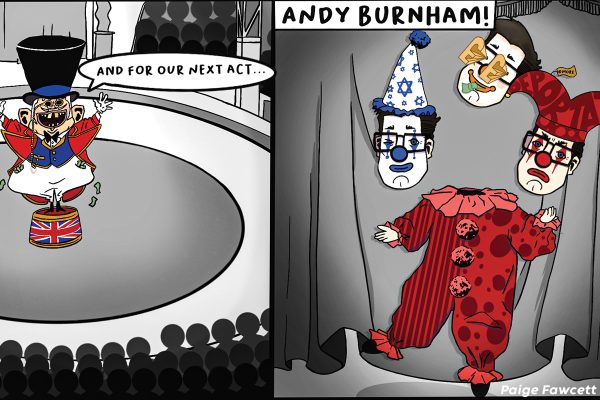
The Reform leader, they suggested, had been upstaged and lampooned by a clown candidate; by a self-proclaimed ‘intergalactic space warrior’ adorned with a trash can on his head.
Initially, the establishment media had tried to ridicule Count Binface. Soon enough, however, they were getting behind him, seeing him as a potential means for mocking Farage.
Similarly, the other political parties suggested that Farage’s reelection in Clacton was a non-event; a blip that does little to hide the fact that Reform UK has slipped in the polls since the start of the year – with a number of surveys suggesting that the party has been overtaken by Labour since Andy Burnham became prime minister.
These sniggering journalists and politicians should hold back on their gloating, however. As the saying goes, he who laughs last laughs loudest. And as the crisis of British capitalism deepens, it will be them who are left with egg on their faces.
Pride comes before a fall. Likewise, the ‘Burnham bounce’ will soon give way to a widespread anger towards the Labour government – and towards all those attempting to prop up the rotten capitalist system.
Sneering elites
These arrogant ladies and gentlemen never learn. Instead, they constantly fall for their own political propaganda.
A decade ago, in the run up to the Brexit vote, for example, the entire establishment derided the Leave campaign and its supporters. Those thinking of backing the Brexiteers were ignorant and foolish, they proclaimed.
The shock referendum result, however, forced these hubristic hacks to eat humble pie. Suddenly, they were paying lip-service to the ‘left behind’ in their editorials and speeches; wringing their hands about how the forgotten folk of Britain had made their voice heard, and would now be listened to by those in Westminster.
One minute, hypocritical politicians were accusing Leave voters of being knuckle-dragging racists. The next, they were falling over themselves in their efforts to emulate Farage and co. in regards to migrant-bashing and xenophobia.
Similarly, that same year, Donald Trump upset all the establishment’s calculations as he rode into the White House upon a wave of public resentment against the broken status quo.
Fast forward 10 years, and history is repeating itself. Once again, the elites are sneering at ordinary people in Clacton, and other such deprived towns and areas. And on both sides of the Atlantic, the ruling class is frantically attempting to regain control of the situation, hoping to curb the rise of unreliable populists.
Far from calming matters and restoring stability, however, by continuing with his predecessors’ pro-capitalist policies, Burnham will only push voters into the arms of Farage and his ilk.
To those exploited and downtrodden by capitalism, Reform’s dubious donations will seem like small fry compared to the austerity and militarism that the Labour leaders will be forced to carry out on behalf of the bankers and imperialists, as capitalism’s crises multiply and intensify.
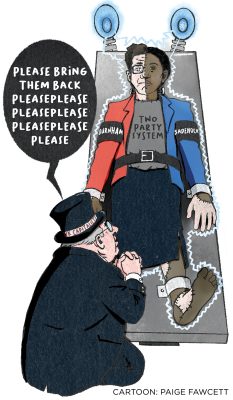
Despite all the hopes and prayers of the establishment and its mouthpieces, therefore, Britain’s old, crumbling two-party system is not coming back. Like Humpty Dumpty, all the king’s horses and all the king’s men cannot put the country’s fractured political landscape back together again.
Polarisation and volatility is here to stay – the new normal of British politics.
Alienating voters
If anything is going to harm Farage and his party, it will not be attacks from the hated establishment, but Reform’s own policies and pledges.
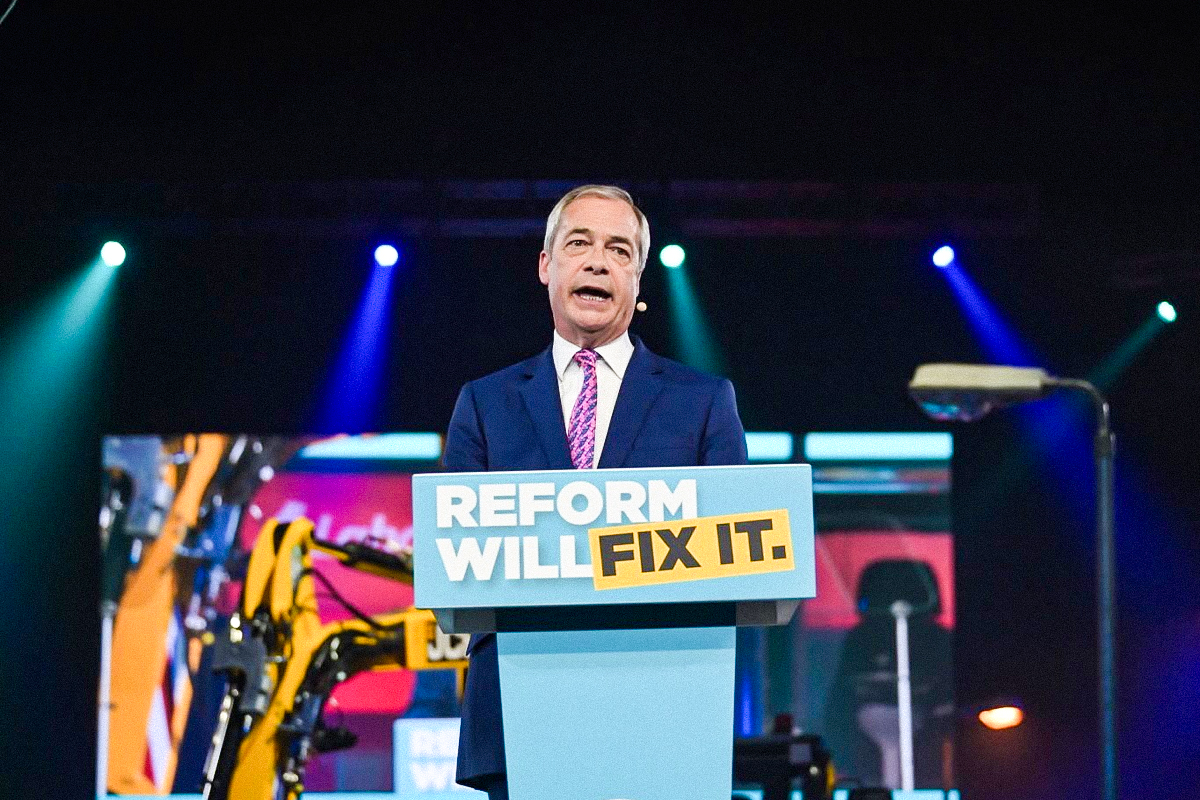
The Reform leaders increasingly seem to be doing their best to alienate whole layers of their supporter base.
The party’s treasury spokesperson, former Tory leader hopeful Robert Jenrick, for example, has recently promised that he would slash £50 billion from the welfare budget as chancellor, hitting millions of the poorest and most vulnerable in society.
In local authorities under their control, meanwhile, Reform councillors are already implementing brutal cuts, leading to dismay and disillusionment amongst residents, including those who have previously voted for Farage’s party.
Elsewhere, Reform deputy leader Richard Tice has landed himself in the proverbial cow dung with tone-deaf, out-of-touch comments dismissing concerns about the damage wrought by this summer’s repeated heatwaves.
The British public should stop wallowing in “doom and gloom”, Tice recently asserted, and instead “celebrate” soaring temperatures. “When it’s a bit warm, let’s enjoy it,” the Boston and Skegness MP insensitively remarked, “and if it means that English wine and sparkling wine gets better and better, fantastic.”
British farmers whose harvests have been destroyed by drought and families whose houses have been engulfed by wildfires will no doubt be greatly reassured by Tice’s appeals to taste the fine fruits of England’s vineyards.
Revolutionary solution
With Starmer defenestrated and Farage falling in the polls, the left is being presented with an open goal. There has never been a better moment to go on the offensive, and make the case for a clear socialist alternative to all the liars, warmongers, and racists in Westminster.
Unfortunately, however, the left and trade union leaders have failed to seize this opportunity. Instead, they are busy sowing illusions in Andy Burnham – promoting this wolf in sheep’s clothing as the ‘lesser evil’ in comparison to Farage.
Rather than making the case for bold socialist policies, these ‘lefts’ are throwing their weight behind popular fronts and so-called ‘progressive alliances’. And instead of mobilising workers for militant mass action, they are pursuing a class-collaborationist strategy, begging Burnham and his ministers for scraps.
This timidity flows from their reformist politics. They have no faith in the power of the working class; no vision for genuinely transforming society, through class struggle.
At best, they seek a ‘nicer’, ‘kinder’ version of capitalism – a completely utopian hope. At worst, they dilute down their demands to the most moralistic, milquetoast platitudes, in an effort to keep liberal elements on board within their broad, cross-class coalitions.
This is no way to fight Farage and the rest of the right. In clinging to Burnham, the left leaders are tying themselves to the mast of a sinking ship.
Workers and youth should have no trust in the supposed Messiah of Manchester. Reform’s reactionary and racist agenda can only truly be defeated through class-struggle methods, in pursuit of a class-based programme.
This is what the communists of the RCP are organising and fighting for.
We are building a force that can bring about a revolutionary solution to the miseries and horrors of capitalism; a Bolshevik party that can lead the working class in the overthrow of this whole stinking system, in order to eliminate exploitation, war, and oppression once and for all. Join us in this task.
Letter: ‘Why Populists Are Winning and How to Beat Them’
Why Populists Are Winning and How to Beat Them is the latest book by Labour MP Liam Byrne. It attempts, as the title suggests, to explain why we are seeing a rise of populism globally, with a focus on Britain’s very own Reform UK.
To this end, Byrne provides some good answers. Rather than just blaming some ‘inherent racism’ within the working class, the book delves into the real culprit: declining living standards, the rising cost of living, disillusionment in and distrust of the system to provide as it once did.
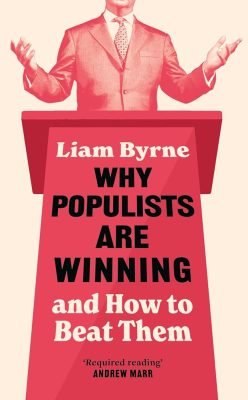
The book cites a study by Best for Britain which shows the group most likely to be swayed by Reform’s rhetoric are middle class, former Tory voters – those who believed in the government’s promises over the last decade and saw them broken.
However, we really see how inept the liberal establishment are when it comes to the section ‘How to beat them.’
Byrne makes frequent calls to “renew the radical centre” throughout the book, whatever that may be. He claims that no one today included in Reform’s support base could ever be convinced of anything else – and then nonetheless proposes that we should attempt to build a “positive patriotism” to counter this.
Instead of examining how to actually deal with the issues described earlier in the book, the tactics suggested sadly culminate in nothing more than another call for a popular front of the ‘left’ in Britain.
A sidenote: the book also takes great pains to highlight how the behaviour of populist leaders is steeped in unspeakable corruption, using examples such as Orbán in Hungary funnelling tax money to his mates. All the while, Byrne conveniently forgets that this kind of corruption is just as common behaviour within his fellow establishment politicians!
Overall, while some sections in this book looking at the ‘why’ of populism are decently interesting, they are then selectively used to try and justify capitalism’s failures. Reading this makes it clearer than ever that establishment politicians have no real way forward.
Harley Jackson, Manchester