Britain’s food system is “close to collapse” stated Green Party leader Zack Polanski at a recent Bakers, Food and Allied Workers Union (BFAWU) conference – entirely reliant on fragile supply chains, it is proving unable to withstand the climate crisis and the shocks of the world market.
Food inflation is expected to rise to at least nine percent by the end of 2026, with food prices having already quadrupled over the last five years. The Autonomy Institute has predicted fruit and vegetable prices could rise by 170 percent by 2050.
And as always, it’s the working class who’ll pay the price.
To afford the government recommendations for a healthy diet, the most deprived households already need to spend 45 percent of their disposable income on food – rising to 70 percent with children.
Skyrocketing prices will force thousands more into hunger, in a country where nearly one in five kids already live in food poverty, and three million are regularly skipping meals.
This crisis is not a question of scarcity. The world produces more than enough food for everyone, yet a third of all food produced globally each year is wasted. It’s capitalism that starves us.
Supply chain shocks
Agriculture has been strongly affected by the closure of the Strait of Hormuz following the US-Israeli war on Iran.
20 to 30 percent of the world’s fertilisers have been cut off as a result of the Strait’s closure, as well as a quarter of the world’s oil. Around a quarter of the 16 million barrels of oil a day used in petrochemical production are used in the agricultural sector.

These shocks will have massive effects on food prices, which will make themselves known in the UK over the next few months.
The National Farmers’ Union has suggested produce reliant on glasshouses – such as tomatoes, cucumbers, and peppers – will be the first to see price rises, followed by meat and dairy. The price of wheat and grains, already inflated by the war in Ukraine, would be next.
Given that next year’s food is being grown now, and prices will remain volatile even after the blockade ends, we won’t see the end of these increases any time soon. This upset will rumble through the world agricultural system, causing havoc with food cost and supply, for a long time to come.
Vulnerability of Britain
Britain is uniquely vulnerable to these shocks because the country relies massively on imports: 46 percent of all food in Britain is imported, including the majority of fish, fruit, and vegetables.
Our food systems are set to become even more dependent on imported produce in the coming years.
Although 80 percent of seafood is imported, critically depleted local fish stocks continue to move closer to collapse. Our harvests are becoming less reliable, too: 2025 saw the second worst harvest since records began, knocking the 2024 harvest into third place.
To make matters worse, the UK operates a just-in-time food economy: commodities crossing supply chains that stretch across the globe are sold for consumption almost immediately.
With virtually no stockpiles, the food system relies completely on trade running smoothly – but Britain today is less and less able to do anything to secure this smooth running. British capitalism has little real influence on geopolitics, no strong navy to protect supply routes, and no large colonies it can exploit, as it could in the past.
Labour claims to be “the first to ever commit to maintaining domestic food production levels.” But the reality is that the British ruling class has left its workers’ ability to eat completely at the whims of the world market.
In the government’s own words, from a 2024 report into Britain’s food security, the British food system is threatened by “single points of failure” which can quickly cascade into catastrophic levels of inflation and shortages.
Climate change
All this is in the context of the increasingly significant effects of climate change, which will only intensify as the billionaire class continues to pollute our world. For British farming, the climate crisis means battling droughts, extreme heat, flooding, and degraded soil quality.
View this post on Instagram
Last month saw the hottest day in May ever recorded in the UK, in a month which had received 23 percent less rain than average – the second dangerously dry spring in a row.
These are no longer one off incidents of extreme weather: it is predicted Britain could be seeing regular 40 degree days in the next 25 years. These are temperatures which currently warrant a ‘red’ level warning from the Met Office.
To make matters worse, the UN has released dire warnings following predictions of a “super” El Niño weather phenomenon this year. Exceptionally warm Pacific waters, exacerbated by climate change, would see billions of dollars lost to crop failures and result in massive food price spikes.
A study at Stanford University found that every degree of global warming hits crop yields by an estimated 4.4 percent. “If the climate warms by three degrees, that’s basically like everyone on the planet giving up breakfast,” explained senior author Solomon Hsiang.
All of this is assuming that most farmers will even be able to adapt to the changing climate enough to continue farming, but the reality is it will be prohibitively costly for many.
But hunger isn’t inevitable just because of climate change – these problems are only catastrophic because profit needs to be made, even when producing the most basic necessities.
Any decreases in crop yield will hit a system where production already far outstrips demand. The world produces enough food to give everyone nearly 6,000 calories a day, of which only half ever reaches the shelves.
Under a democratically planned economy, food could be produced and distributed according to human need, not to make profit, and shocks could be managed with the sole concern of ensuring nobody goes hungry – all while introducing measures to combat the climate crisis.
The workers will fight back
The British ruling class are already nervous about the social consequences of food insecurity, with a Cobra meeting held on this topic in March.
While we aren’t privy to what was discussed behind closed doors, the National Preparedness Commission (NPC) has warned since 2024 that the state should prepare for the waves of discontent that food insecurity will generate.
Their report detailed a series of “risk scenarios”, including: attacks on international trade chokepoints, food price rises, oil price inflation and volatility, lack of public trust in authority, increased public health and societal inequalities, and pollution outbreaks.
You might notice that since then, all of these eventualities have happened!
The common thread in the NPC’s prognosis is social unrest. It foresees ordinary people turning to black markets, endemic stealing of food to get by, and above all, deep anger against ‘societal inequalities’ – leading to “extreme public response, food riots and disruptive action”.
They know it as well as we do: the working people of this country will not allow themselves to be dragged into starvation while their bosses’ wallets get fatter.
With every skipped meal, the anger at the system and the yearning for a better life are slowly growing, ready to explode at any moment into mass action.
The gnawing crisis in British farming
Jai Dunne, Manchester
The Iran War has already seen massive disruption to the global supply of fertiliser and will have knock-on effects for agriculture for months – if not years – to come.
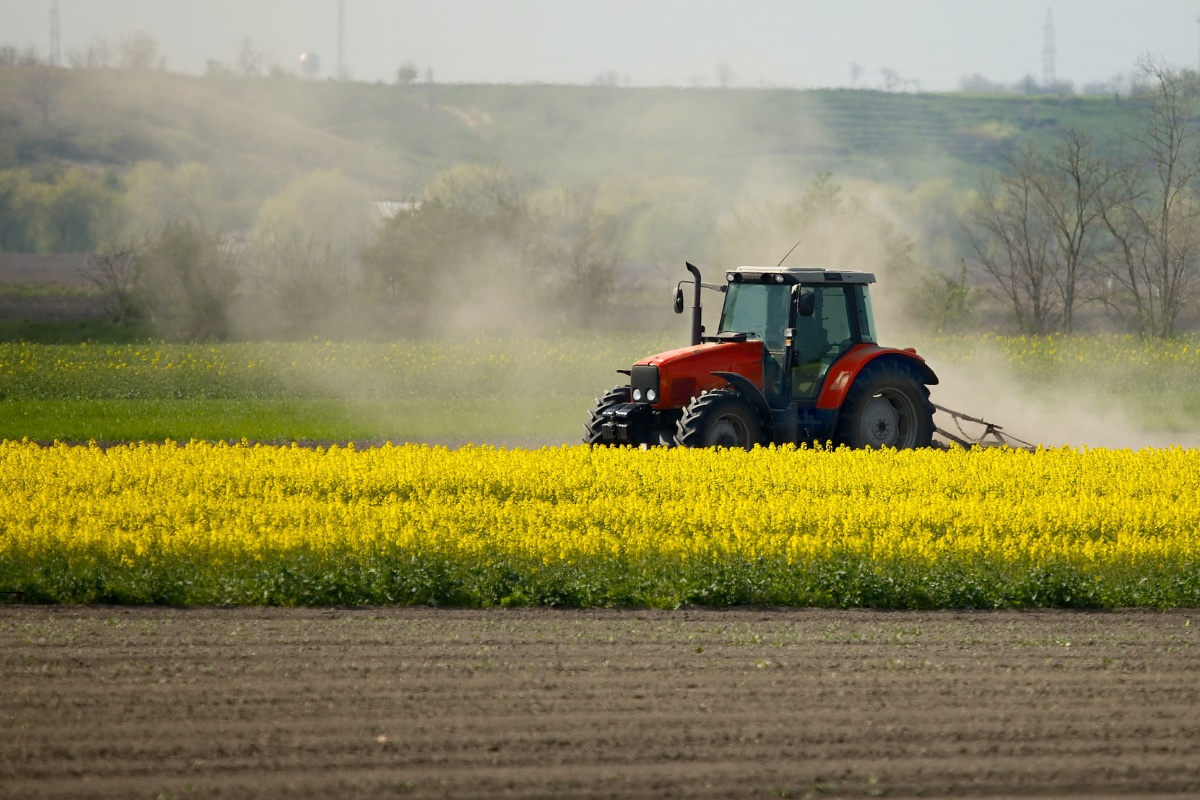
This will have especially dire effects in Britain, where the farming industry has been in perpetual crisis for years. Climate change, alongside rising fuel and electricity costs, have long been reducing the ability for farmers to maintain production – let alone develop it.
A recent article published by the Financial Times outlined the current effects the war on Iran is already having on UK farmers. The ‘double shock’ of a 70 percent rise in the price of red diesel – combined with a 30 percent rise in fertiliser costs – is forcing farmers to actually stop planting crops to prevent the gamble of losing money on the next harvest.
This is by no means a short-term setback. Future rises in carbon tax and fuel duty could exacerbate the situation by pushing the prices for diesel and fertiliser even higher.
If domestic agricultural production falls, it would mean further reliance on global imports at a time when the world market is in utter chaos.
One of the biggest limiting factors for British farmers today is the buyers of agricultural products: the big supermarkets, which are free to act as food monopolies – squeezing supply chains and ripping off both farmers and consumers to secure themselves eye-watering profits.
Between 2021/22 and 2024/25, the operating profit of Tesco rose by 72 percent, from £1.8 billion to £3.1 billion. For Lidl, this increase hit a modest 297 percent! All while farmers go bust making less than 1p per carrot sold and workers choose between eating or heating their homes.
With the added pressures of the Iran war now bearing down, the gnawing crisis in Britain’s farming industry could easily erupt.
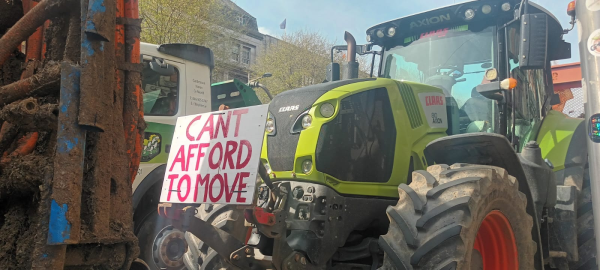
In Ireland, farmers and hauliers have already been provoked into open conflict with the Irish government, winning concessions through militant action: blocking roads, access to ports and oil refineries.
Scenes like those that we saw in Dublin in April are not a case of ‘if’ but ‘when’ here in Britain.