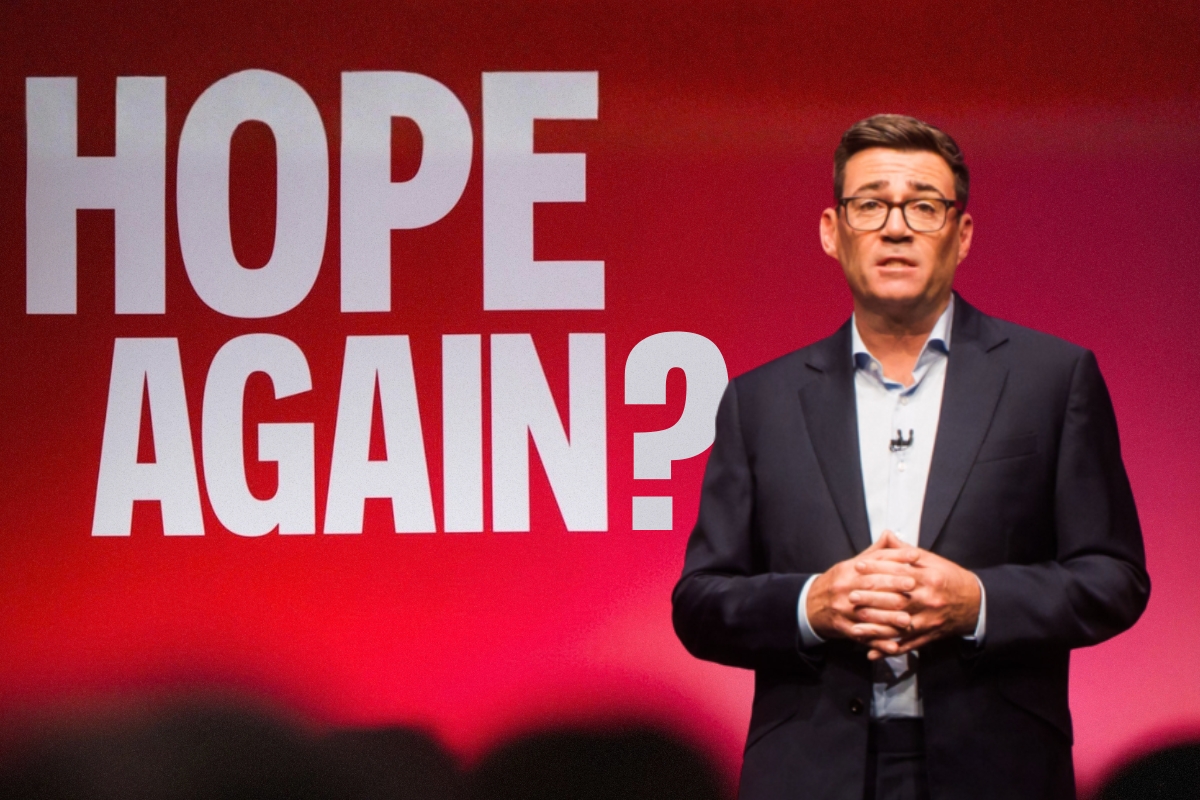
Andy Burnham has been sworn in as the seventh prime minister in 10 years, promising to deliver the biggest change to British politics in the last four decades.
These are big words from someone who has so far said nothing of substance; who seems to be trying to outdo Starmer in terms of platitudes.
In reality, on all fronts – economically, politically, and diplomatically – Burnham will be faced with the same crises that sent his hapless predecessor packing.
When it comes to Britain’s place in the world and the question of foreign affairs, Burnham and his new cabinet will have to contend with British imperialism’s waning power and influence on the international stage.
Once the largest empire in the world, with a powerful navy that ruled the waves, Britain is now taken less seriously – by friends and foes alike – than at any other point in history.
This will only add to the pressures and dilemmas confronting Britain’s latest prime minister, alongside Ed Miliband, Wes Streeting, and John Healey – the new chiefs at the Foreign Office, Ministry of Defence, and Treasury, respectively.
Delusions of grandeur
Burnham’s predecessor, ‘Sir’ Keir Starmer, leaves office as the most hated PM in recent memory. Dull, out of touch, vapid, and impotent – he was the perfect embodiment of British capitalism in its age of decline and decay.
Perhaps the most telling aspect of Starmer’s character was his approach to foreign policy. Perceiving himself as the reincarnation of Winston Churchill, the former Labour leader was most comfortable when abroad, participating in summits and forging ‘coalitions of the willing’. This earned him the rather apt nickname of ‘Never Here Keir’.
In this, Starmer reflected all the delusions of grandeur that afflict the British ruling class. These well-to-do ladies and gentlemen live in the past – imbued with a psychology inherited from a time when the British establishment stood at the head of the world’s mightiest empire.
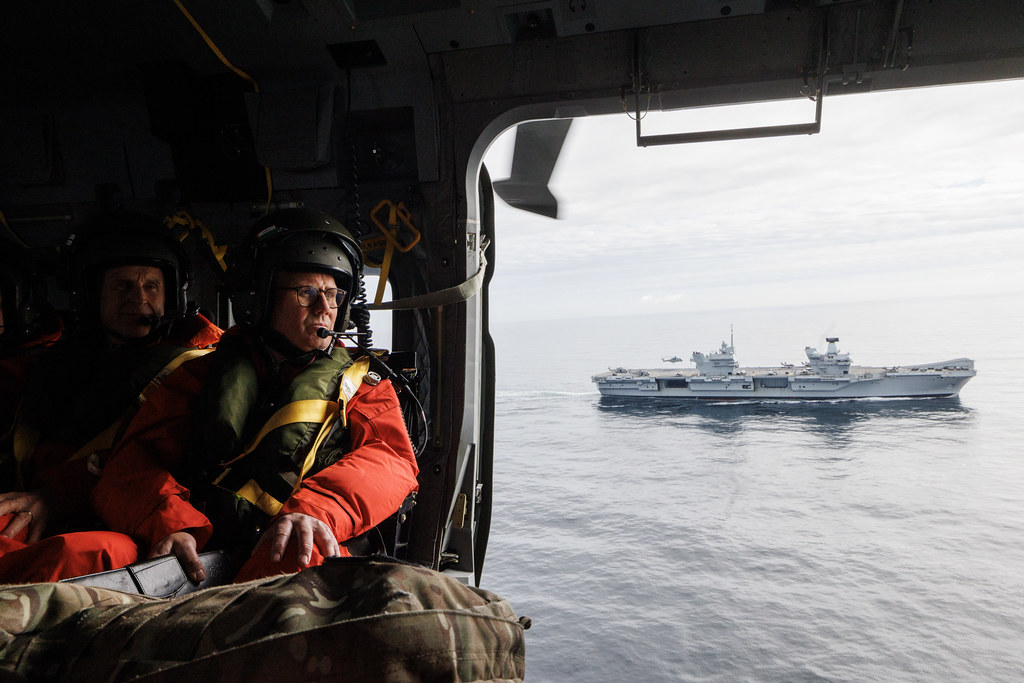
Unable to reconcile itself to the sharp decline of British imperialism, and in turn to its own irrelevance, the British ruling class has convinced itself that it can still play a leading role on the world stage.
But those looking at the UK from the outside, including other world leaders, will likely have a very different perception – seeing the reality of Britain’s much diminished status and stature.
A recent article in the Financial Times – a more sober mouthpiece of the British bourgeoisie – provides a telling insight into how Britain’s image has taken a blow in recent years. According to ambassadors around the world, other countries now see the UK as too “inward-looking” and “insular”.
We can only assume these are diplomatic euphemisms, and that less polite words have been used by those in charge in other countries to describe the blockheads and clowns sitting in Westminster and Whitehall.
Masked decline
The truth is that British imperialism’s heyday lies long in the past. Britain has not had an empire for almost 80 years. Today, internationally, the UK and its political leaders are a laughing stock, presiding over a crisis-ridden, small, rainy island. Yet the ruling class talks and behaves as if ‘Great Britain’ still has a decisive influence on world relations.
British imperialism’s decline goes back at least a century. But it was WW2 that proved decisive in revealing who really calls the shots in regards to the western world: not London, but Washington.
Britain, along with the rest of Europe, came out of the Second World War broke and broken. By contrast, US imperialism emerged strengthened, economically and militarily – establishing itself as the undisputed new world hegemon.
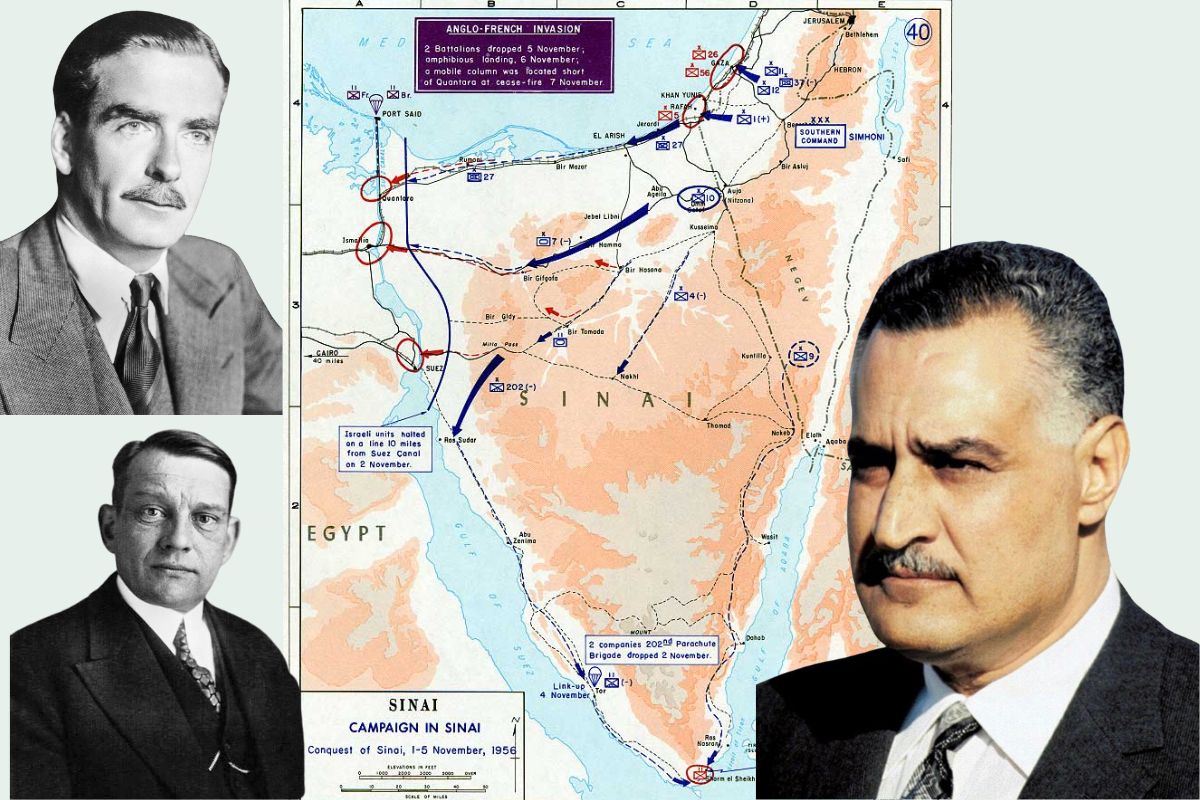
British imperialism lost the bulk of its colonial possessions in the aftermath of the war. The 1956 Suez crisis was a key turning point in this disintegration of the British empire; a humiliating blow for the British ruling class, which was thenceforth forced to accept that there was a new sheriff in town.
With their empire crumbling, the British establishment’s best option now was to kiss the ring and advance their interests by hitching their wagon to American imperialism, in this new US-dominated world order.
Capitalism’s postwar boom helped to mask British capitalism and imperialism’s decline for a whole period, however. Britain’s share of the world market was decreasing in these decades. But the global economic pie was growing overall, so the British bourgeoisie’s slice was still getting bigger.
At the same time, by dining on the spoils of its former empire, and tying themselves to Washington, the British imperialists managed to maintain their seat at the table when it came to international matters. This included Britain’s permanent membership of the UN Security Council.
Similarly, the British establishment were able to take advantage of English being the lingua franca – thanks to the global dominance of American capitalism and its cultural exports, such as Hollywood – in order to preserve Britain’s ‘soft’ power.
The British ruling class also relied on its imperial legacy. Institutions inherited from the past – like the BBC World Service, the British Council, its universities, and international network of embassies – played a role on this front, bolstering Britain’s global reputation and influence.
The British establishment also cultivated the UK’s ‘special relationship’ with US imperialism. This was strengthened when Britain joined the Common Market, allowing the City of London to serve as a bridgehead for US capital into Europe.
By embedding itself in international institutions established by US imperialism – the UN, NATO, the IMF, the WTO, among others – the British ruling class played an outsized role in diplomatic affairs, helping it advance the interests of British capitalism and western imperialism.
All of this allowed British imperialism to continue holding some sway and relevance internationally, within the West’s so-called ‘rules-based’ order.
This disproportionate influence in world affairs, in turn, has helped to inflate the British ruling class’ sense of self-importance – fuelling its jingoistic fantasies, even as its empire perished and its economic power declined.
‘Special relationship’
The collapse of the Soviet Union also helped to mask British imperialism’s decline.
Following this, the western imperialists and their apologists were triumphant, declaring their liberal world order to have been decisively vindicated.
In turn, with the end of the Cold War, the ruling classes in the West talked about the possibility of a ‘peace dividend’, meaning less expenditure on arms, and more on social spending.
As a result, Britain’s leaders allowed the country’s military ‘hard’ power to wane, resulting in decades of underinvestment in the UK’s armed forces.
Instead, the British establishment made themselves even more reliant on the ‘special relationship’. As part of this, in exchange for the protection that US imperialism continued to afford them, Britain played its part in loyally supporting Washington’s imperialist adventures in Afghanistan and Iraq.
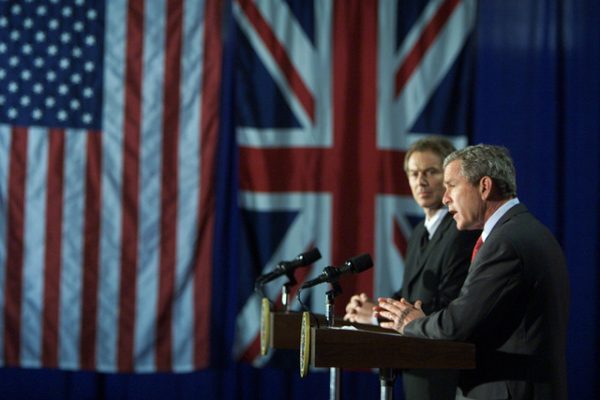
But this proved to be a costly mistake for the British ruling class and its representatives. These imperialist interventions in the Middle East led to humiliating defeats for the US and Britain, and to mass protests and discontent back home.
Furthermore, in reality, the British establishment’s reliance upon the ‘special relationship’ has come to mean complete dependence on US imperialism.
Britain might maintain its own nuclear arsenal, for example, but the White House and the Pentagon hold the launch codes. And the UK similarly lacks any ‘strategic autonomy’ or ‘sovereignty’ when it comes to other areas of its military and security apparatus.
This was less of a problem when the interests of US imperialism and British capitalism were aligned. But as the old world order cracks apart, and the transatlantic alliance between America and Europe fractures, Britain’s leaders find themselves having to conduct an increasingly uncomfortable and unsustainable balancing act, trying to face in all directions at once.
In turn, unable to rely on the support of US imperialism as in the past, British imperialism is being exposed as weak and frail – barely able to stand on its own two legs.
The cupboard is bare
Brexit was a key turning point in this respect, accelerating Britain’s long-term decline. At one stroke, British capitalism cut itself off from its largest trading partner, and simultaneously diminished its importance to US imperialism as an American Trojan Horse within the walls of Europe – which itself has come to be seen as less important by the US ruling class, and is now being treated as a rival by Trump.
Perhaps as important as the economic impact of Brexit has been the damage that Britain has suffered to its reputation. Once considered an extremely stable country, now the UK is seen as a paragon of political pandemonium and chaos.
As a consequence of all this turmoil, investment in the UK economy has flatlined since 2016. Economic stagnation and crisis, in turn, have produced more political earthquakes.
The crisis of British capitalism has also found its reflection in the country’s decrepit, underfunded armed forces.
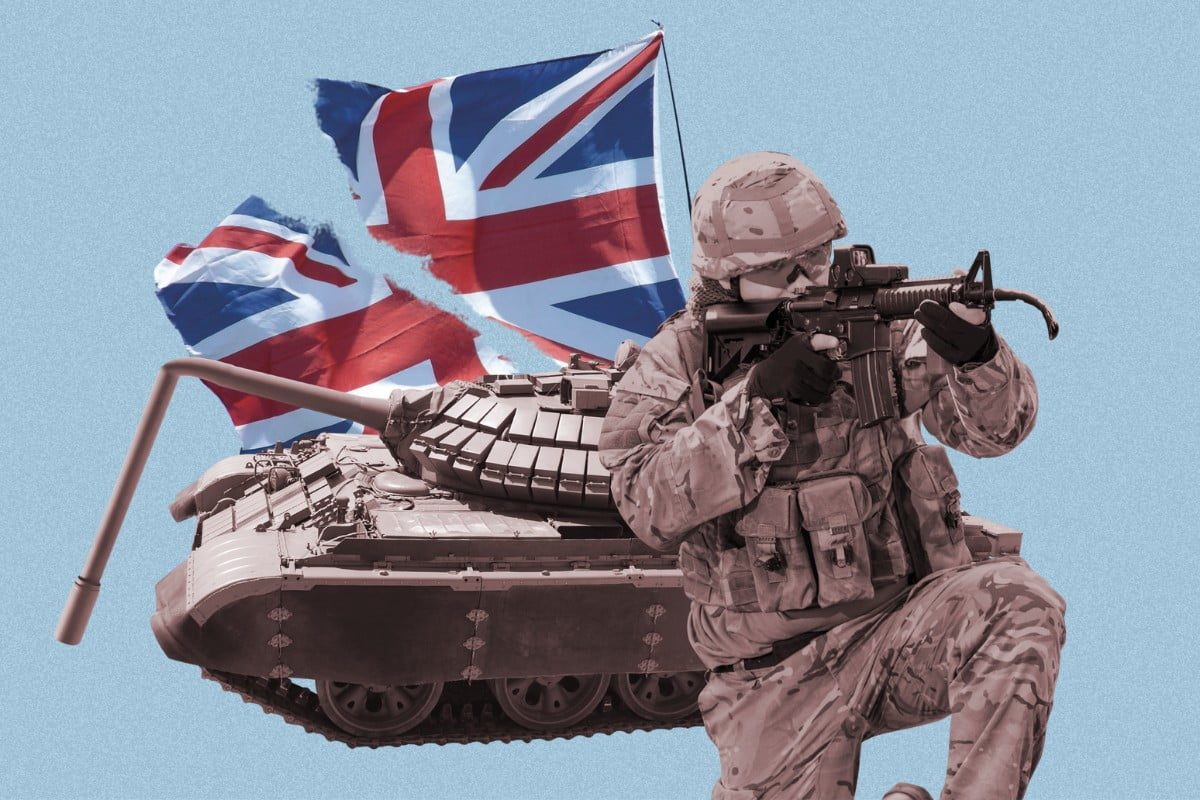
And here the British ruling class faces a paradox. In order to be taken seriously by other imperialist powers, and hold its seat at the table, the UK must maintain its costly nuclear programme – with a bill of around £3 billion a year – and increase its spending commitments in regards to ‘defence’.
But the cupboard is increasingly bare. Investment in militarism therefore necessarily means greater cuts elsewhere – not only to welfare and public services, but also to Britain’s instruments of ‘soft’ power, such as foreign ‘aid’.
Boris Johnson did away with the Department for International Development in 2020, for example, by merging it with the Foreign Office – underlining the real role of the UK’s foreign aid as a tool of British imperialism. Successive Tory and Labour governments have since cut this ‘aid’ even further, from 0.7 percent of GDP to 0.3 percent.
Similarly, cuts to the BBC World Service, the British Council, and the UK’s universities, along with tighter visa restrictions for foreign students, have all contributed to the waning ‘soft’ power of British imperialism.
All bark, no bite
The way in which the different aspects of this crisis interplay with one another is exemplified by the recent debacle concerning the deployment of the HMS Dragon.
At the start of Trump’s war on Iran, it took the British Navy roughly a week to dispatch a single Type 45 destroyer to defend its military base in Cyprus. And after finally arriving at its destination, this ship had to be docked due to technical issues.
Such farcical, pitiful displays inevitably react back upon Britain’s image, undermining its influence and sway in diplomatic arenas.
The imperialists may never use their military machinery. But that is not the point. They still need to have a sizable army and arsenal in reserve, in order to be taken seriously by other powers – both allies and adversaries alike.
‘Soft’ power therefore ultimately needs to be backed up by ‘hard’ power. And both need to be backed up by cash; by a strong economic base that can fund foreign aid, embassies, arms, soldiers, and more.
Likewise, a mafia boss doesn’t need to bring his biggest gun to the negotiating table with his rivals. But he needs his fellow gangsters to know that he has access to the largest stock of deadly weapons, and to a mob that can wield them.
Britain’s ‘guns’, however, are either non-existent or barely functioning. Consequently, its leaders are increasingly seen by their counterparts as all talk, no action.
Hence, British attempts to lead international efforts – to set up ‘coalitions of the willing’ and the like – are inevitably viewed with scepticism, as the aforementioned FT article admits. Everybody (but the British, it seems) knows that those in Downing Street are all bark and no bite; nothing but a yappy poodle.
Such projects, therefore, are little more than paper tigers; the diplomatic equivalent of a senile old man who is still convinced he has the virility of his youth.
The dying days of Starmer’s premiership highlighted graphically how other ruling classes look upon Little Britain today: with European leaders remaining unconvinced by his attempts to ‘reset’ UK-EU relations; and President Trump displaying nothing but humiliating contempt towards the (now former) PM in regards to Britain’s paltry role in the Iran War.
The overall picture is both pathetic and comically quixotic. Still shouting in the vain hope of being heard, but with very little to back up its noisy rhetoric, the British ruling class increasingly resembles the delusional emperor who has no clothes.
Sinking ship
As he enters Number 10, Burnham has made it clear he offers no real alternative to Starmer’s policies or approach. He will therefore face the same crisis of British capitalism, and ultimately meet the same fate as his predecessor.
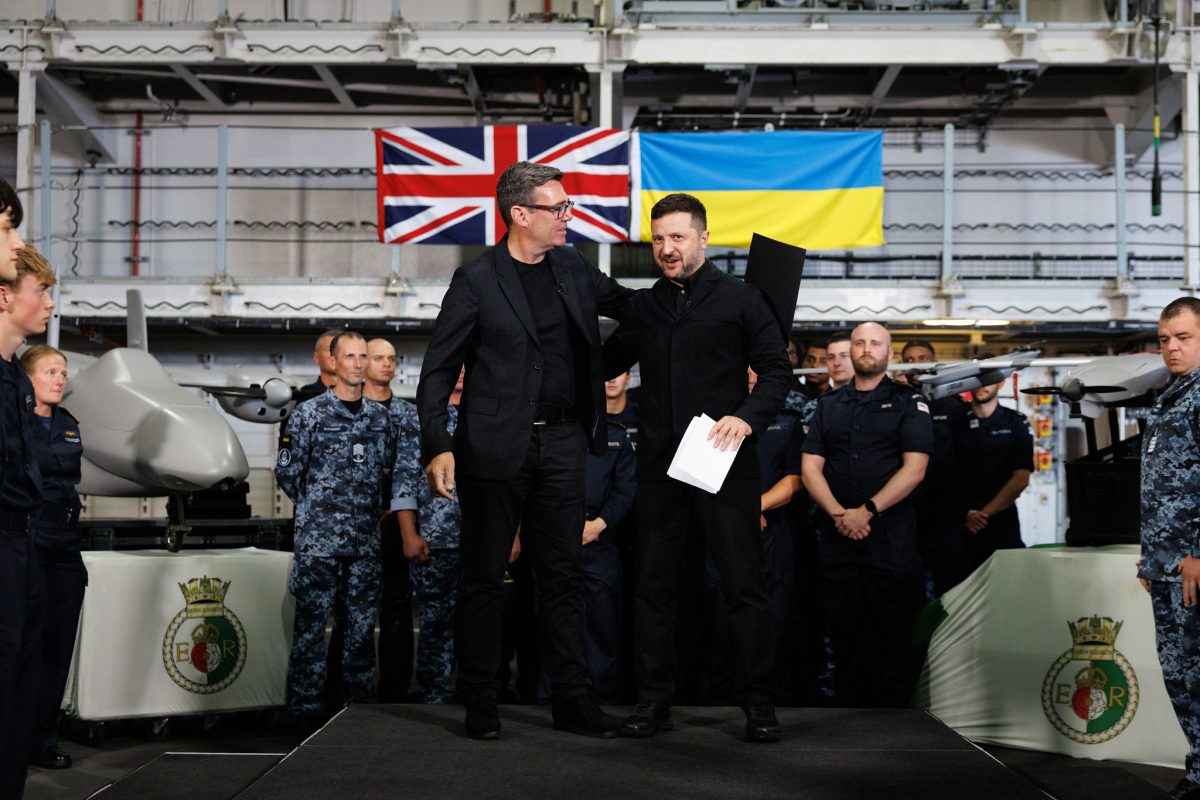
Insofar as he has said anything at all about foreign affairs, Burnham has pledged to continue his predecessor’s disastrous policy towards the Ukraine War. And he has said he would like the UK to rejoin the EU “within his lifetime”, only to backtrack on this statement as he made his premiership bid.
Added to this intractable equation is another important variable: that of an enraged working class, unwilling to pick up the cheque for British imperialism’s demise.
Recently, for example, the UK government was forced to nationalise British Steel, under pressure to save thousands of jobs. This, in turn, has drawn the ire of Beijing, seeking compensation for the Chinese firm that owned these steel plants – thereby endangering relations with a key trade and investment partner for British capitalism.
This example starkly illustrates the impossible situation for Burnham, who is faced with the inglorious task of navigating a turbulent storm of world relations, at the helm of a sinking ship.
Burnham will fare no better in this than those who have come before him. British imperialism is on an inexorable downward trajectory. British capitalism, meanwhile, has become ungovernable. Only its revolutionary overthrow can offer a way forward.