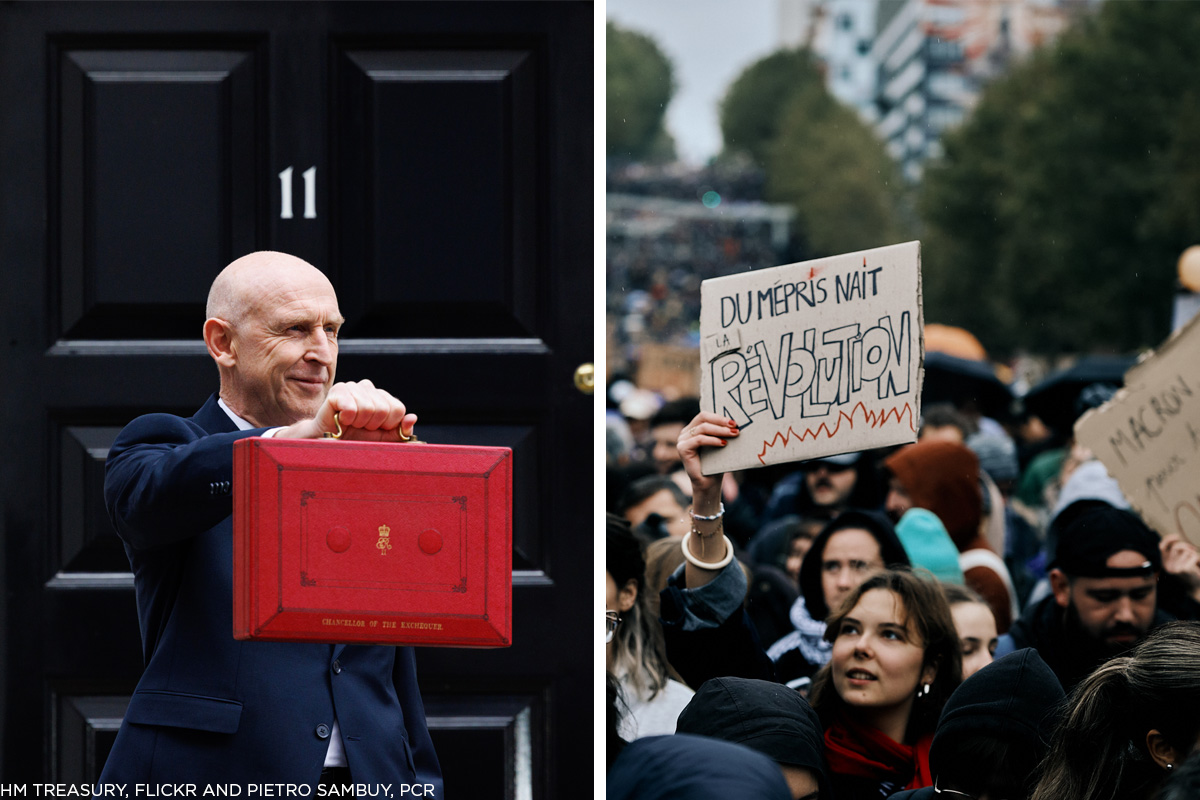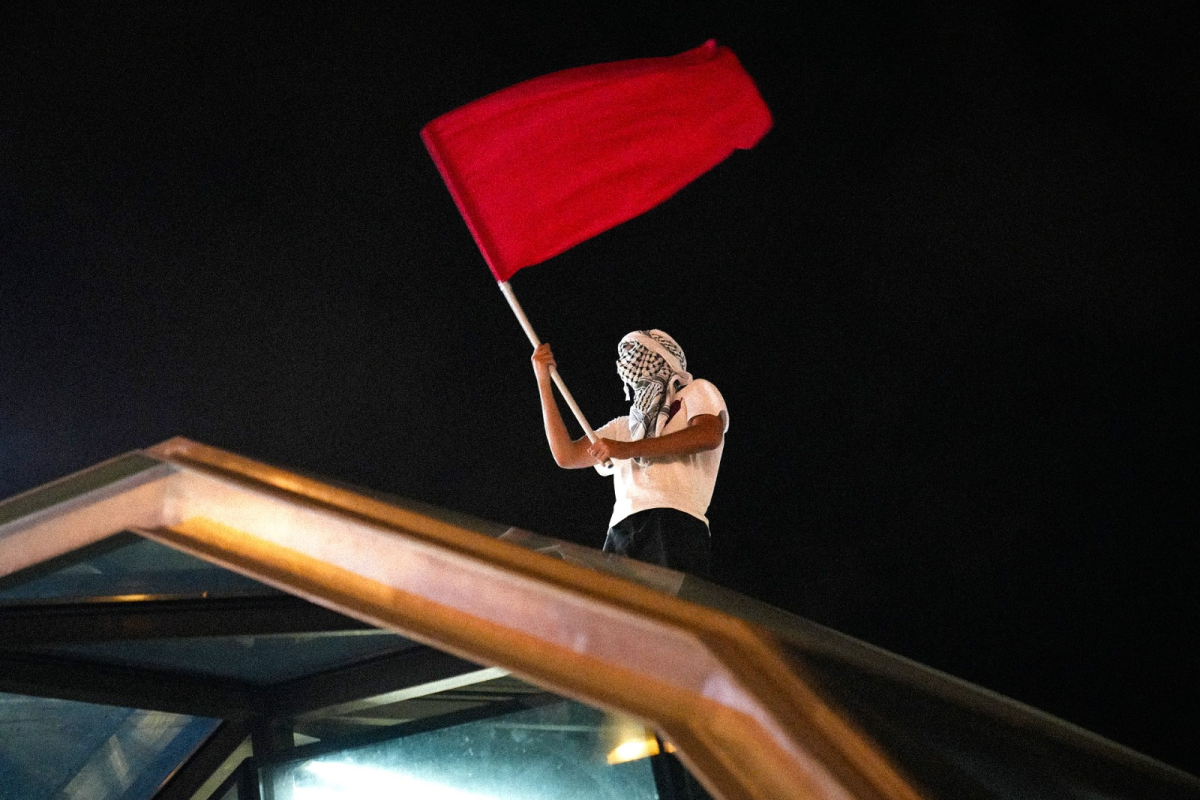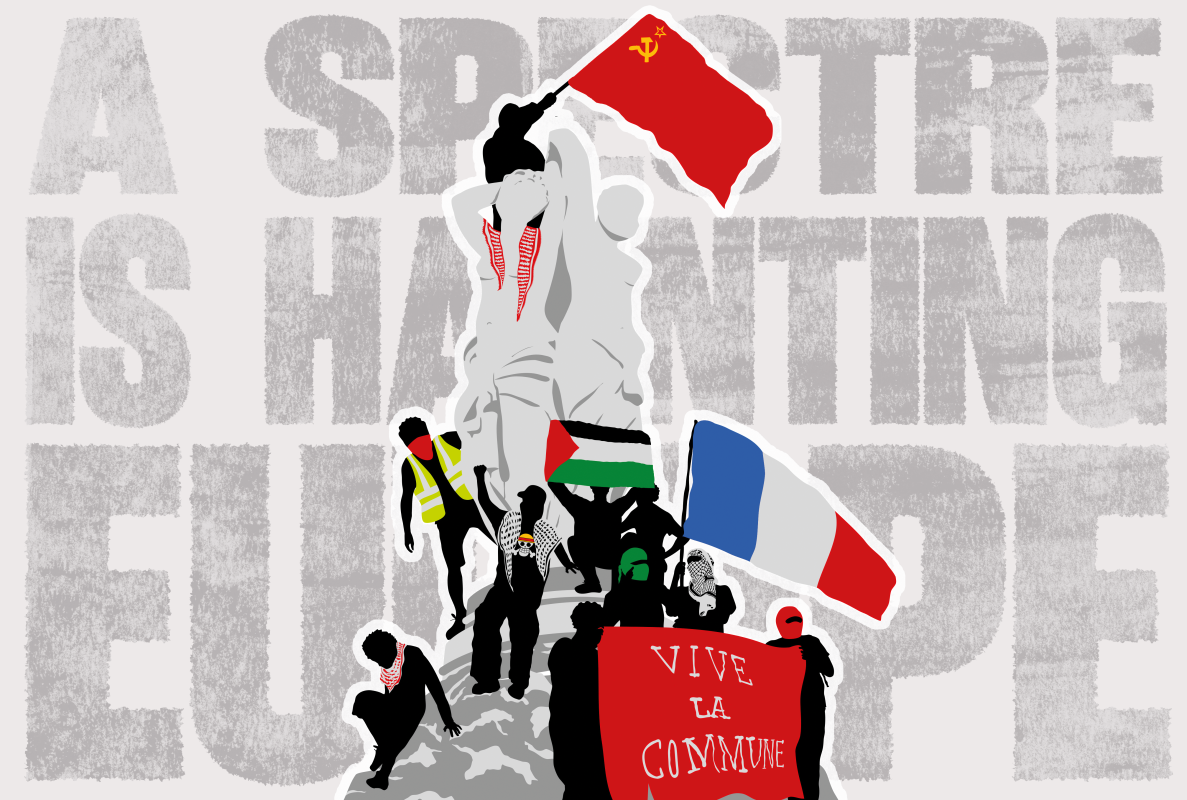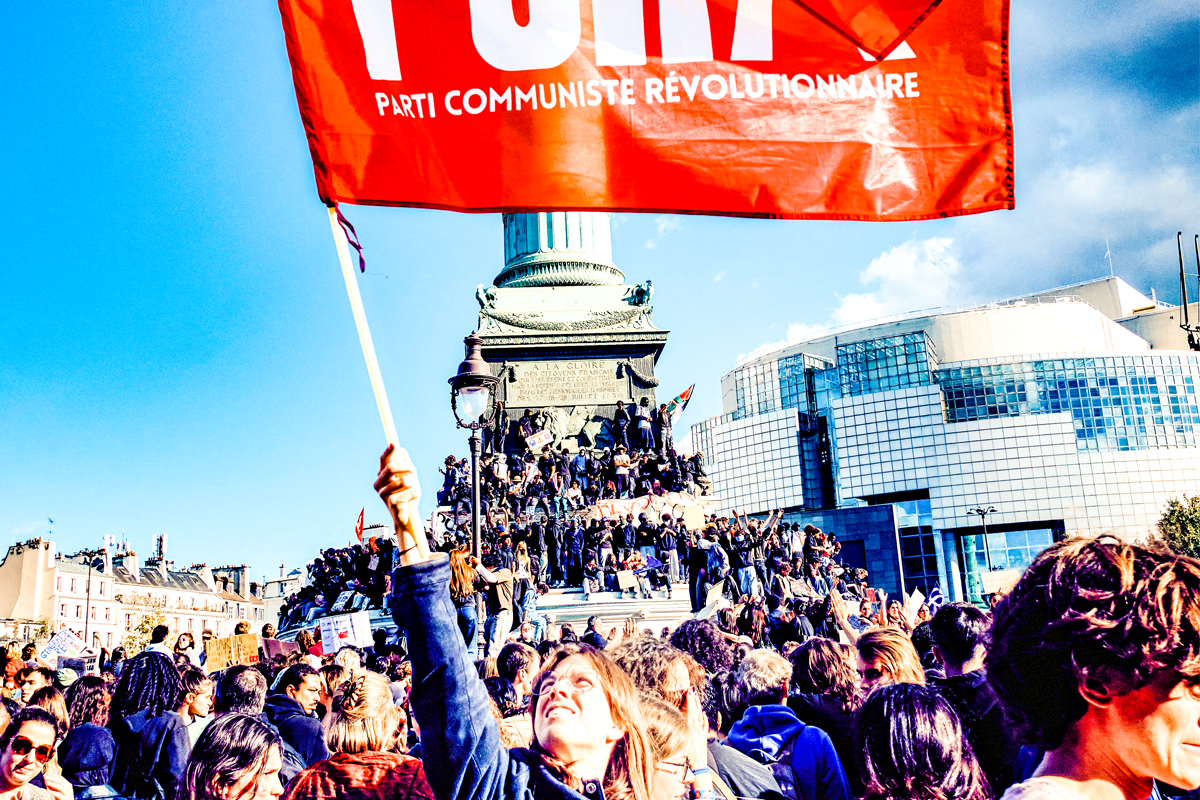
The streets of Europe are set to be the theatre for dramatic scenes this November. Last month already saw a wave of militant protests erupting in France, Spain, Italy, Belgium, Serbia, Albania, and more. And the coming weeks are due to see an escalation of these movements, as the working class enters the stage as an organised force.
Under pressure from below, the major trade unions in France have called for a massive nationwide cross-sector walkout on 5 November. In the days following, the ‘Gilets Jaunes’ (Yellow Vests) are planning rallies and road blockades to continue the disruption. And this is on top of mass demonstrations of students and workers that have been taking place weekend after weekend, often in defiance of savage state repression.
The Spanish unions will join the fray soon after, with a 24-hour general strike on 11 November. This is in support of the huge mobilisations that have exploded in recent weeks – in cities across the country – over the question of housing. With similar protests taking place in Portugal, the demand for an all-Iberian strike is also now gaining an echo.
The Italian working class will follow suit on 20 November, with the CGIL, the main Italian trade union confederation, organising a general strike for this day. This follows a smaller national strike on 30 October, called by the grassroots USB union – and the inspiring Italian general strike in October 2025, when millions came out to ‘block everything’ for Palestine.
View this post on Instagram
This date, 20 November, will also see a Europe-wide day of action against militarism. Student walkouts are planned around the slogan of ‘Fight for our futures, not their wars’, in opposition to rearmament, conscription, and rising spending on warfare, at the expense of welfare, healthcare, and education.
Large numbers of workers and youth in Britain are looking across the Channel in awe – watching these electrifying events in Europe playing out in real time. And many are understandably asking: when will we get our turn? Will Britain join in with this Red Autumn?
Cynics and sceptics
More cynical types might dismiss the suggestion that Britain could ever see similar such developments.
The French and Italians are naturally fiery people, the argument goes, with a store of Molotov cocktails always at hand, ready to lob at the slightest provocation. Revolt is supposedly ‘in their blood’.
British people, by contrast, are said to possess an innate conservatism – more likely to ‘keep calm and carry on’ than take to the streets and clash with the police.
Moreover, where you do see protest in Britain, these sceptics say, it is by reactionaries and racists, outside asylum-seeker hotels and behind charlatans like Tommy Robinson.
Such pessimistic conclusions are extremely superficial and impressionistic, however. The truth is that the explosive events taking place on the continent offer a mirror to Britain’s future.
We do not have a crystal ball. We cannot say exactly when we will see the Gen Z revolutions arrive on our shores – just as we would not be so foolish as to try and forecast with any precision the famously unpredictable British weather.
But just as meteorologists can track when a front of intense pressure is heading towards us, bringing with it heightened temperatures and violent showers, so too can we – armed with the scientific perspective of Marxism – understand what lies ahead for capitalism, for society, and for the class struggle.
And most importantly, we can prepare for the impending downpour: making sure that we are ready for the rains of radicalisation and revolution that are coming our way.
Calm before the storm
Our starting point, as Marxists, is not to look at the surface of things, or to base ourselves simply on a static picture of how things appear right now.
Instead, we must look at the deeper, underlying processes taking place in society. And when we do this, we can quickly see that any seeming tranquility in British politics is only temporary – the calm before the storm.
In truth, there is no shortage of flammable material in Britain, ready to be ignited. All of the incendiary ingredients that have led to the ongoing mass protests and general strikes in Europe exist over here too: the endless austerity and growing inequality; the eye-watering rents and unbearable living costs; the cuts to welfare, healthcare, and education to pay for bombs and bloodshed; the rampant racism and migrant-bashing of the ruling class.
View this post on Instagram
It is only a matter of time before a spark falls that sets this combustible cocktail in Britain alight.
It could be the announcement of another round of cuts to appease the bankers, billionaires, and bond holders. It could be yet another instance of scandal and sleaze within the institutions of the establishment, whether it be Parliament or the police. Or it could be something like the eviction of a vulnerable old lady from her home, as was the case for the mass movement currently gripping Spain.
The point is not to predict exactly what the trigger will be, but to understand how precarious and fragile the entire situation is for British capitalism and its representatives – and not to be taken by surprise when the movement finally erupts, shattering the seeming social serenity like a bolt of lightning from a clear blue sky.
World turned upside down
It is a basic tenet of Marxism that conditions create consciousness. But the link between the two is not mechanical and direct. There can often be a lag between worsening living standards and the explosions of anger that – explicitly or otherwise – are a response to this.
Eventually, however, consciousness will catch up with events. And when it does so, it is with an almighty bang. This is precisely what a revolution represents: that moment when all the accumulated indignation and discontent in the minds of ordinary people finds a physical expression in the mobilisation of the masses.
At such turning points, the entire situation can change overnight. Dialectically, things are transformed into their opposite. The whole world is turned upside down.
Just look at the revolts that are currently sweeping across Europe. The movement in Spain, for example, came on the back of weeks of racist tub-thumping by the right-wing parties and media, with the migrant crisis in Ceuta dominating the news. Now, however, it is class war – not culture wars – that is on the agenda.
Similarly in Italy. Prior to the inspiring Italian general strike for Palestine in October last year, many on the left were in despair, believing that Meloni’s reactionary government could not be challenged. But again, the entrance of the organised working class completely upended the status quo, paving the way for the present wave of militant protests and strikes.
So to those feeling frustrated about the lack of any mass movement in Britain, we say: watch this space – and use this precious time we have to get organised and build the forces of communism, with a sense of urgency.
Crisis of leadership
The worst thing one can do is to get impatient and look for artificial shortcuts. A relatively thin layer of activists cannot accelerate the objective process of radicalisation.
Similarly, those on the left in Britain must not write off the working class as backward or conservative. Workers in the UK may not have the same temperament as their brothers and sisters in France. But they still have militant traditions of class struggle.
As the 1926 general strike or the industrial battles of the 1970s demonstrate, the working class in Britain may take a while to get going. But when it starts to move, it is a juggernaut that can only be stopped by the brakes of its reformist leadership.
If anyone is to blame for the seeming peace and quiet in British society today, it is the ‘left’ leaders.
The delay of the class struggle in Britain has nothing to do with any ‘national character’ of the British, or with a ‘low level of consciousness’ amongst workers – and everything to do with the crisis of leadership on the left.
It is they – the leaders of the trade unions, the Greens, and groups like Stand Up to Racism – who are sowing the biggest illusions in Andy Burnham and his government: calling on workers and youth to place their trust in this capitalist careerist, in order to ‘stop Farage’; painting this wolf in sheep’s clothing as the supposed ‘lesser evil’.
These ‘lefts’ are the worst cynics and sceptics of them all. They have no belief that another world is truly possible; no faith in the power of the working class to transform society – even as titanic events and tremendous movements of the masses are taking place on their doorstep.
Instead, they cling to the broken status quo, bang the drum hysterically about the ‘threat of fascism’, and do everything they can to pour cold water on the energy, elan, and enthusiasm of radicalised workers and youth.
View this post on Instagram
Foresight over astonishment
By contrast, the communists are revolutionary optimists. Far from being caught unawares by the latest developments in Europe, we anticipated them, saying in advance that what previously seemed impossible would quickly become inevitable.
This shows the importance of Marxist theory: that understanding which provides us with the power of foresight over astonishment.
A process of world revolution is unfolding before our eyes. Sooner or later, it will be Britain’s turn to join this historic struggle. The real question is: will we be ready when the time comes?
As Leon Trotsky summarised a century ago, discussing the decline and deepening crisis of British capitalism, only a year before the outbreak of the general strike:
“The contradictions undermining British society will inevitably intensify. We do not intend to predict the exact tempo of this process, but it will be measurable in terms of years, or in terms of five years at the most; certainly not in decades.
“This general prospect requires us to ask above all the question: will a Communist Party be built in Britain in time with the strength and the links with the masses to be able to thaw out at the right moment all the necessary practical conclusions from the sharpening crisis? It is in this question that Great Britain’s fate is today contained.”