
Up and down the country, many people have been enjoying the sun over the bank holiday. As one of the most overworked populations in Europe, this rest has been very welcome.
But this week’s temperatures – with highs of 35°C breaking the record for the hottest temperature in May – are exposing how unfit Britain is for the threat of global warming, and how the impacts of climate change are felt unequally.
Today is now the hottest day in May on record with Heathrow and Kew Gardens provisionally reaching 35.0°C
Until yesterday the highest temperature in May was 32.8°C, but we’ve now exceeded that record on consecutive days by a full two degrees Celsius 🌡️ pic.twitter.com/s4ichw1fZU
— Met Office (@metoffice) May 26, 2026
Hell on earth
During the infamous 2022 heatwave – when temperatures hit 40°C – 3,000 excess deaths were reported. 999 operators reported a 500 percent spike in heat-related calls.
Studies on ‘heat mortality’ show that the most vulnerable to high temperatures include those living in the most deprived households, the elderly, those with chronic health conditions, as well as black and Asian communities.
If you’re lucky enough to live in good health, in a large house in the suburbs with air-conditioning, or drive to work, then heatwaves are heavenly.
But if you live in cramped housing, have to commute on stuffy public transport, or suffer from a chronic health condition, heatwaves can be hell on earth.
It is estimated that deprived households are seven times as likely to struggle with overheating compared to the wealthiest.
Children are also particularly vulnerable to the impacts of adverse weather.
Unlike adults, children sweat far less and cannot regulate their body temperatures as easily. Some estimates predict that children will spend a third of their school year suffering from overheating if temperatures rise by a further 2°C.
At present, five million children live in households at risk of overheating. Warm nights lead to poor sleep, which can affect academic performance and compound the surging mental health crisis amongst young people.
Domestic death traps
Designed to keep in the heat during cold winters, most British homes have no adaptations for the effects of global warming. In fact, 92 percent of British homes are at risk of overheating by 2050.
Cramped housing also plays a hazardous role. The average British new-build offers 38 square metres per person, compared to 46 in Germany and 66 in the USA.
Housing developers care more about selling many small, over-priced properties to boost their profits, than about the safety and wellbeing of their customers.
This is having a tangible impact on workers’ health. Based on a 2024 survey by Opinium, it is estimated that 4.5 million adults have suffered overheating to the point of being unwell.
Left out to dry
Even though three in four people are aware that they need to make adaptations to their home in the face of extreme weather, 40 percent say they cannot afford to make the changes.
In a cruel irony, however, overheated households lead to higher energy costs to cool. Simply put, workers cannot afford to adapt their homes, and cannot afford not to – especially with the looming threat of an energy price spike later on this year, due to the Iran War.
While the government’s new ‘Warm Homes Plan’ will offer subsidies for households to turn to cheaper, renewable energy, such as solar panels, the policy does not go far enough. Many houses struggle with insulation, which contributes to overheating.
Saddled with public debt, and more focused on fighter jets than workers’ wellbeing, government spending on adapting households with insulation, heat pumps, air conditioning, etc. will be far down on Labour’s list of priorities.
Such a project would cost tens or even hundreds of billions – an amount which British capitalism simply cannot afford.
Good news for the energy monopolies
While workers and their families have seen an eye-watering increase of £4,800 in energy bills since 2021, the energy sector fat cats have boasted £26.2 billion in profits – in the first three months of the year alone.
The US attacks on Iran have caused further price rises in energy, lining the pockets of the wealthy while impoverishing the poorest.
In one stark example, Linda Cook, CEO of Harbour Energy, saw her shareholding value rise by £4 million to a whopping £26 million in the first few months of 2026.
From the perspective of the energy bosses, home adaptations cut into energy usage, which cuts into profits. A well-insulated home requires less heating; a well-ventilated home requires less cooling. It is more profitable for the elderly and disabled to freeze or overheat, than it is for them to be able to live comfortably in their homes.
Protecting workers and the planet
Heat-related mortality projections are alarming: up to 10,000 excess deaths by 2050 from extreme weather.
As the NHS undergoes death by a thousand cuts, it will be less able to support those suffering from heatstroke, dehydration, kidney damage, and other heat-related illnesses.
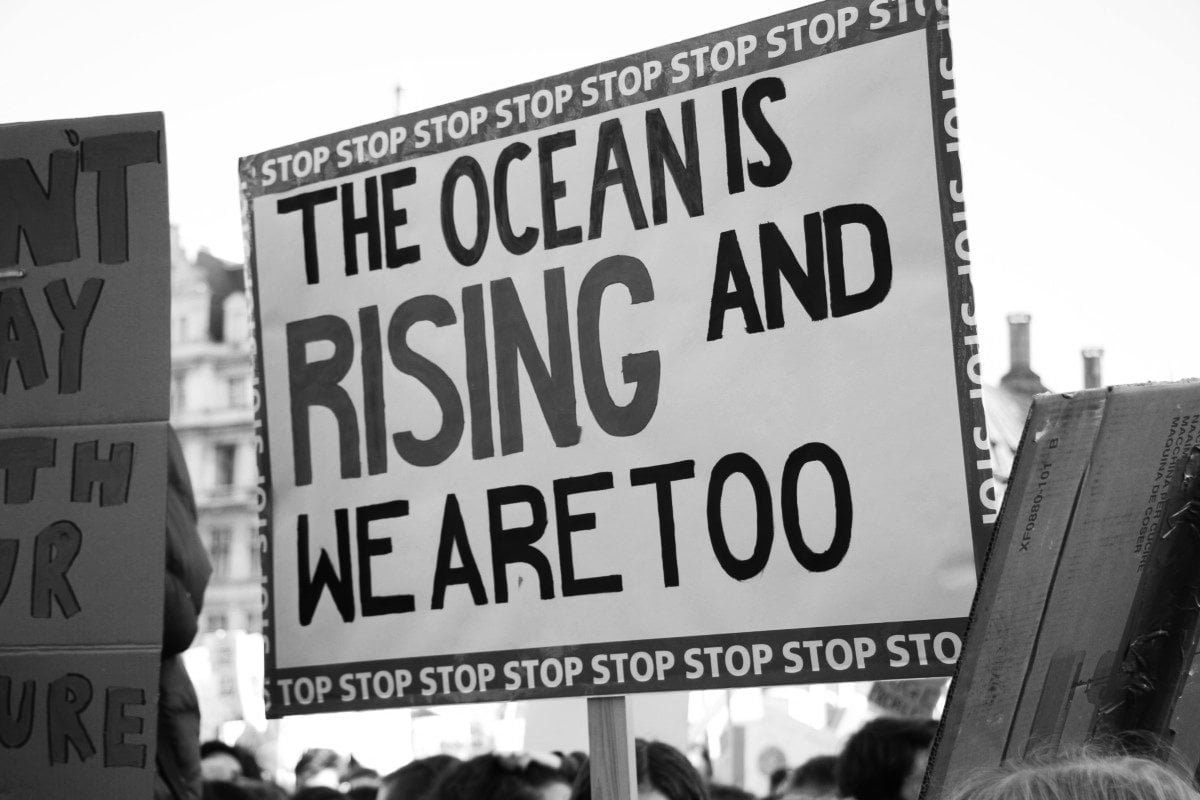
Capitalism is literally roasting us alive. The trade unions must fight to ensure health and safety protections in workplaces and public spaces, including a legal maximum temperature. Further, we need a massive programme of adapting British homes to the rising global temperatures.
All of this can and must be funded by expropriating the super-rich, not least the price-gouging energy monopolies, who are making a killing while plunging the world into climate chaos.
Above all, however, we must nationalise utilities, banks, and housing developers: in order to carry out a large-scale programme of house-building and retrofitting, under workers’ control; and to put an end to the capitalist system which is driving the climate chaos in the first place.
Overheated and overworked – leave the capitalists out to fry!
Samuel Pullen, Reading
This past May, the UK broke several heat records with temperatures peaking above 34 degrees, and we’ve barely arrived at Summer.
The past few years have been consistent in breaking heat records; during heatwaves in 2025 the country reached 35.8 degrees.
Despite this, any legislation regarding working in extreme heat is more of a guideline, with the law stating:
“There is no maximum temperature for the workplace… as an employer, you must decide what a reasonable temperature is in the workplace”.
Clearly employers are incapable of reason, since the UK Health Security Agency (UKHSA) estimates 1,504 heat-associated deaths during the summer heatwaves of 2025.
The capitalists aren’t just sending us out to fry in the heat, they’re the ones who’ve caused such rapid climate change in the first place. Our reliance on fossil fuels – despite the availability of renewable alternatives – has rapidly burned away our ice caps, as well as burning through workers’ pockets.
According to the Intergovernmental Panel on Climate Change (IPCC), 89 percent of global CO2 emissions in 2018 came from fossil fuels.
The impact of imperialist war cannot go unmentioned. The Guardian found that just the first two weeks of the Iran War emitted five million tonnes of CO2 – a war supported in cowardly fashion by the British government.
Every bomb dropped by western imperialism further destroys the climate, destabilises the world market, and devastates the lives of British and foreign workers – all for greater control and influence over the world markets, including the fossil fuel market.
With the problems of capitalism being so multifaceted, the solution must be a broad and lasting one. Stricter workplace legislations or tenuous peace negotiations with Iran won’t be enough. Both workplace and foreign policy should be in the hands of those most affected by these weather extremes: the working masses.
From warfare to workplace, we must take control over our lives and the fate of the planet, leaving the capitalists out to fry.