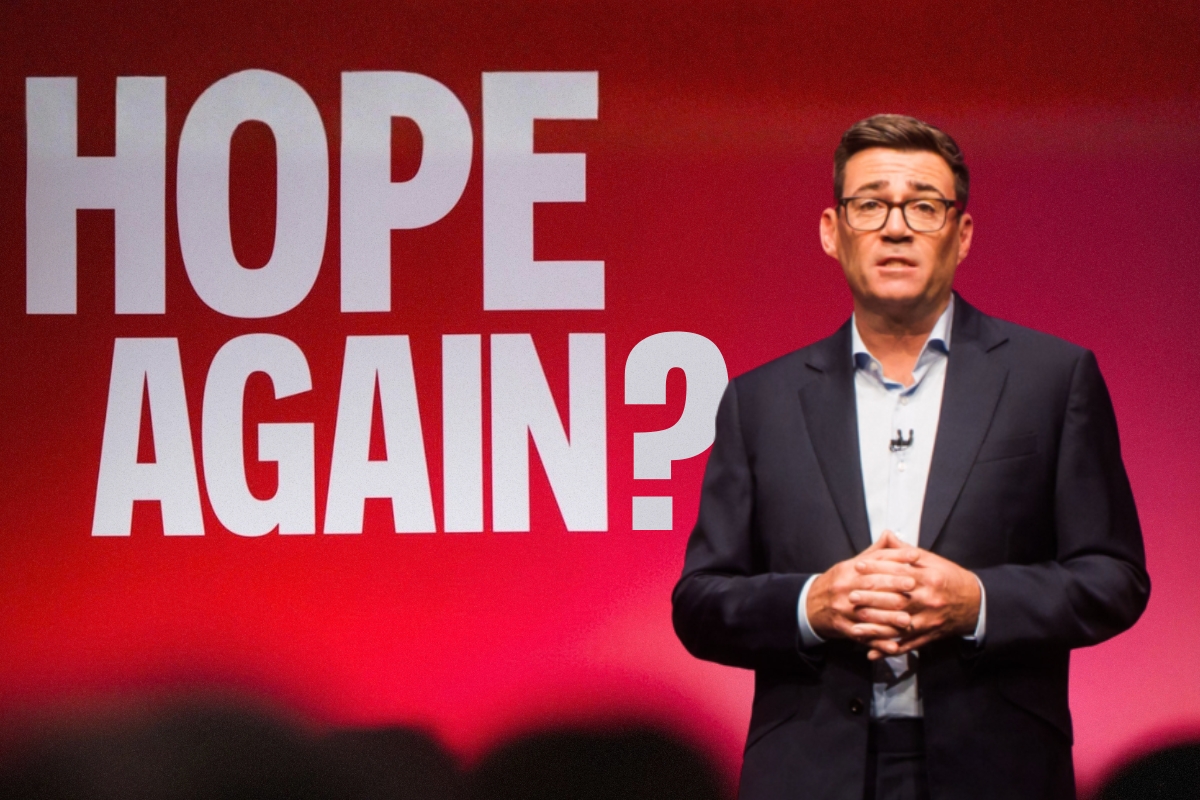
Hovering in the low-to-mid thirties for the last couple of months. That’s not a description of Britain’s persistently sweltering temperatures, but a summary of the favourability ratings of the country’s latest prime minister, Andy Burnham.
And like this summer’s heatwave, while these warm figures may continue for a while yet, eventually the situation will break, and the mercury – both meteorologically and politically – will plunge.
Parliament may be on holiday at the moment. But when the new Labour leader and his MPs return from their recess, they too, like ordinary workers across Britain, will be hot under the collar, sweating under the pressures they face on all fronts.
So Burnham should lap up the sunshine while it lasts. Because dark clouds are brewing on the horizon. And his government – like those of his six ill-fated predecessors in the last decade – may not survive the coming storms.
Despised and untrusted
According to the latest YouGov polls, around 38 percent of UK voters say they have a positive view of Number 10’s latest occupant. This is almost matched, however, by the numbers – 35 percent – who say they have a negative opinion of Burnham, giving him a net-favourability rating of just +3.
Thankfully for the PM, however, his counterparts across the political aisle don’t fare much better. The equivalent figures for Kemi Badenoch, Nigel Farage, and Zack Polanski – leaders of the Tories, Reform UK, and Greens, respectively – are -11, -46, and -26.
Furthermore, whilst there has been a slight ‘Burnham bounce’ for Starmer’s successor and his party since he moved into Downing Street – with Labour recently overtaking Reform in the polls for the first time since March 2025 – Burnham’s overall popularity is only just back to where it was at the time of his Makerfield by-election victory.
The gallery of rogues that constitutes his new cabinet are held in even less regard. Prominent Labour ministers such as Wes Streeting, Shabana Mahmood, and Ed Miliband – the latest secretaries for defence, the Home Office, and the Foreign Office, respectively – are on -27, -14, and -27 in terms of their favourability scores.
Burnham and his government, meanwhile, are inheriting a sour public mood when it comes to British politics and its institutions. The most recent statistics suggest that around 62 percent of voters have little-to-no trust in Parliament, while over half lack faith in the country’s electoral system. And these numbers have been at elevated levels for some years now.
Longrunning studies indicate an erosion of public confidence in bourgeois democracy over the decades. The British Social Attitudes survey, for example, suggests that trust in the government has fallen from around 40 percent back in 1986, to just 12 percent today.
And politicians regularly come near the bottom of the league when it comes to how trusted different professions are – well behind such reputable occupations as bankers, landlords, and estate agents, even.
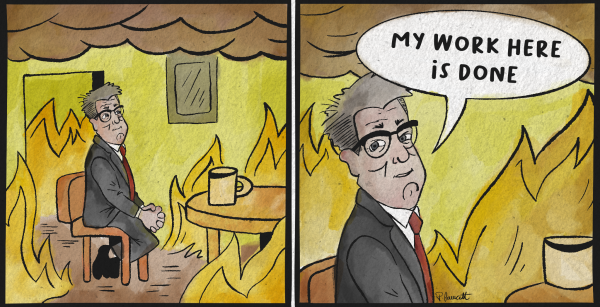
In short: everyone in Westminster is widely despised and untrusted. And rightly so – they are all a bunch of liars, warmongers, and racists!
No wonder they are taken less seriously than a joke election candidate with a bin on his head.
More of the same
Labour MPs have heralded the arrival of Andy Burnham, the Messiah of Manchester, in Westminster. Perhaps a changing of the guard is all that is needed for them to keep their jobs, they mutter amongst themselves. At the very least, it can’t get much worse than life under their last leader…or can it?
Burnham has certainly tickled a few bellies in his first week-or-so in office, and helped to change the mood music within the Parliamentary Labour Party.
In his opening speech as prime minister, Burnham pledged to “re-industrialise Britain”, bring about the “biggest change” in British politics “in the last forty years”, and “give people some breathing space” in regards to living costs.
Beyond these basic platitudes and hollow promises, meanwhile, the new PM has outlined a number of sweet-sounding policies. Ending rough sleeping; cutting electricity bills; capping bus fares at £2; reducing tax rates on pubs and clubs: what’s not to like?!
But as the old saying goes: judge a man not by his words, but by the company he keeps. And on this front, Burnham’s supposed ‘radicalism’ is shown to be nothing of the sort.
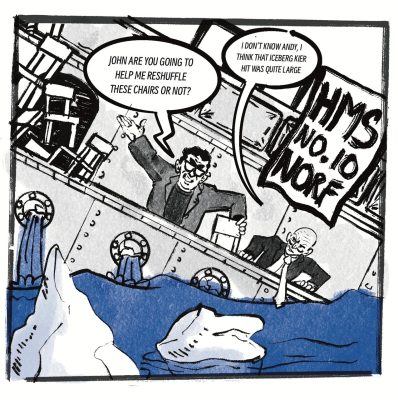
Burnham’s flurry of frontbench appointments represents little more than a game of musical chairs, with ministers from Starmer’s cabinet simply swapping positions, if that.
Right-winger Shabana Mahmood remains at the head of the Home Office – an implicit endorsement of her racist immigration policies on Burnham’s part.
Similarly, having accelerated the privatisation of Britain’s NHS, arch-Blairite Wes Streeting has now been given responsibility for boosting the profits of the major arms monopolies, in his new role as secretary of ‘defence’.
Burnham’s choice for chancellor, meanwhile, is none other than John Healey: the man who quit his last job as defence minister, under Starmer, because the previous hawkish premier was not spending enough on bombs and bloodshed.
If there were any doubts, this tells you all that you need to know about what to expect from Burnham’s ‘Labour’ government: more attacks on migrants; more militarism; and more cuts to healthcare and welfare to pay for warfare. That is, more of the same.
Burn their system down!
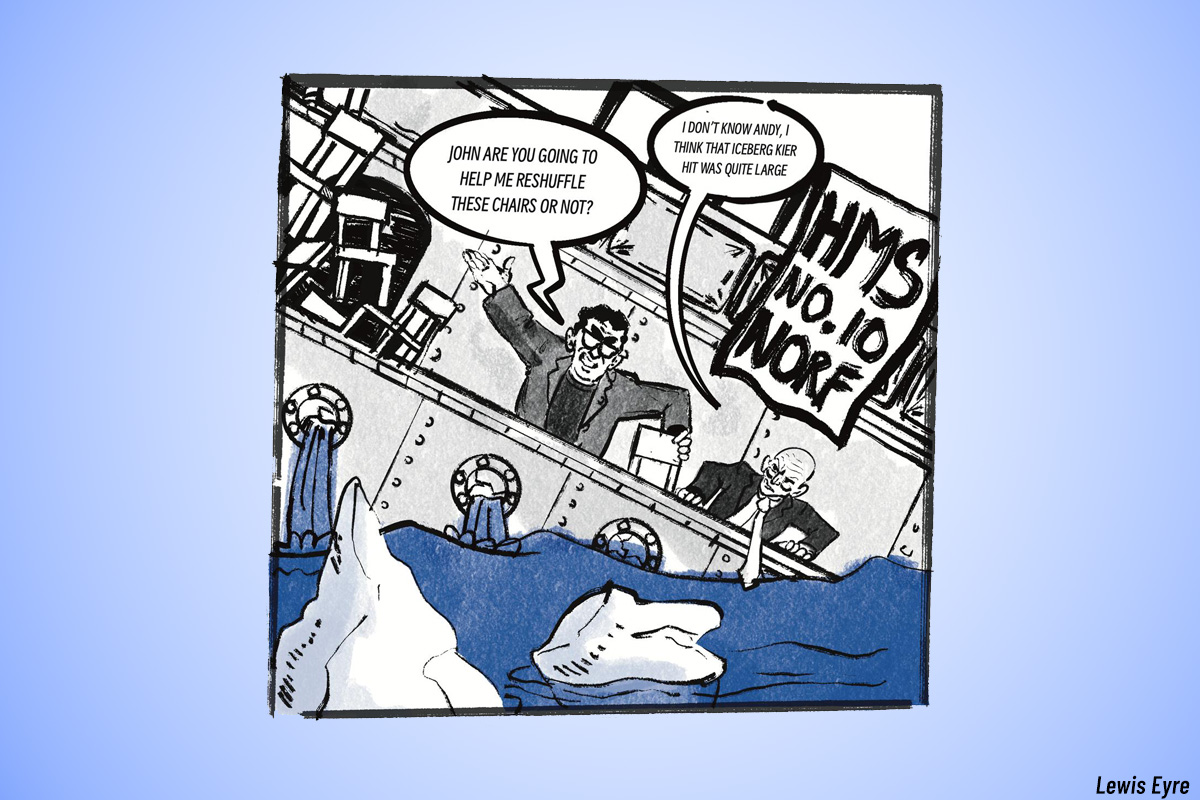
At the same time, Burnham’s ministerial selections resemble a man rearranging the deckchairs on the Titanic.
With the bond markets and military chiefs bearing down on the government, industries closing, and public services crumbling, British capitalism is heading towards a gigantic iceberg. And changing the captain at the helm will make no difference.
Scandalously, the leaders of the ‘left’ and the trade unions are doing nothing to prepare for this.
Instead of organising and mobilising workers around bold, class-based demands, they are busy sowing illusions in Burnham; fostering false hopes in this wolf in sheep’s clothing, as the supposed ‘lesser evil’ compared to Farage and Reform.
Workers and youth must have no trust in Burnham and his slimy, slippery team of ministers. These proven careerists will not hesitate when it comes to making the working class pay for capitalism’s insoluble crises.
There may be a new face in Number 10. But the same rigged, rotten system remains – and it needs to be burnt to the ground, through socialist revolution.
Meet your ‘new’ government…
John Healey: A sworn defender of British imperialism
A familiar face is taking up the post of Chancellor under Andy Burnham: that of John Healey.
Formerly Starmer’s defence secretary, in June he resigned in protest when the government was hopelessly unable to raise enough funds to invest in Britain’s dilapidated armed forces. But there’s more to him than that.
Whether it’s supporting the invasion of Iraq; attempting to oust former left-wing leader Jeremy Corbyn from Labour; advocating a beefed-up NATO to repel the ‘threat’ from Russia; his unending support for the imperialist war in Ukraine; or his belief that the UK’s relationship with Israel is “unshakable” – he’s consistently proven himself to be a steadfast defender of British imperialism.
His appointment as chancellor reveals Burnham’s intent to do as the capitalists wish: to draw the necessary amount of blood from the working class – in the name of ‘fiscal discipline’.
Look at this insane piece by the so-called ‘Communist’ Party. It says “A Burnham leadership may open up space in Labour for anti-war voices again”. That was written yesterday. Today Burnham has appointed John Healy as Chancellor – a man who is demanding MORE money for war! https://t.co/ZNpAJqkmXc
— Ben Gliniecki (@BenGliniecki) July 20, 2026
A Goldman Sachs executive, who has been advising Burnham, urged him to “fund more defence spending by looking for cuts to welfare and the pensions bill”. Healey was the man for the job, and he’s got right to work, with talk about keeping a “tight grip on finances”. Unsurprisingly, the bond markets – that is private investors – have welcomed this appointment!
But Healey is taking up this position at a time when the problems he’ll face are becoming increasingly intractable. The working class is in no mood for more cuts. Crushed by these competing pressures, Healey’s chancellorship will be even more crisis-ridden than the last.
Maeve Hanley, Sheffield
James Purnell: A well-connected parasite
Burnham has finally shown what he means by “For Us” – his election campaign slogan – after hiring James Purnell as his chief of staff: “For Us… the elites and parasites”.
Purnell has been chief executive of Flint Global since 2024: an opaque, Jersey-registered lobbying firm owned by private equity group Cinven, which has Barclays listed as a key investor.
Flint Global counts shining institutions such as BP, Amazon, Jaguar Land Rover, Thames Water, and Uber among its clients.
Andy Burnham thinks dancing and joking around means we will forget the genocide.
Andy Burnham thinks having a northern accent absolves his governments attacks against the working class.
If you work for the capitalist system, you have chosen the side of the oppressor. pic.twitter.com/DHL9lNQwRF
— Fiona Lali (@fiona_lali) July 17, 2026
Purnell’s position there followed his tenure as director of strategy for the supposedly ‘neutral’ BBC, another pillar of the British establishment.
He reportedly told his clients of his hope that the government would concentrate on finding “lower priority spend to cut back on”, and on avoiding tax rises.
Flint Global’s employees also happen to include Starmer’s former chief of staff, as well as his former economic advisor. It’s a small world!
In this appointment, we get a glimpse of the British establishment unmasked: a clique of rotten financiers and other parasitic elites, who incestuously float around the upper echelons of society – pulling the strings while we all suffer.
Myles Gordon, Fulham
Shabana Mahmood: A reactionary culture warrior
Shabana Mahmood, MP for Ladywood Birmingham since 2010, has been reinstated as home secretary in Burnham’s cabinet. Long lauded as one of the first female Muslim MPs, let us examine who this ‘feminist trailblazer’ truly represents.
Mahmood first rose through the Labour Party ranks under Ed Miliband, holding various positions in the Labour shadow cabinet. But after the election of Corbyn to the party leadership, Mahmood stepped down from the frontbench, refusing to serve because of Corbyn’s left-wing politics.
Right from the start of her political career, this ‘rising star’ sat firmly in the camp of the socially-conservative, right-wing Blue Labour faction.
Upon Starmer’s election, Mahmood was soon appointed home secretary – a position which she now retains under Burnham.
What has Mahmood achieved since taking on this role? A vicious onslaught against immigrants and asylum seekers, and a ramping up of police powers.
In March 2026, Mahmood announced that successful asylum seekers would only be offered temporary protection, instead of permanent protection. Refugees will need to re-fight their case for staying in the UK every 30 months, worsening the precarious situation of some of the most vulnerable in society.
Earlier this year, Mahmood also temporarily halted all visas to asylum seekers from Afghanistan, Cameroon, Myanmar, and Sudan – an unprecedented toughening of the UK’s immigration system, all affecting countries that British imperialism has meddled and continues to meddle with. These extremely reactionary policies go farther than those implemented by the Tories.
View this post on Instagram
These policies are part-and-parcel of Labour’s key divisive culture war agenda, aimed at scapegoating immigrants for Labour’s austerity and failures, and distracting blame away from the system.
Burnham – who has already spoken in favour of Mahmood’s policies, and has even expressed agreement with Nigel Farage on immigration – clearly intent on continuing this agenda. We say: fight their culture war with class war!
Tara Desai, Birmingham
Burnham’s backhanded energy ‘concession’
Said Moredi, Milton Keynes
In one of his first moves as prime minister, Burnham announced he was cutting VAT from 5 to 0 percent on domestic electricity bills. In practice, this will amount to a saving of around £45 a year for the average household – roughly £3.75 a month.
This measly measure is set to be funded by scrapping Starmer’s £1.8 billion ‘Digital ID’ scheme – which was never costed in the first place. So already, this opening move has sent Burnham’s cabinet squabbling over where the money is going to come from. So far, so good!
Meanwhile, Ofgem estimates that the cost of servicing bad debt alone will add around £52 a year to the average household energy bill. This is the reality of the gains workers can expect from Burnham’s supposed ‘flagship’ concession.
These meagre concessions come after the working class has already endured almost two decades of austerity, attacks on the NHS, soaring prices, and a relentless decline in living standards.
Today, nearly half of consumers say they struggle to pay their energy bills, with household energy debt sitting at almost £4.8 billion. Yet the energy giants will continue to make enormous profits.
In 2024, Centrica, the owner of British Gas, reported £1.6 billion in adjusted operating profits, while SSE reported £2.4 billion. Since the start of this year alone, Britain’s energy companies have collectively made £26.2 billion in profits.
This state of affairs is no accident, but a feature of how Britain’s warped energy market operates.
Under the UK’s current pricing system, wholesale electricity prices are usually set by the most expensive power station at any given moment – often a gas-fired power station. This is called ‘marginal pricing’.
As a result, even when their energy is being produced through cheaper forms of generation – such as wind, solar and nuclear – consumers will be paying the same market price.
Now, the continuation of Trump’s war on Iran and the return of disruption around the Strait of Hormuz are set to push global gas prices even higher.
Against this international backdrop – and the promise of rising prices coming not just for energy but also food as a result of the Iran War – Burnham’s VAT cut really is just a drop in the ocean.
As long as the energy industry remains in private hands, every crisis – no matter what the cause, be it imperialist wars or the climate crisis – will be paid for by the working class.