A number of high-profile by-elections have already been seen this year. But the upcoming vote in Holborn & St Pancras on 8 October – triggered by Keir Starmer’s resignation as MP for the constituency – may well top the bill in terms of political significance.
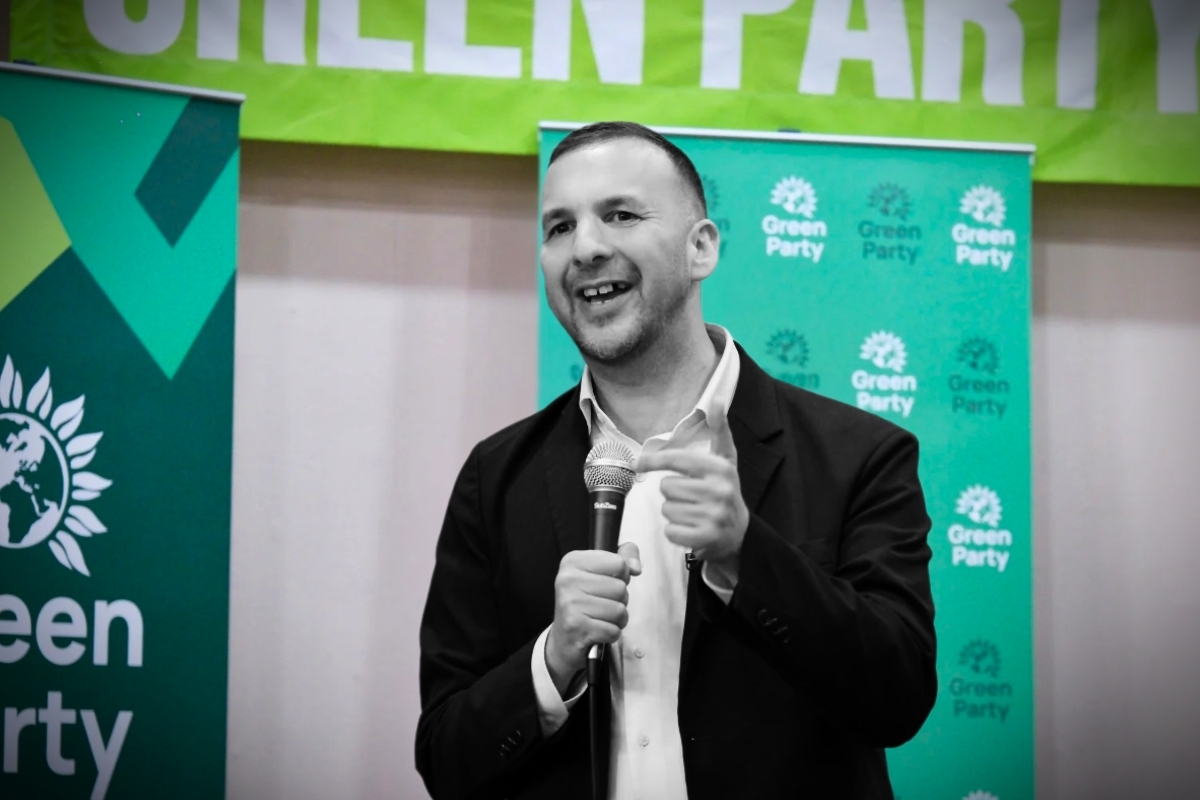
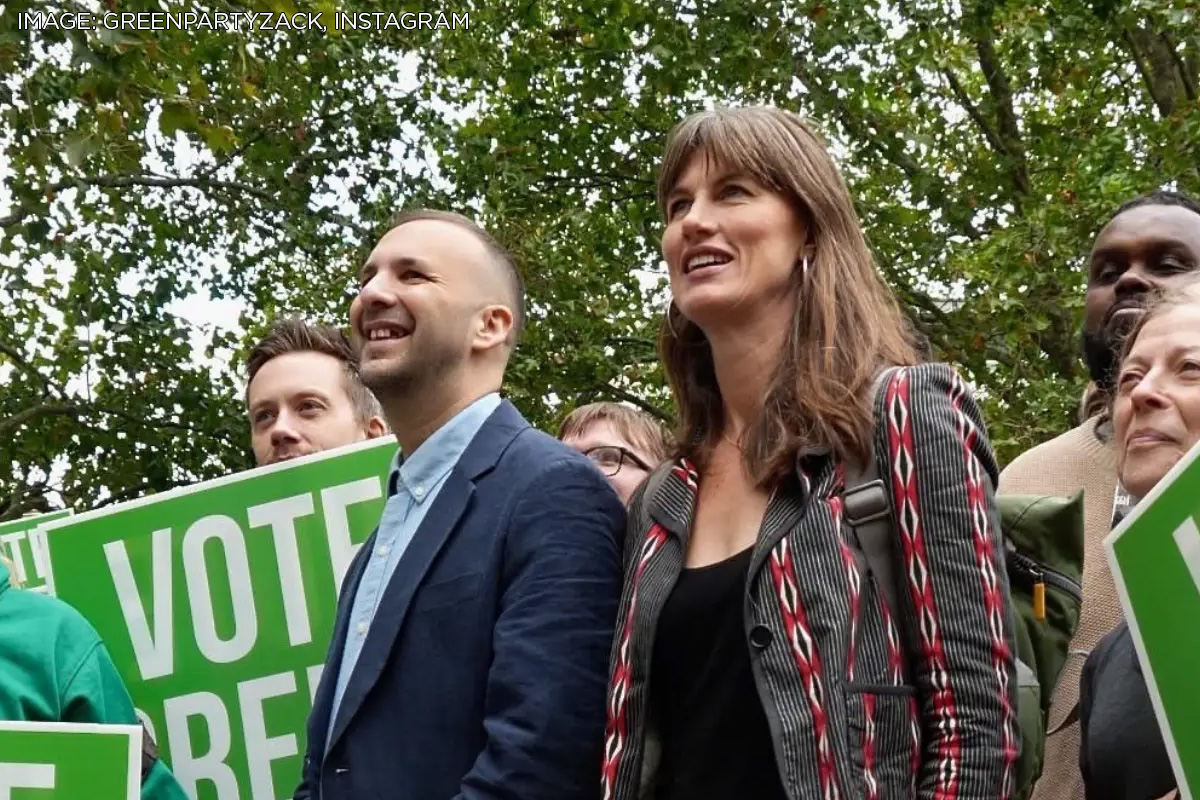
Green leader Zack Polanski has thrown his hat into the ring, standing as his party’s candidate in this parliamentary contest.
Polanski hopes that success in this by-election can help revive the Greens’ electoral fortunes.
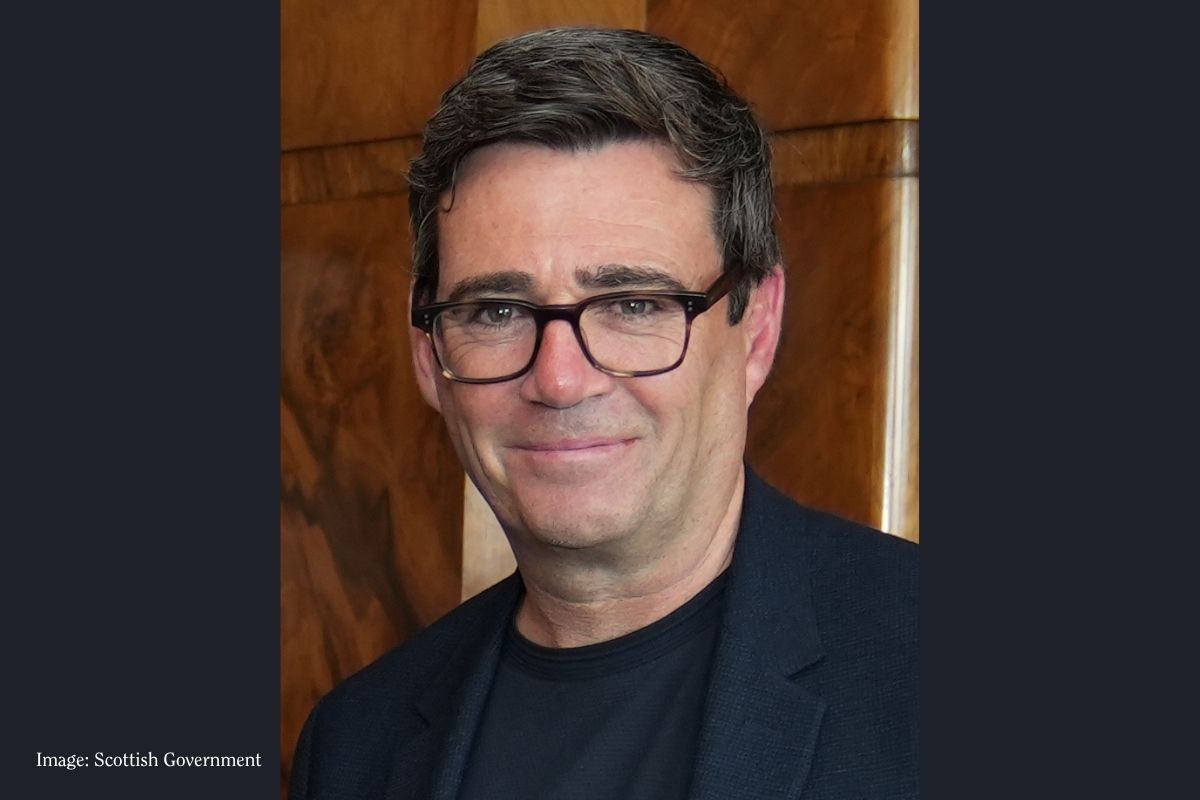
A year ago, in the wake of Polanski’s election as leader, support for the Greens surged. But more recently, the party’s polling figures have suffered – in particular since Andy Burnham became prime minister in July.
The Holborn & St Pancras by-election could therefore be a watershed moment in British politics. Can Polanski win in Starmer’s former constituency? And can he and the Greens turn things around?
Political vacuum
Britain’s two-party electoral system has dominated the country’s political landscape for over a century.
Since the 2008 global capitalist crisis, however, successive Labour and Tory governments have taken it in turns carrying out hated policies in the interests of bankers and billionaires.
This – coming on top of decades of decline and years of Westminster corruption, scandal, and sleaze – has led to a collapse in the support for these formerly powerful parties.
Today, this once-hegemonic political duopoly is at record-low levels in the polls. There is an enormous anger towards the entire establishment, including the traditional parties and all capitalist politicians.
The result of this process has been an enormous political vacuum – particularly from 2020 onwards, with the demise of the Corbyn movement.
Nigel Farage’s Reform UK was able to take advantage of this from the right, siphoning support away from the Tories. But the gaping hole on the left of British politics remained largely unfilled, and only grew larger as Starmer’s government became more and more despised.
The potential for an alternative to the left of Labour was apparent when Zarah Sultana and Jeremy Corbyn announced the formation of Your Party in the summer of 2025, with over 800,000 signing up in support of this new political outfit within a matter of weeks.
Around the same time, a struggle began to unfold within the Green Party, culminating in Zack Polanski’s leadership victory.
Polanski ran to be Green leader with the stated aim of transforming the party from a single-issue, middle-class, environmentalist pressure group into a bold, left-wing replacement for Starmer’s Labour.
And as Your Party tore itself apart through petty infighting and squabbling, Polanski and the Greens appeared to be a breath of fresh air on the left.
View this post on Instagram
Rise and fall
Bold rhetoric around Palestine and demands to ‘abolish landlords’ clearly struck a chord with young people, looking for a political expression for their discontent towards the capitalist system and its upholders.
As a result, tens of thousands flocked to join the Greens. Between March and October 2025, the party’s membership more than doubled, from around 60,000 to 125,000. It then nearly doubled again, to a high point of 230,000 in the spring of this year.
This trajectory was matched in the polls. In August 2025, before Polanski became leader, support for the Greens stood at around 10 percent. This trended upwards to a high of about 21 percent at the beginning of March. According to some surveys around this time, the Greens were even the first choice amongst all voters under 65.
The Greens’ historic victory in the Gorton & Denton by-election was a milestone for the party, in this respect – and a political earthquake in British politics.
Labour had held this northern constituency for almost 100 years. The Greens’ win therefore demonstrated that the party was a viable electoral option to the left of Labour: capable of defeating Farage’s Reform in their own right, and able to mobilise voters in areas outside of their traditional bases in the south of England and in university towns.
Green candidate Hannah Spencer made it clear in her victory speech what the intentions of the party’s leaders were at this point:
“I am so proud that we fought a positive campaign against the Reform Party that dances to the tune of their billionaire donors who don’t want to pay their fair share of tax, and the Labour Party who have also stooped so low. We want an alternative to the stale, broken, old two-party politics. That is the Green Party.
“As our wonderful leader Zack Polanski is fond of saying: we’re not here to be disappointed in Labour, we’re here to replace them. Well, I was here to replace Labour in Gorton & Denton, and that’s job done. Tomorrow the real work begins.” (Our emphasis)
🚨 WATCH: Green MP Hannah Spencer delivers her victory speech in Gorton and Denton
“To my customers: I am sorry, but I think I might have to cancel the work that you had booked in. Because I’m heading for Parliament” pic.twitter.com/jUGxpUAMbx
— Politics UK (@PolitlcsUK) February 27, 2026
Around the same time, prominent figures within the party began talking in more class terms. Polanski stated that the Greens are “the party of the workers”, and made overtures towards the trade unions. In short, there was a conscious attempt to pose the Greens as a clear working-class alternative to Labour.
The party’s peak was perhaps the end of March, when the Together Alliance organised a huge half-a-million-strong demonstration in London. This mass mobilisation was effectively a giant Green Party rally, with Polanski and Spencer dancing on stage in front of thousands upon thousands of enthusiastic supporters.
The Greens’ advance looked unstoppable. Not long after, in May, meanwhile, the party scored a number of important and impressive victories in the local elections.
Since then, however, the Greens have slumped in the polls. Surveys now put the party’s support amongst voters at only 12 percent.
By contrast, with a fresh face at the helm, Labour has experienced a slight electoral recovery. Burnham’s party is registering its highest level of voter support in over a year, with some pollsters now putting Labour level with Reform.
Both aspects of this process were reflected in the Greens’ dismal showing in the Manchester mayoral election in July, where Polanski’s party came third behind Labour and Reform, on 12 percent of the vote.
So what happened? Why has the Green surge stalled and gone into such a dramatic reverse?
Political weakness
Sneering journalists in the capitalist press have attributed the Greens’ drop in the polls to the ‘Burnham bounce’, alongside Polanski’s supposed ‘PR gaffes’. But this diagnosis is very superficial.
In truth, the Greens’ fall is entirely of their own making – and not due to secondary errors regarding publicity, but because of their political weaknesses.
The Greens’ win in Gorton & Denton gave the party a historic opportunity to go on the offensive and take chunks out of Labour. It was precisely this threat from the left that accelerated the downfall of Starmer, as Labour backbenchers – terrified of losing their seats to the Greens – turned on their hapless leader.
But Polanski and the Greens failed to seize this opportunity. Instead, they took their foot off the pedal.
Under pressure from the establishment, including an old-guard faction of ‘Tories on bicycles’ within the Green Party, Polanski and co. toned down their language and demands.
More radical rhetoric around Palestine and imperialism, amongst other things, was largely jettisoned. At the party’s spring conference, for example, a motion entitled ‘Zionism is racism’ was blocked from being debated, angering pro-Palestine activists.
Smelling blood, the establishment launched a hysterical smear campaign against the Greens following the Golders Green stabbing in April, with utterly ridiculous claims of antisemitism.
So you’re saying it had nothing to do with Iran, the Palestine movement, or the Green Party, but likely did have something to do with improper care from a failing NHS? Shocker
— Jack Tye Wilson ☭ (@bolsh3vik) April 30, 2026
This was exactly the same method used to undermine Corbyn. But rather than learning from the mistakes of these previous left leaders, and coming out swinging, Polanski responded softly and apologetically. And this only invited more aggression.
Lesser-evilism
Most importantly, the Green leaders have shot themselves in the foot by capitulating to ‘lesser-evilism’ pressures and offering tacit support to Burnham, a wolf in sheep’s clothing.
The popularity of – and enthusiasm for – the Greens was at its highest when they put clear political water between themselves and the hated Labour Party. By contrast, the party’s support has waned in recent months as a result of their inability to clearly differentiate themselves from Burnham’s Labour.
In the Makerfield by-election, for example, the party put up a token candidate and ran a purposefully low-key campaign – effectively allowing Burnham to run unopposed, so as to avoid any accusations of splitting the vote and enabling a Reform victory.
Similarly, they later joined the establishment parties’ boycott of the Clacton by-election, leaving joke candidate Count Binface as the only high-profile political opposition to Farage.
One Green Party strategist recognised the problem in a very indicative interview with the Financial Times. “An area of risk for us,” they noted, “is that Labour [under Burnham] appears to be borrowing much of our language, though not our actual policies.”
“In the best-case scenario,” they continue, outlining the thinking of the party’s leaders, “the Greens would form a coalition government or some form of power-sharing agreement with Labour.”
This is hardly an inspiring prospect for radicalised workers and youth. Instead of attacking the party of government – which has assisted a genocide, whipped up vile racism, and carried out vicious austerity cuts – leading Greens are looking to tie themselves to these war criminals, racists, and crooks!
No wonder a large layer of potential Green supporters has dropped Polanski’s party. Historically, when workers are presented with two parties promoting similar programmes – or giving off the same ‘vibe’ – they will choose the bigger, more established option. And at the present moment, that means Burnham’s Labour.
Polanski and the Greens therefore only have themselves to blame for their electoral misfortunes. They, along with the rest of the left leaders, are the ones sowing the most illusions in Burnham, as a supposed ‘progressive’ alternative; as the so-called ‘lesser evil’ compared to Farage.
This lack of political independence on the part of the Greens goes a long way to explaining the ‘Burnham bounce’ – and, in turn, the Green Party’s drop in support.
Splits and struggles
Polanski is now standing in Starmer’s former seat, at a time when Labour is benefitting from this ‘Burnham bounce’.
If the Green leader wants to win, he will need to come out fighting, on a much bolder programme: one that attacks the billionaires, landlords, and warmongers – and which thereby puts a clear political distance between the Greens and Burnham’s Labour.
Such a programme could electrify workers and youth, in this constituency and nationally, and turn things around for the Greens.
This is the conclusion that many in the Green Party are themselves drawing.
Ahead of the Greens’ annual conference in early October, members have submitted a motion calling on the party to campaign more explicitly around demands for a wealth tax, and on the basis of sharper criticisms of Labour regarding questions such as the climate and Gaza.
This resolution warns that “unless the key differences in our national policies and principles to those of Labour are also frequently referenced, conference believes that we are likely to see a period of stagnation for the Green vote in local elections”.
“The stress on keeping all campaigning material solely focused on local issues,” the motion’s proponents continue, “is now holding us back.”
They conclude: “If we are to flip Labour voters likely to vote Green in local elections, campaigning material must refer to some key national issues in addition to local issues, stressing that there will be no real change under Burnham.”
This highlights the splits and struggles taking place within the Green Party.
It is clear that more radical activists in the party – those who have joined since Polanski was elected – are coming into direct conflict with a more conservative old guard within the Greens.
The upcoming conference could well be a battleground between these two trends within the Green Party, further widening these fissures and fractures.
The build-up to the Holborn & St Pancras by-election also offered a glimpse of these tensions. Camden councillor Hamza Chowdhury ran against Polanski to be the Greens’ candidate in the contest, on the grounds that he is from a ‘global majority’ background, and that he’s from the local area – a sign that not everyone in the party is happy with the current leadership.
“I’m not here to fight my leader. I’m here to represent my community.”
Camden born and raised, Green councillor Hamza Chowdhury throws his hat into the ring for Holborn and St Pancras. Nominated by fellow Green councillors and rooted in grassroots values, he makes the case for… pic.twitter.com/sZlNoEyhKO— Canary (@TheCanaryUK) September 8, 2026
What programme?
The burning issues for workers and youth today are the cost of living, housing, unemployment, Gaza, climate change, AI, and the struggle against racism and Reform.
These are serious questions that require serious solutions – all linked together as products of the same capitalist system.
Plenty of wealth exists in Britain to provide well-paid jobs, build affordable, good-quality housing, and rejuvenate the NHS and other public services. But it is hoarded by the ultra-rich.
In turn, for these capitalists, it is more profitable to fund wars abroad, speculate on the stock market and on luxury properties, or pour their money into data centres, than to fund the things that society actually needs, or to stop the planet burning.
To distract from their crimes, meanwhile, the ruling class whips up a poisonous, divisive culture war, pitting native or white workers against migrants and minorities.
View this post on Instagram
All the while, those in charge tell workers and youth to vote for them as the ‘lesser evil’, in order to keep the ‘greater evil’ out. In other words, the arsonists tell us to call on them to put out the fire that they have started.
What is needed is a clear revolutionary programme that tackles these problems at their root. This means expropriating the billionaires, big banks, and major monopolies. It means actually ‘abolishing landlords’. And it means clearing out all the corrupt gangsters in Parliament, and putting the working class in control.
On this basis, we could use society’s wealth to raise living standards for all, and produce for the needs of the many, not the profits of a few.
The fight for such a vision would have a dramatic impact on the consciousness of young people, alongside large sections of disillusioned workers.
With such a programme, the working class could be mobilised, organised, and united to smash the far right, and to block everything for Palestine, as was seen in Italy in October 2025. And a political movement could be forged that could genuinely challenge both Labour and Reform at the next election.
View this post on Instagram
Pressure group
Polanski, however, is no revolutionary. Rather, he is a left reformist, who bases himself not on a clear class perspective or programme, but on ‘vibes’, trendy soundbites and platitudes, and woolly, moralistic politics.
How far left Polanski goes will therefore not be decided by his own personal qualities or political beliefs, but by a struggle of living forces.
On the one hand, there will be pressure on the Green leaders to adopt more radical-sounding rhetoric and demands, as the crisis of capitalism deepens, and workers and youth seek an alternative to Burnham’s Labour.
Burnham’s government – like Starmer’s before him – will quickly become hated and crisis-ridden, as it carries out the cuts that the bankers and bond holders demand. This will provoke massive movements of the working class and of young people, which could transform the political situation in Britain very rapidly.
At the same time, under pressure from below, Polanski could be pushed further to the left; forced to wage an open struggle against the older, conservative layers within the Green Party.
We saw how far Zarah Sultana was willing to go, for example, when her political career was at stake and she needed to differentiate herself from Corbyn – coming out with bold demands to ‘nationalise everything’ and ‘abolish NATO’.
On the other hand, without a Marxist outlook to anchor him, Polanski will come under enormous pressure from the establishment – including the right wing within the Green Party – to tone down his programme, present a more ‘respectable’ image, and form unprincipled electoral pacts with Burnham’s Labour and the Lib Dems.
A recent interview with Polanski, discussing the Holborn & St Pancras by-election, gives an indication of how the Green leader himself is thinking.
Regarding doorstep discussions with voters considering whether to back Labour or the Greens, Polanski says: “It’s a very easy conversation to have with people. Even if you support Labour or you want to give Andy Burnham a chance, voting Green in this election still makes sense because it’ll make him be a better Labour prime minister.” (Our emphasis)
“We’ll make sure that we keep pushing him [Burnham] left rather than listening to Nigel Farage,” he continues. “That argument has been resonating with people.”
This is an obvious capitulation to lesser-evilism: posing the Greens as nothing more than a political pressure group; aiming to “push” Burnham’s Labour, rather than replace them and offer a real left alternative.
View this post on Instagram
This is a far cry from the bold intentions asserted by Spencer in her by-election victory speech.
Events will ultimately prove which way Polanski goes; to which class the Greens orientate themselves; whose interests the party chooses to serve: radical workers and youth, demanding militant struggle and a clear political differentiation from Labour; or the old conservative crust and agents of the establishment, demanding liberalism, lesser-evilism, and class collaboration.
Reform or revolution?
A final word of warning: Polanski and the Greens should not be written off too soon, even if they make a whole series of political errors.
The worsening objective situation for capitalism, and for all those who represent it, means that the old status quo is finished. Political polarisation and fragmentation are the new normal.
Any honeymoon for Burnham’s government will soon give way to a mood of anger and resentment. In turn, more and more ordinary people will be looking for a political outlet to the left of Labour. And for many, despite the party’s flaws, the Greens will seem like the most viable option – unless and until a better alternative presents itself.
This demonstrates the vital importance of building a real revolutionary party.
The reformist leaders of the left may mean well and have good intentions. But ultimately, their attempts to solve the problems of the working class within the bounds of capitalism will end in disaster.
In this way, the left leaders and their reformist policies only pave the way for a return of the right.
Unfortunately, the reformists have no perspective of abolishing capitalism or transforming society along socialist lines. Instead, they accept the capitalist system and its laws, and hope to merely patch up and regulate capitalism.
At the end of the day, they have no faith in the ability of the working class to change society. They therefore reject revolutionary struggle, in favour of political shortcuts and alliances with the capitalist class and its agents – which always ends in betrayal and ruin.
From Jeremy Corbyn to Bernie Sanders, the left reformists have all led workers and youth down a dead end.
But history is never wasted. The lessons from these events and experiences are being absorbed by an ever-growing layer.
An enormous political vacuum still exists on the left. More people than ever – particularly amongst the youth – are open to the ideas of communism, and to calls for revolution.
View this post on Instagram
The Green Party is not a revolutionary party, nor will it ever be. Yet that is what the situation is screaming out for.
We therefore implore all those reading this to join the RCP, and help us build the revolutionary party that is so urgently needed.