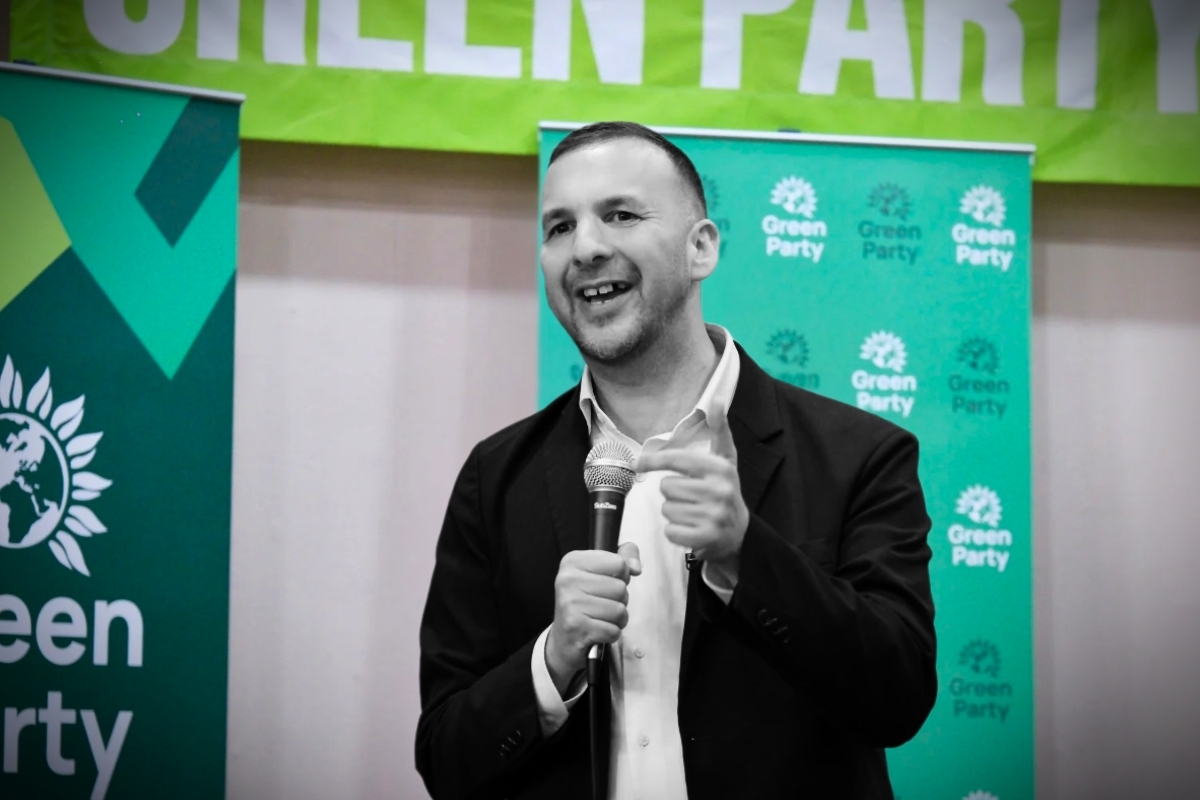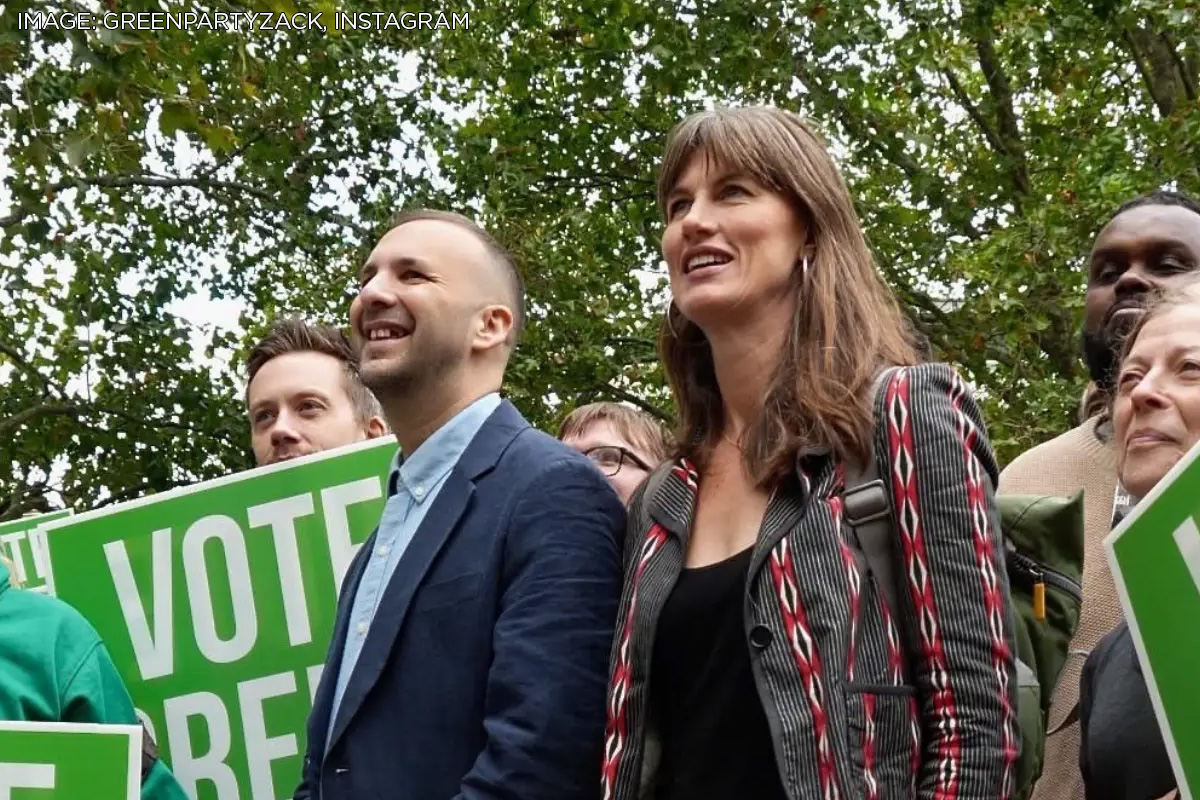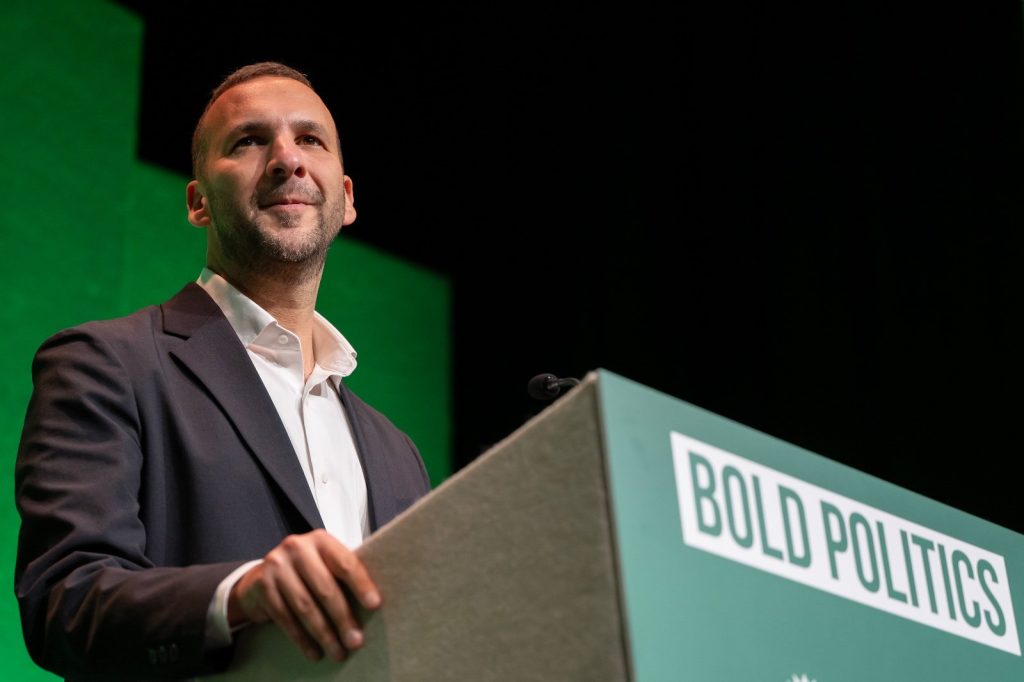
Since the election of Zack Polanski as leader last year, there has been a noticeable shift in the tone and image of the Green Party of England and Wales.
Up until very recently, the Greens were largely viewed as a fringe protest party, supported by liberal environmentalists and middle-class progressive voters – sometimes earning them the moniker ‘Tories on bikes’.
Their electoral strongholds, meanwhile, were concentrated in the South, in cities like Bristol and Brighton.
But under Polanski’s leadership, there has been a lot less focus on the environment and green policies, and a lot more emphasis on class-based policies and rhetoric, around things like ‘abolishing landlords’, rent controls, public ownership, and taxing the wealth of the super-rich.
On the basis of anti-establishment politics, the Greens have attracted the support of hundreds of thousands of new members. One survey by Lord Ashcroft put them at an all-time high of 21 percent – joint first alongside Reform and the Tories. Another poll by Ipsos this week suggests that almost half of Londoners are considering voting Green.
All of the polling data suggests that the Greens are steadily supplanting the Labour Party as the default ‘left’ party. And this will no doubt be confirmed by the coming local elections in May, where the Greens could win a swathe of London councils and mayoralties.
Polanski’s party is also making headway in northern working-class towns and cities. This was proven most of all with their recent by-election success in Gorton & Denton, in East Manchester. This is the first time that the Greens have won a seat in the North of England.
Building on this new image, the Greens are now consciously trying to present themselves as the party of the working class.
This has been reflected in party broadcasts by both Polanski and co-deputy leader Mothin Ali. In his video, Polanski rails against rising prices and bills, housing, debt, crumbling services, and the wealth of the super-rich – mentioning the environment only in passing.
Mothin Ali, meanwhile, points towards the need for united class struggle – against the “chains of hardship and debt” – to fight racism and division.
Charm offensive
Now, the Green leader has made explicit his intentions, declaring on social media that the “Green Party are the party of the workers”.
Alongside this, Polanski has met with the leaders of ten different trade unions, including those affiliated to Labour, as well as non-affiliated unions like the University and Colleges Union, and the Bakers, Food, and Allied Workers Union.
The Green Party are the party of the workers.
Lower bills. Raise wages.
And take on the cost of living crisis. pic.twitter.com/G3oAE9mnmT
— Zack Polanski (@ZackPolanski) March 30, 2026
As part of this ‘charm offensive’, Polanski has delivered speeches at a number of union conferences. He reportedly received a standing ovation at the recent National Education Union conference, with his calls to reverse academisation and end the school-funding crisis.
He has also made a public appeal for unions to reconsider their historic ties to Labour. Given that the bureaucracies of Britain’s biggest unions – such as Unite, Unison, and the GMB – are more or less intertwined with the apparatus of the Labour Party, this is unlikely to happen any time soon.
But the fact that Polanski even feels emboldened to make such overtures shows that the century-old link between Labour and the workers’ movement – which has held firm since Labour’s inception as a party – is now as shaky as it has ever been.
These moves by Polanski are all part of a conscious plan to depose Labour as the default party of the trade union movement.
“When I became Green Party leader I said I wasn’t here to be disappointed by Labour – I’m here to replace them,” stated Polanski in conversation with The Times. “And a crucial part of that is connecting with the organised labour movement.”
Up until now, the Greens have remained almost completely absent from the labour movement. In many towns and cities, Green activists were marginal or invisible in trade union life.
The International Workers’ Day – or ‘May Day’ – event in Manchester, for example, has traditionally been the fiercely-guarded preserve of the local trades council. In the past, the Green Party’s presence at such events was almost non-existent.
Now, however, the Greens are putting on their own sold-out May Day event, including speeches by Polanski, former Green leader and MP Carla Denyer, and Gorton & Denton MP Hannah Spencer, alongside a range of trade union activists.
View this post on Instagram
Political vacuum
The Greens’ new strategy is almost a mirror image of the fleeting attempts made by Nigel Farage and co. last year to present Reform UK as a pro-worker, pro-union party, in order to “park their tanks on Labour’s lawn”.
By carrying out cuts and attacks, Starmer’s Labour has rapidly eroded its support amongst its traditional, working-class social base. Similarly, by supporting genocide, war, and militarism, Labour has alienated Muslim voters and the youth.
In turn, both Reform and the Greens are eagerly stepping into the breach, attempting to fill the political vacuum left by Labour’s ongoing collapse, while also galvanising disaffected layers that did not vote at all in the 2024 general election.
This vacuum has, above all, existed on the left of British politics, since Jeremy Corbyn was replaced by Keir Starmer as Labour leader back in 2020.
Groups like ‘Enough is Enough’ and ‘Your Party’ had opportunities to fill that space. But the Greens – whatever their contradictions and shortcomings – have now occupied that abandoned terrain, and have established themselves as the most viable electoral force on the British left.
Despite their shifts towards class-based rhetoric and policies, the Greens remain a reformist party – committed to tweaking and managing capitalism, rather than replacing it.
Nevertheless, their new tone and image reflect something real in society: a growing hunger for fighting, class politics.
Workers and young people are searching for a political expression for their interests and needs. And the Greens are increasingly presenting themselves as the only mainstream party able to understand and articulate this.
Even the Greens’ optimistic slogans like “make hope normal again” – however vague and wishy-washy they might sound – do resonate with people, because they speak to a genuine desire for change, and reflect a growing sense of confidence and hopefulness on the left.
Radicalisation
Some people on the left scoff at these developments, with snooty cries that the Greens are “not a real workers’ party”. They are no doubt disappointed that this process doesn’t fit with their predefined schema for how a mass left-wing party should emerge.
But this complaint completely misses the point. The desire for radical change is finding an expression, no matter how imperfect and contradictory it is.
As communists, we shouldn’t dismiss this phenomenon in a haughty, sectarian way – nor should we uncritically cheerlead the Greens and their reformist programme.
We should recognise, on the contrary, that the layers moving towards the Greens are motivated by a desire to fight both Labour and Reform; by anger towards the entire political establishment; and often by a deep-felt class anger against capitalism and the super-rich.
The limits of the Greens’ reformist programme and strategy will be revealed in due course. Until the Greens are seriously tested, however, we can expect that they will continue to find the support of a growing layer of radicalised workers and youth.
Our job, as Marxists, is to engage with these layers – whether they are supportive of the Greens, already see their limits, or feel alienated from parliamentary politics altogether – and win them over to a revolutionary programme.
Greens Party Spring Conference leads to bust-up over Zionism
John Dobson, Leeds
Thousands of radical young activists have looked to the Green Party in recent months. Many of these no doubt placed hopes in last month’s Spring Conference as an opportunity to build upon the momentum gained from rapid membership growth. Unfortunately, however, many will have been left disappointed.
For these new Greens, their highest priority at Conference was policies in favour of fighting the genocide in Palestine, as demonstrated by the extremely popular “Zionism is Racism” motion.
The motion defines Zionism as an ethnonationalist, racist political ideology. It accuses Israel of apartheid, supports Palestinian resistance by all available means, and advocates for a single, democratic Palestinian state with the right to self-determination.
But despite record-breaking levels of support amongst the rank and file, this motion wasn’t heard, debated, or voted upon.
It fell prey instead to an onslaught of filibustering no-confidence motions raised by bad-faith opponents. As the party’s rules state that any such challenge must be debated, the motion was effectively blocked.
Before the Conference, the motion also received a tepid reception from party leader Zack Polanski. He sat on the fence, claiming his vote would “depend on the definition” of Zionism – despite presumably having read the motion in its entirety, including its proposed definition of Zionism, weeks in advance.
View this post on Instagram
Nationalisation
Another priority issue for the mass of new members is tackling the cost-of-living crisis. Paradoxically, this was expressed at the conference through a motion against nationalising Britain’s five largest energy companies.
In place of their 2024 election pledge to bring the whole energy system under public control – from generation to supply – the vague, abstractly pro-market “Energy Ownership” motion limits the scope of nationalisation to the transmission and distribution infrastructure only. Supposedly, this will work out cheaper than controlling the whole lot!
This ‘radical pragmatism’ makes more sense considering that nationalisation only made it into the Greens’ manifesto quite recently, following the 2021 energy crisis – when it was revealed that a majority of British people were in favour of nationalisation.
But support for public ownership has grown substantially in the years since, and doubtless even more so amongst the Green’s newest members and supporters.
These energetic new layers aren’t likely to remain satisfied with ‘practical’ compromises for long – especially when this practicality stands in contrast to Polanski’s big talk about rampant inequality and billionaire greed.
Old guard or new?
Ultimately, the Greens’ online conference was attended by fewer than 1,000 of its 215,000 members.
But by pandering to the old guard of disaffected liberals with clever-sounding energy strategies – and by failing to stand firmly on the side of the Palestinian struggle – the Green Party risks alienating the radical young people who are desperately searching for a means to fight for real change.
Without a clear working-class basis to their policies, the Greens will struggle with the mounting pressures exerted by a mass political movement.
The new, more radical layers will continue to challenge the middle-class, liberal old guard, and strive beyond their ‘pragmatic’ policies and outlook.
Green tsunami set to hit London this May
Elora Parocki, Wood Green
After years of cuts to services, rising rents, and declining living standards, growing numbers of Londoners are turning their backs on Starmer’s Labour.
Labour has long relied on London as a stronghold, with Mayor Sadiq Khan occupying City Hall for a decade now. One recent Ipsos survey, however, suggests that half of voters in the capital are considering voting for the Greens in the 7 May local elections. This has left Labour HQ in meltdown.
Visiting polling stations this May, the sentiment amongst many Londoners will be: “I can’t wait to give Labour a good kick in the teeth.”
London’s upcoming council elections are therefore set to be another act in Labour’s inglorious decline, with the Greens growing as an insurgent threat to the party’s left.
Yesterday, Hannah Spencer came to Lambeth and we flooded the streets to prove her right: people-powered movements like ours can take on the billionaires, the far right, the political establishment – and win! pic.twitter.com/TNLdfZxYzE
— Lambeth Green Party (@Lambethgp) April 22, 2026
Many prospective Green councillors are positioning themselves against the status quo: advancing policies aimed at organising workplaces and tackling the cost-of-living crisis.
Their emphasis on international issues, meanwhile, like the genocide in Gaza, is tapping into the well of anger felt by workers and youth in London, who have been repressed for peacefully protesting.
The Greens are predicted to make significant inroads into traditional Labour areas: Hackney, Lewisham, Southwark, Newham, Islington, Haringey, and more.
Any Green breakthrough at the ballot box will immediately run up against the limits of capitalism, however.
Councils are operating under severe financial constraints, shaped by years of underfunding and hollowing out of basic services. Without confronting these budgetary strains, even well-intentioned local representatives will be reduced to managing decline.
This is the question facing any new Green councillors. If they are serious about refusing austerity and transforming ordinary Londoners’ lives, they will inevitably come into conflict with central government, slum landlords, and private profiteers.
The only way forward is to mobilise working-class communities, with the support of the entire trade union movement, for a militant mass campaign against cuts and privatisation – in pursuit of a clear socialist programme that makes the billionaires and bankers pay.