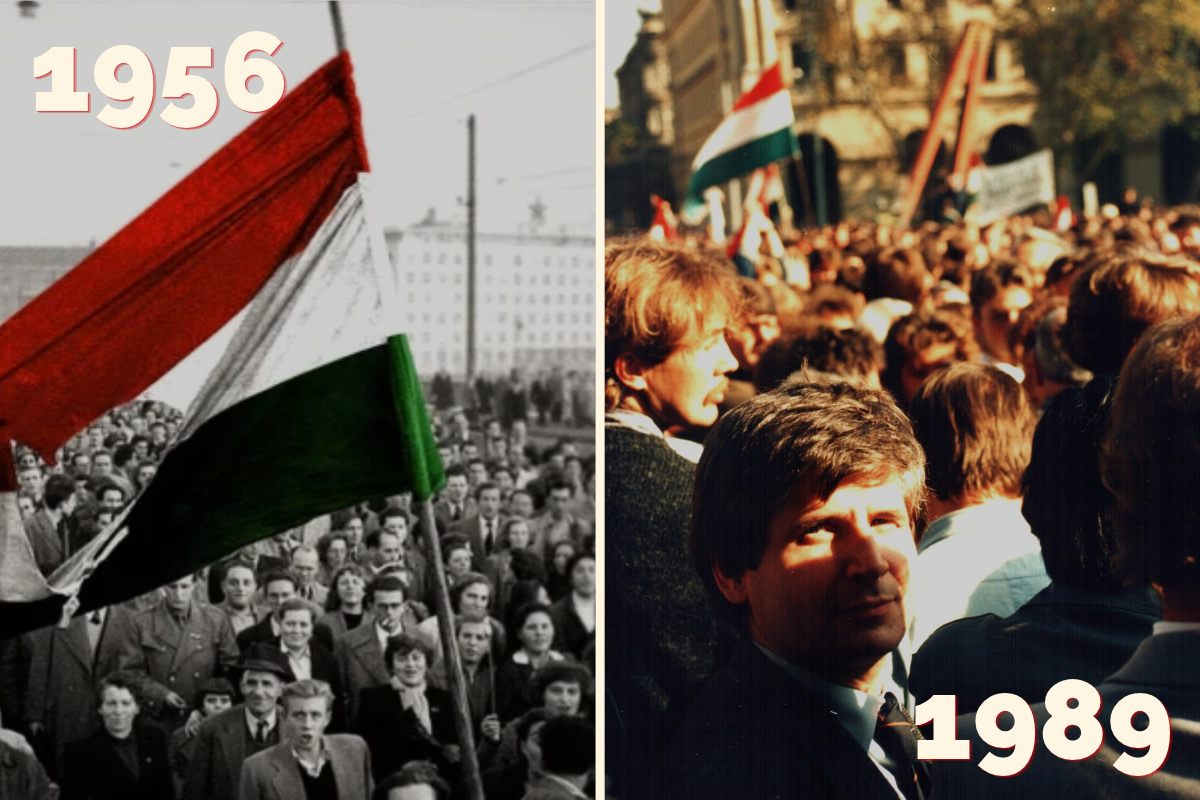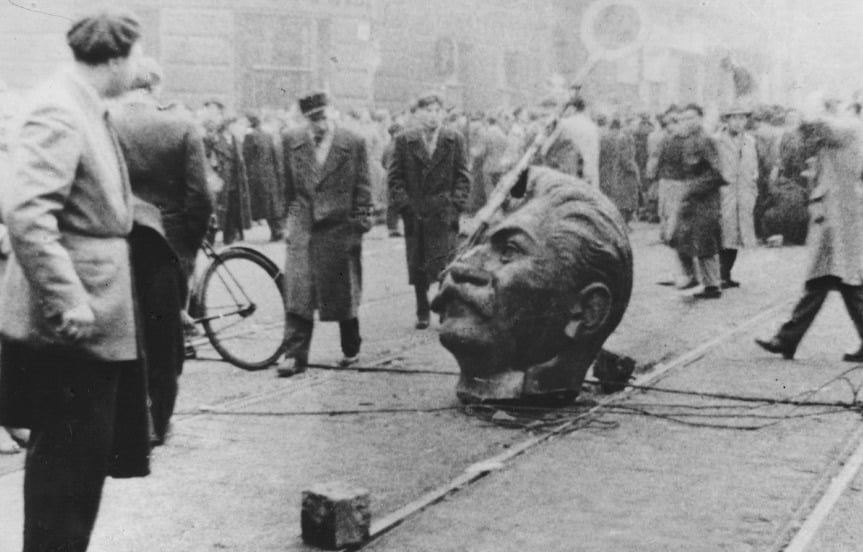

This article is the tenth instalment of our 12-part series ‘The Hungarian Revolution: 70 years on’.
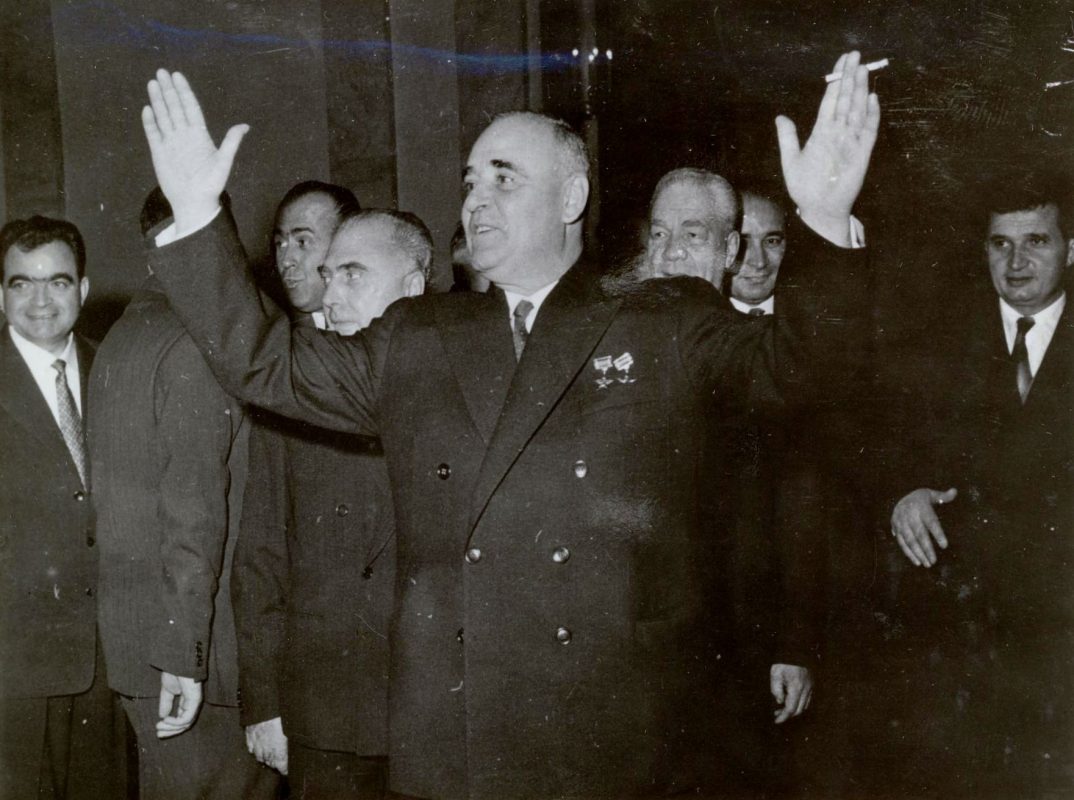
When Hungarian students marched to Bem Square in Budapest on 23 October 1956, few could have imagined how far the shockwaves would spread. The uprising helped shape the fate of neighbouring Romania, ruled by one of the Eastern Bloc’s most rigid Stalinists, Gheorghe Gheorghiu-Dej.
Romanian ‘communism’
Banned since 1924 and repeatedly gutted by arrests, the Romanian Communist Party entered the Second World War with only a few hundred members. After the war, when the country was occupied by the Soviet Red Army, the Party seized power not through revolution but with the aid of Soviet Deputy Foreign Minister Andrey Vyshinsky. He forced King Michael I to install a pro-Soviet government.
‘Communism’ in Romania was imposed from above, not won from below. That fragile social base shaped everything that followed. By 1952 Gheorghiu-Dej had secured power through loyalty to Moscow and purges of his rivals.
Nonetheless, the abolition of capitalism in Romania produced genuine economic progress.
Nationalising 90 percent of industry in 1948 and launching a Five-Year Plan in 1951 successfully transformed the agrarian nation into a rapidly growing, urbanised, industrial economy, whose growth outpaced many parts of Western Europe. This was despite severe war damage and the forced payment of reparations to the USSR.
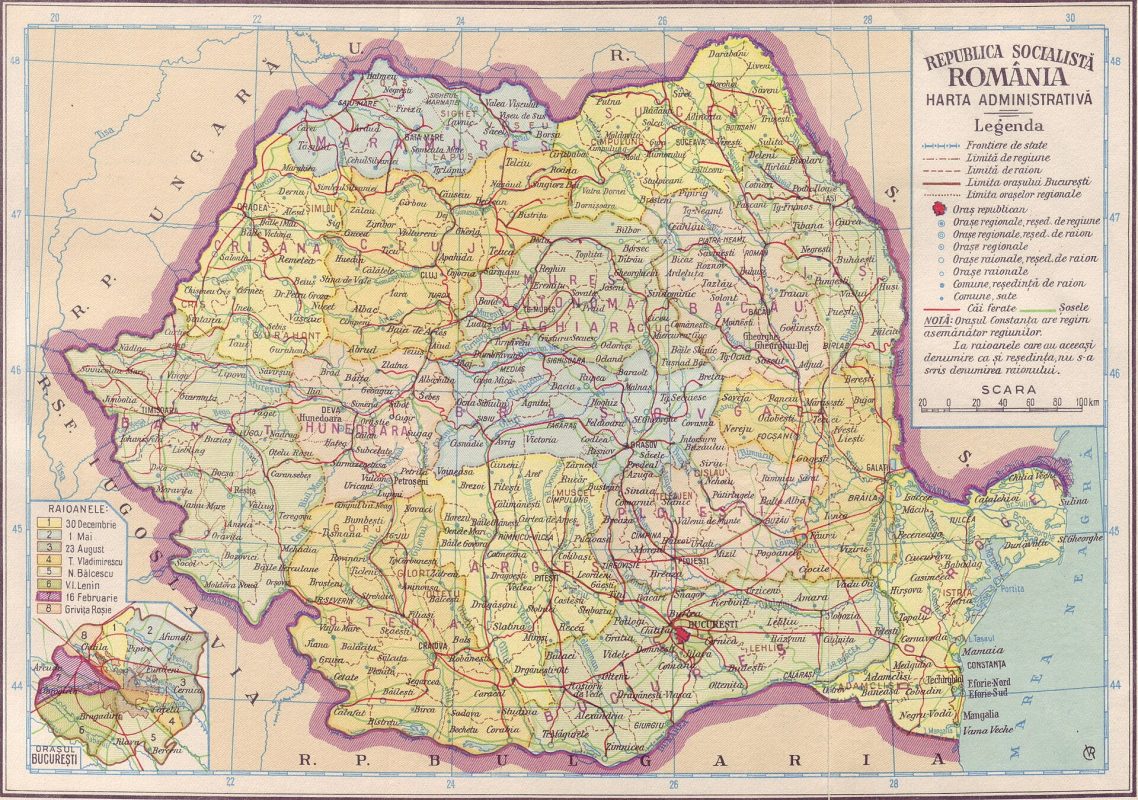
However, living standards never rose to match this economic growth. Agriculture lagged behind. Despite a policy of forced collectivisation, by 1955 88.5 percent of households were still farming privately, causing chronic food shortages. Ending rationing in 1954 exposed workers to unaffordable prices.
By 1956, the regime faced a paradox: it had built an industrial state almost from nothing, yet there were still food shortages, unaffordable prices, and poor housing.
Students in particular complained of chronic shortages of accommodation, unkempt buildings and poor food to eat in university canteens.
Here lay the deeper contradiction within Romanian ‘communism’: a nationalised, planned economy with the potential to substantially improve ordinary Romanians’ living standards, yet administered by a parasitic bureaucratic class sitting atop it. That contradiction was the source of growing anger beneath the surface of society.
The ‘secret speech’
Khrushchev’s February 1956 ‘secret speech’ came at a critical moment for the regime. Gheorghiu-Dej attempted to use it to defuse the growing anger from below.
In March 1956 he read the Central Committee an abridged version of the speech, but declared that its criticisms did not apply to Romania, since the party had already eliminated the excesses of the ‘cult of personality’ back in 1952, that is, when he purged the so-called ‘Muscovites’.
A handful of critics within the leadership, including Iosif Chișinevschi, pushed back, but the episode revealed how little organised opposition to Gheorghiu-Dej existed.
News from Budapest
When the Hungarian revolution erupted at the end of October, Romania was rattled. The country shared a border and a substantial ethnic Hungarian population within Transylvania. News travelled quickly through family contacts and western radio transmissions.
Romanian workers and youth began following events. Grievances that had simmered for years suddenly found an outlet. Rumours spread that Soviet units stationed near Timișoara had been redeployed into Hungary to help crush the revolt.
To begin with, the Romanian government did not overtly condemn the Hungarian revolutionaries, instead blaming ‘foreign elements’ who were looking to take advantage of the workers’ grievances.
Yet, perhaps anticipating discontent, they moved swiftly to ban all meetings of three or more people.
The 1956 Hungarian Revolution: A struggle for genuine socialism
Students take the lead
Undeterred by the ban, it was the students who moved first. Students began organising in their cramped dormitory rooms. Small action groups appeared in different faculties. Information travelled between cities, but there was no coordination between them.
On 23 October, 300 students at the Art Institute in Cluj gathered to declare solidarity with their Hungarian counterparts. They called for the removal of compulsory Russian-language and ‘Marxism’ courses, and for a fairer scholarship system. They also drafted a manifesto demanding an independent student association.
In Bucharest, students from the Faculty of Letters petitioned Iosif Chișinevschi because of his support for liberalisation at the March meeting of the Central Committee. Some of the questions they posed to him were:
“If the regimes in the two countries [Romania and the USSR] are identical and communist internationalism exists, why is Bessarabia not being given back [to Romania], since that province is Romanian, from an historical point of view?… Why must the peasants make children’s coffins from fence-posts when Romania has a substantial production of wood?… Why must bread be bought with ration cards in an agricultural country?… Why is there no fish on the market?”
The wording of the questions was carefully chosen. The students were not demanding the restoration of capitalism. They were making the case for democratic and economic reform of the existing regime. They still believed the regime would respond kindly to such appeals. But no government official replied.
The most serious challenge to the authorities came in Timișoara, where three students – Muțiu Caius, Stanca Teodor, and Baghiu Aurel – helped organise a meeting on 30 October that drew roughly 2,000 students from across the university.
Facing down government ministers sent to placate them, the students raised the same grievances as students in Cluj and added a political demand: the withdrawal of Soviet troops from Romanian soil who had occupied the country ever since King Michael’s coup in August 1944.
Government response
In response, Gheorghiu-Dej’s government tightened border controls and demanded greater oversight over newspapers and radio broadcasts.
A party directive issued on 26 October ordered “explanatory meetings” in every factory, office, and university to characterise the Hungarian revolutionaries as “hooligans” and “fascist forces”. A second directive on 30 October, issued the same day as the Timișoara meeting, authorised security forces to open fire on protesters and declare states of emergency where necessary.
The Timișoara organisers were arrested that same night. However, during the following weeks, their charge was downgraded from one that carried the death penalty to imprisonment, under pressure from the movement.
In Cluj, meanwhile, authorities stoked a rumour that Hungary intended to cede Transylvania to Yugoslavia in exchange for territorial concessions. This fabrication was designed to turn ethnic Romanians against any show of solidarity with Hungarian revolutionaries.
In Bucharest, philology students planned a 5 November meeting in University Square to demand the release of students detained for urging Scânteia Tineretului, the Communist Youth newspaper, to tell the truth about events in Hungary. News about the planned demonstration quickly spread among students across faculties.
Workers, too, began to move. On 29 October, the same day unrest was building in Timișoara, workers at the Grivița railway yards in Bucharest held a protest meeting over pay and working conditions.
The government responded quickly with wage increases and free travel concessions, eager to prevent workers’ grievances from fusing with the student movement as they had in Hungary.
In the days after the Timișoara meeting, students across the university were made to sign statements condemning their detained classmates.
Long after protests ended in Cluj, students from the Hungarian-language Bolyai University were routinely arrested. Students linked to the Timișoara meeting continued to be detained, often taken from their dormitories at night. Expulsion lists were posted, and former students were denounced at public meetings of the youth union.
The paradox of loyalty
By the last days of October, Gheorghiu-Dej was summoned to Moscow. He returned on 4 November having been briefed on Soviet plans for a full military intervention in Hungary.
Romanian propaganda shifted, presenting the coming crackdown as Hungarian workers ‘helping the army to re-establish social order’ against ‘imperialist’ agitators.
Bucharest’s cooperation with Moscow went further: the deposed Hungarian premier Imre Nagy was seized and delivered into Romanian custody, and Gheorghiu-Dej was among the first foreign leaders to visit Budapest once János Kádár’s hardline government was installed.
The myth later promoted by the regime is that this loyalty to Moscow earned Romania greater independence. In reality, evidence shows the opposite: the Romanian military was deemed unreliable because many soldiers and officers had sympathised with the Hungarian revolutionaries. Consequently, Romania signed an accord in April 1957 extending the Soviet military presence.
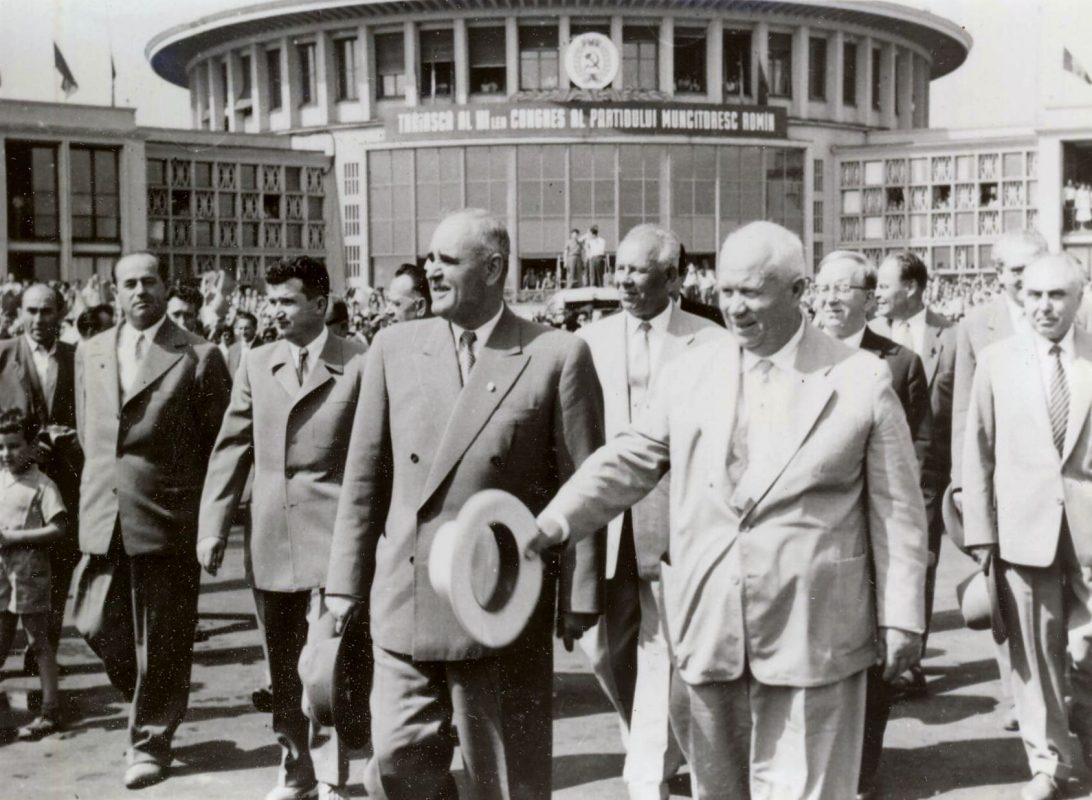
Bucharest’s subservience to the Kremlin during the crisis – sealing borders, censoring the press, arresting students, and imprisoning Imre Nagy – brought little in return.
Economic assistance from Moscow remained remarkably modest, with aid given ranking among the lowest in the Eastern Bloc. Archival telegrams reveal Romanian officials were openly disappointed by Moscow’s refusal to cancel debts or improve export prices.
Having helped contain the Hungarian fallout, it took Gheorghiu-Dej years to eventually negotiate the complete withdrawal of Soviet forces by 1958, laying the foundation for ‘Romanian national communism’.
‘National communism’
The Hungarian Revolution failed to spark a broad workers’ uprising in Romania, where a security apparatus hardened by internal purges easily crushed the students.
Yet, 1956 left a lasting mark. It accelerated Romania’s drive for autonomy from Moscow, entrenching its Stalinist bureaucracy while paving the way for future social explosions.
‘National communism,’ in Romania amounted to courting the West. It recognised West Germany, formalised relations with Israel, mediated between the US and North Vietnam, joined GATT (predecessor of the World Trade Organisation) and the IMF, and gained ‘Most Favored Nation’ status under the WTO in 1975.
However, the Iranian Revolution of 1979 triggered a catastrophic economic crisis. Unlike its neighbours, Romania received no subsidised Soviet oil, forcing heavy borrowing from Western banks. National debt exploded from $0.5 billion in 1976 to $10.4 billion by 1981. Ceaușescu’s brutal austerity measures to repay the debt gutted the economy, ultimately fuelling the revolution of 1989.
That revolution began, once again, in University Square, Bucharest.