This article is the fourth instalment of our 12-part series ‘The Hungarian Revolution: 70 years on’.
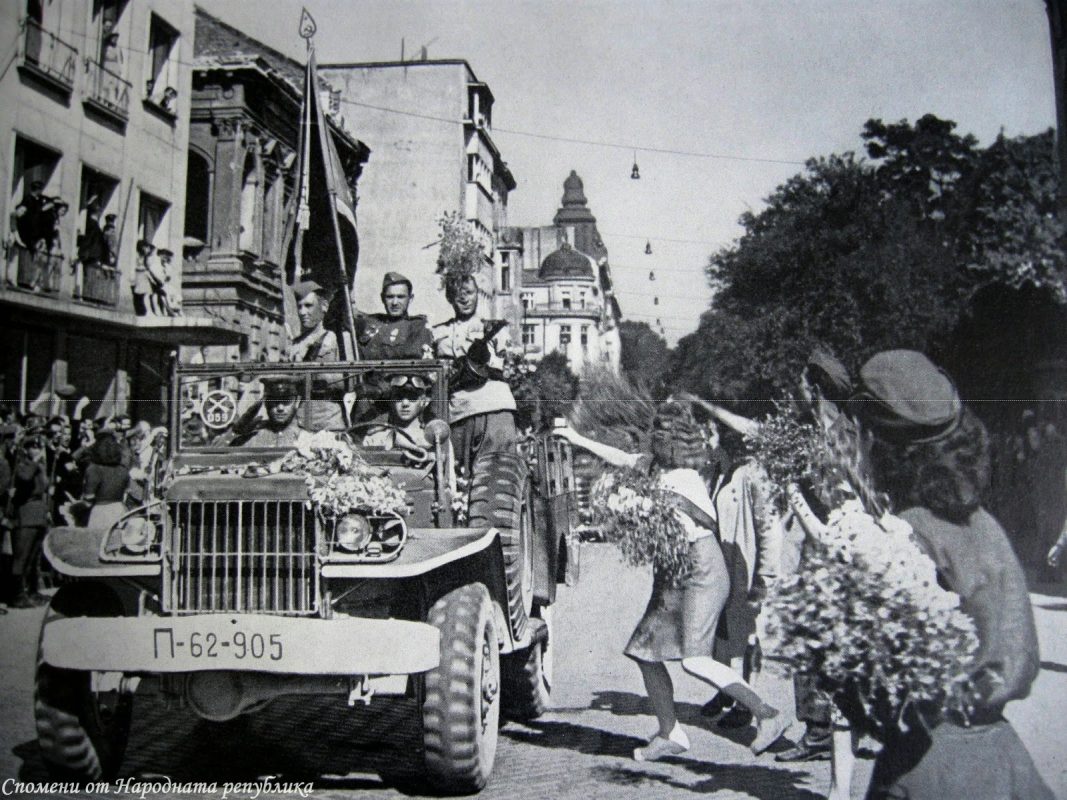
On 5 September 1944, after three and a half gruelling years under German occupation, news swept through Bulgaria that the USSR had declared war on the authoritarian, Axis-aligned Bulgarian regime. A wave of relief and optimism spread across the nation.
In the capital, students flooded the streets, converging in front of the Ministry of Justice to demand the release of political prisoners.
On 6 September, sailors stormed the port of Varna to free imprisoned communists, while strikes swept the city. Tram bells fell silent, tobacco workers walked out of factories, railways ground to a halt, and the Pernik coal miners laid down their tools.
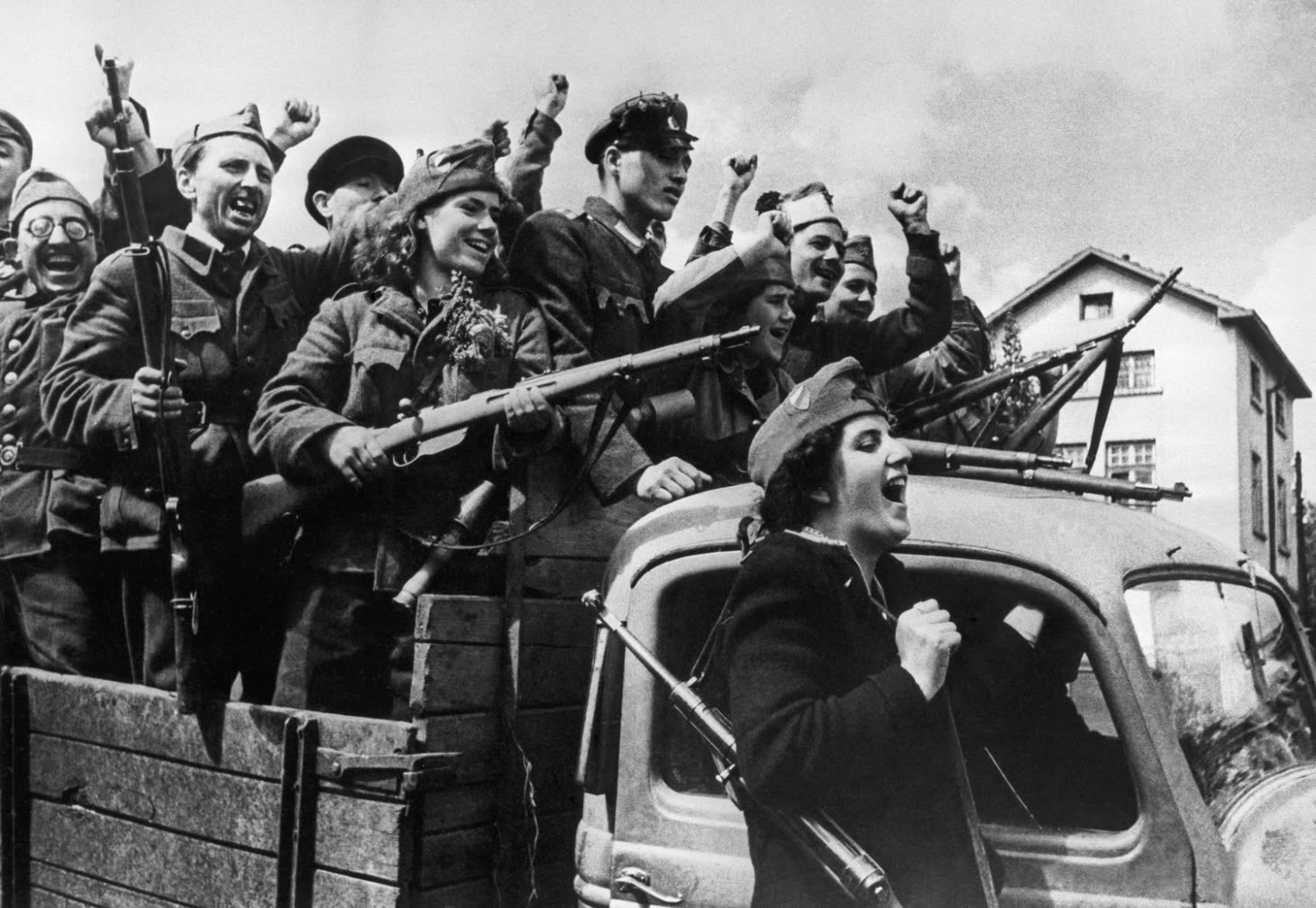
Armed partisans descended from the mountains to join forces with local insurgent committees, disarming the police and freeing political prisoners. The military had been deeply demoralised by serving a Nazi regime, and soldiers executed or arrested fascist officers, established democratic soldiers’ committees, and elected their own commanders.
Inside the factories, workers created committees to take control of production. A revolutionary movement was building. Across the country, workers cast off their chains and dreamed of a free, socialist future.
Unfortunately, these dreams would be replaced by the grey reality of Stalinist bureaucracy.
The bureaucracy smothers the revolution
Ever since 1935, the USSR had been promoting a policy of ‘popular frontism’, in which communist parties around the world were ordered to form broad, cross-class coalitions with anti-fascist bourgeois, liberal, and nationalist parties in various countries.
Stalin was pursuing a goal of ‘socialism in one country’, which meant stabilising the regime in the Soviet Union through alliances with liberals in the West. This came at the expense of socialist revolutionary movements across the globe which were deliberately suppressed by the Stalinists to curry favour with their new bourgeois liberal allies.
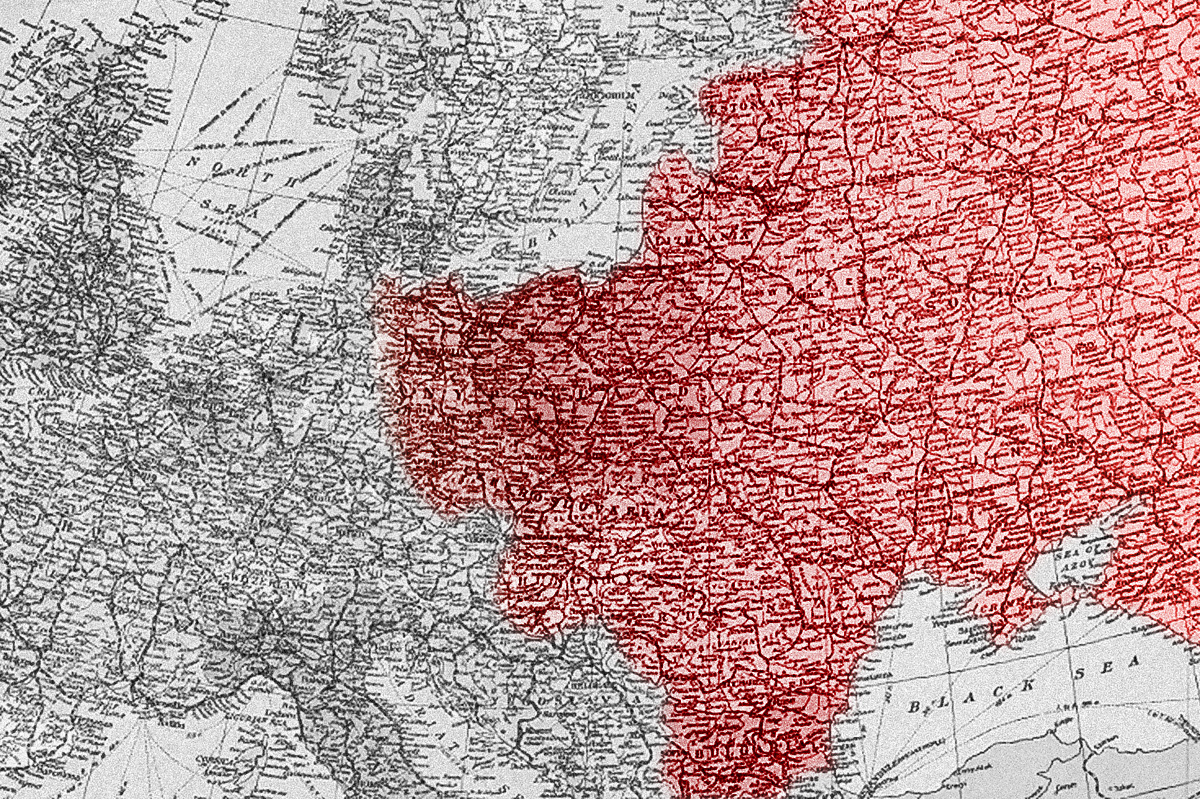
This was the approach with which the Red Army marched through Eastern Europe at the end of the war. The Stalinists wanted to secure control over the key levers of state power in these countries, such as the police and army. But they also made a point of presenting a moderate, democratic face to the West. As such, their original aim was to preserve capitalism in these countries, so as not to upset the Western imperialists.
And so, the Soviet bureaucrats ordered the Bulgarian Communist Party (BCP) to rein in the developing revolution.
On 9 September, the Communists, in coordination with the military arm of the Fatherland Front (the Bulgarian Popular Front, including liberals and capitalists), carried out a coup, disarmed the popular militias, and incorporated them into a state police force under party control.
Soldiers’ committees were liquidated, while independent factory committees were stripped of their organising power and turned into branches of the state-controlled trade union apparatus. In effect, a genuine working-class revolution was strangled to create a state subservient to USSR interests.
As in Bulgaria, Czechoslovakia, Hungary, and Poland all experienced surges of anti-fascist working-class uprisings, resulting in the spontaneous creation of soviets and workers’ militias.
This was a hopeful entry of workers into political life. But just as in Bulgaria, these movements were stifled, while Moscow made further bureaucratic moves to bring East Germany and Romania into its political orbit.
Stalin does deals with imperialism
This sweeping dominance across Eastern Europe was made possible not by a master blueprint, but by the magnitude of the Soviet military victory.
Western powers had initially hoped that the USSR and Nazi Germany would destroy each other on the Eastern Front, leaving both of them weak and pliant. Instead, the Red Army’s advance across Eastern Europe to Berlin left Soviet troops in physical possession of Central and Eastern Europe.
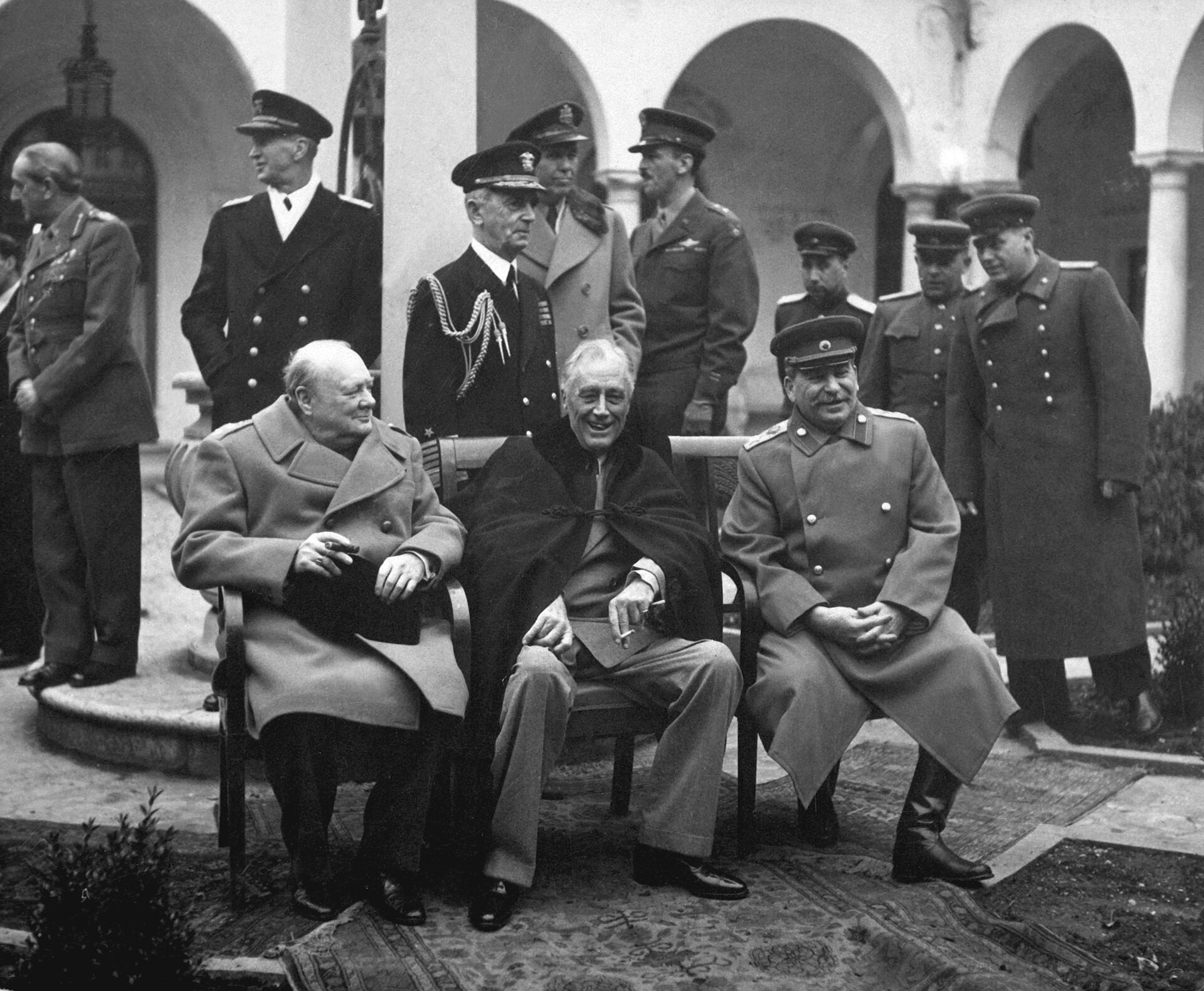
The Allied powers were forced to legitimise Moscow’s new sphere of influence at the Yalta (February 1945) and Potsdam (July–August 1945) conferences. In exchange for the USSR joining the newly formed United Nations and entering the war against Japan, the West recognised Soviet dominance over Poland, Hungary, Romania, and Bulgaria.
Germany and Austria were split into four occupation zones, managed by the Soviet Union, the United States, Britain, and France. Poland’s borders were shifted to account for Polish land absorbed into the USSR.
Meanwhile, Western Europe and Greece remained under British and American control, and Stalin promised ‘free’ bourgeois elections in liberated territories such as Poland, Romania, and Bulgaria.
These conferences merely formalised an informal pact struck earlier, in October 1944, when Churchill met Stalin in Moscow and drafted the ‘Percentages Agreement’. Written on a paper napkin, the proposal gave the Soviets a 90 percent share in Romania and a 75 percent share in Bulgaria, while assigning Britain 90 percent influence in Greece, with Yugoslavia and Hungary split 50/50.
Stalin had already adhered to this informal pact by refusing to aid communist rebels during the 1944 uprising in Greece, demonstrating where his priorities lay. He wanted to do deals with the Western imperialists, not overthrow them. In return, he expected the Western powers to grant him a free hand in consolidating his control over Bulgaria, Romania, and Poland.
Stalinism consolidates its position
The introduction of what was termed ‘socialism’ – but was actually a bureaucratically planned economy across the Eastern Bloc, comprising Poland, Czechoslovakia, Bulgaria, East Germany, Romania, and Hungary – was not part of an internationalist Soviet plan to support workers’ movements. In fact, it was an exercise in opportunistic manoeuvring.
Leon Trotsky had predicted that this would happen in 1939, when considering the earlier Soviet invasion of Poland:
“The Moscow government will carry through the expropriation of the large landowners and statification of the means of production. This variant is most probable not because the bureaucracy remains true to the socialist programme but because it is neither desirous nor capable of sharing the power.”
The expropriation of landlords and large private industry was the best way for the Stalinist bureaucracy to maintain control of the region, while also creating a buffer zone with the West and allowing the USSR to siphon off resources for its post-war reconstruction.
Stalin’s expansion into Eastern Europe established bureaucratic regimes across the region that stood above society and ruled in the name of the working class. The bureaucracy relied on workers to crush the old ruling class, before turning against the working class itself to consolidate its own power. Crucial to this transformation was the bureaucracy’s total seizure of the state’s main instrument of power: its armed bodies of men.
In Bulgaria, the Communist Party initially relied on workers’ militias to disarm fascist soldiers, neutralise royalist police, and seize property. Once they had secured state power through these armed forces, the Stalinists used the Fatherland Front to disarm those very same militias and co-opt partisan detachments into the state apparatus.
Meanwhile, in Czechoslovakia, the communist-supported, cross-class alliance of the National Front first legally subordinated independent works councils to state-appointed directors.
Then, with the threat of genuine workers’ democracy crushed, Stalin mobilised the working class to crush what remained of the traditional bourgeoisie.
Finally, the Stalinist bureaucracy turned once more on the proletariat: workers’ militias were disarmed, independent strikes were banned, and the nationalised economy was stripped of all democratic workers’ control. This policy was repeated across the region.
For a couple of years, these countries continued to operate as mixed economies. While the state controlled heavy industry, a small private sector remained, and trade with the West continued as Eastern European states attempted to rebuild their war-shattered economies.
However, in 1947, the United States announced the Marshall Plan, offering economic aid to Europe in an attempt to combat the spread of communism and rebuild markets for American exports.
Fearing the impact of American influence on Soviet power, Stalin forced his satellite states to reject the aid, abruptly ending their transitional mixed economies and imposing total nationalisation and collectivisation across the Eastern Bloc.
By 1949, private enterprise and landlordism had been completely abolished across Poland, Hungary, Romania, Bulgaria, Czechoslovakia, and East Germany. Industry was nationalised, and economies were centrally planned. Yet these were deformed workers’ states, created in the bureaucratic image of Moscow, where the workers themselves remained entirely shut out of political life.
Economic planning eliminated the chaos of market capitalism, providing workers with employment, subsidised housing, and universal healthcare. There were genuinely huge advances in the economic strength of the planned economies, proving in practice its superiority over the capitalist mode of production. However, they lacked the defining pillar of genuine socialism: democratic workers’ control over production and society.
Far from enacting socialism, these bureaucracies limited the economic potential of the planned economy. This led to widespread consumer scarcity, privilege for party elites, and brutal state terror when discontent bubbled to the surface. Eventually, it resulted in the restoration of capitalism. This travesty has tarnished the name of communism ever since.
Marxists defend the immense productive potential of a planned economy, which was proved by the USSR and the Eastern Bloc. But we must be unambiguous: these countries did not experience socialism. It was a bureaucratic caricature, a Frankenstein’s monster born from the grave of a genuine workers’ revolution.