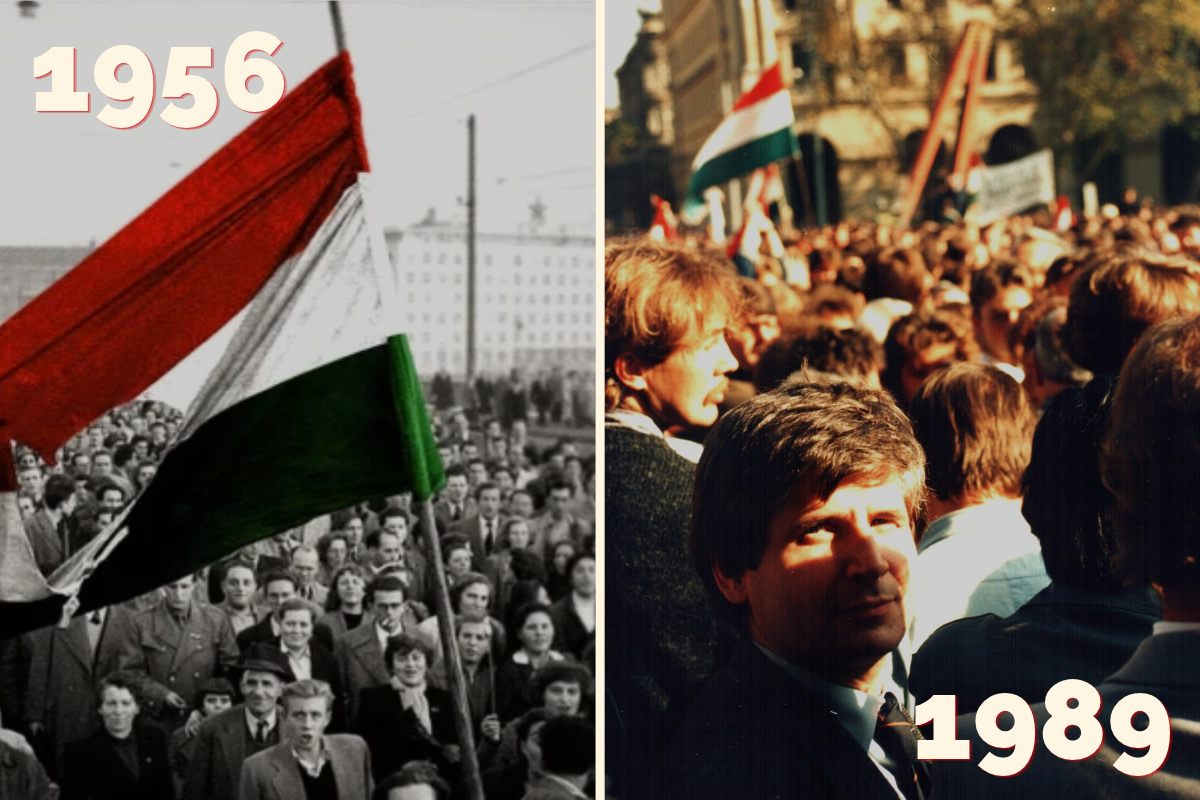
This article is the final instalment of our 12-part series ‘The Hungarian Revolution: 70 years on’.
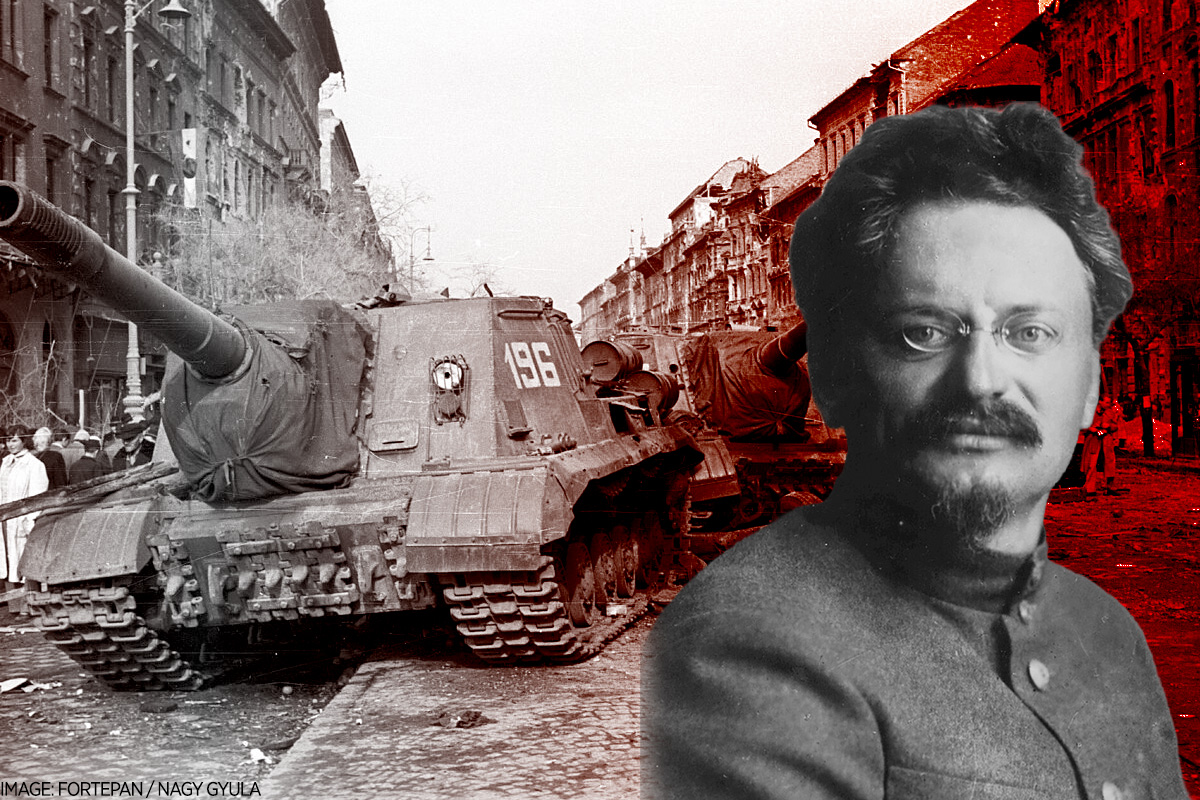
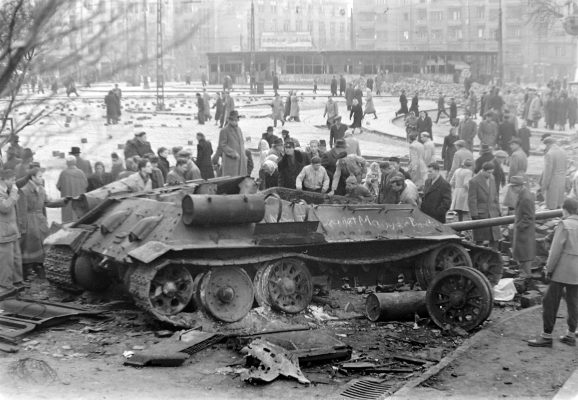
On 4 November 1956, Soviet tanks rolled into Budapest and began the brutal crushing of the Hungarian Revolution. That morning, as the tanks were entering the bounds of the city, a new pro-Soviet government headed by János Kádár – handpicked by Moscow as the new leader of Hungary – was announced over the radio.
With Kádár’s self-proclaimed ‘Revolutionary Worker-Peasant Government’ in place, and a cosmetic rebranding of the Communist Party as the Socialist Workers’ Party, reprisals against those involved in the revolution swiftly followed. Between 1957 and 1961, over 20,000 were sentenced to time in prison, around 300 were executed, and many more were either deported or sacked from their jobs.
One victim of this wave of repression was Imre Nagy, the leader of the revolution. Having taken refuge in the Yugoslav embassy in Budapest, Kádár had promised Nagy – whose government he had briefly served in – safe passage out of the country.
When he left the embassy on 22 November 1956, Nagy was promptly arrested and deported to Romania, where he was imprisoned. Sent back to Hungary two years later, Nagy was subject to a secret trial and hanged in 1958.
But whilst the revolution had been crushed, the new regime was well aware of the dissent that still existed in Hungarian society: the experience of Hungarian workers and poor lynching agents of the hated AVH secret police was burned into the memory of the bureaucracy.
And so it was that, once the Kádár regime felt itself consolidated, it turned a new course, and sought to balance between appeasing the Soviet Union on one hand, and granting concessions to the Hungarian masses on the other.
‘Goulash communism’
Kádár summed up his approach with the phrase “he who is not against us is with us”, which he declared officially at the beginning of 1962. Whilst maintaining the Hungarian Socialist Workers’ Party’s total control over the country, Kádár offered up certain freedoms that were not available elsewhere in the other Stalinist countries.
The press enjoyed a higher degree of freedom, and the government even allowed some dissident samizdat literature to circulate; Hungarian citizens had fewer restrictions when going abroad to western countries; and it was easier to access western cultural imports, as long as they were not critical of the government.
This progressed further in 1968 when Kádár implemented the New Economic Mechanism: a programme of concessions to the market, greater freedoms to private enterprise, and a heightened degree of decentralisation of the planned economy. Kádár’s economic approach came to be known as ‘goulash communism’, as it established more of a ‘mixed’ economy, akin to the variety of ingredients in the famous Hungarian dish.
Unlike the other Stalinist regimes, which generally focused their economies on developing heavy industry at the expense of consumer goods, the Hungarian economy was centred on improving the standard of living. In the short-term, this had a sizeable impact, and the quality of life in Hungary was among the highest in the Eastern Bloc, earning it the moniker ‘the happiest barrack’.
From 1968-73, GDP grew by six percent each year. Between 1960 and 1984, annual consumption of meat and fish rose from 35kg to 78kg per capita, the percentage of homes with electricity rose from 46.6 percent to 99 percent, homes with running water rose from 17 percent to 77 percent, just to list off a few indicators.
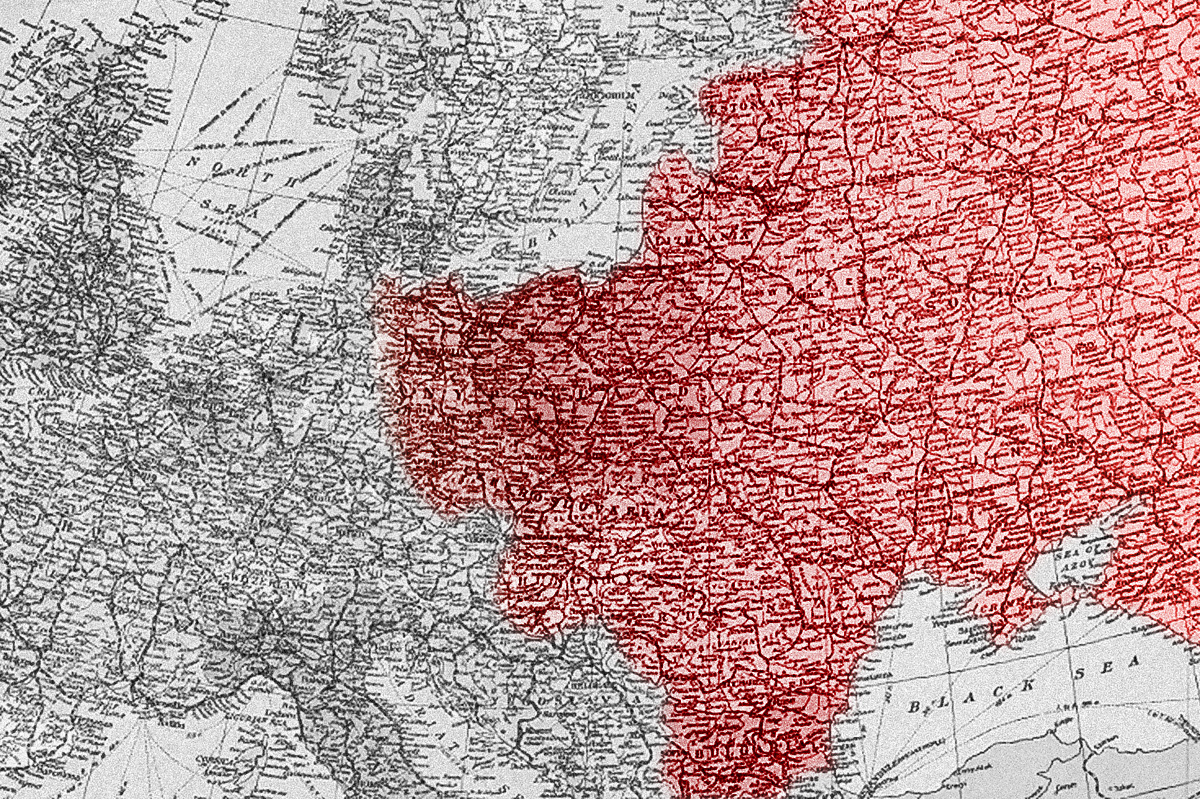
Hungary’s openness with the West put it in a unique position as a bridge between the capitalist western powers and the Stalinist East – the Soviet Union, for example, utilised this connection to bypass western export restrictions.
Deal with the devil
On the surface, the Hungarian model seemed to be working exactly as intended. But beneath the surface, trouble was brewing. Over the course of the 1970s, the Hungarian bureaucracy was to learn that you cannot accept some parts of the market and not others.
In order to funnel investment into improving living conditions, the Hungarian economic strategy was essentially to balance between the East and West, taking preferential rates on oil and other raw resources from the Soviets, and allowing capital to flow in from the West. Underpinning all of this was an immense amount of debt, courtesy of the capitalist West.
Credit allows an economy to artificially surpass its limits for a certain period, but it cannot go on expanding forever. Eventually, it must be paid back with interest.
The first sign of the debt troubles that plagued Hungary in the 1980s came in 1973, when the postwar boom ended as the world economy plunged into crisis, and oil prices shot through the roof.
The global crisis of 1973-75: A turning point for capitalism
Looking to soften the blow, the bureaucracy curtailed elements of the New Economic Mechanism in 1973, and strengthened the elements of central planning in the economy. Firmly in the driver’s seat, what did the bureaucracy do with their greater control over the economy? To cover the increased cost of western oil exports, and to avoid any negative impacts on the standard of living, they took on even more debt.
Between 1973 and 1978, Hungary’s external debt levels tripled to 40 percent of GDP (just over $9 billion worth of debt), as western powers readily flooded it with low-interest (but variable-rate) credit.
They managed to maintain a steady rate of growth over the course of the 1970s, but as this was sustained by more and more debt, it was only a matter of time before the chickens came home to roost. At the end of the 1970s, there was another major economic crisis, which once again led to skyrocketing oil prices.
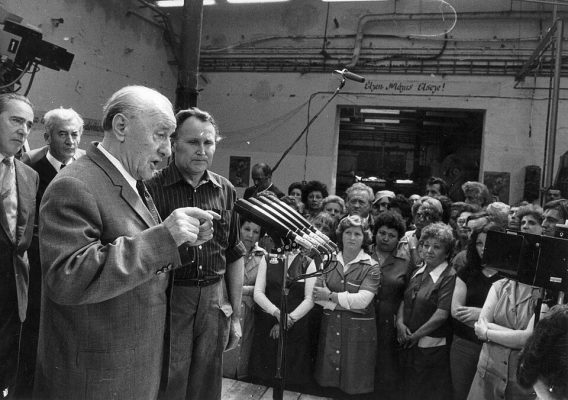
In the late ‘70s, Hungary was battered from both sides. From the West, a hike in interest rates buried the country even deeper in debt. From the East, the Soviet Union had entered its own period of stagnation, as the lack of workers’ democracy choked the life out of the planned economy. Gone were the ‘fraternal’ export rates given by the Soviets to the Eastern Bloc countries, instead they demanded more for less, and generally imposed harsher terms of trade on their satellite states.
For example, between 1980 and 1984, Hungary increased its real exports to the Soviet Union by 30 percent, in order to meet the demands of the Soviet government. Hungary didn’t get anything in return, there was no increase in import volume back from the Soviets – the price of Soviet goods also rose by 50 percent in this period, compared to a 25 percent increase in Hungarian goods.
Out of options, the Hungarian bureaucracy made a deal with the devil. In 1982, Hungary followed Romania to become the second Eastern Bloc country to join the International Monetary Fund (IMF). They took out an IMF loan worth about $600 million at the time (just over $2 billion today), on the condition that they ‘reduce demand’ in the economy, a euphemism for austerity.
Market concessions
Was the Hungarian bureaucracy incorrect to give concessions to the market? In principle, no. But to paraphrase Ted Grant, the decisive question to consider is not just what policy has been carried out, but who has carried it out, how they have done it, in whose interests, and why.
In the case of Hungary, the strategy of ‘goulash communism’ was an attempt to placate the Hungarian people after they were brutally repressed in the aftermath of 1956, put in place by a short-sighted Stalinist bureaucracy.
Furthermore, these capitalist concessions were not viewed or presented as a necessary evil in developing the economy for the transition to socialism, but as the best means of modernising the economy and unlocking its productive potential.
In the same vein, the bureaucracy’s reassertion of state-planning just five years later was not due to a sudden epiphany that they should renounce their flirtation with capitalism, but an empirical manoeuvre in the face of an economic shock. As exemplified by the fact that the grand plan of the bureaucracy, once it had a tighter grip of the reins, was to send Hungary even deeper into debt.
Whilst Hungary took a somewhat different path to the other Eastern Bloc countries, the mistakes made are the same as those made across the Stalinist world: empirical, short-sighted decision making based on the narrow national interests of this or that bureaucracy.
View this post on Instagram
1956 was the closest that any of the Stalinist countries came to overcoming this bureaucratic leach on the planned economy, which for a short time was seriously threatened with political revolution. Had the bureaucracy been defeated, and genuine Soviet democracy established, the planned economy of Hungary would have been free of the bureaucratic bungling and unrealistic quotas that burdened it.
Such a victory would have acted as a clarion call across Eastern Europe, and could potentially have led to political revolution across the region, unleashing the immense productive potential that was being held back by the various bureaucracies. But unfortunately, this is not what happened.
With the defeat of the Hungarian Revolution, and the consolidation of the bureaucracy under Kádár, Hungary only had two paths ahead of it: go further down the path of market concessions, and accept what comes with that, or double down on fully-bureaucratic planning the economy.
Both paths ended in the same location: the restoration of capitalism.
Growing opposition
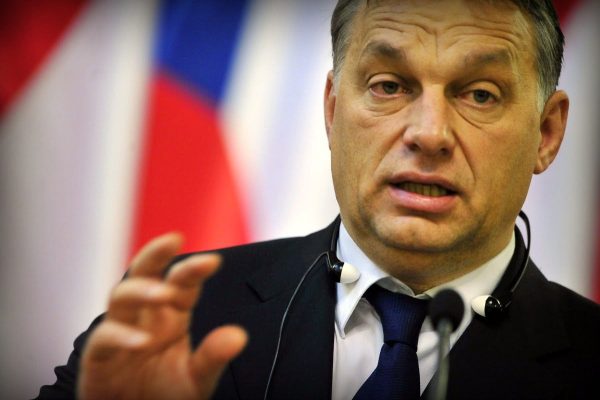
The 1980s in Hungary were defined by shortages of basic goods, austerity measures, and growing dissent against the government. The bureaucracy tried all sorts of different measures to revive the economy, sometimes leaning more towards planning, sometimes more towards the market, but they were rearranging the deckchairs on the Titanic at this point.
Opposition groups demanding an end to communist rule began to flourish. One was the Alliance of Young Democrats – or Fidesz for short – which was founded as a liberal alternative to the official Young Communist League. This group was co-founded in the late 80s by a young liberal named Viktor Orbán, and officially launched as a political party in 1989.
The western imperialists could smell the opportunity, and due to Hungary’s heightened level of interconnection with the West, were in prime position to move in on Hungary should the regime collapse. A CIA document from the time says as much:
“The United States has an important stake in the evolution of the situation in Hungary because it is at the leading edge of reforms in Eastern Europe. Hungary’s growing indebtedness to and economic need of the West, moreover, should continue to give the United States and other Western industrialized countries some limited leverage. Over the longer term—and particularly if Gorbachev’s program to revive the Soviet economy fails—the economic attraction of the United States and the developed West may increase even more and, thus, provide a better opportunity for Western leverage in Hungary.”
Ironically, Fidesz and Orbán personally were early recipients of funding from Hungarian billionaire George Soros, who threw money and other resources at opposition groups in Hungary via the Hungarian Soros Foundation to accelerate the restoration of capitalism in the country.
Facing an economic crisis and swelling social unrest, the bureaucracy itself was split between the Stalinist old guard and the pro-capitalist ‘reformers’. Only a genuine political revolution to sweep the bureaucracy aside completely and establish true socialism could have solved the crisis in Hungary. The bureaucrats themselves were stuck between Stalinist repression or capitalist restoration. Neither could resolve the crisis, they were damned if they did, damned if they didn’t.
In 1988, suffering poor health and pressure from the pro-capitalist faction, Kádár was forced to resign as leader, and the moderates and reformers – which were now the dominant wing of the bureaucracy – took over the leadership of the country.
The Round Table Talks
The decisions that led up to the restoration of capitalism in Hungary occurred behind closed doors, in a meeting between the government, government-friendly organisations such as the trade unions, and a coalition of different opposition groups. These were known as the Round Table Talks, and their explicit aim was to agree on establishing a multi-party system in the country.
That isn’t to say that there was no mood in the rest of society for change. After a decade of decline, shortages, and austerity, how could there not be? On 15 March 1989, to commemorate the 1848 revolution, there was a 100,000-strong anti-government protest. This put wind in the sails of the opposition.
To cut a long story short, the opposition unified around making sure that the Socialist Workers’ Party would be ousted from power, and that it would stay out. On 23 October 1989, the 33rd anniversary of the Hungarian Revolution, the Hungarian Republic was declared, and elections called for the following year.
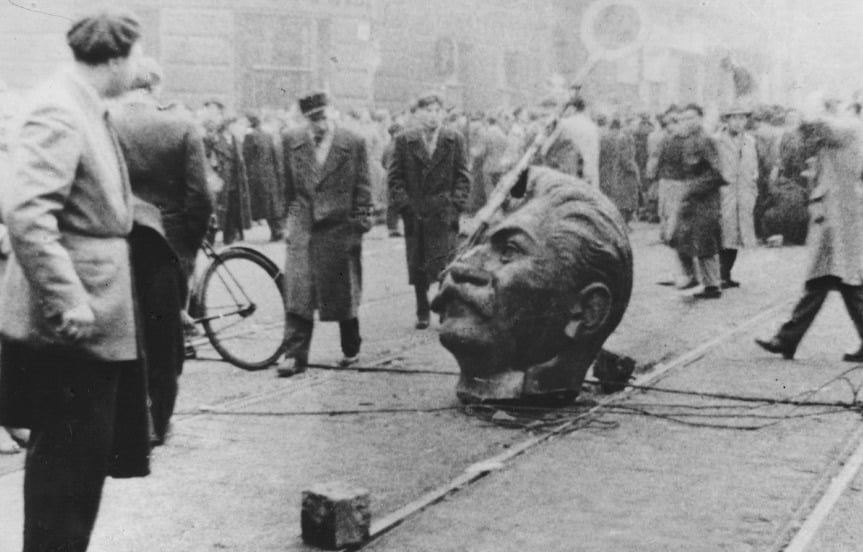
But this republic was a caricature of what could have been established had the 1956 Revolution succeeded. The Hungarian Revolution was not a pro-capitalist movement, it was an anti-Stalinist political revolution that wished to preserve all of the major gains made by the planned economy.
View this post on Instagram
The Round Table Talks, on the other hand, were a behind-closed-doors set of negotiations that resulted in the utterly disastrous restoration of capitalism in Hungary. Between 1990 and 1993, GDP fell by around 20 percent, industrial production by around 30 percent, inflation peaked at 35 percent in 1991, and about 600,000 people were left unemployed in a country with a population of 10 million people.
It is no surprise then, that according to a 2020 study, 54 percent of Hungarians say that their life was better before capitalism was restored.
This does not reflect a longing for a total repetition of the Kádár government, but for the prosperity and stability that it was able to offer for a short period of time, for the mass lifting out of poverty and technology advances achieved by the planned economy.
The only way that these gains could have been safeguarded, expanded, and not destroyed by debt, inflation, and bureaucratic stupidity, would have been a successful political revolution in the vein of 1956.
The struggle to build genuine socialism continues to this day, in Hungary and around the world, as we stand on the shoulders of the revolutionaries of 1956.