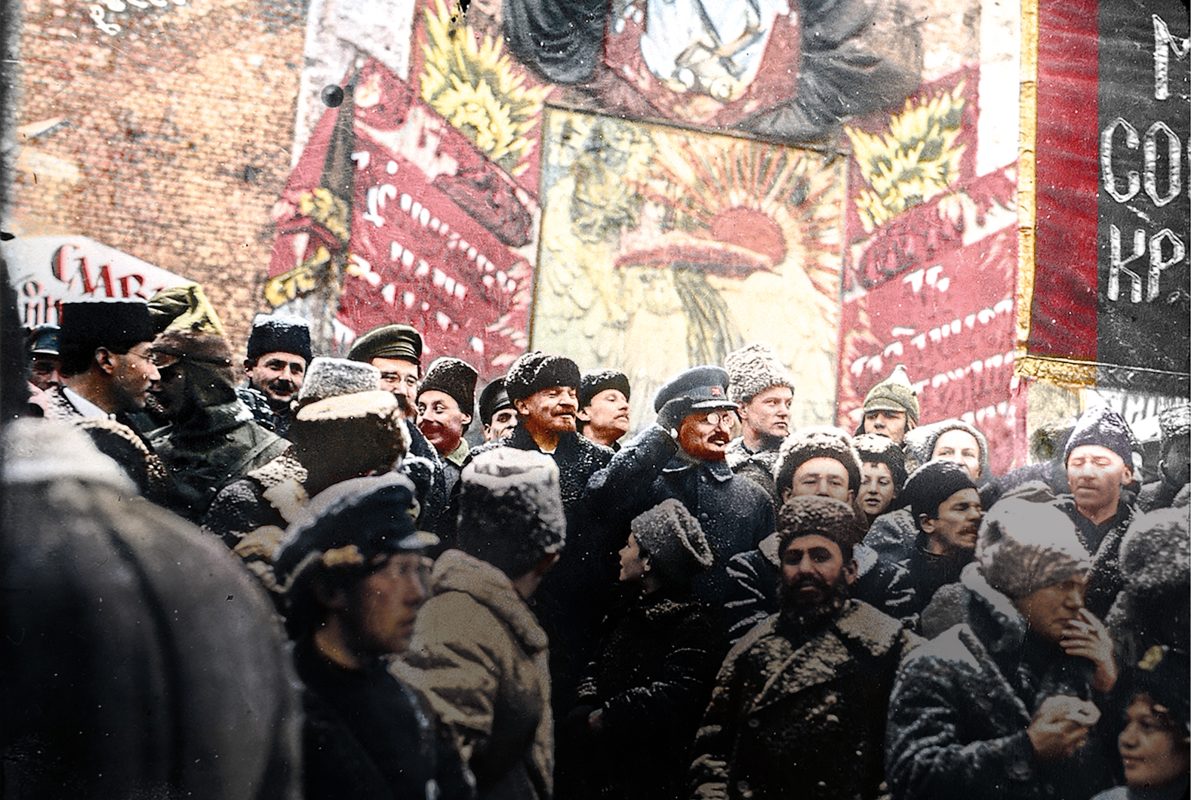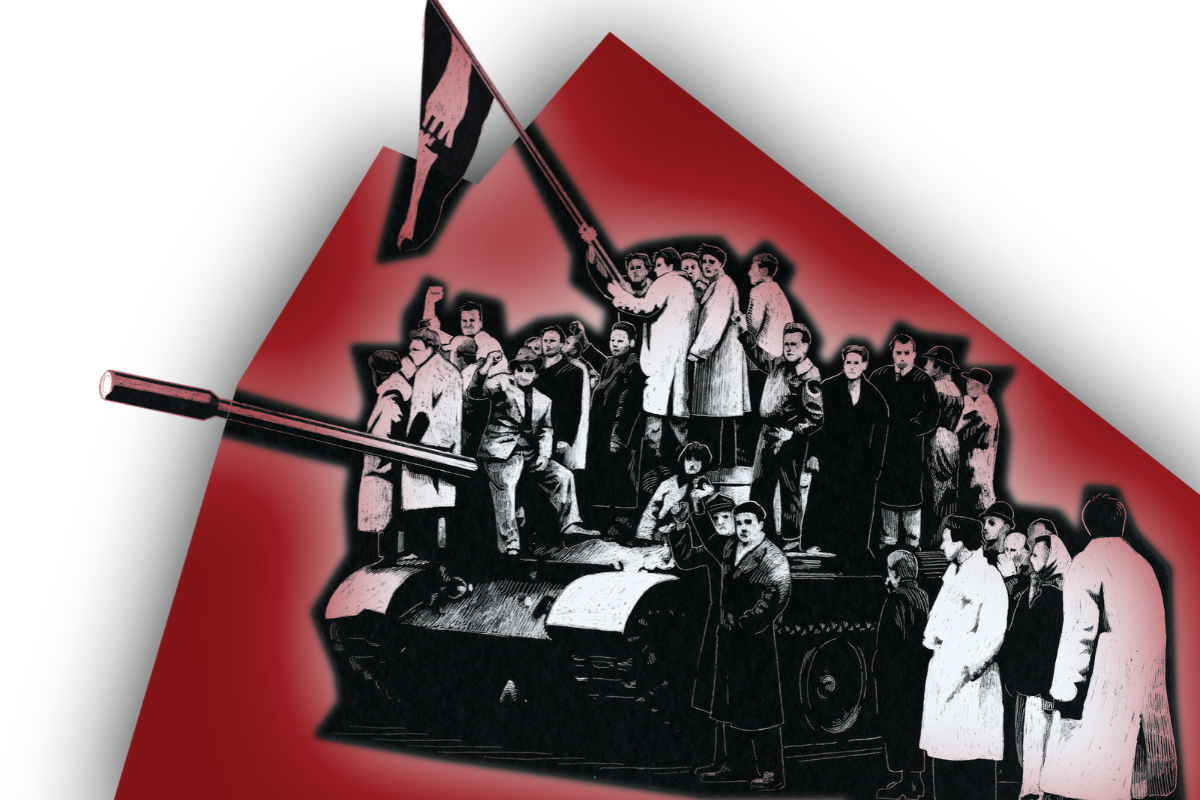
Seventy years ago, in October 1956, Hungarians flooded into the streets. For eleven days, they fought the Stalinist dictatorship. By the end, they were battling Soviet tanks street by street. This was a revolution for genuine socialism in Hungary.
The Hungarian regime was hated. It was socialist in name but bureaucratic in essence – modelled on the Soviet Union under strict control by Moscow. This lifeless government had been bureaucratically deformed ever since its birth in 1949. But it was rocked in 1956 by a living movement for workers’ democracy against Stalinist repression. Contrary to Stalinist slanders, this was never a movement for the restoration of capitalism. It was an attempt by ordinary Hungarians to take control over their own lives and establish a healthy socialist society.
The revolution was ultimately crushed with an iron fist and Soviet tanks. The scale of the threat it posed to the Soviet bureaucracy can be measured in the lives that were lost. Tens of thousands of Hungarian workers were killed and countless more injured.
[This is an extract from the introduction to Peter Fryer’s ‘Hungarian Tragedy’. Purchase your copy HERE]
View this post on Instagram
The 1919 and 1945 revolutions
The end of the First World War brought about huge social and economic turbulence. A year earlier, in October 1917, the Bolshevik Revolution had transformed the entire situation. It had placed socialist revolution on the agenda. A revolutionary movement in 1919 put the youthful Hungarian Communist Party into power. Mistakes by the Hungarian Communists and invasion by imperialist-backed Romanian troops meant that the young socialist republic was unable to consolidate itself before it was overthrown by outside invasion.
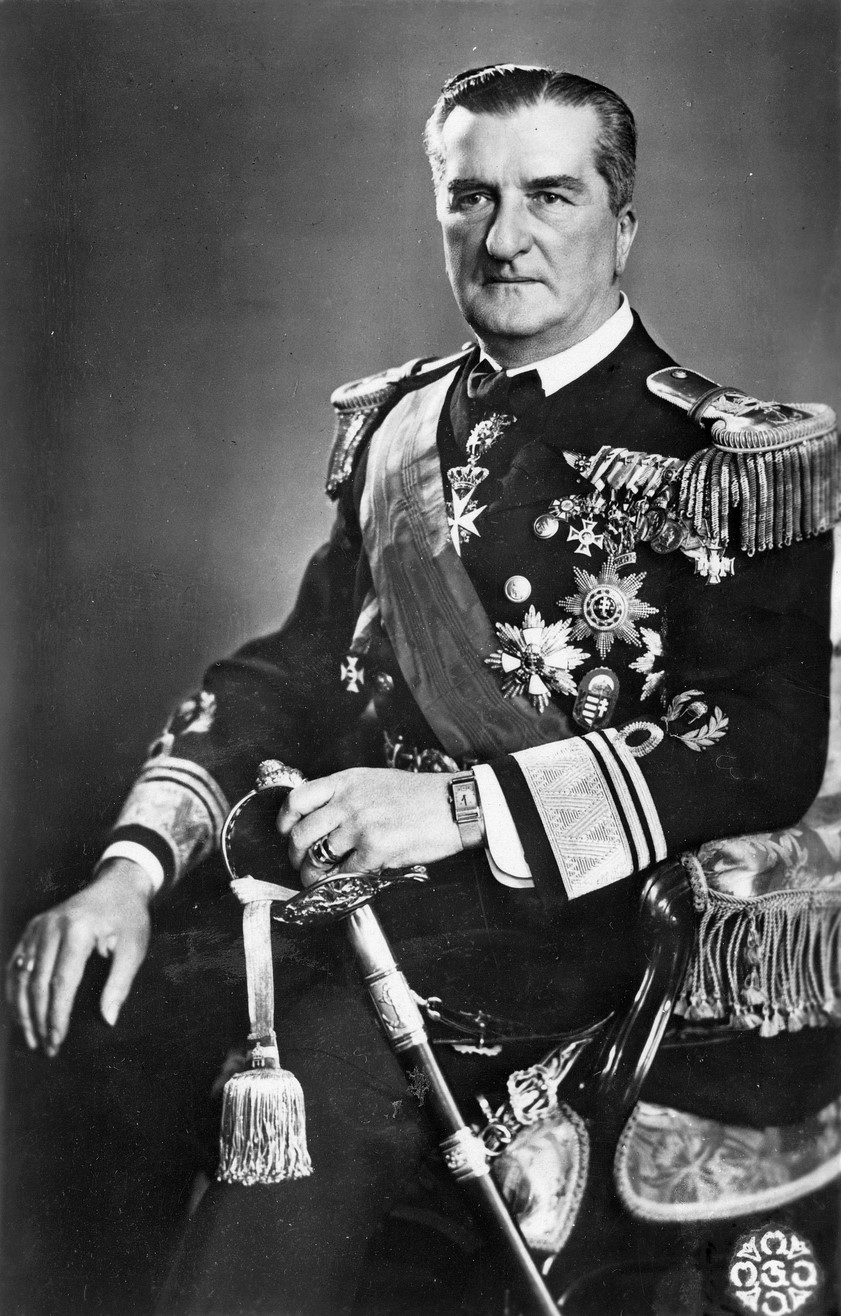
By the end of 1919, fascist counter-revolution was on the cards in Hungary. It was led by the former Imperial Admiral Horthy, who unleashed a bloody wave of White Terror and was an ally of Hitler during the Second World War. The horrific memory of this experience partly explains why a restoration of capitalism and Horthyism was never seriously on the agenda during the revolution of 1956.
In 1945, the victorious Red Army marched into Hungary and drove back the Nazis and their sympathisers. But Stalin had no interest in establishing healthy workers’ states in Eastern Europe, which would have acted as inspiration for the Russian workers to re-establish the real traditions of Lenin. Instead, the Stalinists turned Hungary into a miniature version of the USSR.
It had a planned economy, but lacked workers’ democracy and was complete with stifling bureaucracy and brutal secret police. This meant that when the expropriations, nationalisations and economic planning took place, they were done without the conscious participation of the mass of the workers. Economic planning and the abolition of capitalism were introduced into Hungary from the top down, via bureaucratic means.
This distant and top-down control meant bureaucratic inefficiency and the systematic pillaging of Eastern Bloc industry by the Soviet Union, so that it could build up its industrial base. The production of consumer goods was sacrificed for the development of heavy industry. Even despite these bureaucratic distortions, however, the planned economy provided many gains. Education, culture, and public health were improved and advances were made for women, mainly in the form of equal pay and some socialised child care.
At the same time, the bureaucracy was accumulating massive privileges for itself, in the form of luxury holiday homes, limousines, better food, clothing, and housing. As long as the economy was growing, people were able to put up with all this. However, these contradictions could not remain beneath the surface forever.
Stalin’s death and crisis in the Eastern bloc
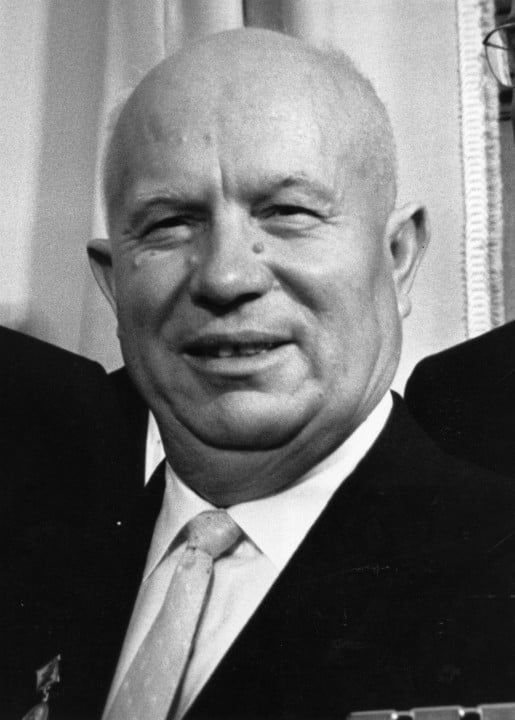
In 1953, Stalin died and there were signs of a ‘thaw’ in the policies coming out of Moscow – and, correspondingly, Budapest. After a savage power struggle behind the scenes in Moscow, Khrushchev took power and made some moves towards reform of the Soviet system. He did this, not because he was opposed to a privileged bureaucratic dictatorship, but because he could see dangerous levels of discontent accumulating in Soviet society. He hoped reform from above would stave off revolution from below.
Khrushchev had good reason to be worried. In 1953 there was a massive strike wave and street fighting in East Germany. In Czechoslovakia, there were riots in major cities. There were even strikes and protests in the Soviet Union itself.
In Hungary, the bureaucracy followed suit by removing the hardline Stalinist Rákosi as head of the government.
Rákosi was replaced with Imre Nagy, who was seen as a ‘liberaliser’. He proposed the abandonment of forced land collectivisation, the release of political prisoners, and a downgrade in the position of the hated AVH secret police. For the first time, a different shade was penetrating the solid grey of the Stalinist regime that had ruled Hungary since the War. Nagy became a point of reference for the most advanced, radical and revolutionary layers in Hungary.
But, like Khrushchev, Nagy was still very much part of the bureaucracy – and his ‘liberalising’ agenda was limited. During his premiership, thousands of political prisoners remained locked up by the AVH.
By 1955 the Hungarian economy was in crisis, thanks to the bureaucratic blunders that are inevitable in a planned economy without workers’ democracy. Oil fields were flooded due to too rapid a rise in the rate of production; buildings were constructed that deliberately fell short of required standards, just so that production targets could be met; consignments of goods had to be sent on time, even if 40 percent of those goods were defective.
Khrushchev changed course again in 1955. He became afraid that giving the masses a taste of reform would make them hungry for more, especially under conditions of economic crisis. Nagy was therefore removed and expelled from the Communist Party in April 1955, and the hardliner Rákosi was brought back once again to turn back the clock on the new policies of the previous two years – an exact reversal of what had been done in 1953.
Moscow’s transparent exercise of total control over the Hungarian government, and the zig-zags of the bureaucracy aroused the indignation of the workers of Hungary, who had never been given a real chance to control their own lives, society, and economy.
Ever since the early 1900s a deep sense of national injustice had been felt by Hungarians. They had been consistently denied their basic democratic right to be a self-governing nation. After the First World War, the country was carved up by the victorious powers, losing two thirds of its territory and one third of its population. Contrary to all of Lenin’s advice and policies on the national question, the Stalinists continued riding roughshod over the national rights of Hungarians after 1945, which built up enormous resentment. The removal of Nagy was a lightning rod for this anger, because he was seen as a defender of Hungary’s national-democratic rights against the overbearing Moscow bureaucracy.
In February 1956, Khrushchev denounced Stalin’s crimes in a speech at a closed session of the 20th Congress of the Communist Party of the Soviet Union. He hoped that by shifting all the blame for past problems onto the figure of Stalin, this would put a lid on the developing crisis of the bureaucratic Soviet regime. But an individual in power represents more than just himself: he represents a class or stratum in society, one which remained very much in power in the Soviet Union. Khrushchev’s speech was not meant to reach beyond the party’s apparatus, but was soon leaked into the public domain – and caused people to question the entire Stalinist bureaucracy.
In Hungary, the whole country began to bubble with discussion and debate. A group of intellectuals known as the Petőfi Circle, named after the poet and revolutionary of 1848, began to meet and discuss the idea of reform in a semi-open way. The secret police infiltrated this circle but, to the horror of their commanders, the police spies themselves would come back from the meetings convinced of the need for reform. Some even signed a manifesto to this effect.
Events across the Eastern Bloc began to accelerate after Khrushchev’s speech. In May 1956, Soviet tanks and troops were sent into Georgia to crush an uprising sparked by austerity measures. In June 1956, the workers of Poznań in Poland began a strike and protest movement which rapidly spread across the country.
As in every developing revolutionary situation, the bureaucracy was split over how to deal with the rising tide of discontent. Some favoured reform to re-establish the credibility of the Communist Party, so that it would be able to control the movement. Others favoured hardline repression.
The bureaucracy wasn’t able to decide which course to pursue in relation to Hungary, because whatever they did would have been wrong. In the end, Rákosi was removed in July 1956 because he was so hated by the masses; but he was replaced with an equally vicious hardliner – János Kádár. Nagy, meanwhile, was demoted still further. The Communist Party’s credibility was rapidly approaching rock bottom.
The spark that lit the flame
The stage was set for revolution. The combustible material had accumulated over the summer of 1956. All that was required was a spark to set it off. On 23 October, a protest took place in Budapest – called by students, but incorporating a wide range of political demands. These included the rehabilitation of Nagy as Prime Minister; the election of a new Party leadership by a national congress; friendship with the USSR on the basis of equality; the withdrawal of Soviet troops from Hungary; free elections; freedom of the press; academic freedom; and the use of Hungary’s uranium stocks by Hungary itself. Added to this was solidarity with the workers of Poland. The peaceful protest was attended by tens of thousands of unarmed men, women, and children.
The Hungarian leaders utterly failed to understand what was happening. They took to the radio, broadcasting that the demonstrators were agents of imperialism. This enraged the masses, who converged on a square next to the headquarters of the Communist Party newspaper.
The AVH secret police officers panicked and opened fire on the demonstration. The protesters immediately approached ordinary police officers and soldiers who, when they heard what had happened, handed over their weapons to the crowd. Within a few minutes the workers of Budapest had armed themselves with rifles and machine guns, and a monstrous repressive state apparatus was melting into thin air in the face of an armed movement of the masses.
In any revolutionary situation, events move at lightning speed. The armed protesters demanded that a government minister come out and explain what measures would be taken to satisfy the demands of the demonstration. By the time a minister arrived an hour later, the crowd had turned entirely against the government and heckled him off the platform.
The first invasion
As the mood and anger of the masses developed rapidly, so too did the panic of the Soviet authorities. On the night of 23-24 October the USSR invaded Hungary to put down the revolution. The resistance of the Hungarian workers and youth was ferocious. They poured into the streets and fought the Soviet soldiers with everything and anything at their disposal. Thirteen-year-old children hurled home-made Molotov cocktails at the advancing troops.
The Soviet soldiers, some of whom had been told they were being sent to put down a fascist rebellion, quickly realised that this popular resistance told a different story. After fraternisation, the soldiers began leaving their tanks and joining the demonstrations.
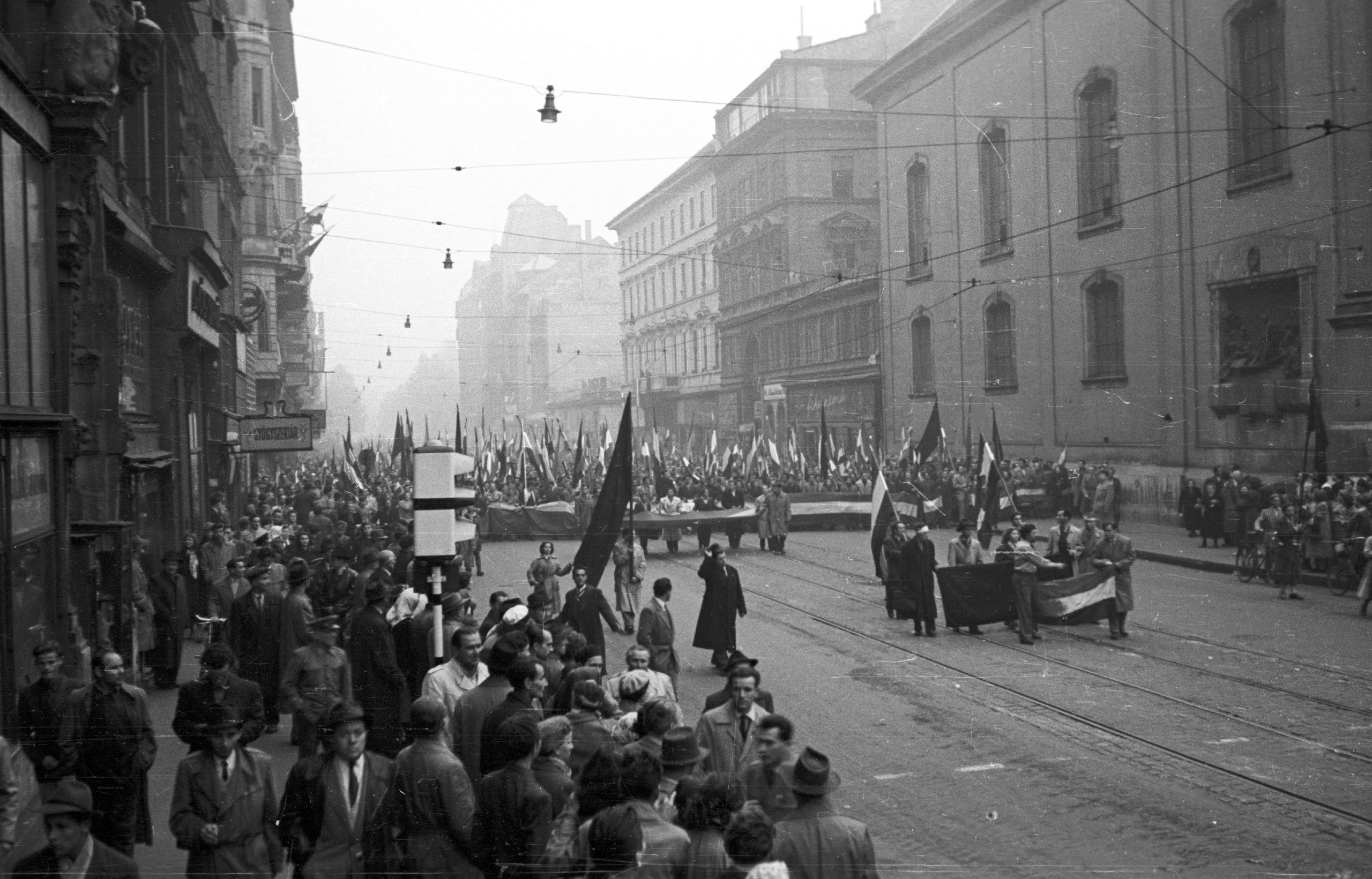
From there, things developed rapidly. As the AVH continued to fire on the demonstrators, the Soviet troops moved in to protect the crowds. The bureaucracy could feel the ground falling away beneath its feet and was forced to withdraw the troops.
By this time, the main demands of the mass demonstrations had crystallised into two: the withdrawal of Soviet troops, and the abolition of the AVH. At the same time, under the pressure of a developing revolutionary situation, the workers and peasants began instinctively to move towards workers’ control and democracy throughout the country. Committees of workers were set up in every town and city. These committees called themselves ‘national’ or ‘revolutionary’ – they rejected the word Soviet, which had been soiled by Stalinism.
The revolution swept from the towns to the countryside. The hated, forced co-operatives were broken up, and the incompetent bureaucrats who ran them were kicked out. The peasants organised themselves to send food to Budapest, which was distributed for free to help the revolution. Despite the dismantling of the collectivised farms, resolutions were passed throughout the countryside that said the farmers would not accept the return of capitalism and landlordism.
The radio station was requisitioned by the workers to broadcast their revolution to the whole world. Newspapers sprung up everywhere – the six official papers were overtaken by 25 new ones within a couple of days. The prisons were opened and thousands of people, many of whom had been assumed dead for years, spilled onto the streets. A vast network of secret, underground police passages that spanned the whole of Budapest was discovered.
The bureaucracy’s next move, on 25 October, was to remove those hardliners who had provoked the masses, and to reinstate Nagy as Prime Minister. But this was too little too late. On his first day back in the job, martial law was declared and 300 workers were killed by state forces outside parliament. For those who, just two days before, had been looking to Nagy as a counter-weight against the Soviet bureaucracy, these illusions were shattered.
For a full week, power lay with the workers and their revolutionary committees. As the government was slaughtering its own people at Moscow’s bidding, these committees were seen as the only legitimate organs of administration in the country; and, what’s more, they were the only real armed force in the country. The committees were demanding that workers’ councils be given control of production; that wages be increased and wage differentials be capped; and that a rapid programme of housebuilding be undertaken. A vision of a genuinely socialist society was taking shape in the minds of millions. This was a vision in which the Nagy government had no place – it was suspended in mid-air, representing no-one but itself.
View this post on Instagram
The second invasion
Of course, as in any real revolution, the revolutionary process was not an even one. It had plenty of contradictions. Inevitably, there were pro-capitalist elements on the streets and in the protests. The CIA, the Catholic Church, and assorted riff-raff all tried to turn the situation to their advantage. But they made little to no progress – the overwhelming direction of travel was towards a healthy, democratic, socialist society. Nevertheless, the Stalinists seized on isolated examples of reactionary counter-revolution to justify what they did next.
For Khrushchev, there was one last roll of the dice to crush a revolution that had the potential to spread through the whole Eastern Bloc and the USSR itself. Every city in Hungary was surrounded by Soviet tanks and, at 4am on Sunday 4 November, the bombardment began. This time, the troops were ordered to stay in their tanks and not to speak to the civilians. Any Soviet troops who showed any sympathy for the population – of which there were many cases reported – were shot by their commanders. The troops were told that they were in Berlin, fighting German fascists. Every possible measure was taken to prevent a repeat of the fraternisation and desertions seen during the first invasion.
The brutality of the second invasion was supposed to smash the revolution with one blow. But the Hungarian workers could not be cowed so easily. For four days and nights Budapest was bombarded. Tanks patrolled the city during the day, pumping buildings full of phosphorus to set them on fire, and shelling houses at point-blank range. Budapest’s workers, soldiers, students, and school children took to the streets and vowed to fight to the bitter end.
By 10 November the fighting was over. Nagy was replaced once again, this time by hardliner Kádár. The resistance continued in the form of a general strike. There are even reports of further isolated strikes and demonstrations as late as 1959, as the USSR tightened its grip and flooded Hungary with more troops stationed there on a permanent basis.
Lessons of the revolution
Despite its defeat, these events proved that there was an alternative to Stalinism other than a return to capitalism. This was why the bureaucracy had to crush the Hungarian revolution – and it is why, in doing so, Moscow created a crisis in the Communist movement all over the world, leading to splits and demoralisation in its ranks.
The Hungarian revolution hardly lasted two weeks, but in that time the workers went from a first radio broadcast calling for UN intervention, to a final, revolutionary, broadcast calling on the workers of the world to unite.
Hungary in 1956 was just one episode in the crisis of Stalinism and the Soviet Union. The convulsions that shook Russia and its allies in this period were symptoms of the fundamental contradiction at the heart of Stalinism: a planned economy cannot survive without workers’ democracy.
Eventually, this contradiction brought down the Berlin Wall and caused the USSR to collapse. But by that time the movement had been hijacked, and the traditions of 1956 were smothered by hollow liberalism and the claim that it represented a movement to return to capitalism. Large sections of the bureaucracy, as Trotsky predicted, went over to capitalism and formed a new ruling class.
Seventy years later, it falls to a new generation to continue the struggle of the heroic workers and youth of Hungary. Stalinism is no longer a serious force, but capitalism remains. Therefore, we too must fight for genuine socialism.
Karl Marx described a revolution as “a human protest against an inhuman life”. The Hungarian revolution was precisely that. Our revolution must be too. We should learn the lessons history has to teach us, and be inspired by the dedication, militancy, and sacrifice of those who came before us.