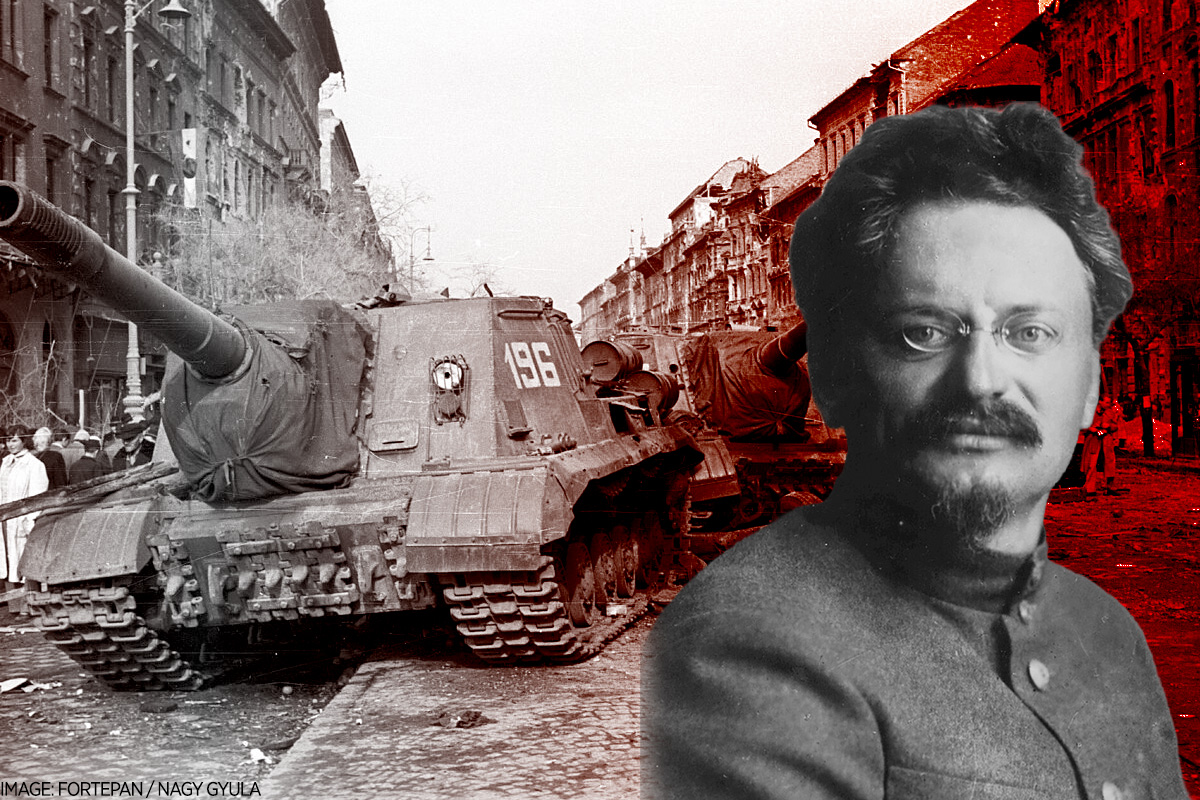
The events of October 1956 in Hungary were a striking confirmation of Leon Trotsky’s perspective that a political revolution to overthrow the Stalinist bureaucracy was possible and necessary in the deformed workers’ states.
Leon Trotsky, alongside Vladimir Lenin, played an essential role in leading the Russian workers and peasants to victory against capitalism in the October Revolution of 1917.
In particular he planned and carried out the insurrection in Petrograd, where he was leader of Russia’s largest Soviet and of the Military Revolutionary Committee.
Through his tireless work in the years afterwards he also played an enormous role in ensuring the survival of the world’s first workers’ state, including the founding and organising of the Red Army during the Russian Civil War.
He energetically defended October against counter-revolution every step of the way and participated in all the key debates of the Russian Communist Party and the Communist International.
Trotsky’s defence of the Soviet Union
Contrary to the Stalinist slanders which are repeatedly levelled against him to the point of exhaustion, Trotsky’s real legacy is one of absolute sacrifice and unwavering dedication to the cause of the working class and of Bolshevism.
This remained the case even throughout the incredibly difficult period following Lenin’s death, which saw the rise of the Soviet bureaucracy, headed by Stalin.
Any opposition which threatened the bureaucracy’s power and privileges was hunted down and exterminated without exception.
The forces of genuine Marxism were annihilated by the monstrous Stalinist bureaucracy, starting with the Left Opposition within Russia.
Trotsky saw his closest comrades murdered, including his secretary Rudolf Klement, whose headless corpse was discovered in the Seine after his assassination by the NKVD in 1938.
Even Trotsky’s own family was targeted. His son, Sergei, was executed in 1937 after spending two years imprisoned in a gulag.
In those conditions you might have expected Trotsky to capitulate to the immense pressure of the Moscow regime and reject the real legacy of the Russian Revolution. Many did.
But, instead, he remained absolutely steadfast in his unconditional defence of October until his own murder in 1940 at the hands of a Stalinist agent in Mexico.
Despite the USSR’s political degeneration, he consistently upheld the incredible achievements of 1917, which remained in the form of the nationalised planned economy.
This can be seen clearly in his polemics against the so-called Trotskyist leaders of the American SWP, such as James Burnham and Max Shachtman, in his masterpiece In Defence of Marxism.
Instead of defending the position of genuine communists, these leaders ended up buckling under the pressure of moralism and petty-bourgeois public opinion.
They refused to recognise the USSR as a workers’ state, confusing its political degeneration – the growth of the bureaucracy as a cancerous excess on the workers’ state – for a social degeneration into ‘bureaucratic collectivism’, with the bureaucracy as a new ruling class.
They saw the violent repression of the working class by the bureaucrats, the lack of democratic freedoms, and especially the signing of the Hitler-Stalin pact, and concluded that the USSR was no more progressive than capitalism.
As Trotsky correctly pointed out, this line of thinking, drawn to its logical conclusion, would lead in concrete terms to rejecting the defence of the Soviet Union in the face of imperialist attacks – even in an eventual war with Nazi Germany.
In a passage of In Defence of Marxism, Trotsky likens the appraisal by communists of the degenerated USSR to the appraisal by a mechanic of a car which had been hijacked by gangsters and badly damaged beyond recognition.
The angry mechanic’s initial, justifiable reaction would be to say: “that’s not a car… Devil knows what it is!”. But, eventually, he would recognise that what is in front of him is indeed still a car, no matter how deformed, and he would set himself to work determining which parts are still good and which are ruined beyond repair.
Political revolution
As such, after initially advocating for the reform of the Soviet state when that was a viable perspective, the Trotskyist Fourth International adopted the programme of a political revolution against the bureaucracy, in order to restore workers’ democracy and safeguard the Soviet planned economy.
What was needed was not a social revolution along the lines of the October Revolution of 1917, but a political struggle against Stalinism to save the USSR from its inevitable stagnation and self-destruction.
In The Revolution Betrayed, Trotsky drew historical parallels to explain this perspective:
“History has known elsewhere not only social revolutions which substituted the bourgeois for the feudal regime, but also political revolutions which, without destroying the economic foundations of society, swept out an old ruling upper crust (1830 and 1848 in France, February 1917 in Russia, etc.).
“The overthrow of the Bonapartist caste will, of course, have deep social consequences, but in itself it will be confined within the limits of political revolution.”
This struggle would be driven, among other things, by the bureaucratic mismanagement of the economy, the suffocation of art and culture, and the drowning out of any form of genuine democracy. These features were all in extreme abundance in the USSR from the mid-1920s onwards.
In Trotsky’s perspective, the victory of the workers against Stalinism would unleash the potential of socialist planning and culture:
“Free discussion of economic problems will decrease the overhead expense of bureaucratic mistakes and zigzags. Expensive playthings, palaces of the Soviets, new theatres, show-off subways – will be crowded out in favor of workers’ dwellings.
“The youth will receive the opportunity to breathe freely, criticise, make mistakes, and grow up. Science and art will be freed of their chains. And, finally, foreign policy will return to the traditions of revolutionary internationalism.”
But this was never achieved. The absence of a successful political revolution in the USSR (or any other deformed workers’ state) was not due to the workers being ignorant of the issues caused by the bureaucracy, but because of their strong sentiment to preserve the gains of the planned economy, and the lack of a feasible revolutionary alternative being put forward.
Despite all of its inadequacies, the bureaucracy still oversaw enormous economic development. And, with the victory of the USSR over Hitler in the Second World War – in spite of Stalin’s blunders – the bureaucracy could portray itself as the capable defender of the Soviet people against imperialist threats.
In order for the workers to really move against the Soviet bureaucracy, what was needed was the arrival of a revolutionary wave – in the West or in the East – in order to present a real alternative outside of either Stalinism or bourgeois counter-revolution.
Hungary 1956
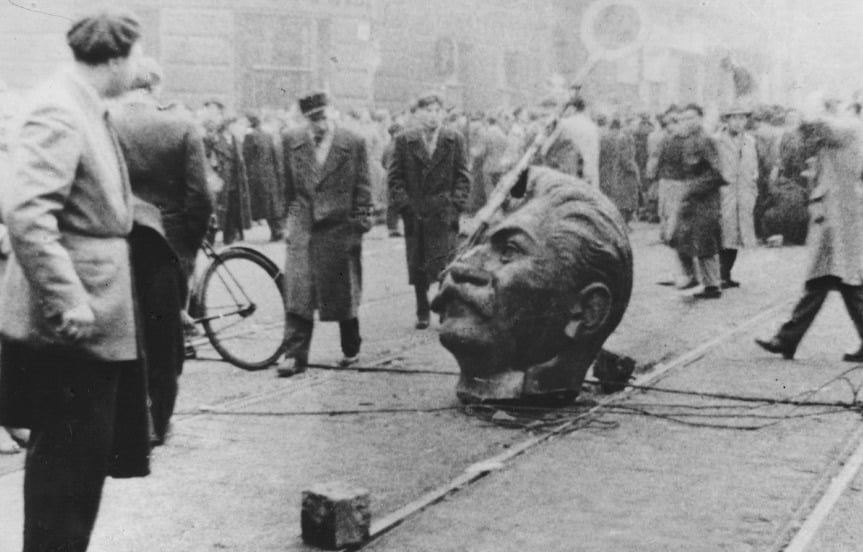
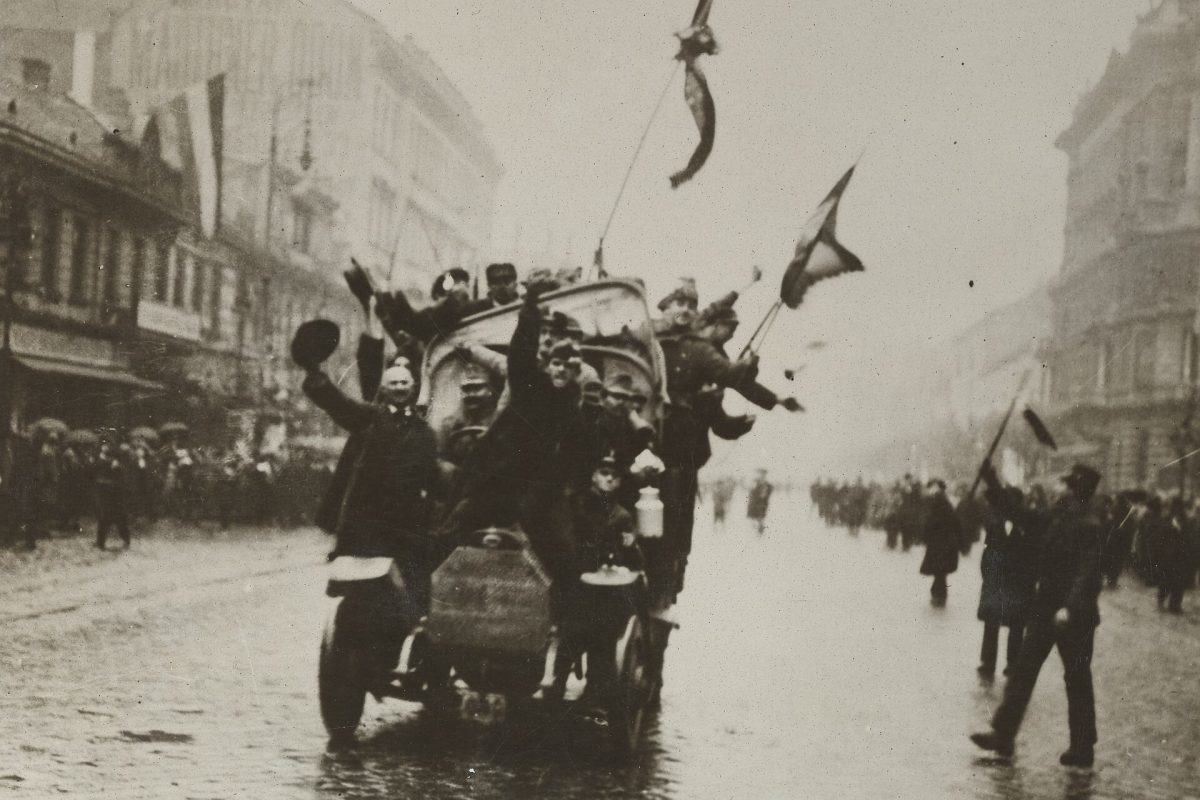
What was proven in Hungary during October and November 1956 was that Trotsky’s prescription of a political revolution to cure the ills of Stalinism was not simply wishful thinking. Such a movement was possible – and indeed broke out.
Voir cette publication sur Instagram
However, the movement alone was not enough. In addition to that, a genuine Marxist international would have been necessary to coordinate the struggle, develop a common programme, resist Kremlin intervention, and spread the movement internationally – both within the deformed workers’ states, and in the capitalist countries.
Unfortunately, by 1956 the Fourth International had degenerated and collapsed after Trotsky’s death. Moreover, even if a healthy international leadership was present at the time, there is no guarantee it would have been able to take root in the oppressive atmosphere of pre-1953 Eastern Bloc. A party of a sufficient size and quality would have been extremely difficult to build in these conditions.
Today, we continue Trotsky’s struggle to build that world party of socialist revolution so that our movement will be successful.