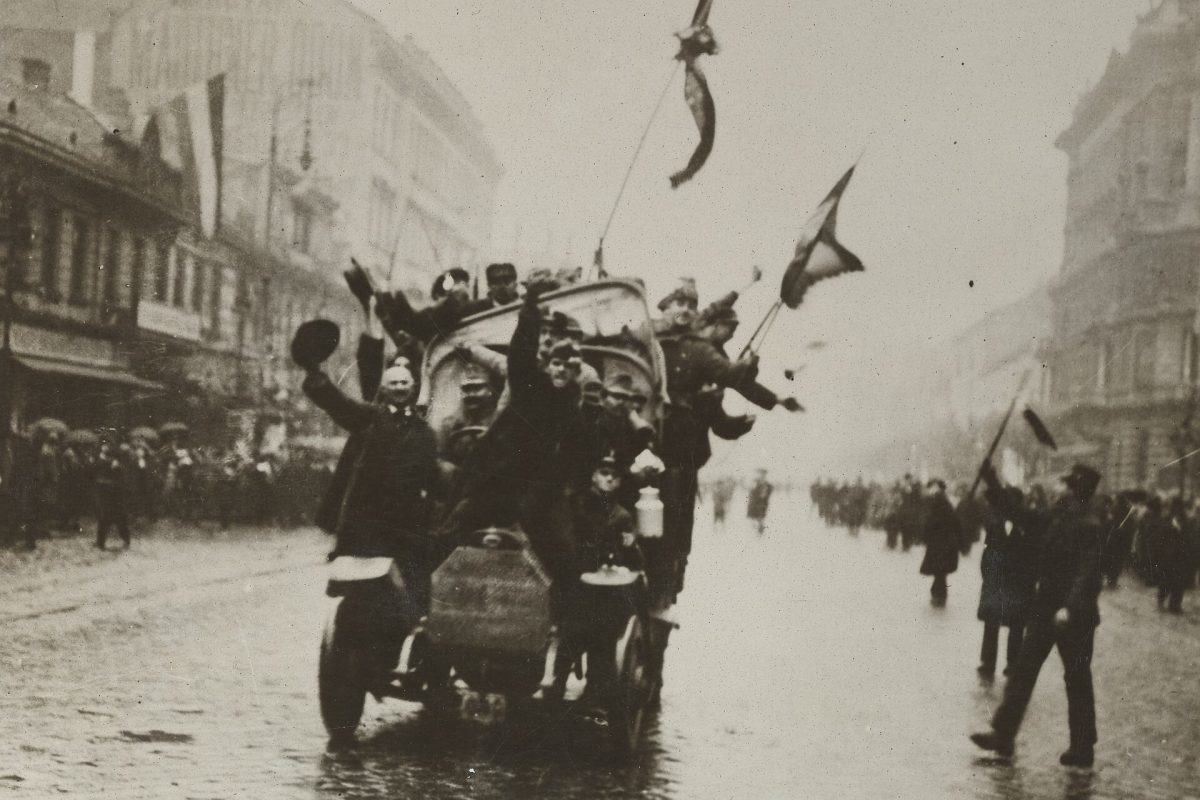
On 22 October 1956, students stirred in front of Budapest’s Technical University.
They were gathering to draw up 16 demands ahead of their planned demonstration the following day. This was to be the culmination of months of ferment among the student youth – and the beginning of the Hungarian revolution.
The Petőfi Circle
Under the suffocating censorship of the Stalinist bureaucracy, universities and intellectual circles were one of the few places where political debate could take place. The Petőfi Circle, founded in 1955 as part of the Communist youth movement, was a discussion group for young intellectuals and students.
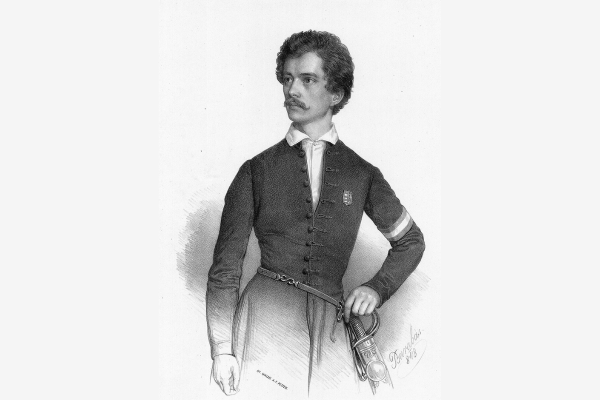
It was named after Sándor Petőfi, the Hungarian poet and revolutionary of 1848. By the spring of 1956 it had become a place for increasingly open criticism of the regime, and discussion on the future of socialism in Hungary.
As the Circle’s meetings grew, they were infiltrated by police agents. The discussions went beyond the demands of the students, and the case they made for wholesale reform ended up winning over many of the police informants themselves. Some even signed a manifesto in support of the students’ programme.
Khrushchev’s speech in February 1956, and the events in Poland in June that year, accelerated this growing opposition. On 23 October, the debates spilled out beyond the boundaries of the Petőfi Circle.
The demands of the students brought together calls for political freedom, higher wages, an end to repression, and solidarity with Poland. They called for a demonstration which became a focal point for a wider movement, as workers joined the protests.
The students did not create the conditions that had brought the masses onto the streets, but they provided its initial, public expression.
From student demonstration to revolution
On 23 October, students took to the streets of Budapest to demand political reform, including an end to repression and for Soviet troops out of Hungary. They expressed their solidarity with the workers of Poland, linking their own struggle to the wider crisis that plagued much of the Eastern Bloc by referring to the historic link between the two nations, quoting Petőfi’s poem from the time of 1848 revolution:
“Our battalions have combined two nations, and what nations! Polish and Magyar! Is there any destiny stronger than these two when they are united?”
Poznań 1956: The first workers’ uprising in Stalinist Poland
The protests began peacefully, and drew in wide layers of society. Students sent delegations to factories, urging them to join the demonstrations, and soon tens of thousands of unarmed men, women, and children poured into the streets.
What had begun as a demonstration over student demands quickly transformed into an expression of discontent that extended far beyond the universities.
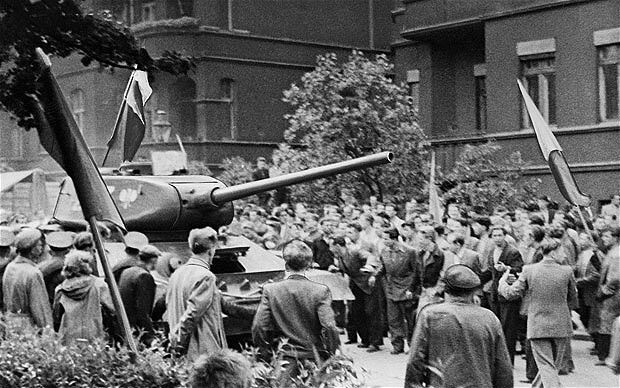
The state responded with threats and attempts to suppress the demonstration. As tensions escalated, the hated secret police (AVH) opened fire on demonstrators. The brutal violence transformed the situation. The regime’s attempt to intimidate the movement into submission only served to inflame it further.
Many regular Hungarian soldiers and police officers were newly recruited young peasants, who sympathised with the crowd against the secret police. They began to hand over their weapons so that the demonstrators could defend themselves. As Peter Fryer described:
“They knew the cruelty of the AVH and had just witnessed a new example of it; the smoke and powder of the fusillade were still in the air. One soldier, then two, gave guns to members of the crowd. Others followed their example.”
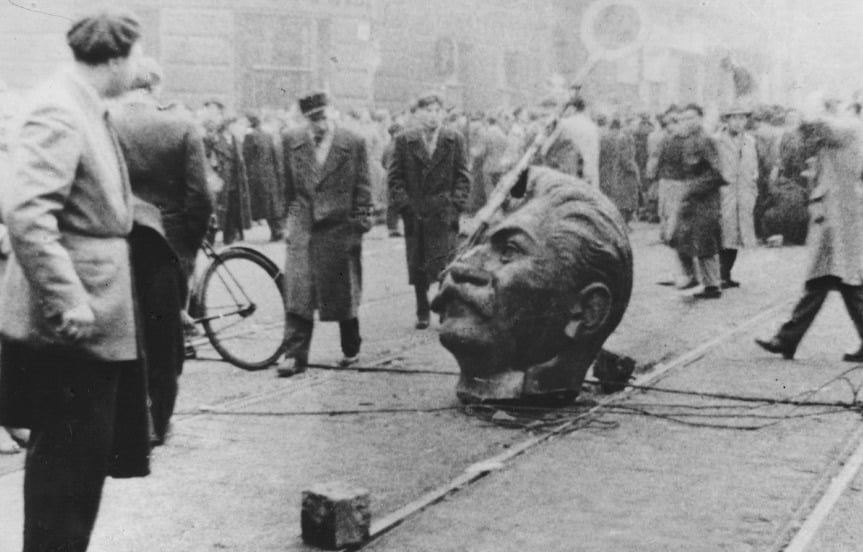
The attempt to crush the demonstration transformed it into an armed uprising. Thus a student demonstration turned into a revolution against the Stalinist regime.
View this post on Instagram
A pattern in revolutionary history
Hungary in 1956 is one example of a general trend. Throughout revolutionary history, the youth and students have been among the first to provide an expression for wider discontent within society.
The Prague Spring of 1968 was also an expression of the crisis of Stalinism in the Eastern Bloc. Under Alexander Dubček, the Czechoslovak state introduced reforms which loosened censorship and allowed political debate to unfold. Seizing the moment, as in Hungary, young people were the first to push against the bureaucratic control of society and the economy, and subsequently the struggle spilled out beyond the universities.
This pattern was not confined to the Eastern Bloc. In the United States, opposition to the Vietnam War became a major focus of student and youth radicalisation from the late 1960s into the 1970s.
The civil rights struggle was shaking the USA, and the military draft brought the realities of the war directly into the lives of many young people. Opposition to the war grew into a mass movement, drawing in students and workers. Under very different conditions to Prague or Budapest, the youth were again the catalyst to bring the class struggle into the open.
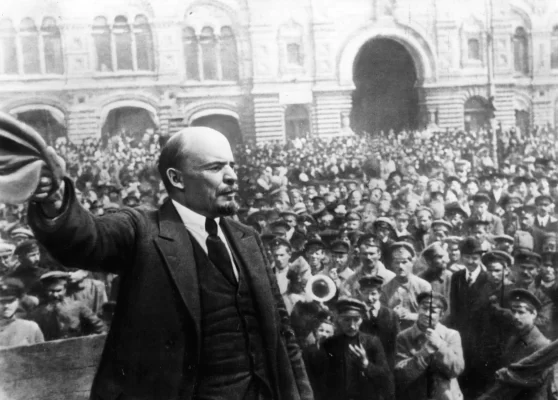
This was a pattern identified by Lenin himself. He understood that the first, confused attempts to fight Russian Tsarism in a revolutionary way came from the Narodnik students in the nineteenth century. These were young people who rejected their privileged backgrounds and devoted themselves to overthrowing the regime.
The Narodnik methods were fruitless. But they represented the beginnings of a revolutionary trend that would lead to the crystallisation of the Bolshevik party, which was overwhelmingly youthful, and the victory of the Russian Revolution in 1917. Not for nothing did Lenin often repeat “he who has the youth, has the future.”
The role of youth in revolution
Young people do not become radical in isolation. They can act as a sensitive barometer of growing tensions in society, even when these have yet to find an organised political expression among wider layers of the working class.
The youth are often a sponge for radical ideas, as they are still beginning to form their own political outlook, and are often less attached to the prevailing institutions and traditions. For students, universities become a place to debate, discover and organise around radical and even revolutionary ideas.
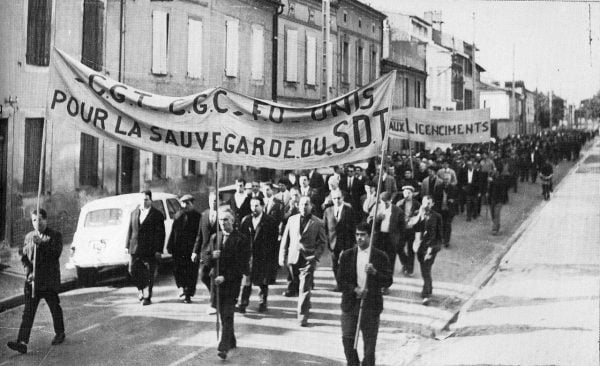
But students alone cannot carry out revolution. The key to that is the organised working class, who occupy a central place in production, and whose exploitation and oppression sows the seeds of a revolutionary consciousness.
The central question is how the radicalism of the youth can be linked with the power of the working class to change society. Hungary in 1956 was a vivid illustration of this process.
With independent workers’ organisation and political expression severely restricted, student circles became important places to express the growing discontent in society. But the transformation of the student demonstrations into a revolution was entirely dependent on the broader participation of the Hungarian working class.
Gen Z in revolt
We only have to look at the streets of France right now to see the role of the youth today.
The movement was sparked by school students demanding an end to a crumbling education system. But it has since been joined by trade unionists, workers, farmers and others. Repression by the police has galvanised more layers of the working class into action.
The youth sounded the charge, and they have been followed into the struggle by battalions of the working class.
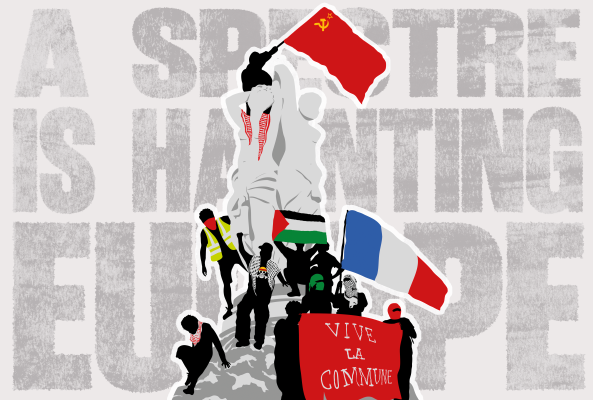
Inevitably, parallels have been drawn between the events of today and those of the revolution of May 1968 in France. That too started as a student occupation movement, and developed into a general strike of ten million workers that, with the correct leadership, could have overthrown French capitalism.
But this movement of the youth is not confined to France. All over the world, and now especially in Europe, movements that have become known as ‘Gen Z revolutions’ have erupted. These are not just protests by young people who ‘will soon grow out of it’. They are movements sparked by the dead-end of the capitalist system, which offers us no future.
In more than one place, they have extended beyond just Gen Z, and have started connecting up with broader layers of the working class. General strikes are on the cards across Europe this November.
Leadership
In any revolutionary situation the question of leadership is vital. One of the roles of leadership in the class struggle is to unite the radicalism of the youth with the power of the organised working class.
That unity is not an organisational question, but a political one. It is by taking the demands of the youth and connecting them with the struggle of the working class against exploitation and oppression, in a revolutionary programme against capitalism, that we can unify our struggles.
Our job is to build a revolutionary party that can develop that programme. It must be a party of the youth and the working class. That is how we can prepare for the revolutionary movements to come, in Britain and around the world.