This article is the seventh instalment of our 12-part series ‘The Hungarian Revolution: 70 years on’.
At 3:00am on Thursday 28 June 1956 in Poznań, Poland, a foreman of the MPK public transport company arrived for his morning shift. On his tram, he found a slip of paper:
“GENERAL STRIKE OF THE TRAM DRIVERS. TODAY WE’RE NOT DRIVING OUT.”
So began the first major workers’ uprising in Stalinist Poland. It was an extraordinary demonstration of working-class power, which was brutally suppressed by the bureaucratic state.
Yet the uprising helped force political reforms in Poland that October, in turn inspiring the Hungarian Revolution of 1956, which exploded onto the scene shortly thereafter.
The roots of the uprising
After Stalin’s death in 1953, the anger accumulated under his rule began to surface. East Germany experienced a mass uprising that June, swiftly crushed by Soviet forces, while workers in Plzeň, Czechoslovakia, had revolted a few weeks earlier. Across the Eastern Bloc, the beginnings of de-Stalinisation appeared, but hard-line Stalinists remained in control of much of the state apparatus.
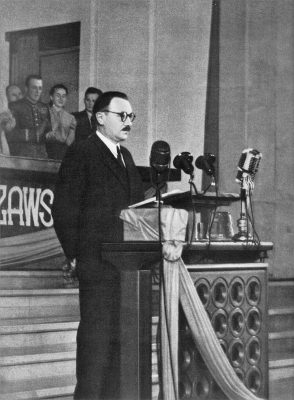
Poland was no exception. Under Bolesław Bierut, the regime continued to demand sacrifices from workers while official propaganda promised prosperity and socialism. The growing gap between these promises and everyday reality fuelled resentment.
Poznań was particularly affected. Its population had grown by nearly 50 percent since the war, reaching 380,000 in 1956. But housing provision had failed to keep pace. Much of the city had been damaged during the fighting of 1945, and eleven years later many workers were still living in provisional barracks. Per-capita investment from the central government was far lower than in Warsaw or Kraków.
Conditions inside the city’s ZISPO/Cegielski heavy-machinery complex were appalling. In the W-3 department, workers possessed inadequate tools and unsafe equipment, and experienced poor ventilation, excessive noise, and cramped rooms. Protective clothing was lacking, hot water was unavailable in the showers, and some workers laboured beside toxic cyanide salts without proper ventilation.
Bureaucratic mismanagement made matters worse. W-3 was supposed to produce fifteen locomotives in 1956, yet by early July it had not received enough steel to build even two. Deliveries arrived weeks late, leaving workers idle and poorly paid for periods before forcing them into exhausting overtime, sometimes working sixteen-hour shifts and sleeping on the factory floor.
Meanwhile, production quotas had been increased, bonuses were scrapped for most workers, and management rewarded favoured employees based on implausible claims of extraordinary productivity. Factory councils, supposedly intended to represent workers, were dominated by management loyalists hoping for privileges such as access to new housing.
In 1953, the government introduced a tax concession for workers meeting certain production targets. ZISPO management interpreted the rules selectively, depriving thousands of workers of the money they were owed. This became one of the immediate triggers of the uprising.
But material hardship alone cannot explain what happened. Workers were not merely demanding better wages. They were also rebelling against a system that denied them any meaningful control over their working lives.
The workers organise
One female worker later explained that her dissatisfaction extended beyond the factory to food kitchens, newspapers, schools, and banks. Her petitions and letters had achieved nothing. Others had their own grievances, but, as she observed, “we all felt the same.”
Another worker described the strike as a reaction to the constant suppression of initiative and independent thought. The regime demanded sacrifices in the name of socialism, while denying workers the freedom to shape the society supposedly being built for them.
Stanisław Matyja became a prominent example of this defiance. As early as 1953, when management announced worsening conditions over the factory loudspeakers, he climbed up and attempted to cut their cables. Summoned for discipline, he threw his production card at the managers and refused to accept the new arrangements. He became known as someone unafraid to challenge those at the top.
Gradually, informal networks developed in W-3 and across ZISPO. Workers began meeting away from management, discussing their grievances and refusing to explain themselves to its representatives. Similar groups emerged across all departments and in other factories. In a system where independent collective organisation was treated as illegal factionalism, these networks represented a significant achievement.
Workers began electing their own representatives to factory councils, submitting complaints, and sending petitions to management. In October 1955, W-3 workers went over their managers’ heads, contacting Communist Party bodies and sending a delegation to Warsaw to approach the Ministry of Machine Industry and the Metalworkers’ Union.
Their grievances became a national issue. When workers discovered the extent of the disputed tax deductions, anger intensified. In preparations for the next five-year plan, ZISPO workers submitted 4,704 proposals and amendments, only to have every one of them ignored.
The regime wanted workers to participate in the appearance of socialist democracy, not to exercise genuine power.
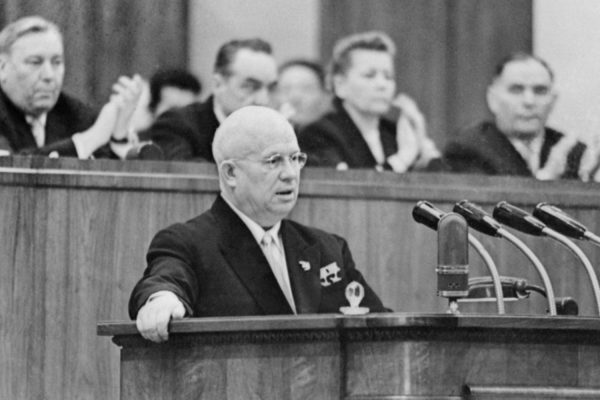
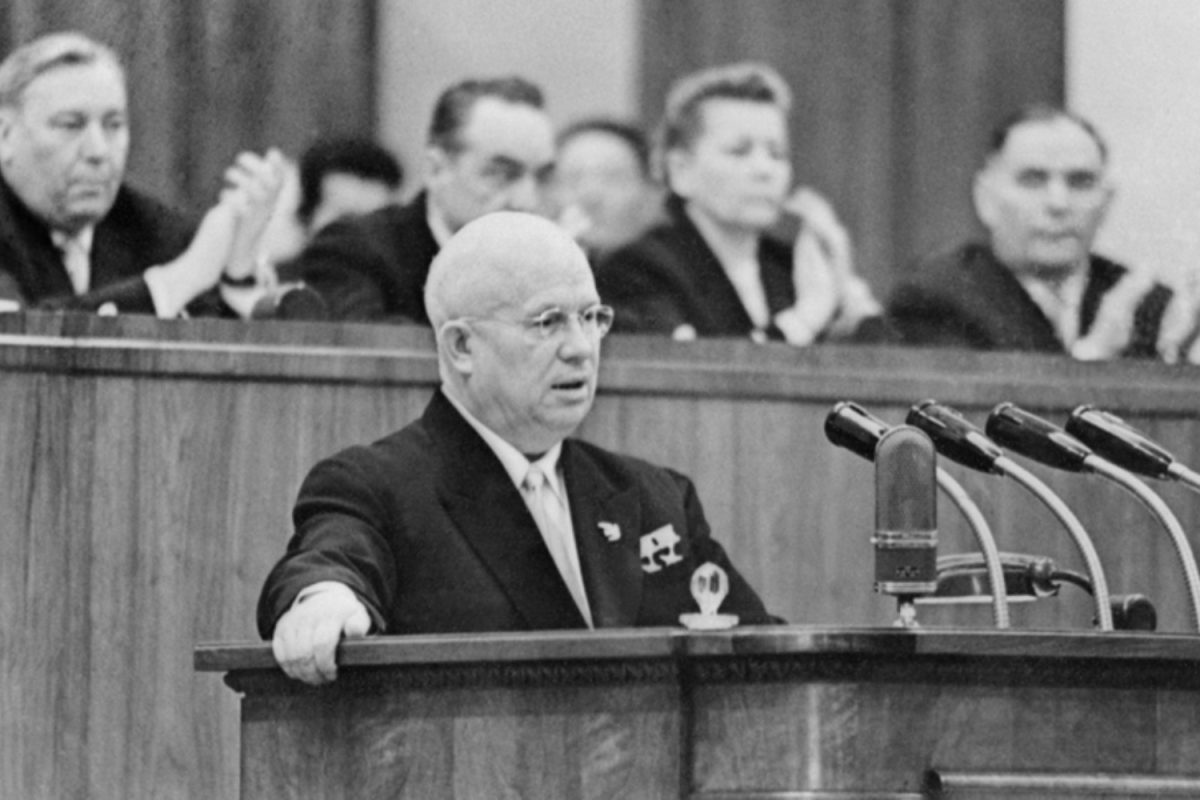
In March 1956, Nikita Khrushchev’s speech denouncing Stalin’s crimes circulated among Polish Party members and quickly reached workers. The speech encouraged further discussion and weakened the authority of the Stalinist establishment.
At ZISPO, protests intensified. Workers demanded talks with senior officials, and on 21 June issued an ultimatum: a commission from Warsaw must arrive by 26 June, or they would strike.
A delegation arrived, but its bureaucratic and evasive language only deepened the workers’ anger. Seventeen representatives were subsequently elected to negotiate directly with Minister Roman Fidelski.
On 26 June, after lengthy discussions, Fidelski agreed to several demands, including repayment of the disputed tax deductions, bonuses for previously excluded workers, measures to address production stoppages caused by shortages, and changes to piecework calculations.
Matyja, sceptical of official promises, insisted that the minister travel to Poznań the following morning and announce the agreement himself.
When Fidelski arrived, however, he began retreating from his commitments, disputing the sums owed and claiming that some promises could not be fulfilled. Workers who had expected victory erupted in anger. One challenged the minister’s arithmetic, asking whether those in power needed to finish elementary school before governing. Another brandished a rope and suggested hanging the minister.
Fidelski was escorted away. That evening, the minister and factory directors dined together luxuriously. But the workers had reached their breaking point. The time for negotiations was over.
The strike begins
At 5:40am on 28 June, the night shift at W-3 finished work. Yet nobody changed out of their work clothes. When the morning shift arrived, they joined their colleagues in the hall, waiting in silence.
At 5:55am, Matyja entered to cheers. The factory siren sounded, and the workers walked out.
Groups spread across other ZISPO departments, urging their colleagues to join them. The agreed signal for other workplaces was the second morning siren. Workers at the Railway Rolling Stock Repair Works, municipal gasworks, transport company and other factories responded.
At one workplace, even Communist Party members joined the walkout, one explaining that he was a party secretary but also a worker. One factory director who tried to stop the walkouts ended up doused in machine oil. Another found himself with a paper recycling bin dumped on his head.
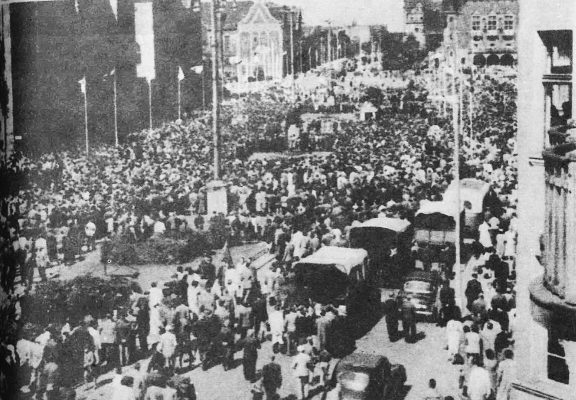
By around 7:30am, much of industrial Poznań was on strike. Between 70 and 80 percent of the city’s employed population would eventually participate, alongside students and young people.
The movement displayed remarkable discipline. Workers secured factory premises with the cooperation of respected technical staff, while self-appointed stewards maintained order during demonstrations. Public property was treated with care.
The slogans reflected the mixture of economic and political demands: “We want to eat”, “We demand bread”, “Down with the bloodsuckers”, and “Down with the red bourgeoisie”. Socialist songs, Polish patriotic songs and Catholic hymns were sung together. This confused mixture demonstrated not a rejection of socialism, but a rejection of the deformed caricature of socialism imposed by the Moscow bureaucracy and their stooges in Poland.
By 9:00am, approximately 100,000 people had gathered outside the Imperial Castle, where the Municipal People’s Council was based. A spontaneously chosen delegation demanded that Prime Minister Józef Cyrankiewicz or First Secretary Edward Ochab come to Poznań immediately, declaring the lower party ranks incapable of resolving their grievances.
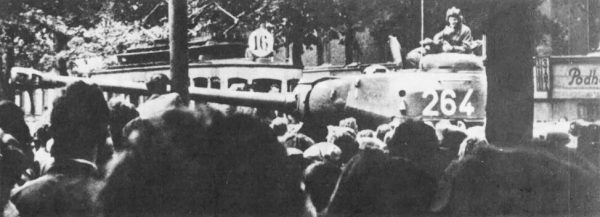
Workers also went to the local party offices. Militiamen arriving to protect the buildings were greeted with cries of “Militia with us!” and fraternised with the crowd. Official representatives attempted to calm the situation with vague assurances, but their evasions further undermined confidence. The militia commander ended up knocked out by a punch to the face. The party’s propaganda officer was forced to flee the scene.
The now-abandoned local government offices were eventually entered by the crowd. A white flag was raised to signal its surrender, portraits of officials were removed, and a bust of Lenin was turned towards the wall. Someone wrote above it: “Keep him facing towards the wall, to spare him the shame of seeing all of this.”
The limits of spontaneity
Despite the extraordinary organisation that had made the general strike possible, the movement soon encountered serious limitations.
The enormous crowd could not easily be coordinated. Many people could not hear official statements, and confusion spread when rumours circulated that the seventeen ZISPO delegates who had negotiated in Warsaw had been imprisoned. In reality, they had not been arrested.
Unable to communicate with the crowd as a whole, the strike leaders struggled to contain the confusion. Sections of the demonstrators marched towards the city prison, where the guards surrendered their weapons to the crowd, but the delegates were not inside. Others then concluded that the missing delegates must be held by the secret police and headed towards the Voivodeship Bureau of Internal Security.
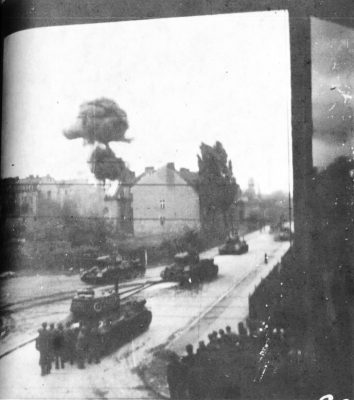
There, the situation escalated. Agent provocateurs started shouting anti-communist slogans. Security personnel sprayed demonstrators with water before opening fire sometime between 10:40 and 11:00am. Workers, students, schoolchildren, and other civilians were shot indiscriminately. Demonstrators responded with stones, Molotov cocktails and weapons taken from the prison. An urban battle began.
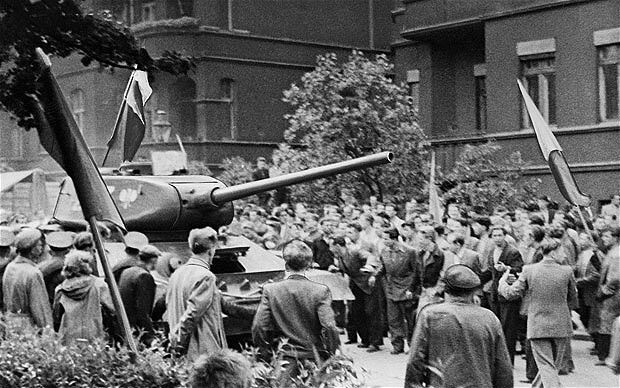
Some military cadets refused orders to attack the demonstrators, and the crowd briefly took control of several tanks. But the uprising had become fragmented, and the original strike leaders could no longer provide effective direction.
Matyja, hearing gunfire, realised that the strikers’ leadership had lost control of events. By midday, many workers had returned home, while others joined the armed resistance. Fighting continued into the early hours of the following morning.
These events demonstrated the immense capacity of workers to organise themselves under extraordinarily repressive conditions. Yet it also exposed the limits of spontaneity. A revolutionary organisation with a clear socialist programme, experienced cadres, capable of coordinating action, communicating clearly, and providing political leadership, might have helped lead the movement to success.
However, such an organisation did not exist in Poland, and would have been exceptionally difficult to build under Stalinism. Independent political organisation was repressed, and the uprising emerged from conditions in which workers had been denied even basic democratic freedoms. To insist, seventy years later, that the workers simply needed a revolutionary party and that would have solved everything, is sterile abstraction. It overlooks the historical circumstances that made one so difficult to establish.
The lesson is therefore twofold: the working class is powerful, and when it moves it can achieve remarkable things, but the ability to sustain and extend a movement also depends on political coordination and leadership.
Repression and its consequences
The regime responded by sending approximately 10,000 troops and hundreds of tanks into Poznań. The army was ordered to suppress the uprising, and aircraft flew low over the streets to intimidate the population. Armed workers fought back, but the military balance was overwhelmingly against them.
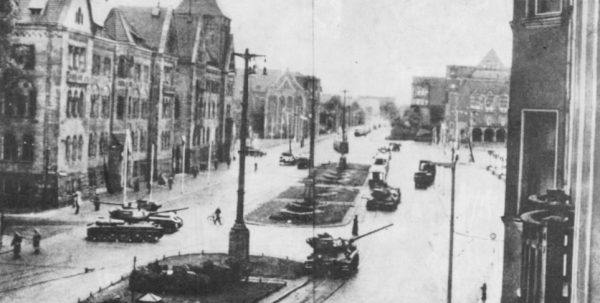
The human cost was devastating. 57 people were killed, many during the assault on the security police headquarters. Most were young working-class men, including drivers, electricians, engineers, and machine operators. School students and apprentices were also among the dead. Roman Strzałkowski, one of the youngest victims, was only thirteen.
The following day, Cyrankiewicz delivered a threatening speech, declaring that the state would “chop off” the hand of anyone who raised it against the “people’s power”.
Yet the people of Poznań were not provocateurs or enemies of socialism. They were workers demanding bread, fair wages, and a say in their lives. The state answered their demands with bullets.
In the following weeks, hundreds of workers were interrogated and brutally tortured by the security apparatus. Tram driver Stanisława Sobańska described being beaten repeatedly, losing her teeth, and suffering severe internal injuries. After months in custody, she was left with lasting disabilities. Her testimony illustrates the cruelty inflicted on those who had dared to challenge the regime.
Polish October and the Hungarian Revolution
The uprising nevertheless had consequences far beyond Poznań.
Since Khrushchev’s speech, criticism of Stalinism had been growing within Poland. The magazine Po Prostu became a prominent voice for reform, while demands grew for Władysław Gomułka, a former party leader imprisoned under Stalin, to return to power.
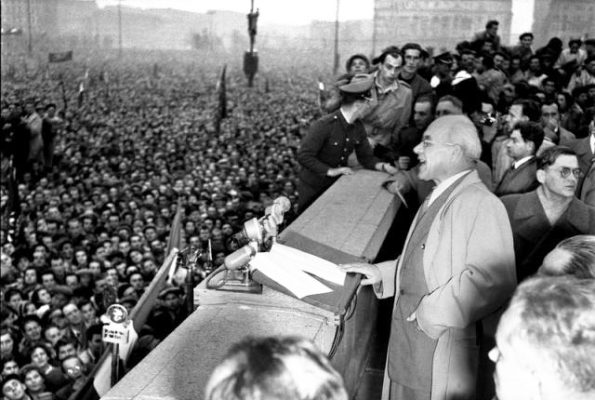
Gomułka publicly acknowledged that the workers of Poznań had legitimate grievances and that the tragedy should have been avoided. In October 1956, he became First Secretary, presenting himself as a reformer who would pursue a specifically Polish road to socialism and greater independence from Moscow.
The Soviet leadership reacted with alarm, but Gomułka remained in power after tense negotiations. Soviet military personnel and advisers subsequently withdrew from Poland, while the regime introduced limited political changes.
For workers and reformers across Eastern Europe, these developments suggested that resistance could force concessions from the Stalinist regime. In Hungary, where unrest was already building, the events in Poland helped inspire a much broader revolutionary movement. Unlike Poznań, the Hungarian Revolution spread across the country and challenged the regime on a national scale. It was ultimately crushed by direct Soviet military intervention.
Gomułka’s reforms had clear limits. His priority remained the preservation of Party rule. Within a year, he was urging workers to treat Poznań as a “tragic family matter”, best left unspoken. In December 1970, another workers’ uprising would be violently suppressed, and Gomułka himself would be removed from power.
Poznań ’56 remains a powerful example of both the potential and the tragedy of workers’ struggle under Stalinism. Workers demonstrated extraordinary courage, solidarity, and initiative, challenging a regime that claimed to rule in their name. But their uprising also revealed the difficulties of transforming spontaneous revolt into a coordinated struggle capable of changing society.
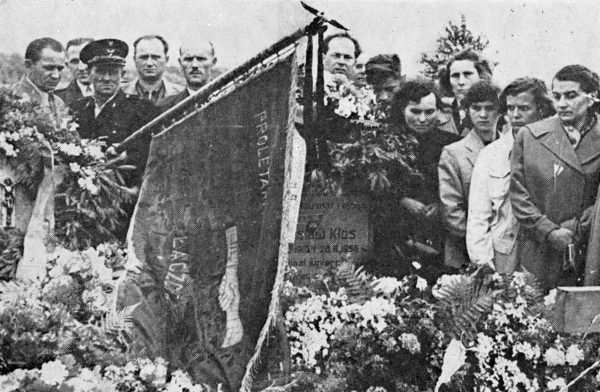
The Stalinist bureaucracy had betrayed their promises of socialism, subordinating workers to an unaccountable bureaucratic state and ultimately using violence against those demanding genuine workers’ power. The consequences extended far beyond the streets of Poznań, contributing to the political crises that shook the Eastern Bloc in 1956.
The defeat of these movements helped preserve a system that would eventually collapse under the weight of its own contradictions. The wider historical tragedy was that the possibility of a real workers’ state and democratically planned economy was never realised.
Poznań reminds us that workers are not machines to be directed from above, but human beings capable of thinking, organising, and fighting for a different world. Their defeat was not inevitable, but neither could courage alone overcome every obstacle. It needed organisation. The uprising remains both a testament to working-class power, and a warning about the price of a revolution betrayed.