This article is the sixth instalment of our 12-part series ‘The Hungarian Revolution: 70 years on’.
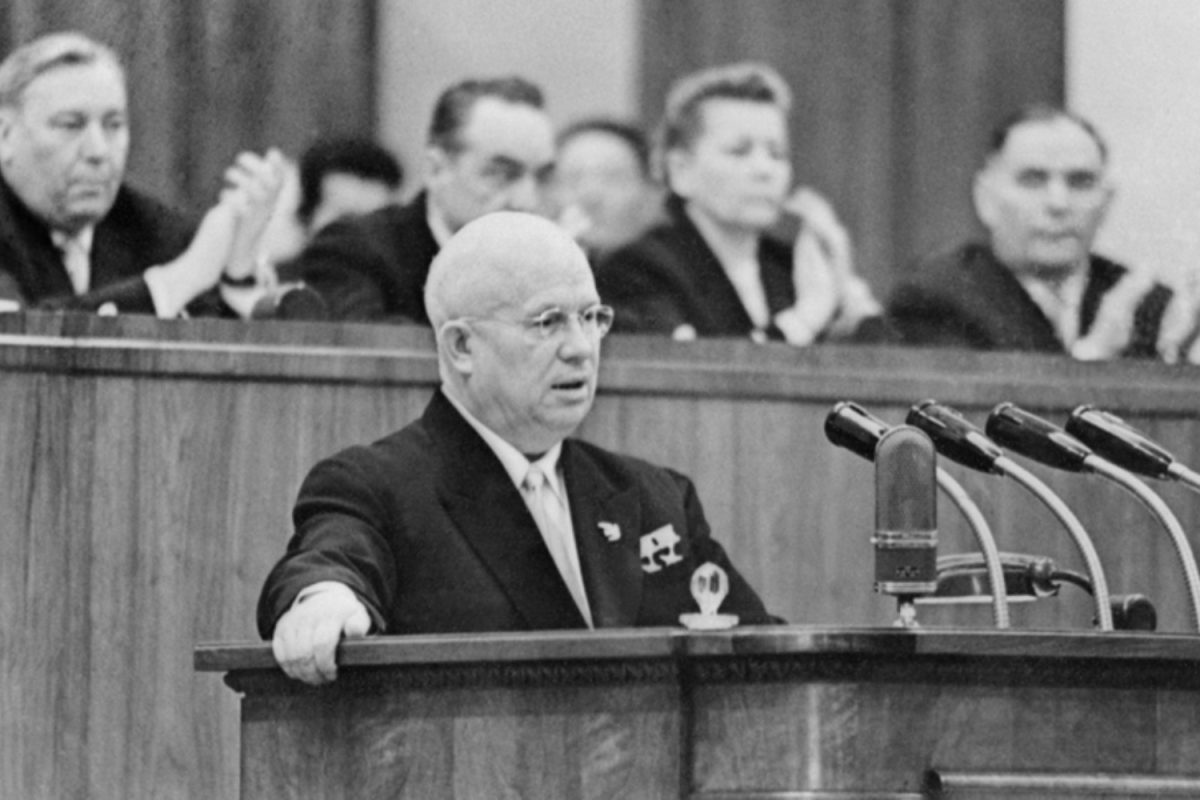
In February 1956, Nikita Khrushchev, leader of the Soviet Union, gave a speech to the 20th Congress of the Communist Party of the Soviet Union. He accused Joseph Stalin – who had died three years earlier – of political repression, murdering his political opponents, and creating a cult of personality.
This speech was supposed to be secret. When it leaked it echoed across the USSR and the ‘Eastern Bloc’ like a thunderclap.
For years, Stalin had been revered as the unquestioned, benevolent, omniscient leader of the Soviet Union. With one speech that was all turned upside down. It shook the USSR and its allies to their foundations.
Contemporary reports describe meetings where the speech was read out. People sat in stunned silence, fluctuating between disbelief and anger. Some even fainted.
Why did Khrushchev make this speech? Did it represent a break with Stalinism, or was it simply a scapegoating manoeuvre? And what happened afterwards?
Stalin’s crimes
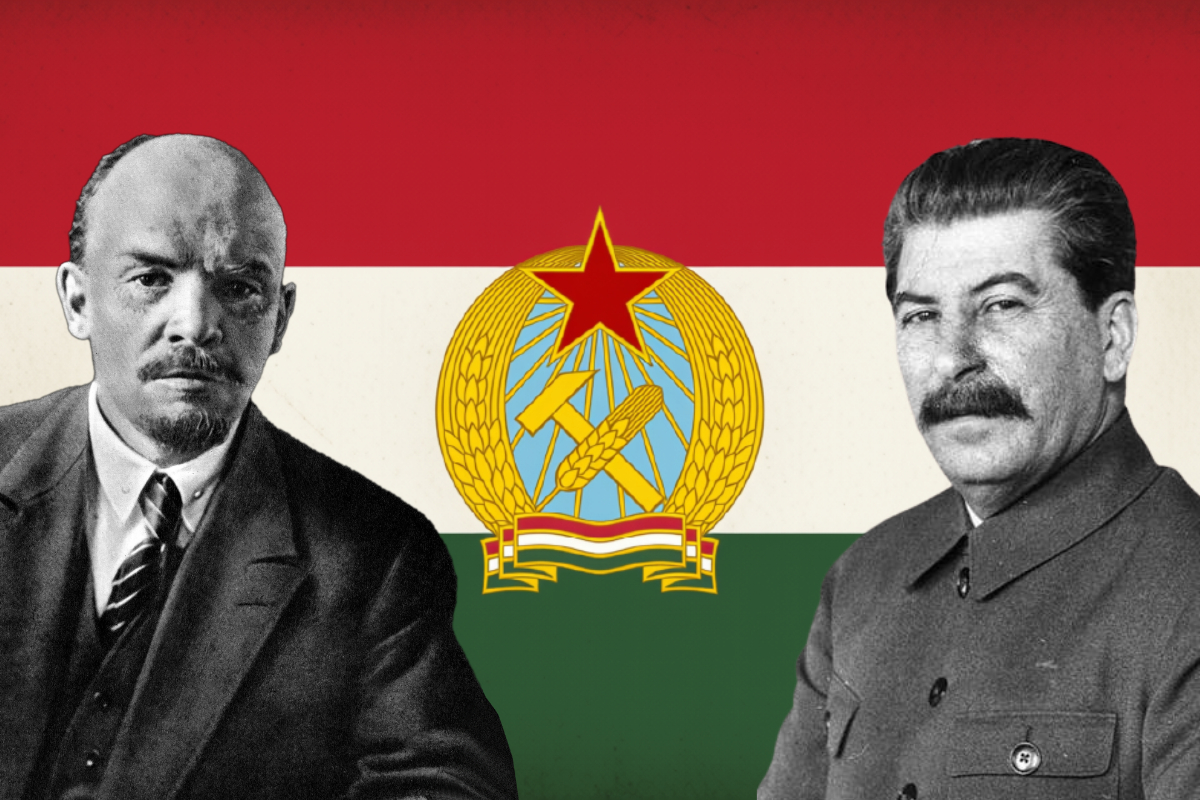
After Lenin’s death in 1924 Stalin had risen to power by unscrupulous methods at the head of a parasitic bureaucratic caste within the Soviet Union.
This bureaucracy manipulated and controlled communist parties around the world, through its capture of the Communist International.
Stalinism was therefore responsible for a whole series of mistakes and betrayals of the international workers’ movement. This cost countless revolutionaries their lives, and derailed many revolutionary movements, like the Chinese Revolution of 1925-27, and the Spanish Revolution in the 1930s.
At home, Stalin’s bureaucracy – which included hundreds of thousands of managers, specialists, and functionaries – acted as a relative fetter upon the development of the planned economy, by stifling the initiative, free discussion, and democratic control needed for socialist planning to thrive, and by introducing all sorts of corruption, distortion, and mismanagement into economic life.
To preserve its position and its privileges, and fearful of a backlash from the working class, the bureaucracy became increasingly violent and oppressive towards its political opponents – real or imagined. This repression reached a crescendo with the Great Purge of 1936-38, in which the Stalinist regime physically liquidated what remained of Lenin’s Bolshevik party, which had led the revolution in 1917.
Detailed descriptions and explanations of these crimes were outlined by Leon Trotsky and the Left Opposition as the process unfolded, across various articles and books. For his steadfast opposition to the crimes of the Soviet bureaucracy, Stalin had Trotsky murdered in August 1940.
Stalinism in Eastern Europe
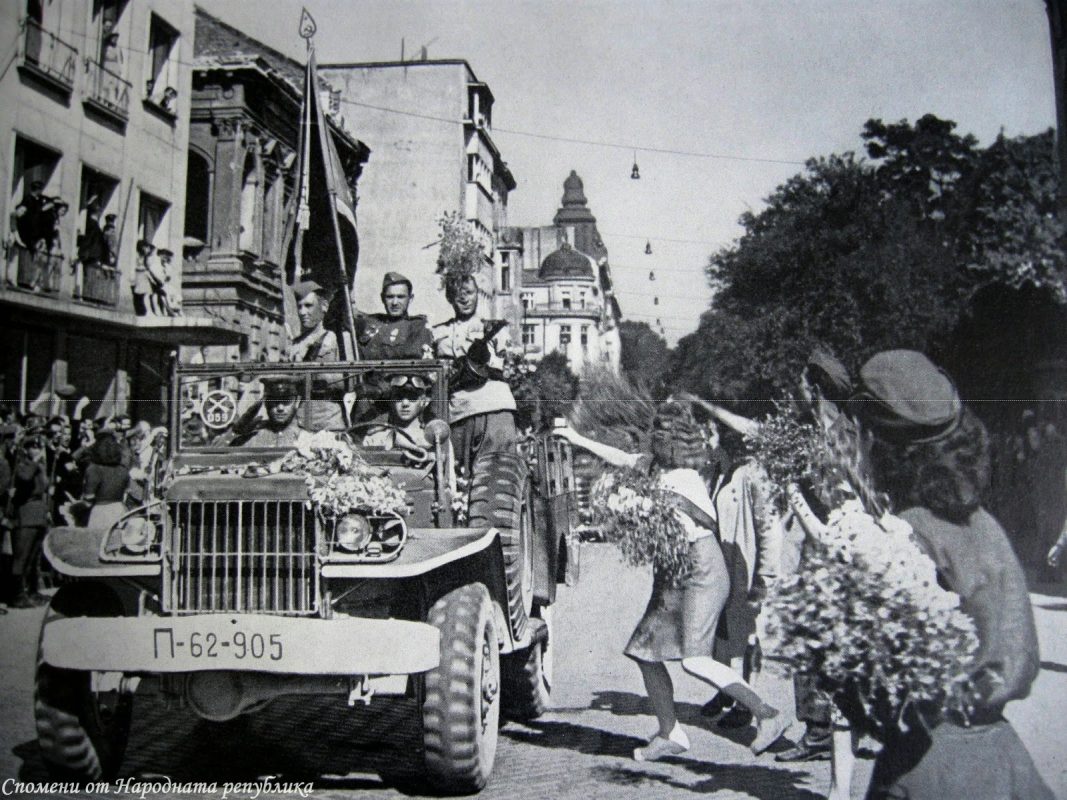
By 1944, the Soviet Union was winning the Second World War and driving the Nazis back. The advance of the Red Army across Europe, combined with the demise of the fascist regimes, produced a revolutionary mood across the continent.
But the Stalinist regime wasn’t bringing socialism to the Eastern European countries. It brought the rule of a bureaucracy: a nomenklatura; a privileged elite that spoke in the language of the October Revolution, but imposed top-down control, leaving workers with no real voice or control over their workplaces or governments.
In one country after another, the revolutionary movements inspired by the defeat of fascism were manipulated, captured, and demobilised on Stalin’s orders. The bureaucracy leant upon the masses in order to expropriate the bourgeoisie and abolish capitalism, but swiftly turned to repression in order to assert their control.
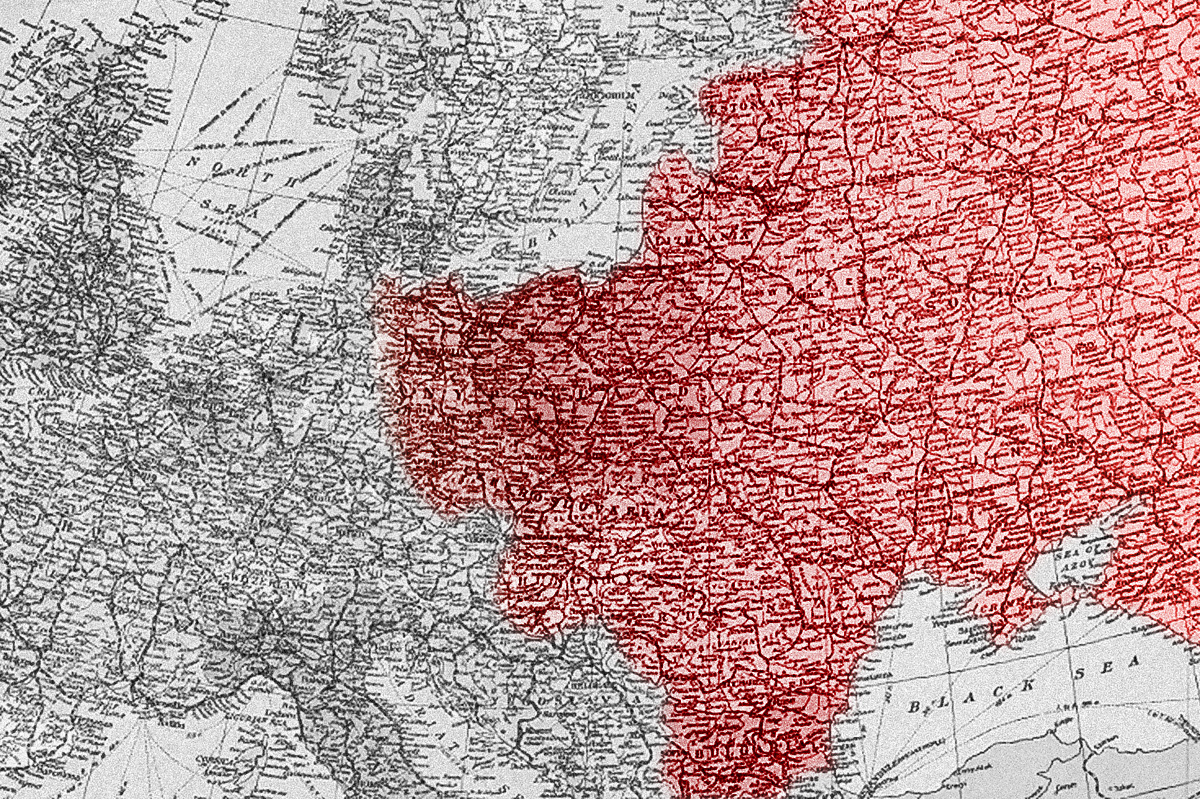
Across Eastern Europe deformed workers’ states were established in the image of Stalin’s USSR. Powerful planned economies were hampered by bureaucratic planning and violent repression. A simmering frustration among the masses grew over time, and threatened to force its way to the surface.
By the early 1950s, Stalin’s policies were becoming increasingly erratic, as he tried to manage the economic and social contradictions building up. He could feel the anger directed against his regime, and became paranoid and trigger-happy in exterminating real or imagined political opponents.
It was in this context that Stalin abruptly died in 1953. As Ted Grant explains in Russia: From Revolution to Counter-Revolution:
“Stalin’s actions were endangering the position of the whole bureaucracy. It was not only that he was threatening to murder the top layer. The Soviet Union was only just recovering from the devastation of the war. To plunge it again into the chaos and lunacy of another purge would have had the most catastrophic effects. However, on the 5th March 1953, Stalin suddenly died. Even if he was not murdered – and all the evidence suggests that he was – his death could not have come at a more opportune time.”
Khrushchev’s manoeuvres
With Stalin’s death, the top layer of the bureaucracy was left to deal with the growing discontent within the USSR and its sphere of influence. Khrushchev’s secret speech in February 1956 was an attempt to redirect and diffuse the anger.
Nikita Khrushchev was born into a working-class family, worked in mines in his youth, and served as a political commissar during the Civil War following the revolution in 1917. He was a communist with considerable abilities but limited general and political education.
In his early days, he supported Trotsky’s line on the need for workers’ democracy, but – as he was very close to Stalin’s henchman Kaganovich, who helped him climb the bureaucratic ladder – he switched to a pro-Stalinist position, helping to clear out the ‘enemies of the people’.
As Stalin’s repression intensified, Khrushchev managed to climb ever higher. As Leninist traditions were rooted out of the party, careerism and sycophancy were welcomed in. The metamorphosed party demanded obedience, and encouraged a lust for privileges over independent thinking or political knowledge. It was in this context that Khrushchev thrived.
In his article on The Individual and the Marxist View of History, Adam Booth explains that:
“In its ascendancy, the revolutionary movement produces figures with courage and conviction: the Cromwells, Robespierres, and Lenins of this world. The period of degeneration and backsliding, however, favours those without theories or visions. As the revolution ebbs and the masses withdraw from activity, then the dull, grey ‘strongman’ emerges on the back of this demoralisation to maintain order.”
Khrushchev, like Stalin, was the perfect example of such an individual. Just as the bureaucracy needed Stalin to defend its hijacking of the workers’ state, it needed a man like Khrushchev to appease the growing discontent from below.
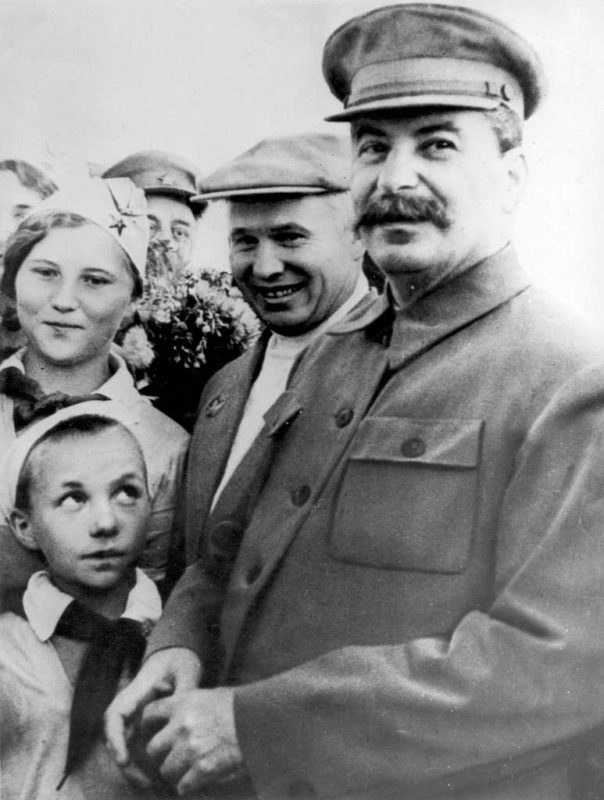
Therefore, through the secret speech to the 20th Congress of the Communist Party of the Soviet Union, we hear not an individual speaking, but the voice of the entire bureaucratic caste of the USSR.
Khrushchev’s criticism of Stalin was not that he had betrayed the interests of the working class, but that he had betrayed the interests of the bureaucracy, by recklessly endangering their rule.
This is why Khrushchev’s speech was secret. It was only supposed to be heard by a closed session of the Congress with no journalists present. Most of the listeners were high-ranking party officials, state officials, and generals. It was concealed even from the leaders of foreign Communist Parties who were in the USSR at the time.
There was no open discussion of the speech at the Congress. It was intended to be a statement to the bureaucracy only – i.e. not for public consumption. Only afterwards was it leaked.
In the speech, Khrushchev said that all of Stalin’s purges prior to the 1934 Congress of the Communist Party were justified and necessary. They targeted those who were in political opposition to Stalin – especially the Trotskyists – and therefore, according to Khrushchev, they deserved to be murdered.
However, from the 1934 Congress onwards, Khrushchev said, Stalin’s purges went too far, because they started targeting the bureaucracy itself.
In fact, of the 1,966 delegates to the 1934 Congress – most of whom were loyal bureaucrats – 1,108 of them were later arrested by Stalin on charges of counter-revolutionary crimes. This gave the 1934 Congress its nickname: the Executed Congress. It was this kind of terror against their own bureaucratic colleagues that was too much for the rest of the bureaucracy to stomach.
The system was not to blame, and certainly not the ruling bureaucracy, said Khrushchev, but Stalin personally, because of his negative personal traits. As an individual, he manipulated people and led them to murder others. Meanwhile, the ‘innocent’ party leadership claimed to have had little knowledge of the extent of the Purges.
This rings hollow. The Purge was conducted when Khrushchev himself was in charge of the Communist Party apparatus in the Moscow region. 35 out of 38 party officials in Moscow and 136 out of 146 party secretaries in the surrounding areas were murdered by the regime.
But this fact, and its contradiction in Khrushchev’s speech, can both be true at once. Much of the internal apparatus perhaps didn’t know or care to investigate the scale of the repression, but at the same time it was fully complicit in sending people to their deaths so they could survive.
Khrushchev charged Stalin with purging the military, causing the USSR to be unprepared when the Nazis invaded in June 1941, leading to the needless deaths of millions. This is undeniably true. However, Khrushchev did not explain why Stalin did it. The military purges were his attempt to secure his own position, as he sank into paranoia that he would be removed by more capable men, like the leading military commander Mikhail Tukhachevsky.
There was a clear reason why Khrushchev avoided explaining Stalin’s actions. He was doing the same thing himself. After he consolidated control over the party, the top military personnel, including the celebrated Marshal Zhukov, were sent into exile. Khrushchev had realised that – as he himself had outmanoeuvred other bureaucrats to get to the top – the military could also outmanoeuvre him. So he sidelined them. The precise method looked slightly different to what Stalin had done, but the essence remained exactly the same.
The most famous line of attack by Khrushchev was that Stalin had created a cult of personality around himself. This was true, and there were two reasons why Khrushchev had to attack it.
First, he needed to indicate to the bureaucracy that his rule would be different to that of Stalin’s, and that he would properly consider the needs of the upper caste of officials and generals.
Second, he needed to present all the problems of the Soviet Union and its allies as the product of an individual flaw of Stalin’s character. He singled out Stalin as a scapegoat, whom the party could condemn, and who could be politically buried along with all the discontent which had been building.
Getting the bureaucracy onside was relatively easy. The pro-Stalin section of the party was either physically removed, as in the case of Beria, or politically sidelined, as in the cases of Kaganovich and Molotov.
The second part of the problem was more difficult. The entire bureaucracy had consciously participated in the creation of the cult of personality around Stalin, because it suited their interests. The cult was a structural, institutional part of their rule. As Trotsky explains in The Revolution Betrayed:
“The increasingly insistent deification of Stalin is, with all its elements of caricature, a necessary element of the regime. The bureaucracy has need of an inviolable superarbiter, a first consul if not an emperor, and it raises upon its shoulders him who best responds to its claim for lordship. That ‘strength of character’ of the leader which so enraptures the literary dilettantes of the West, is in reality the sum total of the collective pressure of a caste which will stop at nothing in defense of its position. Each one of them at his post is thinking: l’etat c’est moi. In Stalin each one easily finds himself. But Stalin also finds in each one a small part of his own spirit. Stalin is the personification of the bureaucracy. That is the substance of his political personality.”
It was therefore impossible for the bureaucracy to isolate the cult of personality from all the other issues created by bureaucratic degeneration in the USSR. The working class did not buy it. They were looking for answers to economic problems and the lack of workers’ democracy, not simply one individual to blame.
Khrushchev attempted to put gaffer tape on moving tectonic plates, hoping that – by some miracle – the workers, peasants, and intelligentsia would ignore the deep problems that existed in Soviet society, and return to a quiet life.
In fact, the result was the opposite. The speech opened the floodgates. Complaints against the party opened up across the Soviet Union and beyond.
Consequences of the speech
When, in the 1920s, Stalin promised to build socialism in one country and consolidate the privileges of those at the top, the bureaucrats said yes.
When, in the 1930s, Stalin and his henchmen, including Khrushchev, murdered the revolutionaries who made the 1917 revolution possible, the bureaucrats cheered.
When, after the Second World War, Stalin decided to carry out even deeper purges, the bureaucrats revolted. Why?
Not because they had suddenly developed a conscience, nor because they had suddenly developed an understanding of genuine Marxism. It was because at that point Stalin no longer represented the interests of the bureaucratic caste, and his death, whether natural or not, provided a means for them to re-assert their control over the party and the state.
Khrushchev’s speech was nothing more than a justification for the continuation of their rule: parasites hurling abuse at the dead body of their colleague, accusing him of almost killing the host, and bringing them all down.
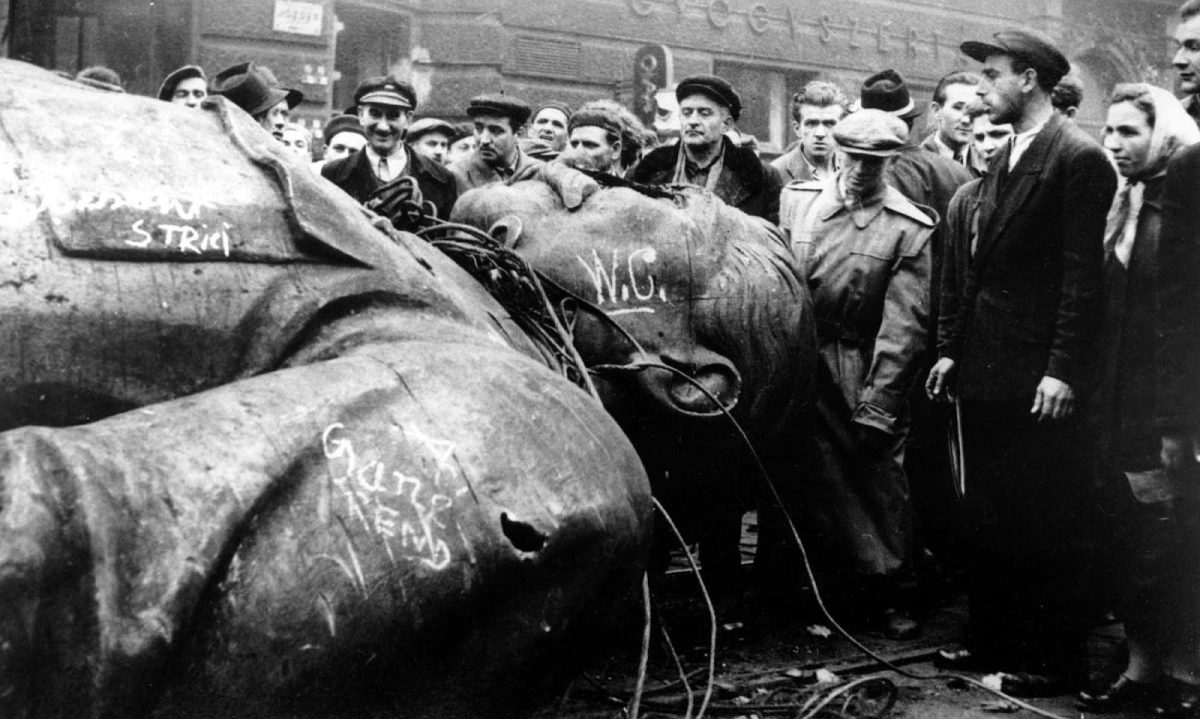
The consequences of the speech, once it was leaked and in the public domain, were disastrous for the bureaucracy. It opened up space, even if only a little, for discussion and dissent across Eastern Europe and the USSR.
The party was flooded with demands from rank-and-file communists for explanations of why Stalin was elected in the first place; whether socialism had actually been achieved in the USSR; and what role the party could and should be playing.
As we will discuss in this article series, in Poland, Romania, Hungary, and elsewhere, mass movements erupted as ideas of reform became a material force. In Hungary, the bureaucracy was threatened with revolutionary overthrow. Khrushchev responded by invading the country and slaughtering tens of thousands of Hungarian workers. The crimes of Stalinism continued exactly as before.
Clearly, at the top of the party the face had changed but not the substance. The workers still had no control over the state or the party. The Bolshevik Party was dead. Stalin had cheerfully presided over its demise.
Stalin had cleared the path for careerists and sycophants through the murder of genuine revolutionaries. Khrushchev gave those parasites some stability and the promise of a quieter life. Brezhnev later suffocated any attempts by workers and intellectuals to come to terms with the Stalin period, and further increased the privileges of the bureaucracy.
Later, leaders of the bureaucracy oversaw the final demise of Stalinism, and kickstarted the Soviet Union’s disastrous reversion to capitalism – just as Trotsky had prophetically outlined in Revolution Betrayed.
The Revolutionary Communist International, as the true inheritors of the legacy Lenin and Trotsky, learns from and seeks to understand what happened in the Soviet Union. We do this, not out of academic historical curiosity or a fetish for Soviet aesthetics, but to ensure that we are clear about what we are fighting for.
As Trotsky once said, the motor force of history is truth and not lies. That is why communists should know the real history of the secret speech and its consequences, including the heroism of the Hungarian revolutionaries of 1956, and the brutality with which the Khrushchev regime responded. Armed with the truth, we can turn that history into a material force to change the world.