
This article is the third instalment of our 12-part series ‘The Hungarian Revolution: 70 years on’.
It is impossible to understand the Hungarian Revolution of 1956 without a clear picture of the economic basis of the country, and that of the Soviet Union and ‘Eastern Bloc’ as a whole, at that time.
The abolition of capitalism in the Eastern Bloc after the Second World War helped to transform the balance of world forces. The Red Army’s victory over the forces of fascism was a success that rivalled the Russian Revolution itself. Today, the ruling class have heaped a mountain of lies and slander on top of the real history of the Soviet Union and the Eastern Bloc.
Before the war, much of Eastern Europe consisted of backward, semi-colonial states ruled by weak military-police dictatorships. Millions languished in atrocious backward conditions, jointly oppressed by landlords, capitalists, nobility, and imperialists. At the end of the war, these gangsters, if they had not already fled, were kicked out by varying combinations of anti-fascist partisans, workers’ movements, and the Red Army, and their property was partially expropriated.
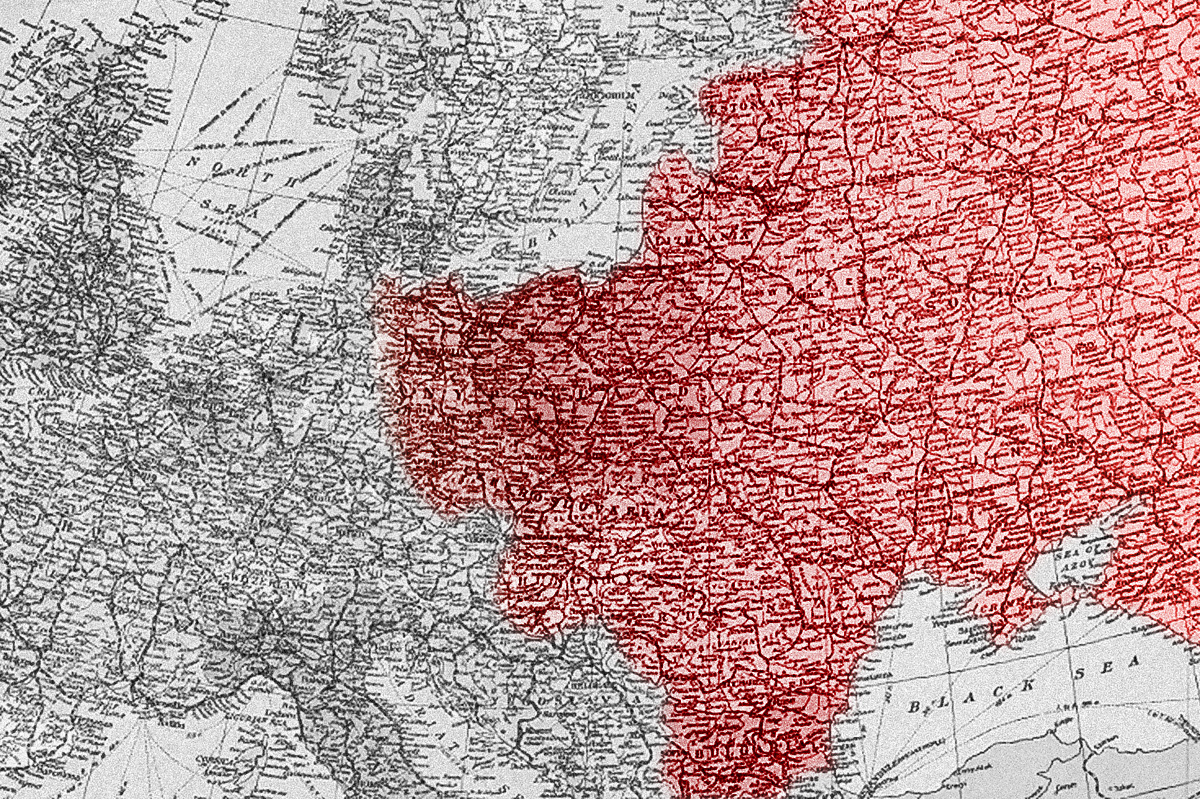
However, the productive forces in Eastern Europe lay in ruins, and around 40 million people had been killed in the region. It is therefore one of the greatest achievements in human history that, under the planned economy, by 1960 life expectancy in the Eastern Bloc matched that of advanced capitalist countries.
Yet the founding of workers’ states across Eastern Europe was severely compromised by Stalinism and bureaucracy, which sabotaged the establishment of healthy workers’ states. Instead of democratic workers’ control of industry, the bureaucracy took control and management of it ‘on their behalf’. The huge advancements made possible under the planned economy occurred despite the Stalinist bureaucracy, which fostered mismanagement, corruption, and waste.
The eventual collapse of the Eastern Bloc and the Soviet Union was used by the capitalist class around the world as evidence for the hollow conclusion that socialism simply does not work. Marxists fundamentally disagree with this false conclusion, and endeavour to uncover the real reasons behind the disastrous restoration of capitalism.
The planned economy
One of the fundamental tasks for the working class, once it has established state power and taken possession of the means of production, is to democratically plan production along rational lines.
The planned economy in the Soviet Union and the Eastern Bloc had little-to-no democratic element to it. At first, Lenin and Trotsky fought hard to introduce this into the Soviet Union, but the backwards social and material conditions made this almost impossible without help from revolutions abroad, which were not successful.
Stalin, by contrast, adapted to – and even welcomed – this lack of democracy in the economy, and exported that model across Eastern Europe. His regime – and, to a greater or lesser extent, those that followed – planned the economy. But they did so bureaucratically and exclusively from the top down.
Nevertheless, the planned economy raised living standards rapidly from a low starting point, and was able to take these weak economies quickly to the point where they were competing with advanced capitalist economies in many fields. The awesome successes of the planned economy are proof of its correctness.
Through planning, great advancements were made in education. In Romania, for example, the number attending vocational secondary schools increased 20-fold (28 pupils per 10,000 people in the early 1960s to 550 by the late 1980s). The number of students attending universities also increased, ranging from 60-90 percent in the Eastern Bloc. Education systems across the Soviet Union produced a highly educated, trained, and skilled population.
In healthcare, the number of doctors, dentists, and hospital beds rose by 50 percent on average during the same period, greatly increasing access to free healthcare. In contrast, Western Europe saw only marginal increases, and even decreases, during the same period.
One of the most crucial areas the Soviet Union invested heavily in was science, to develop the productive forces at an unprecedented rate. Soviet scientists excelled in mathematics, physics, and aerospace engineering, and the Soviet Union had more scientists per capita than the major Western powers combined.
These advances drove impressive increases in industrial production, particularly in heavy industry. According to the New York Times in 1964:
“The Soviet Union and its Communist allies in Eastern Europe showed an 11.7 per cent production growth a year, compared with 5.7 per cent a year for other countries of the world and a United States growth rate of 3 per cent a year.”
In other words, between 1950 and 1961 industrial production more than tripled!
What made these achievements of the planned economy even more remarkable was that they occurred without any injections of foreign capital. The same cannot be said for Western Europe, where US imperialism financed the post-war reconstruction of European capitalism through the Marshall Plan, in order to act as a bulwark against the Soviet Union and the threat of revolution.
Stalinism strengthened
When the Red Army initially occupied Eastern Europe, the Stalinists did not immediately expropriate the capitalists or landlords. Instead, they established so-called ‘people’s democracies’ – in coalition with what remained of the bourgeoisie which hadn’t already fled, in fear of the advancing Red Army.
This manoeuvre by the Soviet bureaucracy was carried out intending to maintain friendly relations with the USSR’s imperialist ‘allies’; to halt the revolutionary wave unleashed in these countries by the struggle against fascism and their liberation by the Red Army; and to thereby consolidate the bureaucracy’s power in this region.
However, these alliances with the remnants of the bourgeoisie proved unsustainable. Within a few years, the Stalinists moved to kick them out, take full control of the state apparatus and the economy, and begin implementing a planned economy.
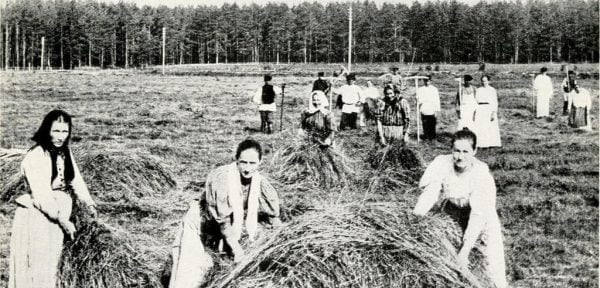
The Stalinists carried out land reform and expropriated the landlords, winning over the support of the peasantry. And they expropriated the bourgeoisie and nationalised industry, basing themselves on the socialist mood of the workers.
But, in turn, this was swiftly followed by the forced collectivisation of agriculture, and the removal of workers’ control in the state-owned industries. The Stalinists had abolished capitalism, but then replaced it with a caricature of socialism.
This process was not identical everywhere, but in general the Eastern Bloc emerged as a group of bureaucratically controlled, deformed workers’ states, modelled on the Moscow bureaucracy. The initial relationship between the Soviet Union and its satellite states was highly unequal, with Russia plundering natural resources and industrial machinery to rebuild its own exhausted and weakened economy.
To be clear, the relationship between the Soviet Union and Eastern Europe was not imperialist, for the elementary reason that imperialism is in essence the highest stage of capitalism, and capitalism had been abolished in the USSR and the Eastern Bloc. However, the USSR did subordinate the Eastern Bloc militarily, politically, and economically to its needs.
Mismanagement, corruption, and waste
In 1949, the Council for Mutual Economic Assistance (CEMA) was established to create a common market for the USSR and its allies. In general, this was a step in the right direction towards integrating and rationally planning the productive forces. However, CEMA did not remove national barriers to support this new approach.
Instead, in keeping with the narrow national outlook of the Stalinist bureaucrats, CEMA imposed plans on each state that pushed them towards economic specialisations, which, under Stalinist administration, entrenched national divisions.
The specialisation can be best described as follows:
“Taken together, the plans seemed to point toward the following pattern of specialisation: the Soviet Union was to remain the key trading partner of each country; she was to export capital goods and basic materials, including iron ore, coal and cotton, and agricultural produce; she was to import machinery, some raw materials, including coal and a large variety of consumer goods. East Germany and Czechoslovakia were to supply mostly machinery and manufactured goods, along with a few raw material items, such as potash and coke. Poland was to export coal, coke, railway equipment, chemicals, and manufactured consumer goods; Hungary was to supply bauxite, diesel engines, agricultural products, and consumer goods; Romania, Bulgaria, and Albania were to supply oil and ores, as well as agricultural products.”
If such a plan of specialisation had been implemented alongside the removal of national barriers, it would have had very positive results. But the parasitic, national-chauvinistic bureaucracy in each state acted as a fetter on this plan, leading to all sorts of contradictions.
For example, from 1950 onwards, there was a large increase in goods transported by truck within the Eastern bloc. But because this was imposed from the top down, and filtered through jealous, territorial, and corrupt cliques of bureaucrats in each nation, infrastructure investment lagged behind in various countries. The result was that in many countries they didn’t have a reliable road network to drive all the additional trucks on.
One of the chief mistakes of the Stalinist bureaucracy was its narrow focus on developing heavy industry, at the expense of consumer goods. This stunted economic growth and often led to needless waste. As this report from 1958 states:
“Poland was the largest recipient of Soviet investment credits… a considerable part of the machines and complete installations received under the credits have not found employment in production, will not find employment for many years to come, and will have to be considered an irretrievable loss.”
There are thousands of examples where rigid plans from the bureaucratic state were imposed on workers without the labour or equipment needed to carry them out. East Germany and Czechoslovakia frequently outperformed other bloc countries, likely because of the higher level of development of the productive forces that existed before 1945. The bureaucratic system was unable to ‘iron out’ or generalise these relative advantages across all the bloc states.
This mismanagement is depicted in the 1970 Polish documentary The Factory, which films a factory committee meeting. The bureaucrat demands to know why a contract is not being fulfilled, and the workers try to explain that it’s because of the inadequate tools and complicated administrative system. One worker plainly states, “the bureaucracy in the nation is hindering our taking care of the matter.”
The successes of the planned economy were plain to see, but so was the bureaucracy’s undermining influence. The many impressive quantitative statistics and figures of economic growth hid the quality, or lack thereof. It produced all sorts of distortions and contradictions in people’s everyday lives.
View this post on Instagram
There were more doctors and dentists than ever, yet there were not enough hospitals, and the quality of healthcare varied greatly. As for education, more young people were in secondary and university education, yet schools were overcrowded and underresourced.
Consumer goods were hard to come by and often of inferior quality compared with those in the West. Soviet railways transported more goods than US railways, but the quality of those goods was inferior to that of the US. And although the disparity between rich and poor was much smaller than in capitalist countries, the best goods and services were nevertheless reserved for the bureaucracy.
Gross inequality existed between the bureaucracy and the working class, and it grew larger year on year.
Capitalist tendencies
To get around shortages and mismanagement, a ‘second economy’ or ‘grey market’ emerged within socialist enterprises, and within the retail and service sectors. For example, if a delivery of vodka arrived at a shop, workers would set aside a couple of crates for their own use and sell them to friends and family, plausibly claiming the full delivery didn’t arrive because of well-known inefficiencies in production and distribution.
On the surface, this petty corruption seemed to satisfy trivial material wants, but beneath the surface it had a corrosive effect. Firstly, it further undermined the planned economy and exacerbated its problems, and secondly, it fostered the development of a petty bourgeoisie and various capitalist tendencies.
The bureaucracy was the main driver of these tendencies. During the 1960s, when economic growth in the Soviet Union and the Eastern bloc began to slow, the bureaucracy sought a way out of the economy’s contradictions by increasing its participation in the world market. However, this merely deepened them.
In the 1960s, Romania, for example, purchased Western machinery with Western credit. However, during the economic crises of the 1970s, these Western lenders demanded repayment, which Romania could not make, and so the government was compelled to impose austerity.
With every step further into the world market, the Soviet economy became more tightly linked to the fate of the capitalist world economy.
Agrarian question
Alongside problems in industrial production, a major aggravating factor was the low level of agricultural production, hampered by the zigzagging policies of the bureaucracy. This was a Gordian knot for them. It is the most striking example of how, despite huge advances under the planned economy, it fell short of genuine socialism, let alone communism.
Even by 1961, only 48 percent of the Ukrainian population lived in towns and cities, underscoring the significance of the agrarian question.
A harmonious combination of agriculture and industry is a key requirement of a socialist economy, leading to the abolition of the separation between town and country, as Marx and Engels put it in the Communist Manifesto. Such a conception is only possible with the voluntary unity of the working class and peasantry working towards a complete socialist plan.
However, the bureaucracy forced collectivisations on the peasantry, which fostered resentment. Where large portions of land remained in peasants’ hands, they were subject to low fixed prices for their produce. Both groups were hostile to the bureaucracy and became reluctant to follow the bureaucratic plans imposed on them, which had a retrograde effect on industrial production and, in turn, slowed the rate of modernisation in agriculture.
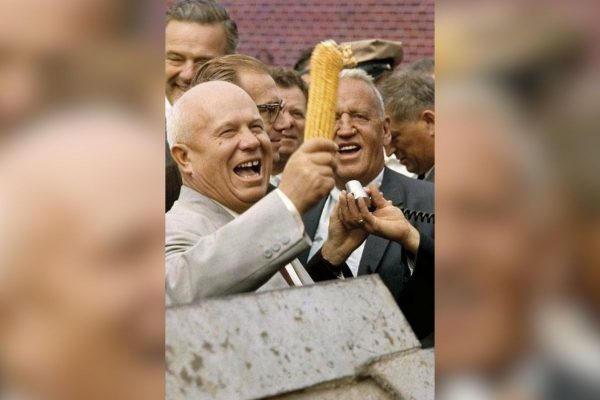
Nikita Khrushchev tried to resolve this problem in 1953 by encouraging corn cultivation, inspired by US corn production. Initial successes were quickly replaced by a return of old problems. The plan’s narrow focus and empirical implementation led to labour shortages in Kazakhstan, a lack of machinery, and, conversely, a lack of storage facilities for harvests, and a surplus of labour in some Eastern European collective farms.
In general, privately owned lands were relied upon to produce most agricultural goods. As with the grey market and petty bourgeoisie in towns and cities, this reproduced the conditions for capitalist tendencies to emerge in the countryside, as peasants grew increasingly wealthy and demanded concessions from the bureaucracy.
What we defend and what we reject
The last decades of the Eastern bloc were characterised by a sorry period of economic stagnation. The contradictions of the Soviet economy and repressive nature of the Stalinist regimes undermined the struggle for socialism. Growing inequalities between the bureaucracy and workers stoked discontent over social, economic and national questions.
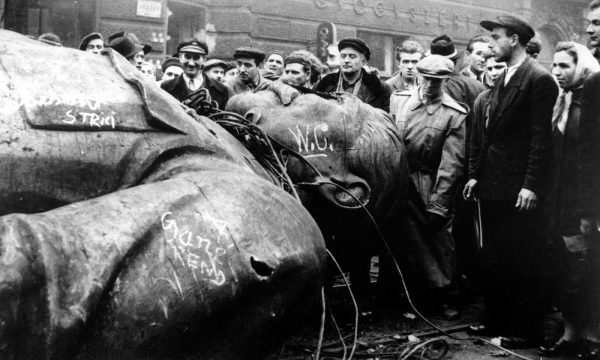
These frustrations exploded in the Eastern bloc: 1953 in East Germany, 1956 in Hungary, 1968 in Czechoslovakia, 1980 in Poland. They were all expressions of the working class’ desire for genuine workers’ democracy and overthrow of the Stalinist bureaucracies.
In the words of Trotsky, “a planned economy requires democracy just as the human body requires oxygen”.
In this sense, the bureaucracy acted as a suffocating noose around the necks of the working class. The Stalinist bureaucracy’s reforms, at various points in time, were futile for the very reason they were the fundamental problem. The only solution was for the working class themselves to own, control, and manage the means of production without the parasitic fetter of bureaucracy.
The planned economy proved itself a thousand times over as superior to the anarchy of capitalism. Today, a successful socialist revolution that establishes a healthy and democratic workers’ state or states and pursues a rational plan of production would outshine the Soviet Union’s gigantic achievements. Such an event would usher in new vistas for humanity’s development towards real freedom.
The forces of Stalinism today are weaker than ever, and capitalism is in its deepest ever crisis. The forces of genuine Marxism are growing rapidly and enriched with the best lessons from the history of the class struggle. There has never been a better time to be a revolutionary communist. We have a world to win!