This article is the fifth instalment of our 12-part series ‘The Hungarian Revolution: 70 years on’.
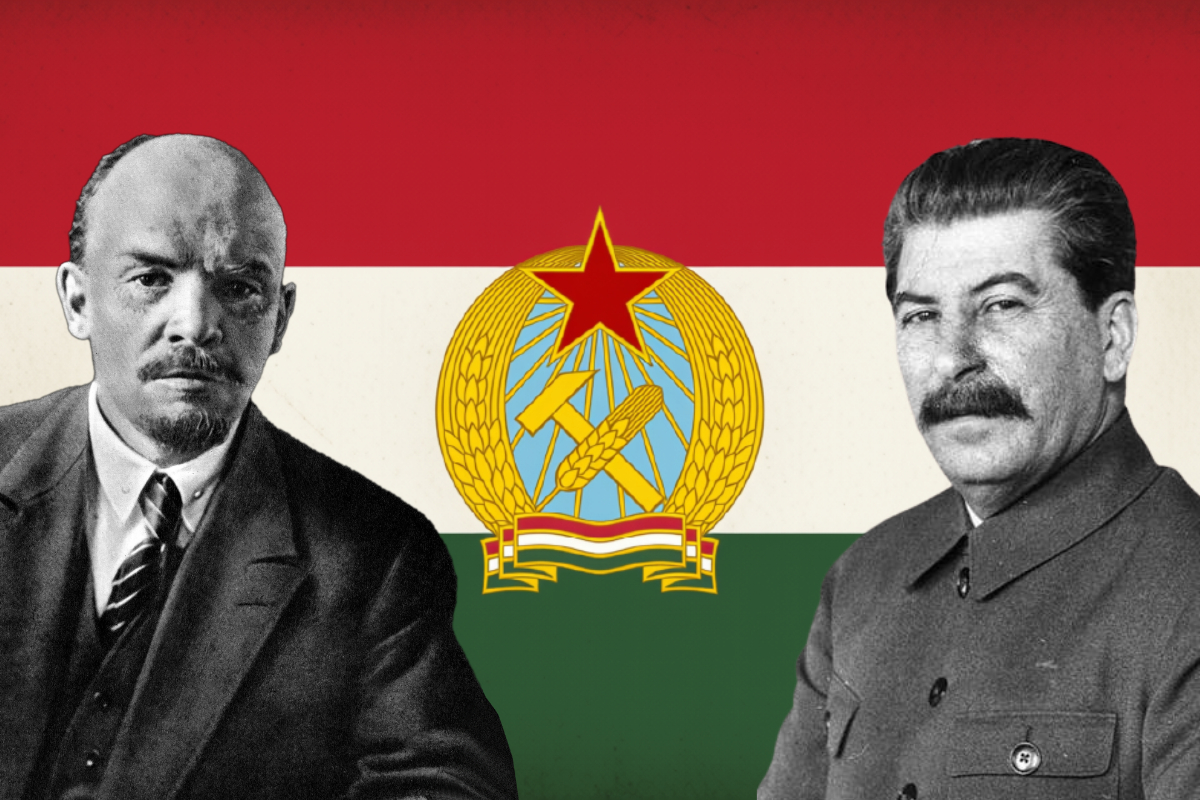
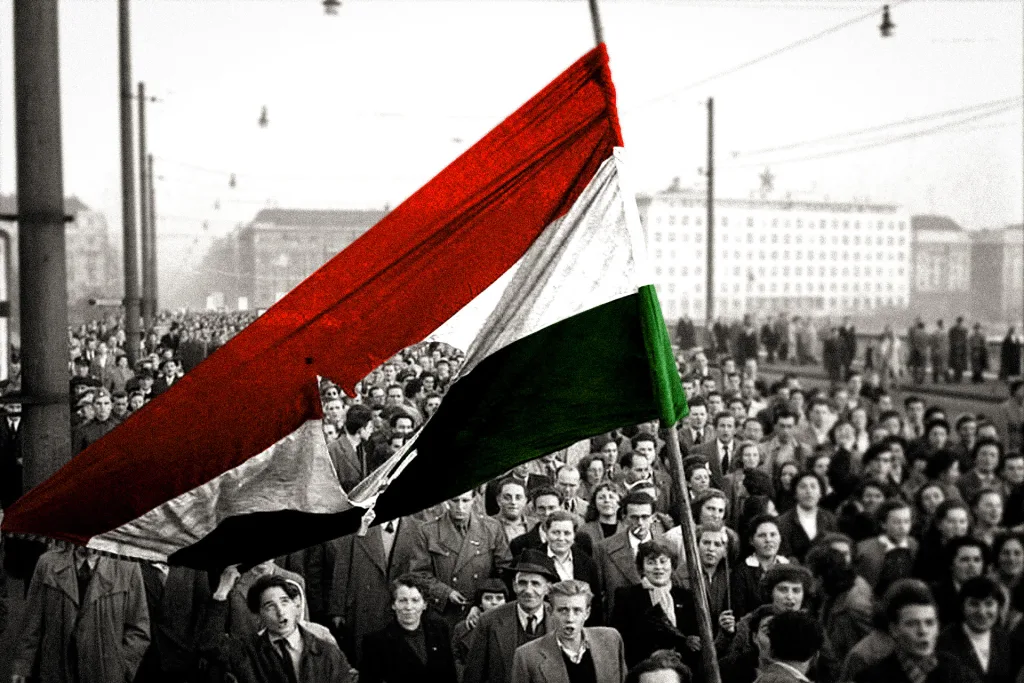
When the Hungarian masses rose against the hated Stalinist dictatorship in 1956, they adorned the streets with the Hungarian tricolour, but with a marked alteration: the communist coat of arms had been cut out of its centre.
At first glance, this might appear to confirm the Stalinist slander that the revolution was a reactionary nationalist movement, led by petty-bourgeois nationalists, fascists, or CIA stooges, seeking the restoration of capitalism.
But scratch beneath the surface and we find the exact opposite.
In his book The Hungarian Tragedy (recently republished by Wellred Books), Peter Fryer vividly describes the scene upon his arrival in Hungary in October 1956.
A soldier was chipping away at a “Welcome to Hungary” sign, bearing the familiar coat of arms of a hammer and ear of wheat, with a five-pointed red star above. It was the red star, and only the red star, that the soldier filed away. It represented the Communist Party, which by this time had become synonymous with Stalinist dictatorship.
The Hungarian masses were not rejecting communism, but its Stalinist bastardisation. What unfolded was a political revolution of workers and peasants against bureaucracy, for genuine workers’ democracy.
The national question in Hungary cannot be understood without first understanding this fact. And to understand it fully, we must examine the fundamental differences between Stalin’s approach to the national question, and the genuine Marxist approach of Lenin.
The Hungarian Revolution of 1956
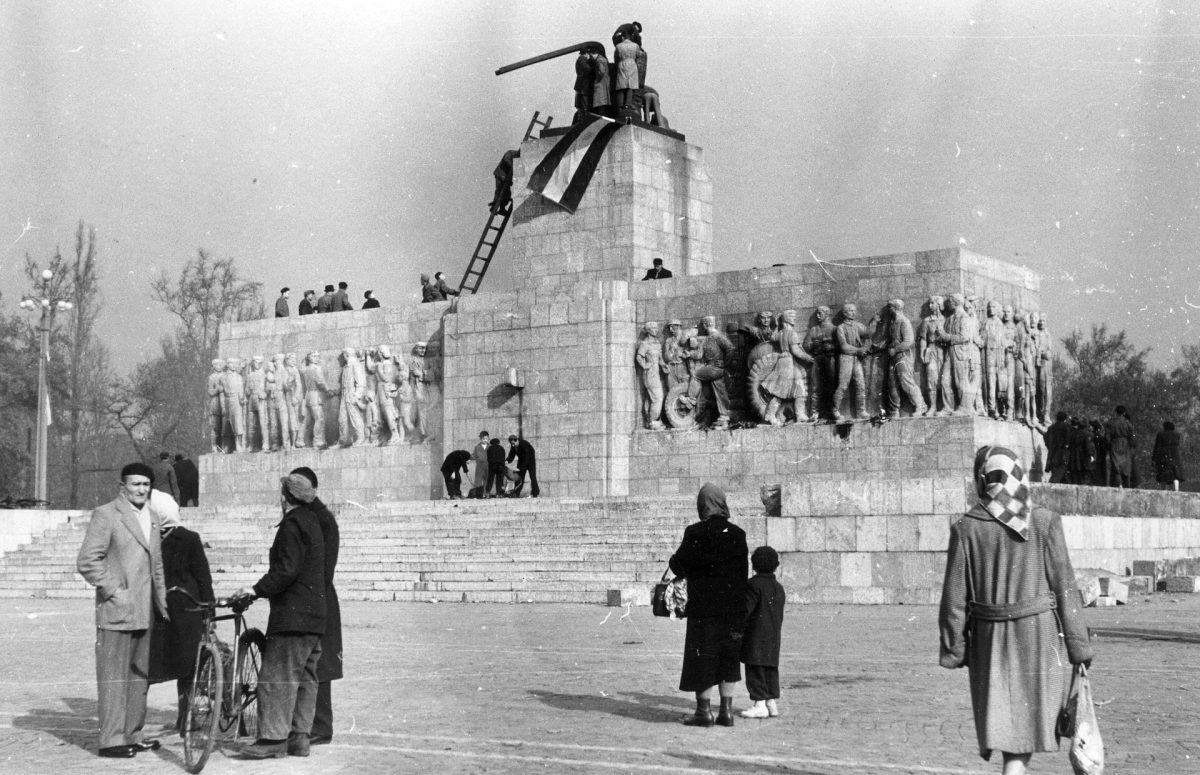
Following the Second World War, Hungary became a satellite of the Soviet Union. The Stalinists established a deformed workers’ state in 1949, with a planned economy based upon the nationalisation of industry, and the abolition of capitalist property relations.
But this was not achieved through the conscious participation of the working class. Instead, it was imposed from above by the Soviet bureaucracy and their protegees in Budapest, who were obedient to the Kremlin and ruled through the brutal secret police, the AVH.
Like all bureaucratic regimes, this clique used its position of power to appropriate privileges for itself. Its interests lay in maintaining that power at all costs.
One consequence of the planned economy was the rapid development of industry and real social gains. However, the result of rule by the bureaucracy was that workers had no genuine control over their workplaces or society.
Unattainable production targets were imposed, consumer goods were sacrificed for heavy industry, and the Soviet Union systematically plundered the Hungarian and other Eastern European economies in the initial postwar years.
Meanwhile, bureaucrats enjoyed limousines and luxurious homes while ordinary Hungarians were crammed into inadequate housing.
Despite the enormous advances made in education, healthcare and women’s equality through the planned economy, bureaucratic mismanagement eventually produced an economic crisis. Food shortages developed, living standards came under pressure, and the bureaucracy continued to enjoy its privileges.
The Budapest bureaucracy was also increasingly perceived, quite rightly, as indistinguishable from the Moscow bureaucracy, or at least entirely subservient to Russian interests.
Here we see how the national question became intertwined with the struggle against bureaucracy. The Hungarian people had suffered under successive dictatorships and had been denied their democratic rights for decades. Their desire to free themselves from the bureaucratic dictatorship was inseparable from their desire to free themselves from national oppression.
This explains the character of the 1956 revolution. The workers did not rise to establish a capitalist Hungarian nation state. Their demands included workers’ management of factories through workers’ councils, higher wages, shorter working hours, free elections, the withdrawal of Soviet troops and, significantly, friendship with the Soviet Union on the basis of equality.
Revolutionary committees and workers’ councils sprang up throughout the country. Workers and peasants organised the distribution of food, healthcare and the running of society. For twelve glorious days, the Hungarian masses began to resurrect Lenin’s programme of workers’ democracy.
Even during the first Soviet invasion, Hungarian workers attempted to win over Russian soldiers. One remarkable account, from the chief of police in Budapest at the time, describes a young boy passing a piece of paper through a Soviet tank, bearing Marx’s words:
“A people that oppresses another cannot itself be free.”
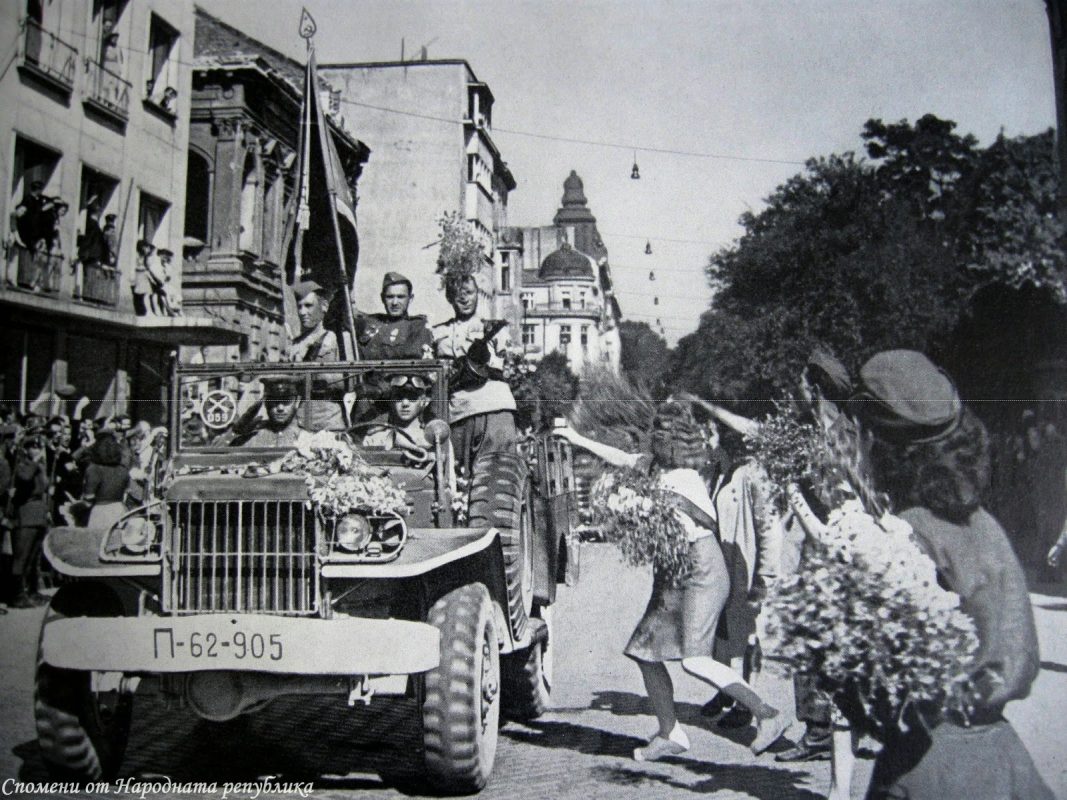
The commander emerged from the tank to find the crowd reaching out to him. A Hungarian flag was handed to him and attached to the tank, while the crowd erupted in cheers.
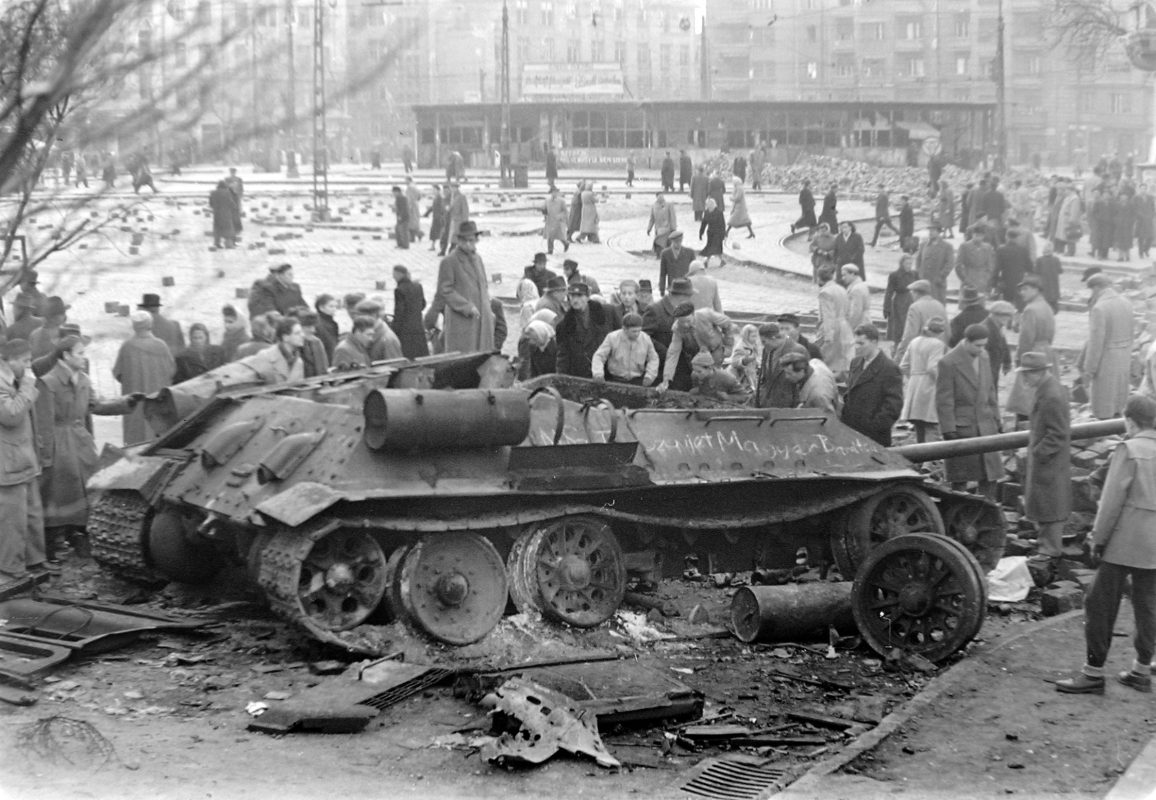
The revolution was eventually drowned in blood by a second Soviet invasion. Even then, workers continued their resistance through general strikes and the maintenance of their committees, until repression finally crushed them.
This was no reactionary nationalist movement. The Hungarian workers had arrived, through their own revolutionary experience, at a fundamental truth of Leninism: the struggle against national oppression and the struggle against bureaucracy were inseparable. Both demanded workers’ democracy.
Lenin’s approach to the national question
Lenin understood that the national question is fundamentally a question of bread. Where there is scarcity, national antagonisms flourish. The struggle for national emancipation of an oppressed nation is one expression of the struggle for better conditions of life. It is therefore a class question.
That is why, for Lenin, the starting point was always the interests of international working class struggle. He was not sentimental about internationalism. It was a practical approach.
The conditions for emancipation of the working class cannot exist in one country alone. Only by harnessing the international productive forces can humanity overcome scarcity and establish the material basis for the elimination of all national oppression.
Therefore, Lenin’s guiding principle was whether a particular course would foster unity between workers of different nationalities, or deepen their divisions.
This is a difficult and sensitive issue, which needs skill to navigate. Lenin understood that the road to international unity did not lie in ignoring national differences or forcibly imposing unity from above. It had to be both genuine and voluntary.
This was a particularly important question of revolutionary strategy for Lenin, who produced countless articles and resolutions on the subject. This is because Russia, where Lenin was doing his political work, was a ‘prison house of nations’. The Great Russians, who made up just 43 percent of the population of Russia, dominated and oppressed numerous national minorities.
The Bolsheviks understood that genuine unity could only be established voluntarily. Lenin therefore championed the right of nations to self-determination, up to and including the right to secede.
This was not an endorsement of nationalism, nor a desire to create new national divisions. On the contrary, it was the means of overcoming the deep-rooted distrust between oppressed nationalities and the Russian workers.
By recognising their democratic right to determine their own future, the Bolsheviks could demonstrate that the new workers’ state had no intention of continuing the oppression of the Tsarist empire. In that way, they could win them over to the struggle to build a socialist society.
As Lenin insisted, unity must be established not by force, but by voluntary agreement. Under Lenin’s leadership, enormous strides were made towards overcoming national oppression.
Minority languages were developed and put into written form, education was provided in people’s mother tongues, and considerable efforts were made to eliminate Great Russian chauvinism from the new Soviet state.
Lenin’s programme was clear:
“Complete equality of rights for all nations, the right of nations to self-determination, the unity of the workers of all nations—such is the national programme that Marxism, the experience of the whole world and the experience of Russia, teaches the workers.” (The Right of Nations to Self-Determination)
The crucial point is that Lenin distinguished between the legitimate democratic aspirations of oppressed nationalities and the reactionary, divisive nationalism of their own ruling classes. He defended the former precisely because he wanted to unite the working class internationally.
Stalin’s betrayal
The antithesis of Lenin’s approach was that of Stalin.
In the final months of his life, Lenin became increasingly alarmed by the growth of bureaucracy within the Soviet state and Stalin’s role in embodying this emerging clique.
The ‘Georgian affair’ brought these concerns to a head. Stalin had been entrusted with securing Georgia’s voluntary unity with the Soviet Union, in accordance with Lenin’s approach. Instead, he bullied the Georgian leadership into submission. His associates used physical violence against Georgian representatives, while a political purge was organised against those who resisted.
When Lenin learned what had happened, he was horrified. Incapacitated by illness, he could only communicate with those he trusted, including Trotsky and Krupskaya. In his final political struggle, he declared war on Great-Russian chauvinism, and identified Stalin as its principal representative.
He described Stalin as a “Great-Russian bully”, and insisted that the political responsibility for the campaign of Great-Russian nationalism must be laid at his door.

This was no incidental disagreement over administrative methods. Lenin recognised that Stalin’s heavy-handed approach reflected the interests of the bureaucracy itself.
For this clique, the democratic aspirations of oppressed peoples were an inconvenience to be brushed aside in the interests of administrative convenience and the consolidation of its power.
Stalin’s conduct was therefore the direct opposite of Lenin’s. Where Lenin sought voluntary unity through the recognition of democratic rights, Stalin sought to impose unity through coercion.
This became increasingly apparent under Stalin’s dictatorship. The patient work of overcoming national oppression was systematically undermined, while the interests of the Soviet bureaucracy were placed above those of the international working class.
The ideological expression of this degeneration was the abandonment of international revolution in favour of the theory of ‘Socialism in One Country’.
Lenin had understood that socialism could not be completed within national borders. Stalin, however, elevated the interests of the Soviet bureaucracy above the international interests of the working class.
This was not simply a theoretical revision. It had profound practical consequences. The bureaucracy increasingly pursued its own national interests, subordinating the struggles of workers in other countries to the diplomatic and strategic requirements of Moscow.
In this sense, ‘Socialism in One Country’ and nationalism were inseparable. A policy that placed the interests of one national bureaucracy above those of the international working class could never resolve the national question.
Indeed, the bureaucracy’s position was fundamentally contradictory. It claimed to have overcome national oppression while simultaneously reproducing it through its own privileged position and its coercive relationship with oppressed peoples.
The lessons of Hungary
The Hungarian revolution of 1956 starkly exposed the failures of the Stalinist approach to the national question.
The Stalinists claimed that the Soviet Union and its allied regimes represented the unity of the working class across borders. Yet when Hungarian workers demanded the right to manage their own society and establish relations with the Soviet Union on an equal footing, Moscow answered with tanks.
The bureaucracy could not tolerate genuine workers’ democracy because it represented an existential threat to its own privileges. It could not tolerate genuine national self-determination, because this threatened its control over the ‘Eastern Bloc’.
The Hungarian workers understood, through their own experience, that these two struggles were one and the same.
Years earlier, in texts like The Revolution Betrayed, Trotsky had warned that the bureaucratic degeneration of the Soviet Union would inevitably revive national resentment within the USSR and undermine the foundations of its unity.
The eventual disintegration of the Soviet Union demonstrated the enormous consequences of this unresolved contradiction, along with all its other bureaucratic deformations.
The lesson is clear. National oppression cannot be abolished through administrative decrees, nor can international unity be imposed by force. It can only be overcome through the voluntary solidarity of the working class, based upon complete democratic equality and the right of every people to determine its own future.
That was Lenin’s approach. Stalin’s was its complete opposite.
The Hungarian workers paid an enormous price for discovering this truth. Their revolution was defeated, but the political lessons it left behind remain vital: the struggle against national oppression is inseparable from the struggle against bureaucracy, and both can only be resolved through the international struggle for genuine workers’ democracy and socialism.