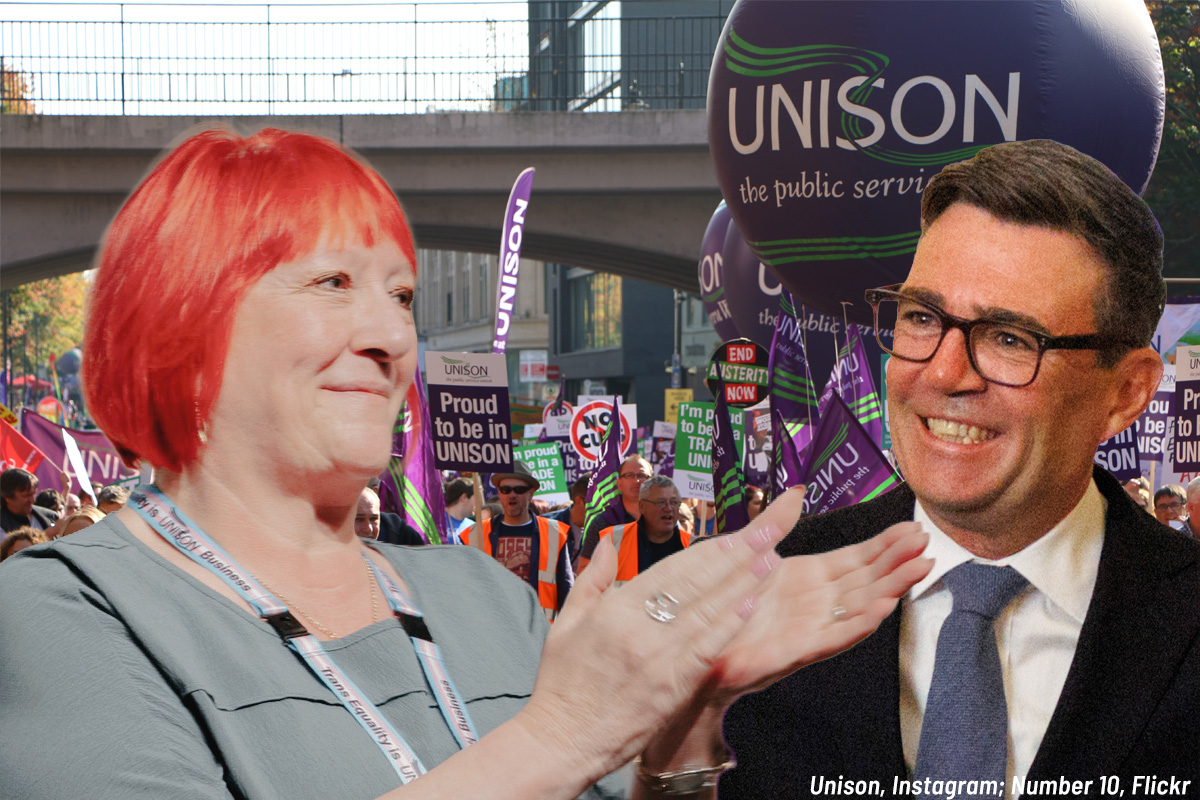
Earlier this year, Andrea Egan was voted in as general secretary of Unison. Consequently, Britain’s largest union has a left-winger as leader for the first time in its history.
This development brims with potential.
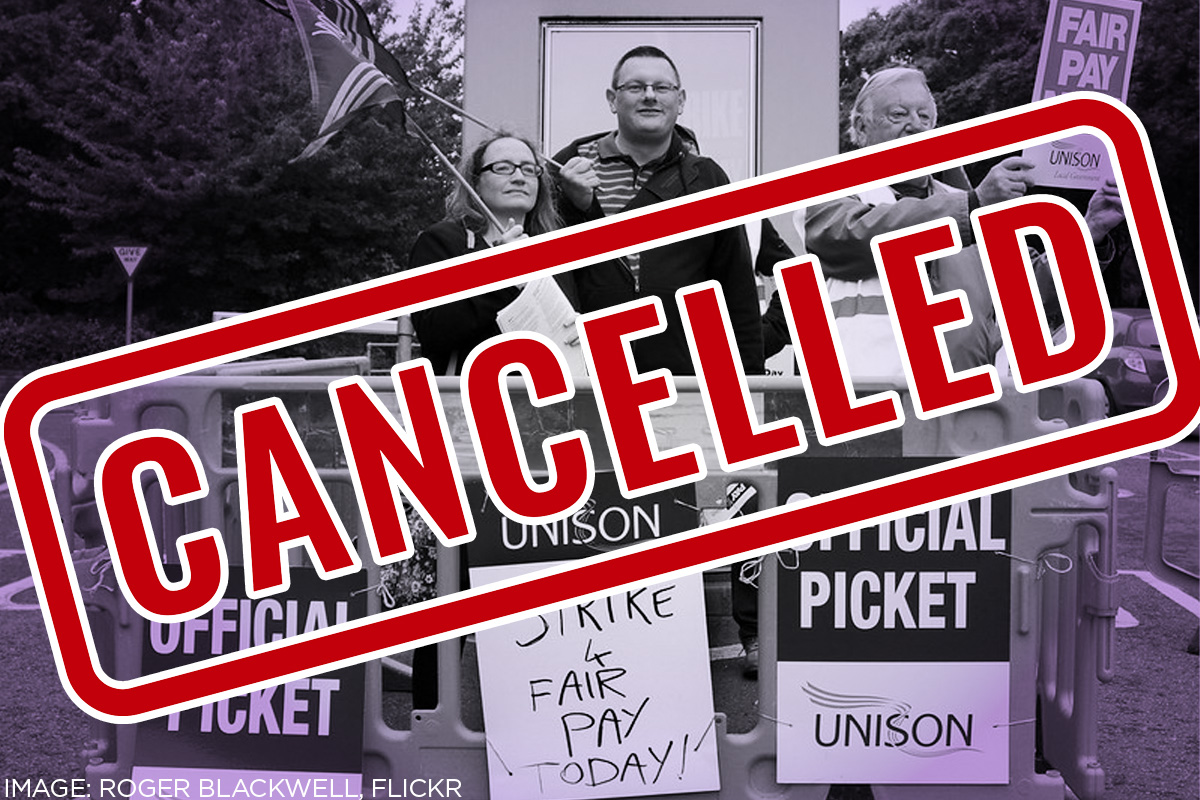
Unison’s bureaucracy has consistently acted as an agent of the ruling class within the labour movement, holding back the class struggle in Britain at every major juncture.
The union, indeed, possesses a vast apparatus, thoroughly tied to the top of the Labour Party, which has acted to put the brakes on every move towards industrial action – not only by its own rank and file, but across the trade union movement.
A left-wing Unison leadership – acting in the interests of grassroots members, and not of the employers and establishment – would therefore be an important step forward for the entire workers’ movement.
Egan’s election, meanwhile, could not have come at a better time: one of deepening crisis for British capitalism and its representatives, and of massive anger within the ranks of the working class.
Still waters
Months after Egan’s leadership victory, however, Unison members are still waiting for the promised transformation.
Egan’s first 180 days in office have passed by without much stirring of the waters – as reflected in the uneventful calm of the Unison annual conference, held in Brighton last month.
On the one hand, as general secretary, Egan is isolated at the top of the union, surrounded by a pack of hyenas.
So far, however, the union officialdom’s treatment of Egan has differed from the outright sabotage faced by left-winger and former Unison President Paul Holmes.
Back then, an unholy trinity of bureaucrats, bosses, and sectarians united and manoeuvred to remove Holmes, using identity politics as a pretext.
Instead, whilst we are not privy to the conversations and dealings inside Unison HQ, it seems that the union bureaucracy is trying to coopt and tame Egan.
Waiting for real change
On the political front, in fact, much of what Egan has said since she came into office has been perfectly acceptable to the bureaucracy – and is not fundamentally different to what her predecessor, Christina McAnea, used to say.
This includes moralistic statements against war, racism, and the far right; alongside mild criticisms of the Labour government, which have been accompanied by timid appeals for Starmer to ‘tack left’.
View this post on Instagram
On the industrial front, meanwhile, Egan has nothing to show for her tenure thus far. Unison members might be forgiven for not even realising that they have, nominally, had a more fighting leader for some months now.
This quiet on the industrial front is not entirely surprising, given the reformist outlook and cautious approach of Time For Real Change (TFRC), the left-wing faction that Egan comes from.
As we have argued many times before: only by appealing to the ranks of the union, on the basis of a bold socialist programme and fighting methods, can the old bureaucracy be truly supplanted.
Instead of focussing on building up a strong base amongst the union’s grassroots, TFRC activists have expended much time and energy campaigning for various elections, which most rank-and-file members have little knowledge of or participation in – believing that they shift the union from the top down, by gaining control of the apparatus.
But these electoral efforts have yet to bear the promised fruit.
Yesterday, TFRC had a majority on the national executive committee (NEC), but needed the general secretary position to control the union. Today, they have control of the general secretary position, and just need to get the NEC back at the next elections – according to their logic.
And so the tiring cycle of elections and hustling for positions continues, without any real change for ordinary union members.
Changing of the guard
TFRC takes the same approach to the Labour Party as it does to the union: focusing all their efforts on a changing of the guard, rather than campaigning and fighting for bold socialist policies.
Thus, most egregiously, Egan has fallen in with the crowd of trade union leaders sowing illusions in the ‘progressive’ credentials of Andy Burnham – who apparently has a “historic opportunity to rebuild Britain”.
View this post on Instagram
Even more surprising was Egan’s intervention earlier this month in a spat between union chiefs on Burnham’s choice of ministers. The Unison general secretary threw her weight behind Ed Miliband to become the latest Chancellor of the Exchequer, because she said he is the “best chance to obtain Unison’s demands”.
Sharon Graham of Unite and Gary Smith of GMB countered that Miliband would be a disaster.
Lining up with the likes of the Daily Telegraph and Tory leader Kemi Badenoch, these latter union chiefs suggested that a Miliband-run Treasury would be a threat to jobs in the oil industry and arms manufacturing – sectors where they have members.
Both ‘sides’ are selling snakeoil. Egan seems to forget that Ed Miliband ran in 2015 on a programme of “Labour austerity is better than Tory austerity”. Graham and Smith, meanwhile, who equally sowed illusions in Burnham but could not offer any alternative, eventually found themselves faced with a knife-wielding Blairite as Chancellor.
Fighting stance?
Despite Egan’s uninspiring leadership so far, however, the pressure from below may yet push her to the left. At Unison conference, Egan said that the union was the biggest working-class organisation in the country, and should be acting as such. She pointed out how it was getting behind the struggles of migrant workers and NHS staff.
Similarly, alongside the RMT’s Eddie Dempsey, the new Unison leader is on record as saying she supports militant action.
It was great to speak alongside Eddie Dempsey, John Hendy, and fantastic activists at Manchester AQA UNISON’s Ready to Strike, Ready to Win event last night.
Let’s draw on our own working-class history in our fight for a better world.
We have no other choice but to win. pic.twitter.com/kwuyghiPD6
— Andrea Egan UNISON General Secretary (@AndreaEganGS) April 25, 2026
These words are welcome insofar as they are militant. However, if Egan is going to come out fighting, she needs to start by taking a stance not only against the bosses, but also against the government, no matter who is in Number 10.
Giving undue praise to capitalist politicians like Burnham and Miliband only serves to politically disarm and disorientate workers.
Instead, the union leaders should be mobilising workers, and giving them the confidence to take the fight to the employers and the government, in defence of jobs, wages, conditions, and public services.
Struggles to come
Egan is being put to the test with the ongoing ballot of Unison council workers over pay. The union’s demand – for at least £3,000, or a 10 percent pay rise and a £15 minimum wage – was met with a derisory 3.3 percent by local governments.
View this post on Instagram
A ballot win could still be a major turning point for the union. But this victory is far from assured. In recent years, in the majority of branches, ballot results have not met the 50 percent threshold required to take action.
Egan can deliver better leadership than her predecessor, McAnea – who only got involved in big disputes in order to call them off, as she did with the NHS pay dispute in 2023.
Unison’s new leader has kept her promise to live on a social worker’s wage – not the inflated £166,000 that was on offer as general secretary. As she said at the local government conference, she will only get a decent pay rise if members do.
In her conference speech, Egan also pointed out the political nature of the battle for decent pay, saying that local government has a £4 billion gap in its finances, and that austerity is still biting in councils, despite two years of Labour in power in Westminster.
Egan has sent a message to the new Labour leader that there needs to be “a massive programme of public investment and insourcing to repair our public services”. And she has asserted that this must be the country’s “fiscal priority, not the military and foreign wars”.
View this post on Instagram
On one hand, therefore, Egan is setting the scene for a fight with the government. On the other, she is sowing illusions that Unison’s demands could be won, if only Labour adopted a ‘more reasonable’ policy.
But how can the government give a 10 percent pay rise on less-than-one-percent economic growth, 100 percent debt-to-GDP, and a budget deficit of dozens of billions?
How can Burnham abandon Labour’s plans for remilitarisation, at a time when the British ruling class is finding itself increasingly exposed on the world stage, with military chiefs and the capitalist press screaming at the state to cut welfare to fund warfare?
Question of leadership
Unison – and the rest of the trade union movement – can only wrest its demands from the government if it is prepared to fight: to fight for workers; to fight for a bold socialist programme to make the billionaires pay.
This is what Egan should be advocating: using her position to tour workplaces, help build strike committees, and prepare workers for class war against the employers.
In doing so, she will have to meet the Unison bureaucracy – and the British establishment that stands behind them – head on.
This highlights what is needed and missing across the labour movement in this epoch of deepening capitalist crisis: a truly fighting leadership, willing to smash past all obstacles in order to defend and advance workers’ interests.