
In the final hours before his long-awaited demise as prime minister, ‘Sir’ Keir Starmer decided to leave his house in order by performing the most elementary duty of government: rewarding with honorary titles those people who have kept capitalism alive.
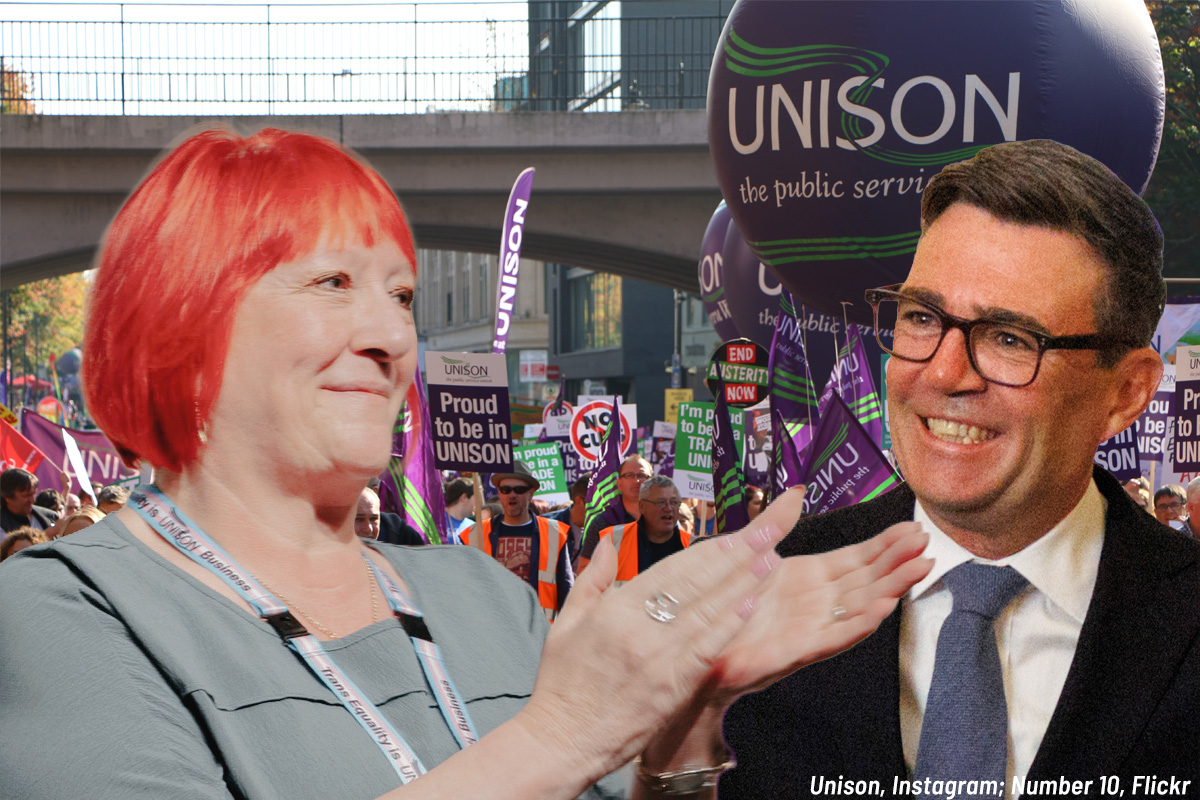
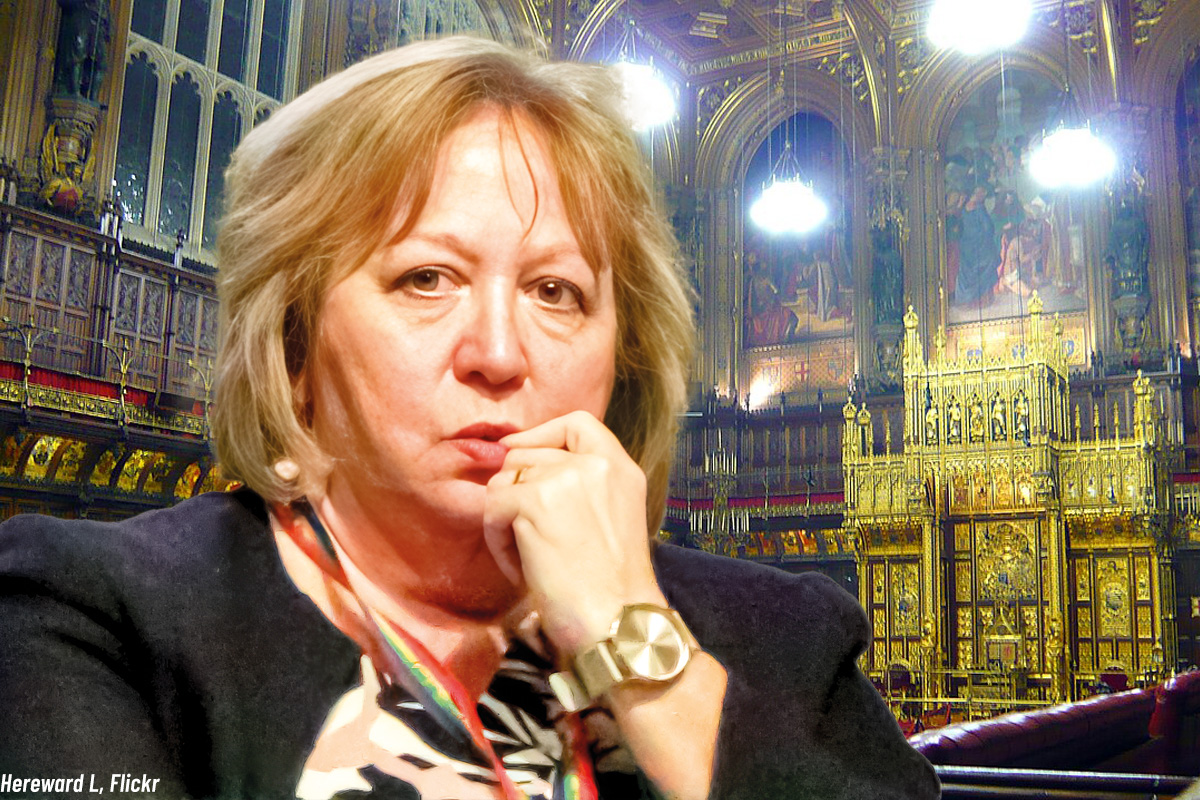
Fifth on his list of nominations for the latest peerages was Christina McAnea, the ex-general secretary of Unison.
Members of Unison will be glad to know that their former ‘leader’ will not be going hungry, at a rate of £371 per day to sit in the House of Lords. They will also be glad to know that they can now refer to her as “Baroness Christina”, rather than “Your Reverence”.
If there was a Lords’ session every day of the year, McAnea would make a mere £135,415 annually – a measly sum compared to the wage, benefits, expenses, bonuses, and so on just over £180,000 per year that she enjoyed at the head of the union.
But fear not! As her pay for the House of Lords will count as an “allowance” for attending rather than a wage, it will not be taxable. And let’s not forget travel expenses, and the subsidised ‘Peers’ Dining Room’.
Also luckily for her, she will be rubbing shoulders with the elites of all parties, celebrities, businessmen, bishops, and other assorted political dinosaurs… Those who have performed their duty to King and Country – and who now vegetate together for life in the gilded Upper Chamber of Parliament, awaiting their call to defend Britain’s uncodified constitution should it be threatened by a left-wing ‘madman’.
Starmer’s choice is very fitting. McAnea’s Blairism secured her the loyalty of Labour supporters and the ‘Organised Left’ – another faction within the union made up primarily of members of the so-called ‘Communist’ Party of Britain.
It was with this support that she united the union’s bureaucracy and oversaw a series of purges of the union’s left wing. This was essential, in turn, to put a lid on the class struggle – not least with her betrayal of the NHS strikes by promoting a rotten deal in the 2023 strike wave.
Having already clipped the left’s wings, she further showed her allegiance to the establishment in the months after the 2024 general election.
McAnea’s criticisms of the Labour government for their continuation of austerity and their attacks on the working class were mealy-mouthed and slow in the making. Her praise for it, meanwhile, rolled off her tongue with ease.
Starmer’s reward for her loyalty – a damning act in-and-of-itself – is only made more concerning by the fact that she is the second Unison general secretary to accept the title in its 33-year history.
Will Unite’s elections transform the union?
Luca Ferrara, Norwich
Ballot papers for Unite‘s general secretary election went out on 14 July. Members have until 11 August to choose between the incumbent, Sharon Graham; and Simon Dubbins, the union’s international director since 2008.
In my own Unite branch at the University of East Anglia, the contest has barely registered. Even the more active members either did not know that a ballot was underway, or had no opinion about it. Lay out what the two candidates actually stand for, however, and there are nods in Graham’s direction.
This is not surprising. Dubbins’ manifesto promises reviews, strategies, integrated departments, and a restored ‘political voice’. It says a great deal about reuniting the union – and very little about how members are supposed to win anything. To a worker facing a pay freeze or a closure, all this is abstract and uninspiring.
Graham’s record is at least concrete. Since 2021 she has done two things. First, she cleared out the old guard of the bureaucracy. Second, she presided over a sharp rise in strike action. Unite claims over 1,800 disputes on her watch, involving 280,000 members.
View this post on Instagram
That is why the ‘Back to the workplace’ slate swept April’s executive elections, taking 41 seats against 18. Graham leads on branch nominations too, by 695 to 342. On this basis, she will almost certainly be re-elected.
But there is little enthusiasm behind these figures. Just 5.9 percent of members voted in the executive elections. The real winner was ‘don’t know, don’t care’.
Graham stands on a promise to continue the change. Yet the change that would galvanise the ranks is not another round of restructuring. It is to turn Unite’s industrial power against the Labour government: the government imposing the cuts, backing councils like Birmingham against their own workers, and keeping the anti-union laws on the statute book.
The mood for such a radical transformation certainly exists. Graham has only partially expressed it, but her record still leaves a lot to be desired: having sown illusions in Labour; let industries like Port Talbot go to the dumps; and failed to escalate numerous disputes – leading to underwhelming deals with the bosses and government.
Her conciliatory approach is also not surprising. She remains part of the very apparatus she claims to be clearing out. Her salary stays undisclosed. Her slate says nothing about annual elections, the right of recall, or officials on a worker’s wage.
Unite organises 1.2 million workers across transport, manufacturing, and the public services. It is one of the most powerful levers the working class in this country possesses.
We welcome Graham’s pledge to continue the ‘back to the workplace’ transformation. But this means her words must be put into action on a far greater scale. Break with the government, and mobilise the full weight of the union against it!
School strike ballot finally goes ahead… maybe
Tommaso Ugo Verga, Brixton
In the summer, the vice-president (VP) of the National Education Union (NEU) toured local branches, promising to use the autumn term to get ‘ballot-ready’ and prepare for industrial action. The VP was responding to a growing mood of militancy over pay, working conditions, and – most importantly – school funding.
Now, a ballot has been announced, which will be voted on during the autumn term. Sounds brilliant! Only problem is: the aforementioned tour was not this summer… but in 2025!
In other words, the leadership have dragged their feet for an entire academic year.
It took months of unexplained waiting; a further insulting, partially-unfunded pay offer that doesn’t keep up with inflation; and the threat of another round of real-terms funding cuts for the NEU leaders to finally launch a consultative online ballot in March.
View this post on Instagram
Even that was not quite enough to move forward to a paper ballot – and then we were treated to a further snap poll in the last week of term, to respond to an updated offer that barely moved the needle.
Luckily, the membership have been rock solid: with over 90 percent voting in favour of industrial action in both online consultations.
As we finally move forward to the paper ballot, the potential is becoming increasingly clear for teachers to play a massive role in Britain’s looming class battles.
Indeed, we are naturally in contact with our local communities and with the families that leave their children in our care, which will provide us with massive amounts of support from all sectors of the working class.
To seize this potential would take a determination to use the most militant methods – including all-out strike action – and to call on other unions to join the fight. So far, the leadership has completely lacked this kind of perspective.
However, a militant campaign for funding and pay restoration, combined with appeals to the broader working class, could well kickstart the strike wave that British workers so desperately need!
Bastard bosses of the week
Service, or servant?
Leatrice
I am a senior receptionist at a five-star luxury hotel, which means our clientele predominately consists of different strands of the ruling class: CEOs, politicians, celebrities, etc. When something goes wrong, they almost infallibly remind us, the workers, of our disparate class positions.
Recently, a woman who stayed with us did just that. It was nearly midday (the latest time a guest can check out), our housekeeping team only had two people on shift, and we were at 100 percent occupancy.
That meant housekeeping needed to clean and inspect every room in the hotel on a skeleton crew – and unexpected late checkouts hindered their ability to do so. I approached the woman in the dining area and politely reminded her it was time to check out.
I dared to mention that housekeeping needed to service her room, to which she interrupted: “Ma’am! I own three hotels in the US. I know how this works.”
This woman may understand, in theory, that housekeepers run on limited time to clean rooms before the next guests arrive. But does she lift her arms to carry over 30 duvets in a day? Does she scrub every bathroom and straighten every room service menu?
In luxury venues, there is a rule that guests cannot be made aware of internal problems like understaffing. When we do give them a peek behind the curtain – one deliberately erected to reinforce class divides – it reminds them of their privilege. Some react with sympathy and try to compromise; others, like this woman, simply say, “I don’t care.”
Moments like this galvanise me to imagine a classless hospitality sector.
A company that “cares”
Ry Tomkins
I’m employed with a company that delivers to construction sites. The work is hard and stressful. Any of my colleagues with kids have to work multiple jobs to get by. Almost no one can afford to rent a place of their own.
Once a month we have a meeting and, on occasion, we’re shown graph after graph of how much profit the company is making. They are doing well.

The company is more than happy to push extreme busy periods to drive this profit, but are unwilling to invest in infrastructure to support it.
The warehouse staff is overworked, and barely has the space to do its job. Our canteen is small and dirty, and our single toilet is far worse.
The upper management fills the office car park (which we are not allowed to use) with flashy expensive cars. Meanwhile, our own car park is full of cars on the brink of death.
The company has coasted on empty platitudes for decades. They send us to be overworked in a heat wave, then hand us a 50p bottle of water and expect a “thank you”.
The frustration is coming to a boiling point. Jobs are being left unfinished or refused outright. People are openly talking about their pay. We will organise.