

On 7 September, the bosses of Jaguar Land Rover (JLR) – Britain’s largest car manufacturer – announced their intention to cut 4,000 jobs starting almost immediately, in a desperate attempt to recover the company’s profitability.
These devastating cuts – coming for Coventry and the wider West Midlands – were defended by JLR chief executive PB Balaji on the grounds of “technological change amidst intense competition and ongoing geo-political uncertainty”.
In effect, Balaji is pointing to a much deeper problem than that faced by JLR: British manufacturing simply cannot compete on the global market.
Jobs massacre
This announcement – devastating as it is – nonetheless did not come as a shock to JLR workers, following a disastrous year for the company. In 2025, the production line ceased operations for six weeks following a cyber attack.

This halt came on top of the tariff war started by Donald Trump that April, when he slapped a 27.5 percent tariff on British-made cars. The tariff was only reduced to 10 percent for the first 100,000 cars exported after former prime minister Keir Starmer struck an evidently underwhelming ‘deal’.
Suddenly, global supply chains got a lot tighter.
Then came the US’s war on Iran and closure of the Strait of Hormuz, which deepened the supply-chain crisis. This ongoing conflict has hit the automotive industry especially hard, as each vehicle requires parts from at least 300 different international suppliers.
On top of this, Chinese car production is moving far ahead technologically; while Chinese production costs are much lower. JLR, along with many other European car manufacturers, is getting squeezed out of the global market.
Taking the example of the Chinese market itself, the BBC reported that “JLR’s sales in China fell from a high water mark of 146,000 cars in 2017 to just 62,400 in the last financial year.”
In these conditions, it is not a matter of 4,000 jobs disappearing and then reappearing elsewhere. Just in the immediate range of JLR, thousands of contractors will likely lose their means of living. In addition, crisis will almost certainly have knock-on effects for JLR’s suppliers, car dealerships, local cafés and shops, and other services that rely on these highly-skilled workers in the West Midlands. The jobs massacre will ripple through all these associated businesses.
British decline
If you look further back, it becomes even more obvious that today’s job cuts are not an isolated incident, but rather a symptom of a long-term process of British automotive decline.
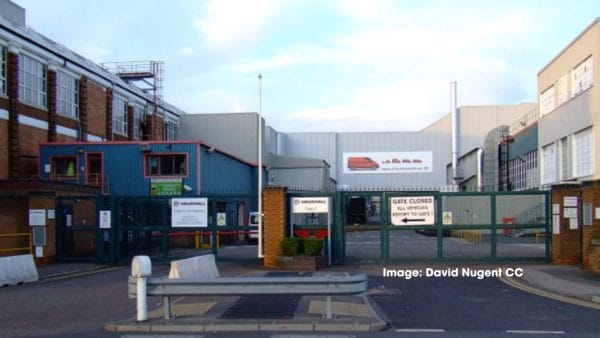
This is the third round of redundancies by JLR since 2020. Meanwhile, Vauxhall’s Luton plant and Honda’s Swindon plant have both closed in the past few years. Consequently, total UK vehicle production has fallen to its lowest level since 1952.
For decades, British capitalism has failed to invest in long-term growth and production. Instead, British capitalists have been happy to sell out their manufacturing base to the highest international bidder. JLR is a prime example – it is currently owned by India’s Tata Group.
Ironically, JLR itself had invested £1.1 billion in a joint venture with Chinese car company Chery in 2012, in a short-sighted pursuit for quick profits. Chery has now developed its own electric vehicles (EVs), and has clearly outpaced Jaguar in its competitiveness.
Indeed, the third most popular-selling car in Britain today is Chery’s Jaecoo 7 – disparagingly dubbed the ‘Temu Range Rover’ – which is half the price of a luxury JLR model.
These cars are not just cheaper – they are better and more technologically advanced. JLR has fallen way behind in this market. More generally, China’s vehicle production has reached 45 times that of the UK.
To stay competitive, JLR is forced to look for any solution to stay profitable. That is the logic of the market. The tariffs and instability have precipitated JLR to talk with Dutch-based Stellantis to produce JLR vehicles in the United States, further putting into question the longevity of British car manufacturing.
In fact, former BMW chief Ian Robertson criticised JLR for failing to move production to the US earlier.
Humiliation for Labour
In his first ever speech as Prime Minister, Andy Burnham promised to “reindustrialise Britain”. So did his predecessor Keir Starmer – who even announced his government’s response to Trump’s tariffs in front of a JLR factory floor. No wonder: British industry is facing crisis after crisis: steel, pharmaceuticals, chemicals, renewables, and so on.
But how are these windbags supposed to save industry – when Britain’s industry lags so far behind its ever-more-vicious competitors; and instead of investing, British capitalists cut jobs and move production abroad?
The single solution the politicians have found is simple: give the bosses more money! Thus it was that Starmer underwrote a £1.5 billion loan for JLR in an attempt to keep the company and its various suppliers afloat.
Keir Starmer tells workers at a Jaguar Land Rover plant in the West Midlands: “We will back you to the hilt.” https://t.co/3JGPGzAsk3
— Tony Diver (@Tony_Diver) April 7, 2025
Yet evidently, even this eye-watering sum has not made a dent in the crisis facing JLR. The bosses, nonetheless, are bound to demand even more cash injections in the future – if it means paying their bills at the taxpayer’s expense.
But even if these vultures tried to make use of state funds in a productive way, it is clear that no amount that the government can realistically offer will be enough to revitalise the industry.
The Chinese state alone has invested $15 billion per year (over £11 billion) in the automotive industry over a decade-and-a-half, 2009-2023. BYD, China’s largest company in the sector, invests £17.8 billion per year as capital expenditure, and £6.5 billion in research and development.
Britain is in a different ball park. The state has earmarked £4 billion total for automotive investment… to be distributed from now until 2035.
JLR, Britain’s largest car manufacturer, intends to invest £18 billion… over its five-year plan.
The need for socialist planning
The politicians of ‘broken Britain’ may therefore offer kind words to the car industry. But ultimately, they neither have the money in the bank to save it themselves; nor can they force the bosses of these underproductive, private companies to invest instead.
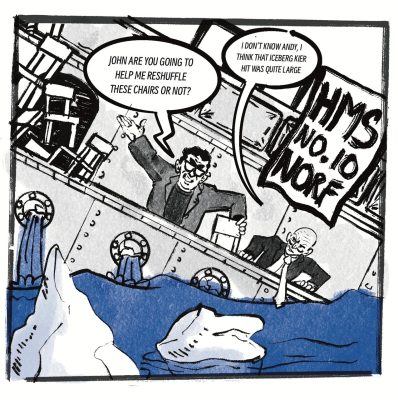
And in truth, after decades of relative decline, there is not enough profit in any of Britain’s car companies – taken on their own basis – to invest and compete against Chinese or American giants.
What this crisis reveals is the complete irrationality of capitalism. British capitalism has become completely parasitic. Meanwhile, across the world, there are too many things being produced for the capitalist market to absorb – in this case, cars.
And, as always, it is the workers who are made to suffer for the profits of the bosses, and the irrationality of their system.
Instead of job cuts and worsening conditions at work, the latest technological innovations – automation, gigafactories, and the rationalisation of resources – could allow for a reduction of the working week with no loss of pay. But these technological developments provide the opposite on the basis of private property and the competition between nation states.
From JLR to Nissan, and from cars to pharmaceuticals: the only way forward for workers is to fight for the expropriation of the industrial giants – together with the banks, insurance, and construction companies – to bring them into one cohesive, rational, and globally-planned economy.
This is the only way to save – and revive – British industry, and prevent workers from being chucked onto the scrapheap.