
Over the last few months, several pharmaceutical giants have reported they are freezing their investment in the British pharmaceutical industry. These announcements deal another blow to Starmer’s government and its efforts to patch up the British economy.
Merck & Co. has cancelled a planned £1 billion research and development centre in London. AstraZeneca has halted a £450 million vaccine facility in Liverpool, alongside pausing its £200 million expansion of its Cambridge site. Eli Lilly has postponed its planned £279 million London Gateway Lab, while Sanofi has placed all substantial UK investments on hold.
Pharmaceuticals and life sciences is one of the few sectors that the UK still excelled at. But these latest moves could not make things clearer: in the eyes of these companies, Britain – once an international cornerstone of pharmaceutical research and development – is no longer a desirable place to do business.
This – alongside the decline of sectors like chemicals, automotive, and metallurgy – is yet another example of the long-term crisis of British capitalism.
Clawback tax

A central element in this freezing of investment, which is hotly debated in the sector, is the ‘clawback tax’ that the NHS levies on pharmaceutical drug makers. This deal means if the NHS goes over an agreed budget on buying a particular medicine, it can tax the company behind the drug and take back some of its revenue.
In theory, this should help regulate the prices pharmaceutical companies can charge, stopping runaway profiteering – as well as help balance NHS books by ensuring it does not overpay for its medicines.
In practice, however, this measure simply acts tax on all medicines launched for use in Britain and sold to the NHS. This tax has long put the British market, and its pharmaceuticals industry as a whole, at a significant disadvantage for big pharma.
Last year, this tax rate reached a high of 23 percent on average. Compare these numbers to France and Germany, for example, which utilise similar taxes – but at only 5.7 percent and 7 percent respectively.
Of course, no one will shed a tear for these big pharma parasites losing out on a portion of their profits. But the negative impact of the clawback tax reveals how any talk of a so-called ‘partnership’ between a publicly-owned NHS and privately-owned companies is a sham. Any attempts to regulate and ‘leverage’ the market, within the confines of capitalism, will inevitably backfire.
Global rankings

Once upon a time, the pharma firms had no choice but to grin and bear these extra costs in order to tap into Britain’s prolific pharmaceutical industry.
But now that is no longer necessary, as options are opening up for these companies to make their billions elsewhere – such as China.
AstraZeneca has recently announced $15 billion for new centres in Beijing and Shanghai, while GSK has gone on a $12 billion spree of purchasing licensing agreements for new Chinese medicines.
Another factor in Britain’s sinking global position is the chaos of the Trump presidency. His threat of slapping pharmaceutical companies with 100 percent tariffs unless they have a manufacturing plant in the US naturally pulled investment away from the UK and across the Atlantic.
But this scramble for jobs – and to lower drug prices for American workers – has also created a mechanism for the pharma companies to twist the arm of the British government.
Initially, talks to bring the clawback tax rate down from 23 percent between Wes Streeting and the Association of the British Pharmaceutical Industry ended in a stalemate.
The pharmaceutical companies did not want to invest in the research, development, or provision of medicines in Britain when they could make more money doing the same thing elsewhere.
Meanwhile, Labour – working with a healthcare service already in financial hot water – could not afford to increase NHS drug spending to bring the rate down. “I won’t allow big pharma to rip off our patients or taxpayers,” Streeting boldly declared.
Faced with the flood of pharma giants relocating to the US, however, Streeting quickly backed down and suddenly found the financial leeway to reduce the rate to 15 percent!
Medical research
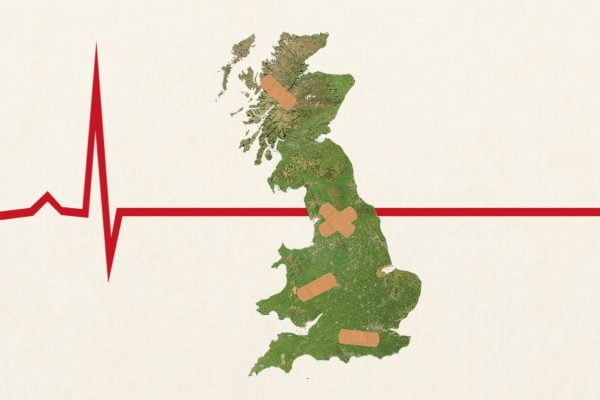
And yet, even Streeting folding to the profit-hungry pharmaceutical companies has not really stemmed the flow of investment away from British industry.
Already, it had fallen 58 percent between 2017 and 2023. Now Britain is falling rapidly down the global rankings for pharmaceutical investment.
Only AstraZeneca has resumed its big, million-pound investment plans – but only after Starmer promised big concessions to AstraZeneca, at the expense of both the NHS, who will have to pay more for drug procurement, and the British public.
And of those companies remaining in Britain, many are dropping their projects tackling pressing issues like antimicrobial resistance, tropical diseases, or paediatric medicines. Instead, they are pouring their money into weight loss drugs and reformulating existing medicines to keep them under exclusivity laws.
This reveals the problem at the core of the pharmaceutical industry, which cannot be solved by any number of tax deals or incentives that Labour can muster.
All of these firms compete against each other in a race towards the same breakthroughs and the same patents. These firms only care about profit, and not about making life-saving medicines available for everyone.
Britain’s historic role as a place for pharmaceutical innovation is coming to an end, and it is British workers – in the industry, and accessing healthcare – who will pay the cost as investment is withdrawn.
But if these pharma giants were run democratically by the workers in these companies, the process of developing new medicines could be greatly accelerated, benefitting both the NHS and the health of the entire working class.