
The British chemicals industry once dominated the world. Now, it is facing a paroxysm of plant closures, as a century of industrial decline rushes to a head.
Chemicals is a core industry that supports half a million jobs, and is key to the manufacture of pharmaceuticals, fertilisers, food, plastics and materials for green technology.
Perhaps most worryingly for the ruling class, it is also central to producing the armaments required for so-called ‘national defence’.
Since 2021, there has been a 61 percent decrease in chemicals output, and 25 plant closures. In March this year, the Chemicals Industry Association issued an “urgent warning” to the Prime Minister that the sector faces imminent collapse without the state effectively bailing them out.
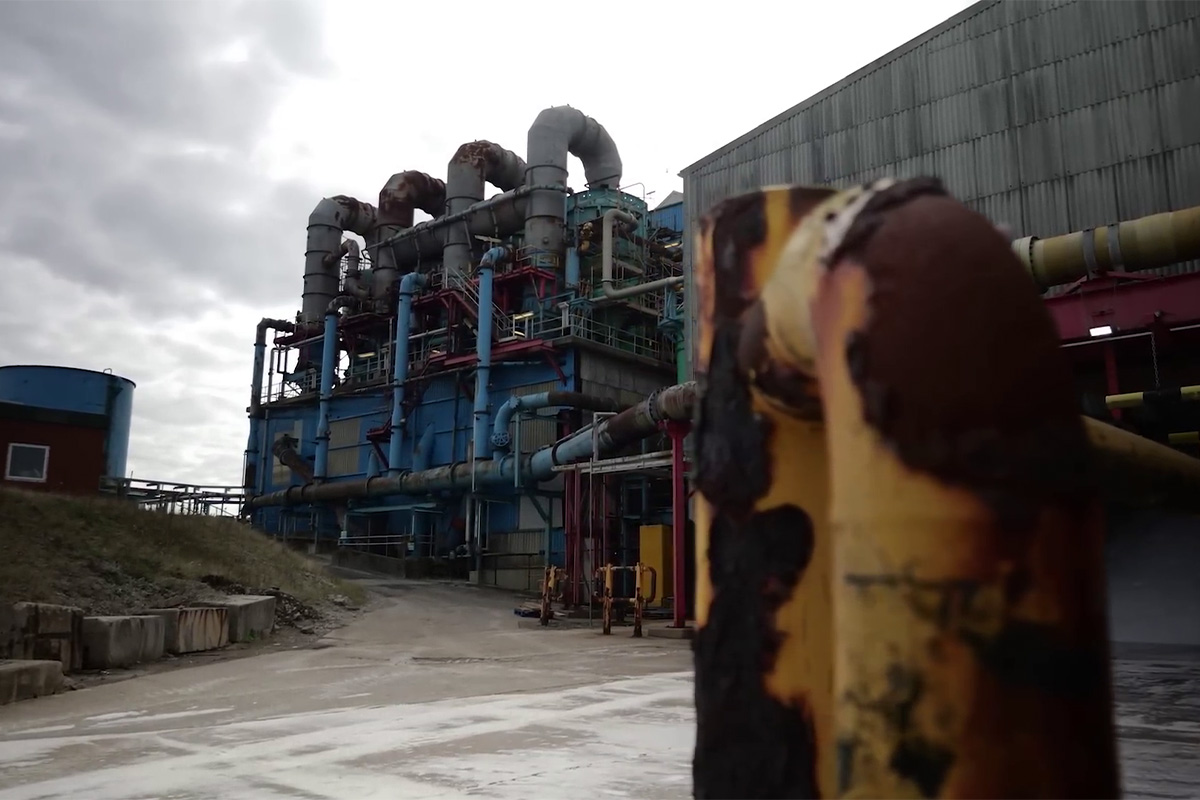
Sky News recently put out a video titled ‘The UK is losing the industry that makes everything’, which opens with a tour of one of the final salt processing plants in the country.
This plant – located in Runcorn, Cheshire – is a physical embodiment of the dilapidation of the whole of British industry. The whole structure looks like it would disintegrate if you sneezed too loudly; the pipes are more rust now than steel; the central evaporation vessel itself is over 100 years old.
Investment of £150 million would be required to save this plant, without which Britain would, for the first time in modern civilisation, have to import its own salt.
It’s not that the mines, which are located near the processing plant in Cheshire, are running out of salt, but that the INEOS (the monopolist owners) are simply not willing to front the capital without a guaranteed return on their investment.
In an increasingly febrile world situation, the sensible strategists of capital are keenly aware of the need for independent industry, so that Britain does not become even more vulnerable to shocks such as wars, tariffs and climate crisis.
Despite the brainiacs in power devising a “robust, strategic, and unashamedly long-term” plan to make Britain the best place to invest in the world, as laid out in their 2025 ‘Modern Industrial Strategy’ document – the government cannot reverse 100 years of decline.
The chasm between Little Britain and industrial powerhouses like China – which alone now produces 40 percent of the world’s chemicals – is now lurching beyond what can be overcome with a few clever tweaks, tax breaks, and bailouts.
And the same can be said of other capital-intensive technological sectors which Britain formerly prided itself on, including pharmaceuticals and life sciences, advanced manufacturing, and aerospace engineering.
Britain’s ‘comparative advantage’ has been steadily eroded by decades of mismanagement, short-sightedness, and lack of investment.
In reality, however, Britain has world-class STEM education and research. On the basis of a planned economy, the thousands of highly-educated graduates that are stuck working minimum-wage jobs could be put to work, on the cutting edge of scientific and industrial innovation.
On the basis of capitalism, however, this is not possible. Only an all out war with the working class – to push down wages and conditions to ‘competitive levels’ – could make Britain a hub for industrial investment. But that would be a finished recipe for exothermic struggle.
Soon the only reactive material produced on British soil will not be the kind that you can safely store in a test tube. The catalyst could be lying anywhere.