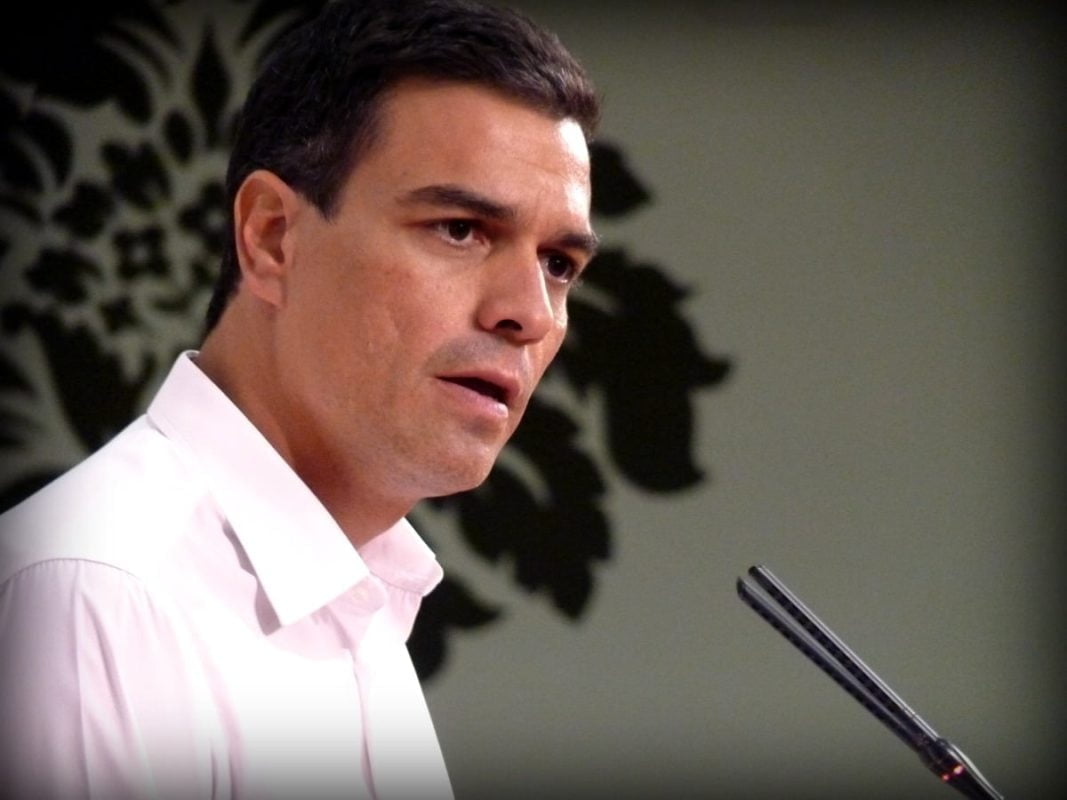
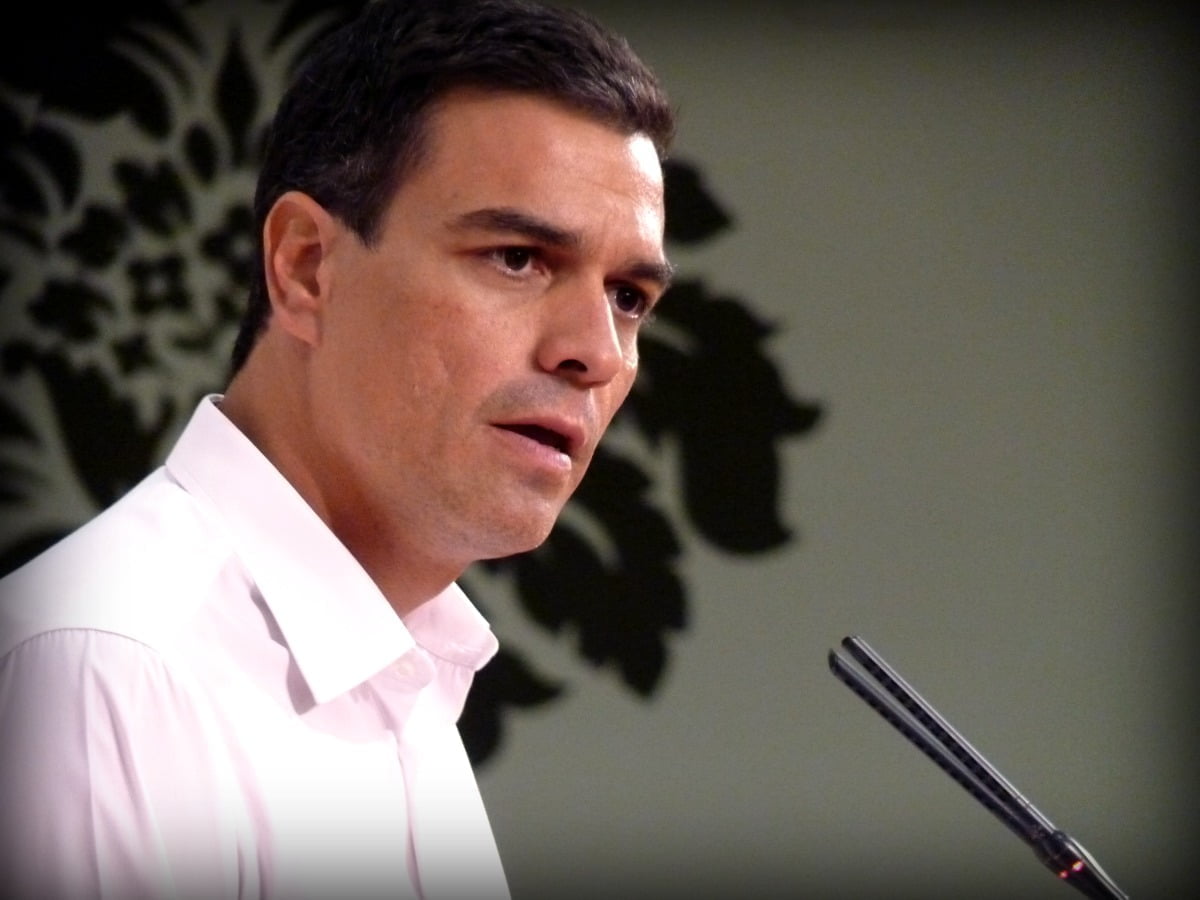
For some on the British left, Spanish Prime Minister Pedro Sánchez has become something of a sensation.
When Sánchez told Trump ‘No’ over joining the war on Iran, refusing to let US imperialism use Spanish military bases at Morón and Rota as platforms for the attack, and then banning the US from using Spanish airspace, the international reaction was electric.
The New Statesman profiled him as a “left-wing icon”. Actor Mark Ruffalo said Sánchez should be “leading the EU”.
Pedro Sánchez has become the leader of Europe. https://t.co/nqoOGqvWbT
— Owen Jones (@owenjonesjourno) April 8, 2026
More recently, Sánchez has been in the spotlight internationally for his leading role at the ‘Global Progressive Mobilisation’ summit in Barcelona, where various prominent liberal and ‘left’ figures joined forces to declare their opposition to Donald Trump and his disastrous war on Iran.
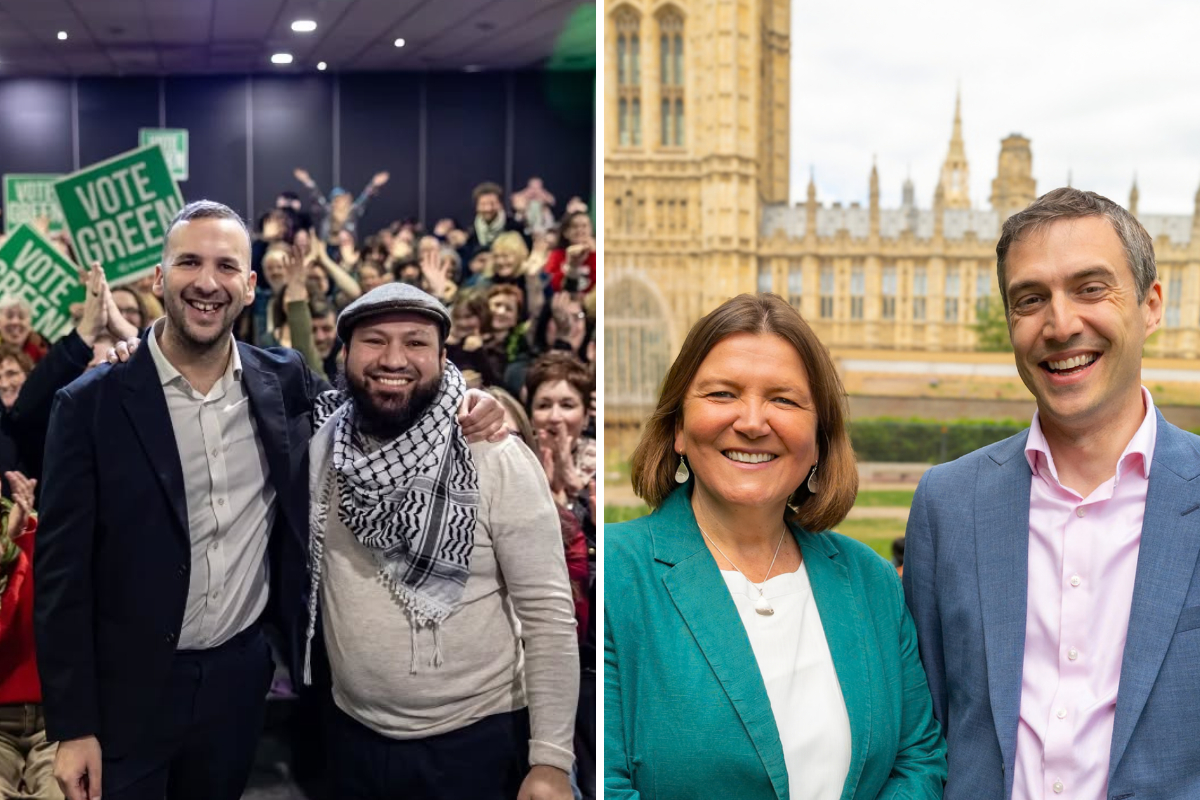
The question is now bouncing around social media and meetings: why haven’t other European leaders defied Trump as sharply as Sánchez? Could the Spanish PM be a role model for the left in Britain, including for Green Party leader Zack Polanski?
In reality, however, as we will show, Sánchez is no model for the left. Rather, he is a cunning opportunist and self-promoter.
It is true that Sánchez has taken actions that have inconvenienced US and Israeli imperialism. But examining these more closely, it is evident that the positions he has taken – over Iran and Palestine – have clear limitations and are full of holes.
What Sánchez is and is not
To understand Sánchez’s actions – and their limits – it is necessary to understand the political conditions he operates under in Spain.
Pedro Sánchez, leader of the Socialist Workers’ Party (PSOE), heads a coalition government, whose parliamentary majority is based on an unstable alliance with other disparate left and nationalist parties.
His defiance of Trump, in this respect, is primarily a calculated response to domestic political pressures.
Sánchez’s own electoral calculations; the demands of his coalition partners; and Spain’s strong anti-war traditions, going back to the mass opposition seen to the 2003 Iraq War, when more than three million Spaniards marched under the slogan ‘no to war’: all these factors account for the PSOE leader’s current stance.
In the case of Iran, however, when push came to shove, Sánchez’s defiance proved partial. Words and deeds diverged sharply.
When serious pressure was applied by the US, Spanish military chiefs, and key sectors of the ruling class, his government dispatched a frigate and a supply ship to Cyprus to collaborate in the defence of the RAF’s Akrotiri base, used to attack Iran.
Sánchez vs Starmer
Nevertheless, Sánchez does stand out in comparison to other European leaders, including ‘our own’ Keir Starmer.
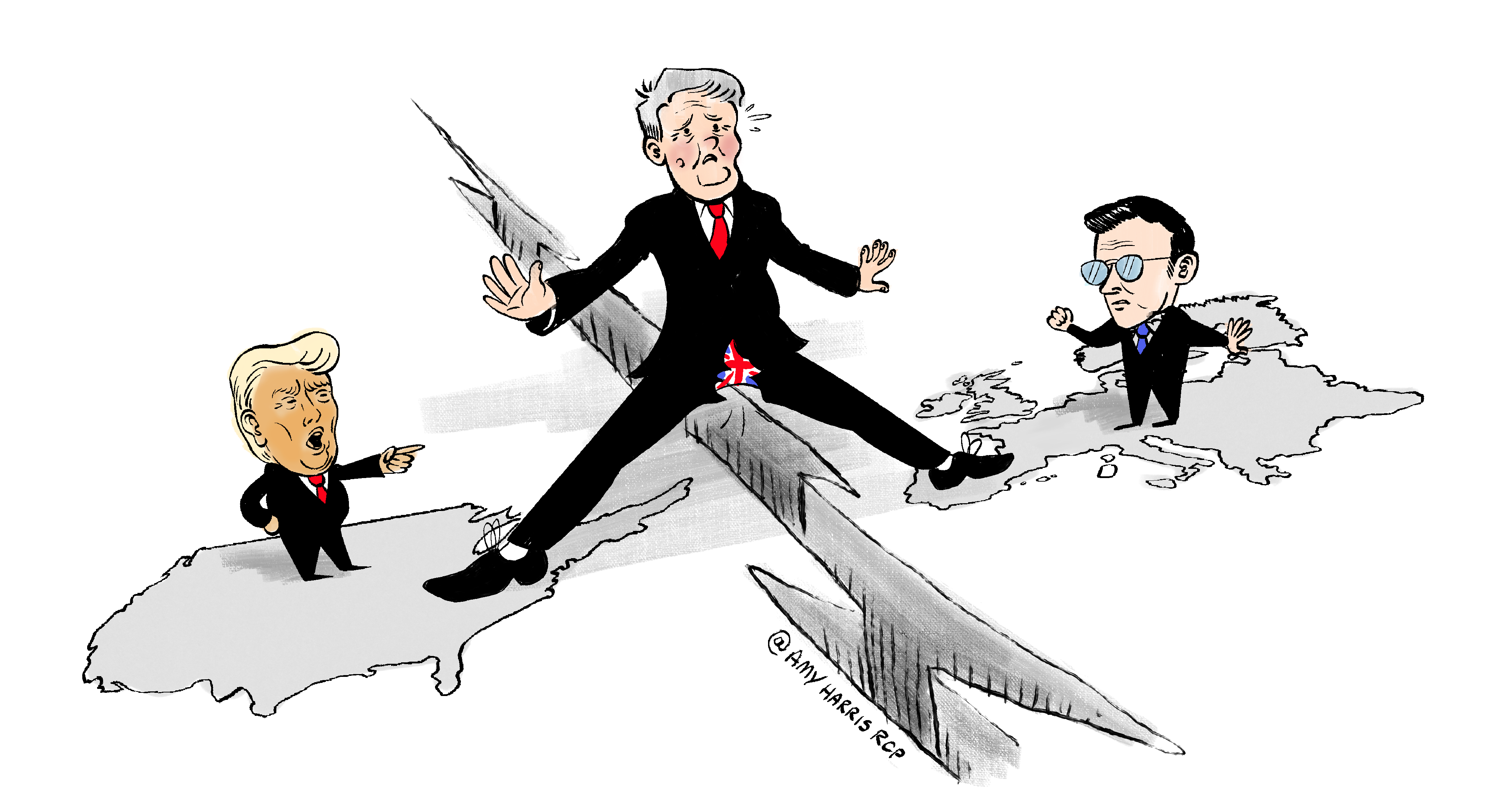
Starmer also initially refused permission for US bombers to use British airbases to attack Iran, for example. But when pushed by UK military chiefs and Washington, the British Prime Minister reversed this decision.
Furthermore, the Labour leader has tried to keep the UK at arm’s length from Trump’s war, by saying that British fighter jets are only involved in “defensive strikes”.
The difference is: Sánchez took the initiative against Trump from the start in refusing to allow American use of Spanish bases. Starmer, by contrast, zigzagged under conflicting pressures, trying to both appease the White House and anti-war British voters at the same time.
Sánchez, in other words, has been relatively consistent in his anti-Trump stance, and is seen as a more honest anti-war leader. Britain’s knight of the realm, ‘Sir’ Keir Starmer, meanwhile, was forced into opposing Trump’s war, and is widely – and rightly – seen as two-faced and dishonest.
Sánchez and Palestine
The limits of Sánchez’s ‘anti-imperialism’, however, are further exposed in relation to Palestine.
In October 2023, the Spanish government publicly announced what it described as an ‘arms embargo’ on Israel. But later, journalists revealed that Spain in fact continued to sell weapons to Israel while the genocide in Gaza was ongoing. All that the government had done was to suspend the granting of new licences. Spain also remained a significant importer of weapons from Israel, thus continuing to fund the Zionist war machine.
Furthermore, under the pressure of public opinion, Spain formally recognised a Palestinian state in May 2024. This was a merely tokenistic gesture, which many other countries had taken before.
Then, in September 2025, Sánchez announced sweeping measures against Israel. This included a total arms embargo, and the banning of weapons exports and fuel transit for Israeli military vessels through Spanish ports.
But reading the small print, we see the clear limitations of Sánchez’s ‘anti-imperialism’. The arms embargo law contains a carve-out allowing exceptions where the ban would harm ‘general national interests’. Furthermore, Spain was never a significant arms exporter to Israel, so the material impact has been limited.
And what, ultimately, does Sánchez see as the answer to the question of Israel-Palestine? Nothing better, at its heart, than the two-state solution: a capitalist Palestinian state alongside a capitalist Israeli state, managed by the same UN and international institutions that have failed Palestinians for almost 80 years.
Fundamentally, this is no different to what Starmer and his government have advocated for. In September 2025, for example, the UK also went ahead with the gesture of formal recognition of the state of Palestine.
Room for manoeuvre
The question remains: why has Sánchez seemingly taken bolder measures than other European leaders in regards to opposing Trump and his war on Iran?
The difference cannot be explained simply by the personal, subjective qualities – or lack thereof – of these various leaders. Rather, there are material, objective factors at play.
In the short term, political expediency is forcing Sánchez, Starmer, and all the European leaders to manoeuvre. But in comparison to Spain, other big countries in Europe are far more economically and militarily intertwined with the United States.
The US is the main export destination for Europe, accounting for 21 percent of all EU exports in 2025. America is also Britain’s largest single trading partner, accounting for 17.5 percent of total UK trade.
Spain, on the other hand, runs a trade deficit with the US. America accounts for just 4.3 percent of Spanish exports. Sánchez’s government, meanwhile, has actively courted Chinese investment. In 2024, for example, within the EU, Spain received the highest level of prospective Chinese FDI (foreign direct investment).
These economic and security differences mean that Sánchez has more room for manoeuvre when it comes to defying Trump. Spain is far less reliant on US trade and investment, and far less integrated with America’s military apparatus. The threat posed by any potential retaliation from Washington is therefore lower.
Britain and other European powers, by contrast, operate under greater objective constraints, due to their ties with US imperialism and their historic dependency on the transatlantic alliance.
Some manoeuvring is still possible, albeit mostly under pressure. But leaders like Starmer find themselves more limited in the actions they can take; more hesitant and unable to act decisively; having to conduct a delicate balancing act, whilst being buffeted by winds from different directions.
Does Sánchez mean socialism?
If Sánchez is supposedly a model for the British and European left, it is worth being clear about what this ‘model’ actually shows.
Under his government, Spanish military spending has increased by 70 percent. He may say ‘no to war’ now, in relation to Trump’s war on Iran. But he backed Biden’s war in Ukraine without reservation.
At home, meanwhile, despite being the fastest-growing economy in the EU, real wages have barely moved over the past 30 years, rising just 2.76 percent since 1994, according to the OECD, against a European average of over 30 percent. Food prices have risen 72 per cent since 2000. Seven in ten young workers under thirty live with their parents because they cannot afford rent.
Spain’s ‘progressive’ government has not resolved a single one of these contradictions – it has presided over them.
In short: Sánchez is not a role model for how the left can challenge imperialism. Rather, he is a model for how a social democrat can cynically make ‘left’ noises, while doing something quite different. And he is a model for how easily sections of the left can be dazzled by rhetoric into mistaking management of the capitalist system for genuine opposition to it.
We have seen this story before. In fact, we are seeing it right now, in the form of wannabe successors to Starmer, such as Andy Burnham and Angela Rayner.
A ‘British Sánchez’, in other words, would mean a social democrat with slightly sharper rhetoric; someone who could opportunistically surf the anti-war sentiment and promise a kinder capitalism, whilst ultimately delivering the working class back into the hands of the billionaires and war criminals.
Socialist programme
Instead of looking to ‘left’ leaders like Sánchez, or to capitalist institutions like the UN, a genuine socialist leadership would mobilise the working class itself, at home and internationally.
In the face of imperialist war, such a leadership would call on workers at ports, airports, railways, and arms factories to refuse all military cargo, and would organise mass strikes and workers’ boycotts.
This, in turn, would show workers everywhere the potential collective power they have to halt the imperialists’ war machine entirely.
Furthermore, a real socialist leadership would not only reject Trump, but also the farce of the UN and international (i.e. bourgeois) law. And it would call out the so-called ‘rules-based order’ for what it is: an instrument for defending the imperialists’ interests, nothing more.
Instead of placing any trust in these institutions, in bourgeois diplomacy, or in the liberal establishment, the left and the labour movement – in every country – must direct its fire at its own ruling class.
A true anti-imperialist programme would mean dismantling NATO and shutting down all US bases. And it would involve the expropriation of all the warmongers and capitalists, with their factories, banks, and key industries placed under common ownership and workers’ control.
Above all, a genuine socialist programme would aim to overthrow capitalism – through the conscious, organised, mass action of the international working class. This is the only way to end imperialism and war, once and for all.
Workers of the world – unite!