Freedom Suite: The radical legacy of Sonny Rollins
Niko X, Leeds
Sonny Rollins, the late ‘Saxophone Colossus’, was a giant in the jazz world. His peers described him as “a legend, almost a god […] he was an aggressive, innovative player who always had fresh, musical ideas.”
After his death on 25 May this year, many musicians past and present have paid tribute to his enduring legacy – a legacy which has become a touchpoint for anyone remotely interested in jazz.
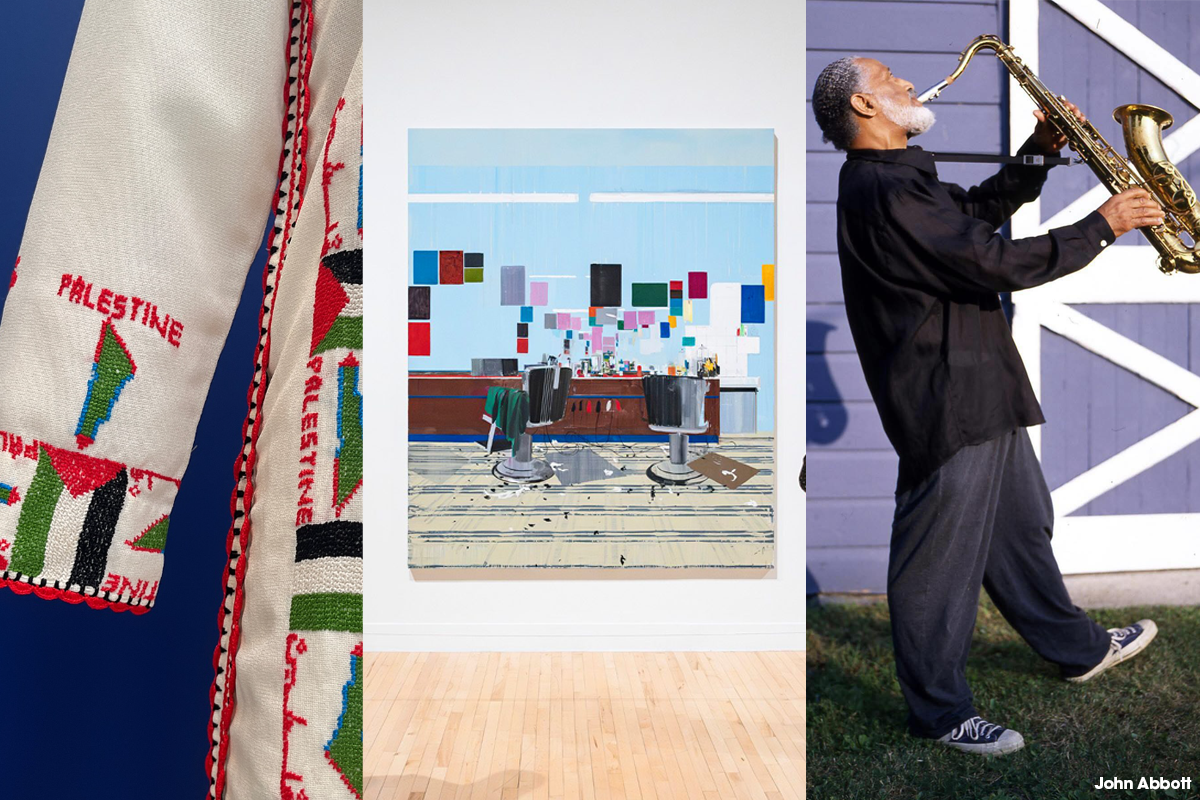
With a career spanning over 70 years, Sonny’s catalogue is as vast as it is brilliant. However, it is in his 1958 album Freedom Suite that we find a true landmark work: a moment of forward thinking, hard-bop excellence, and one of jazz’s first full-length albums to overtly speak on black oppression and civil rights.
Rollins was born to immigrant parents in Harlem, New York in 1930. These were tumultuous times of heightened class struggle in the US, and the deprived neighbourhoods of Harlem were no exception.
Rollins reflected this growing discontent. His medium was jazz – a genre tied closely to the struggle of black Americans against racism and segregation. The aggressive, intense, but also beautiful playing throughout Freedom Suite shows Rollins continuing and developing this legacy to a higher level.
Rollins lays out his vision in the album’s liner notes: “America is deeply rooted in Negro culture: its colloquialisms; its humor; its music. How ironic that the Negro, who more than any other people can claim America’s culture as his own, is being persecuted and repressed; that the Negro, who has exemplified the humanities in his very existence, is being rewarded with inhumanity.”
It is with these words that Rollins sets the tone for his 20-minute title track – a journey through blistering lines, soul-wrenching laments, and blues-soaked, work-song-like marches accompanied only by bass and drums.
In Sonny’s intimate explorations of motifs and chaotic sheets of sound, the melodic drumming, and the departures from standard walking basslines, we see a violent, radical pushing of the genre’s boundaries.
A truly groundbreaking, virtuosic, and unabashedly hip player, Rollins’ contributions to jazz have become foundational throughout the music world.
Hurvin Anderson: Colour and contrast in the colonial Caribbean
Patricia Moseley, Wood Green
British painter Hurvin Anderson’s first solo exhibition is a thoughtful collection, which draws out the complexity of the artist’s Caribbean heritage – from colonialism, to the Handsworth riots and race today.
Through six parts, Anderson explores the various facets of his identity. The exhibition begins with a documentary on the Handsworth riots of the 1985, when simmering racial tensions, unemployment, and inflation exploded in Birmingham over the course of three days.
This sets a sharp tone for the rest of the artwork, connecting Anderson’s identity with the historic relationship between Britain and the Caribbean.
View this post on Instagram
Raised by Jamaican parents in Handsworth, Anderson’s artwork opens with the room ‘Arrival’ – themed around the entry of the Windrush generation in Britain. Masterfully using outlines of figures and haunting landscapes, he captures the tension of finding a new home while longing for the old.
One stand-out piece is a 16-panel painting, Passenger Opportunity, which spans Caribbean history from the transatlantic slave trade to the Windrush generation. Vignettes of everyday life are framed by the dense greenery of Jamaica.
A recurring theme in the exhibition is pan-Africanism: from Marcus Garvey’s Black Star Line, which was part of the ‘Back-to-Africa’ movement, to Emperor Haile Selassie being greeted by a jubilant crowd in Jamaica. In a barbershop scene, the faces of Malcolm X, Martin Luther King Jr, and Garvey look down on empty chairs.
Some of the brightest and most colourful artwork uses nature as a way to explore the tense and contradictory history of colonialism and race. Verdant flora looms over faded ex-colonial hotels once frequented by British colonists.
A painting of the towering ‘Ashanti blood’ plant pays homage to the 18th century rebellion of Ashanti and Akan slaves against their oppressors in Jamaica, which ended in vicious repression.
While Anderson leaves the interpretation of pressing questions like imperialism and racism quite open, his paintings are a stark reminder of both the brutality of capitalism and the resilience of the oppressed.
‘Hurvin Anderson’ is on show at the Tate Britain until 23 August.
Stitching the Intifada: Embroidery and Resistance in Palestine
Chris Douhot, Brixton
Stitching the Intifada – a book by British curator Rachel Dedman – is a great work of art history, tracing Palestinian embroidery and its development since the 19th century in a concise way.
The collection explores how, through embroidery (the decorative embellishment of clothes and textiles) the Palestinian people started to tell stories that they could no longer express in words, for fear of persecution by the Israeli state.
Dedman was only able to write the book because she was British, and therefore able to move between Lebanon and the West Bank. This fact itself is a tragic revelation of how, on every level, the Israeli state oppresses the Palestinian people – even barring them from sharing and communicating their culture.
Stitching the Intifada explores how every aspect of Palestinian culture and thought was affected by the Nakba.
View this post on Instagram
For instance, the book explores pre-Nakba embroidery from the Galilee region of Palestine: characterised by complex designs, with rich silk imported from Syria due to the Galilean region’s proximity to the latter.
In contrast, Nakba embroidery was made with whatever was available to the Palestinian people, such as bags of flour issued by UNRWA (the United Nations Refugee Works Agency) – demonstrating the dire conditions Palestinians faced at that time.
Another great strength of Stitching the Intifada is its ability to shine a light on how, after the Nakba, Palestinian embroidery took on a new meaning and life.
It was no longer just a traditional way to embellish clothes, but turned into an act of revolt against the Israeli settlers.
This act could be seen during the First Intifada in 1987, when it was illegal to display Palestinian colours in public. Women started to embroider the explicit colours of Palestinian resistance into their clothing.
The Palestine Liberation Organisation also used figures of embroidered women in many of their posters and propaganda, demonstrating the renewed meaning of embroidery to the Palestinian masses.
By weaving all of this rich history together, Dedman’s collection truly gives life to the proverb: “They tried to bury us, but they didn’t know we were seeds.”
Project Hail Mary: Humanity’s potential to conquer the unknown
Alex Gassem, Bermondsey
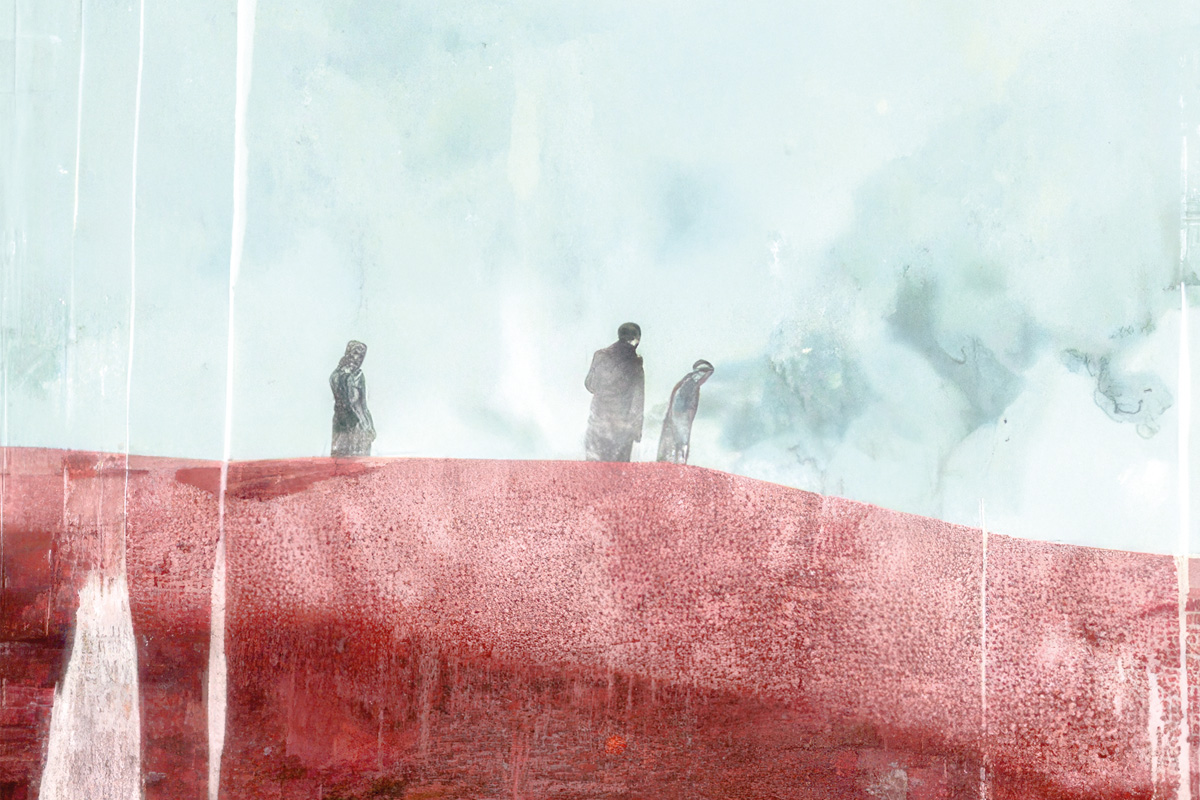
Project Hail Mary is an uplifting sci-fi novel that captures the beauty of human cooperation in the face of adversity.
The book follows high-school-science-teacher-turned-astronaut, Ryland Grace. After an alien parasite comes to our solar system and begins feeding on the sun’s energy – threatening life on Earth – Grace is sent to a foreign star system seemingly immune from the parasite to find a solution that will save humanity.
What I particularly enjoyed was the methodical, scientific thinking that Grace applies to figure out the different problems he faces.
For example, he meets an intelligent alien whose planet is also suffering from the same fate and comes to the same star system as Grace to find a solution. Before they can work together, Grace needs to figure out how to communicate with them, what their living conditions are like, and so on. Their relationship is one of the strong points of the book for me – the portrayal of beings born so far from us, that are surprisingly similar, and share our struggles is endearing to read.
Published during the COVID pandemic, it’s hard not to see the stark contrast between the harmonious pooling of resources in the book, and how the pandemic was handled by the capitalists.
Although the book leans into Cold War era caricatures of Russian and Chinese people, the world’s nations generally put aside their differences and come together to rapidly develop an advanced space programme capable of interstellar space travel.
However, during the pandemic we didn’t see such a coordinated effort. Instead, there was vaccine nationalism where big pharmaceutical companies allowed the virus to rip through the underdeveloped world by refusing to share vaccines with them.
This dire state of affairs is not representative of ordinary workers. There are countless examples of international solidarity and cooperation in the history of our class, after all.
In a time of remilitarisation, barbaric civil wars and genocide, the novel shows that humanity can achieve wonders. We don’t need an apocalyptic threat, just the end of class society.