Before the ink had dried on its mandatory powers over Palestine, the British government began to devise its plans to rule over the Middle East for the rest of the century.
Speaking as His Majesty’s colonial secretary in 1921, Winston Churchill rebuked calls for Arab independence.
“The present form of government will continue for many years,” Churchill stated. On the expected longevity of the Mandate, he continued: “Step by step we shall develop representative institutions leading to full self-government, but our children’s children will have passed away before that is accomplished.”
The hanging question left by this statement was: for whose great-grandchildren did Palestine await? After all, during the First World War, the British imperialists had promised to fulfill the national aspirations of both the Jews and the Arabs in Palestine.
As soon as the war was won, statehood for the Arabs was swiftly taken off the table – a move justified through the colonial playbook of racist banalities.
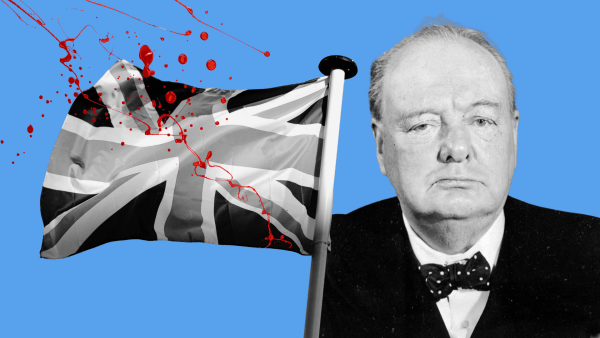
Churchill understood the pressing need to cut across the powerful stirrings for national sovereignty amongst the Arab people. And so, the man who peddled antisemitic conspiracies became the foremost champion of the Zionist cause.
Palestine was cast to play the leading part in Britain’s domination over the Middle East. In order to plunder a region whose surface glistened with oil, the British first needed to fortify their rule by sowing discord in the Holy Land.
“Little loyal Jewish Ulster”
Ronald Storrs, the self-styled “first military governor of Palestine since Pontius Pilate”, spoke with candour about the political purposes of facilitating a tidal wave of Jewish immigration and capital into Palestine.
Fresh out of the partition of Ireland, Britain was aiming to create a “little loyal Jewish Ulster” in the form of the Yishuv (Jewish settlements).
In other words, the British sought to create a loyalist opposition within the borders of Palestine. Through changing the demographic of the land, they sought to divide the peoples through religious sectarianism. This was the bedrock of British rule.
Storrs’ comments give us a piercing insight into the arrogance of the British colonial guard – with delusions so grand they likened themselves to the executioner of Christ.
Throughout the 1920s, the British authorities facilitated the buying up of land from effendis (landowners) to the Jewish Agency. Successive British governments championed the conquest of land by the Zionists, under the auspices of the Yishuv making “the desert bloom”.
This tore up the social fabric of Palestinian life. The peasants were stripped of their independent means of survival, and flocks would make their way into the cities in search of work. But in many sectors they found themselves barred at the door by the racist policies of the Histadrut, a quasi-state institution that promoted the conquest of Hebrew labour.
Acting as the largest employer in Mandatory Palestine, the Histadrut’s policy was crystal clear: “[T]o allow Arabs to penetrate the Jewish labor market meant that the influx of Jewish capital would be employed to service Arab development, which is contrary to Zionist objectives.”
Loss of work for Palestinians became commonplace: from the construction yards to the soap factories. Palestinian labour markets were transient. Many workers found themselves squeezed out of work as seamlessly as the seasons shifted in the orchards.
By the early 1930s, Palestine had become unrecognisable to its native population.
The systematic theft of land by the Zionists in the countryside created a deep-seated paranoia in the mind of the peasant that the Palestinian elite were colluding with their enemies. Constant fear of pauperisation in the cities and a looming sense of displacement fuelled the feeling that something had to be done.
The General Strike
In April 1936, two Jewish settlers were killed by Palestinian fedayeen (guerillas). Within days, recriminations broke out, with two Palestinians executed by settlers. This was the spark that set the whole of Palestine alight.
The Great Arab Revolt commenced with an almighty general strike, lasting six months. Often considered the first intifada, this spontaneous, grassroots movement took the British by surprise.
National committees sprung up all across Palestine. Within weeks, the drivers’ unions had paralysed transport. Railworkers in Jaffa rallied on May Day to denounce the Zionists “depriving the [Arab] worker of his job and the peasant of his land”.
A semi-insurrectionist mood was sweeping through the countryside: non-payment of taxes spread like wildfire and armed attacks grew against the forces of occupation.
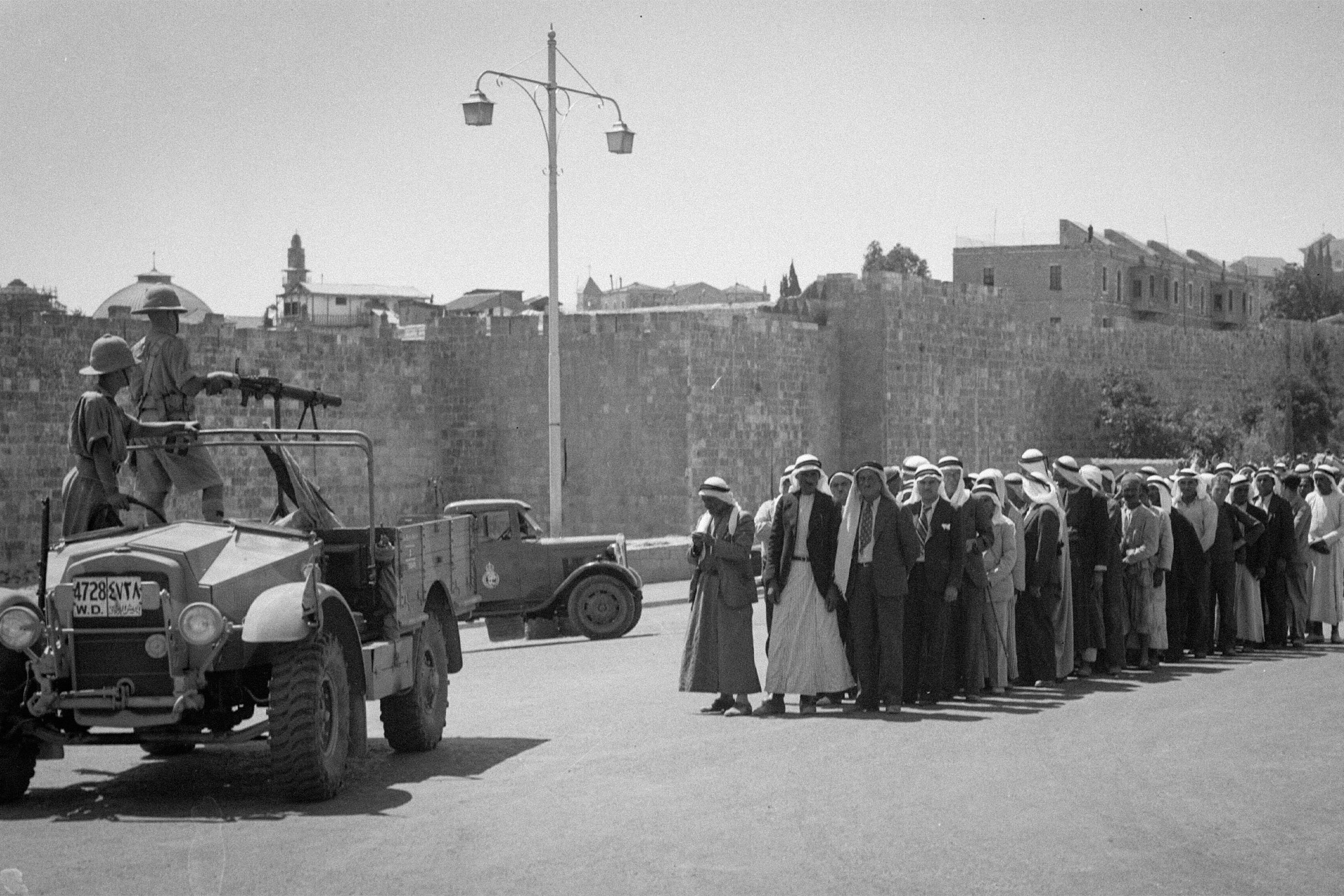
From blowing up thousands of houses in Jaffa, to meting out collective punishment on defenceless Palestinian villagers, the British lived up to their maxim that the only language the native understands is force.
Scab Jewish labour filled the factory floor, under the protection of the British bayonet. Sensing an opportunity in the crisis, the Histadrut used the strike to covet Arab jobs, furthering their strategic control over the economy.
The general strike was quashed by local Arab leaders, willing to collaborate with the British authorities and the Zionist menace.
Partition on the table
The British dispatched a Royal Commission to investigate the uprising. In 1937, the Peel report concluded that only through “the dark path of repression” could the current administration be maintained. It proposed the partition of Palestine.
Rather than the Palestinians being granted a state, their proposed share of the land was to be annexed by neighbouring Transjordan.
It is here one finds the euphemism ‘population transfer’ – a phrase later used by Zionists to whitewash the brutal ethnic cleansing of the Nakba. The plan proposed the ‘transfer’ of 225,000 Palestinians to make space for the Yishuv.
View this post on Instagram
Incensed by this flagrant refusal to engage with their demands, the Palestinians relaunched an armed insurgency with a more violent edge. For two years, there would be almost daily assassinations, followed by brutal recriminations and reprisals.
Civil administration was practically non-existent by mid-1938. At its height, 20,000 rebels controlled most of the mountainous areas.
Rebels established their own courts and postal service to replace the mandatory structures. In Nablus, they twice raided the Barclays bank. In Bethlehem, the fedayeen descended from the hilltops and disarmed the police, singing patriotic songs whilst donning their iconic keffiyehs.
Revolt crushed
The British fiercely tried to regain control of the Holy Land. Villages suspected of harbouring rebels were subjected to collective punishment. Curfews were imposed. Thousands were detained without trial. Aerial bombardments became central tools of counter-insurgency.
At the same time, Britain deepened its cooperation with Zionist paramilitary organisations. The Haganah expanded rapidly under British sponsorship, while the Jewish Settlement Police received training, weapons, and financial support from the Mandate authorities.
Although the revolt demonstrated the power of Palestinian resistance, it ultimately ended in exhaustion and defeat. Much of the Palestinian leadership had been imprisoned, exiled, or killed.
By the eve of the Second World War, the Palestinian national movement had been severely weakened and fragmented. Almost 20,000 Palestinians had been murdered or maimed.
Britain eventually issued the White Paper of 1939, which attempted to curb Jewish immigration and proposed an eventual independent Palestinian state shared by Arabs and Jews. However, by this point, the rubicon had been crossed.
Plucking the fruits
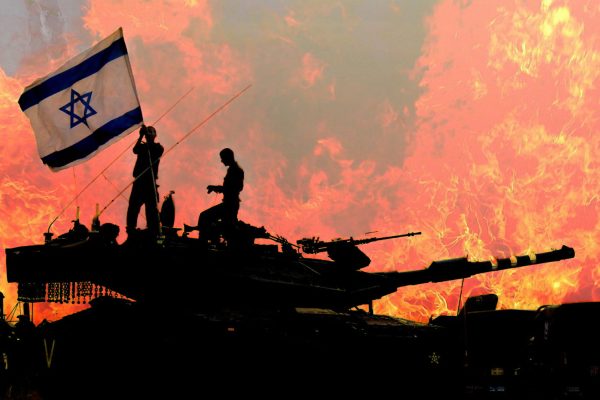
The Yishuv was more firmly set on the road to statehood. Though the White Paper caused dismay within leading Zionist circles, it is undeniable that the sole benefactor of the revolt’s defeat was in fact them.
Playing second fiddle to the most powerful colonial force on the planet, the Zionist leaders had mastered the dark arts of repression. The Israeli state now existed in embryonic form. All that was needed was one last push against their patron state.
The international balance of forces fundamentally shifted in the Zionists favour following the end of the Second World War. The British Empire was proven to be a colossus with feet of clay; unable to quell Zionist rebellion in what they had imagined to be their “little Ulster”.
With sustained terrorist activities carried out by the Haganah against the colonial authorities, the British reluctantly passed over the question of partition to the United Nations in 1947.
For all their imperial arrogance, the British conjured up the force that would come to rule over the ruins of the British Mandate. In the words of Ghassan Kanafani:
“It is no exaggeration to say that the economic and military presence of the Zionists, whose links with imperialism grew stronger, established its principal foundations in this period […] Thus in 1947 circumstances were favourable, for it to pluck the fruits of the defeat of the 1936 revolt.”