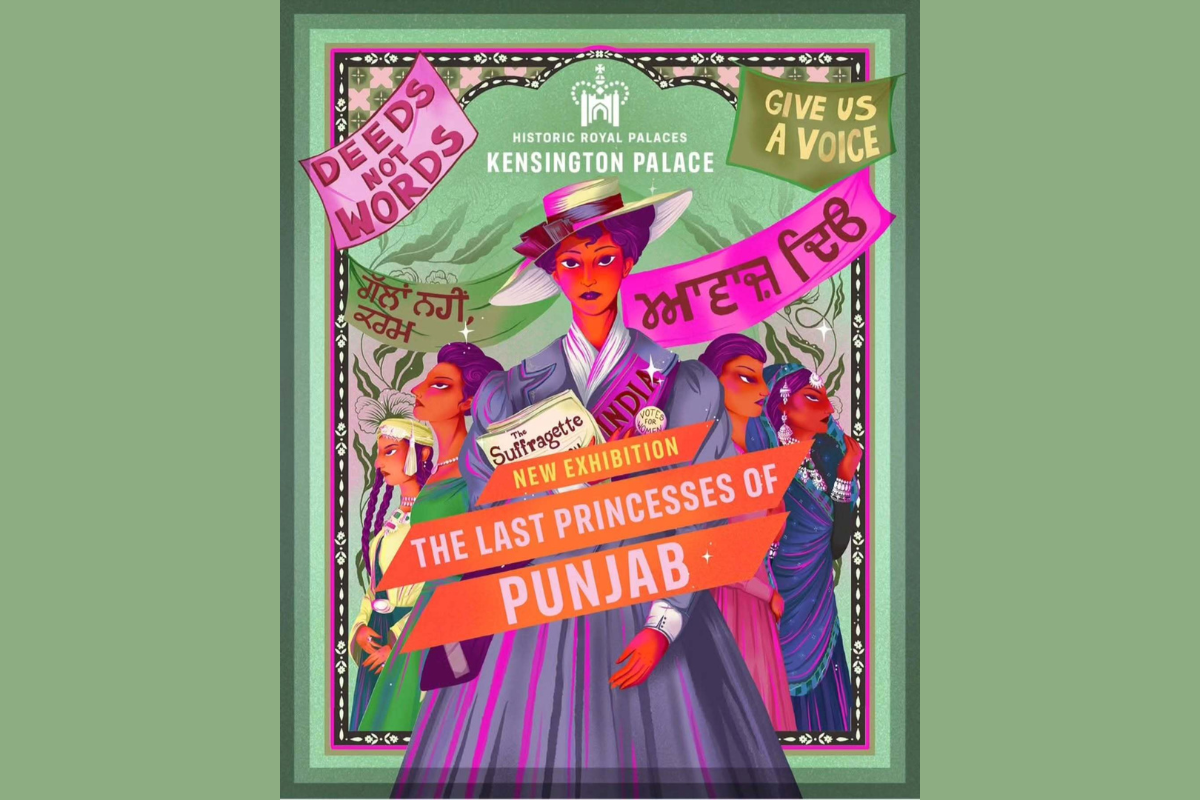

Kensington Palace has opened a new exhibition titled “The Last Princesses of Punjab: Sophia Duleep Singh and the women who shaped her”. The exhibition traces the lives of the deposed Sikh Empire’s rulers and their co-option into the British aristocracy.
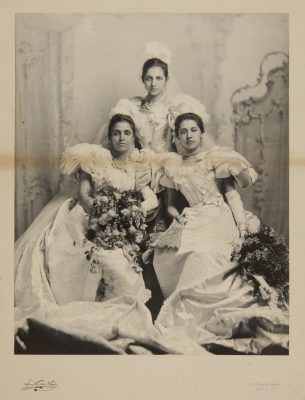
The exhibition explores the stories and lives of the boy King Duleep Singh, his mother Maharani Jind Kaur and his daughters, the last princesses of Punjab. 113 objects are on display including jewellery, maps, newspapers, shawls, family photographs, personal letters and video archive which bring their stories to life.
Intertwined are also modern day reflections of South Asian women and how their experiences relate to the Princesses in the exhibition under the themes of resistance, alienation and as role models.
Fall of an empire
The exhibit covers a sweeping period of history from the early 19th century when Maharaja Ranajit Singh ruled the Sikh Empire from Tibet to the deserts of Sindh, to post partition where the last living descendant, Princess Bamba Sutherland, passed away in Lahore in 1957.
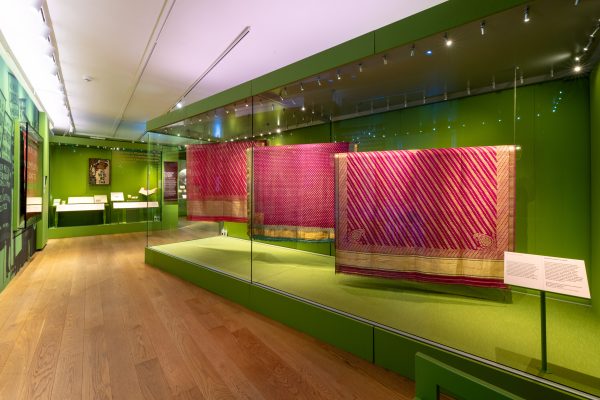
The exhibit explains how the East India Company successfully annexed the Sikh Empire and how Queen Victoria, who was ultimately an ‘imperialist’, inherited the territory as Empress of India, but was kind in how she treated and co-opted the family into the British aristocracy. After all, the exhibition noted how Victoria was a motherly figure to Duleep Singh, the last Maharaja of Punjab, and became godmother to two of his children.
Whilst noting this relationship was unequal, it remains a partial explanation which is never really clarified, which unfortunately leaves a cloud hanging over your head for the rest of the exhibition as to why this family was co-opted into the British aristocracy.
The real reason the British monarchy co-opted the family, took away their religion, their language, and moved them to London was precisely to protect and defend the British Raj. The British were acutely aware of how the deposed royal family could become a rallying point to scupper British rule in India.
The 1857 Uprising, or ‘First War of Indian Independence’, which went on to end Company rule was led by the sepoy army who put Bhadhur Shah, the last Mughal King onto the throne in Delhi as their symbolic leader. Later he and any claim to the throne had to be physically annihilated, so the British monarchy co-opting Duleep Singh and his family was a small price to pay.
This threat is even suggested, but not fully explained, as the boy king Duleep Singh, having grown older, went on to be a point of intrigue in ‘the great game’ between Tsarist Russia and the British, which went on to sour his relations with Queen Victoria.
There are a few other omissions including the prized possession of the Koh-i-Noor, one of the largest cut diamonds in the world which was synonymous with kingship, power and authority. The diamond was taken from the family and Lahore, handed to Queen Victoria and implanted onto the Crown Jewels where it remains to this day. Across South Asia, it remains a symbol of their people’s exploitation, plunder and loss.
As the exhibition is held within Queen Victoria’s home, it is a curious omission.
Princess to suffragette
The princess which takes greatest prominence in the exhibition is rightly Sophia Duleep Singh. Queen Victoria adopted her as a godmother, but she always felt she never fully fit into the British aristocracy. As the exhibition retells in her own words:
“I found it difficult to say what nationality I was, as, when I said India, they wanted to know where I lived and when I said England they seemed surprised, it was really, very trying.”
Most interestingly of all, she went on to become a suffragette, and there is a large newspaper clipping of her selling The Suffragette with the headline “REVOLUTION!” in bold outside Hampton Court Palace.
Princess Sophia went on to take part in what became known as ‘Black Friday’. After the government refused to meet with the Suffergates, a subsequent protest was held. At this protest, Sophia was among hundreds to face kettling, sexual abuse and brutality by the police and other goons.
She was genuinely passionate about the cause, but as with the majority of the suffrage movement, which was led by upper middle class women, this was cut across by WW1; after which she became a prominent supporter of Indian soldiers in the British army.
Her younger sister Catherine is also given prominence in the exhibition. She spent much of her life in Germany and went on to help Jewish refugees seeking refuge from Nazi Germany, and some of those saved by Catherine are featured.
Legacy
The exhibition does a good job at highlighting the intricacies of the life of Sophia and her sisters, where although co-opted into the British aristocracy, they did not necessarily play the role that was expected of them. At the same time, neither did they fully break from their privileged position.
The exhibition moves on through time to the last princess of the Punjab, Bamba Sutherland, who moved back to Lahore towards the end of her life. There are letters expressing her claims to Punjab, but post independence and partition, these are read as farcical and completely out of touch with the new reality.
On entering the exhibition, a haunting music track follows you in. As you leave, you understand that these sisters went on to have no living descendants, and the land their family once ruled over was divided in the most brutal fashion. All in the knowledge that you are standing in the home of the prime sovereign who instigated their demise.
But also whilst leaving, visitors are asked to tie a ribbon on which princess or queen was most inspiring to you. And very few are tied for Queen Victoria – which serves as an indictment of the legacy of the Empire and the monarchy in modern Britain.
The exhibition should be credited for bringing this largely unknown history to life. Despite some omissions and partial explanations, you are left illuminated into a world and lives which took very unexpected directions.
The Last Princesses of Punjab is available to visit at Kensington Palace until 8 November 2026