Warning: This review contains spoilers.
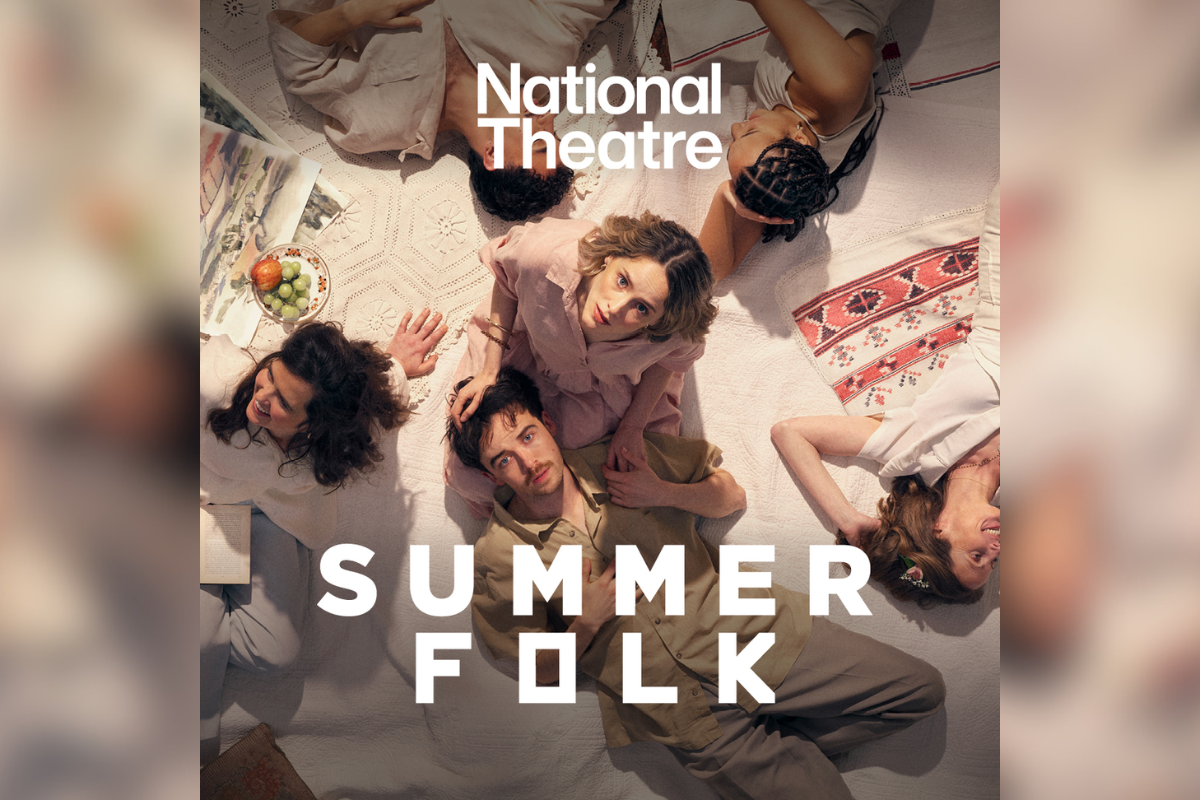
The National Theatre has recently shown new production of Maxim Gorky’s 1904 play Summerfolk. There could be no better time to do this – this is a play which offers an eerily familiar picture of an unstable world on the precipice of revolution.
Summerfolk takes place during the summer holiday of a group of wealthy Russian friends in their secluded Dacha (holiday home). Over the course of the play, they agonise and fall out and agonise again over questions of life’s purpose.
All the while, the masses lurk in the background; the prospect of revolution looms, hanging over all of the character’s discussions. This makes sense from Gorky, a man who would spend his life close to – and sometimes in – the ranks of the Bolsheviks. His revolutionary spirit can be felt strongly through the play.
Worlds apart
Gorky pays homage to Anton Chekhov’s works, such as The Cherry Orchard, in his biting critique of the Russian bourgeois. The characters being physically separated from the rest of society on their forest vacation only makes it more clear they are people who live in a completely different world to everyone else around them.
View this post on Instagram
Director Robert Hastie skilfully makes use of the staging in the National Theatre’s rendition to reflect this: the main cast, for example, constantly strut around the stage, never acknowledging any of the peasant characters in the background.
In the second half, a moat of water even surrounds the platform on the stage where much of the action happens. At one point a couple of beggars emerge from the shadows speaking Russian (an alien language in this context) and are quickly dismissed and never heard from again.
Vapid and self-centred
On their vacation, the characters fill their time with bickering constantly about ‘deep’ questions of life and meaning – and, through this, become increasingly bitter and aggressive towards each other.
Varvara, for example – the main protagonist – falls into conflict with her husband Sergei as she becomes increasingly depressed at the lack of meaning to their existence. Sergei, who is one of the most vile and ignorant characters in the play, insists life has no deeper meaning and must be treated like a game.
In all of this pretentious debate, no one offers any genuine ideas, or thinks to discuss the practical implications of their philosophical conclusions. Why would they? Gorky is painting us here a full picture of the rottenness of the Russian ruling class: vapid, self-centred, and completely sure of themselves – despite the fact they have no clue how to live, or even die.
Through all their discussion, the characters only sink further into venomous despair and bitterness. Whether they insist upon charitable good-heartedness or the virtues of cynical greed, none of them can bring an end to the overarching sense of doom and malaise – much like Russia’s own impotent bourgeois of the time.
This wretchedness of the ruling class is accentuated by Nina and Moses Raine’s modernisation of the script. While staying faithful to Gorky’s work, they skillfully translate the language into the grotesque and empty style of today’s self-assured bigots and ‘intellectuals’.
This serves to elevate moments like Sergei’s misogynistic rant into something immediately, viscerally recognisable for today’s audiences. Over a hundred years later, not much has changed in the character or outlook of the bourgeois class – the play could have just as easily been set in Dubai or Bali.
Change is coming
It may seem, from the way that they speak, that there is no alternative to the outlooks of our ‘summerfolk’ – but Gorky demonstrates again and again that there is a whole world outside this little Dacha of the wealthy.
The masses are strongly present throughout the play. This production in particular makes this clear: watchmen in ragged clothes armed with rifles, for example, frequently patrol the stage in front of the rest of the cast as they prattle on about their marital affairs and read bad poetry.
While these people in their protected little bubble, desperately searching their minds for the way to something meaningful, the rest of the world carries on. In fact, it is precisely the struggle of all these people who facilitate the characters’ seclusion and lavish lifestyle which offers a path ahead.
Indeed, Gorky’s Summerfolk ends with a section of the cast partially waking up to this reality, following Sergei’s misogynistic rant. The women make the decision to leave the Dacha, as the watchmen’s whistle sounds, to embark on an uncertain quest for something new.
We are left with a sense that a great change is coming. This National Theatre production asserts this with even more emphasis than the original: as the lights cut out, we hear distant gunshots and shouting – the Revolution of 1905 is on its way.
‘Summerfolk’ is showing at the National Theatre in London until 29 April.