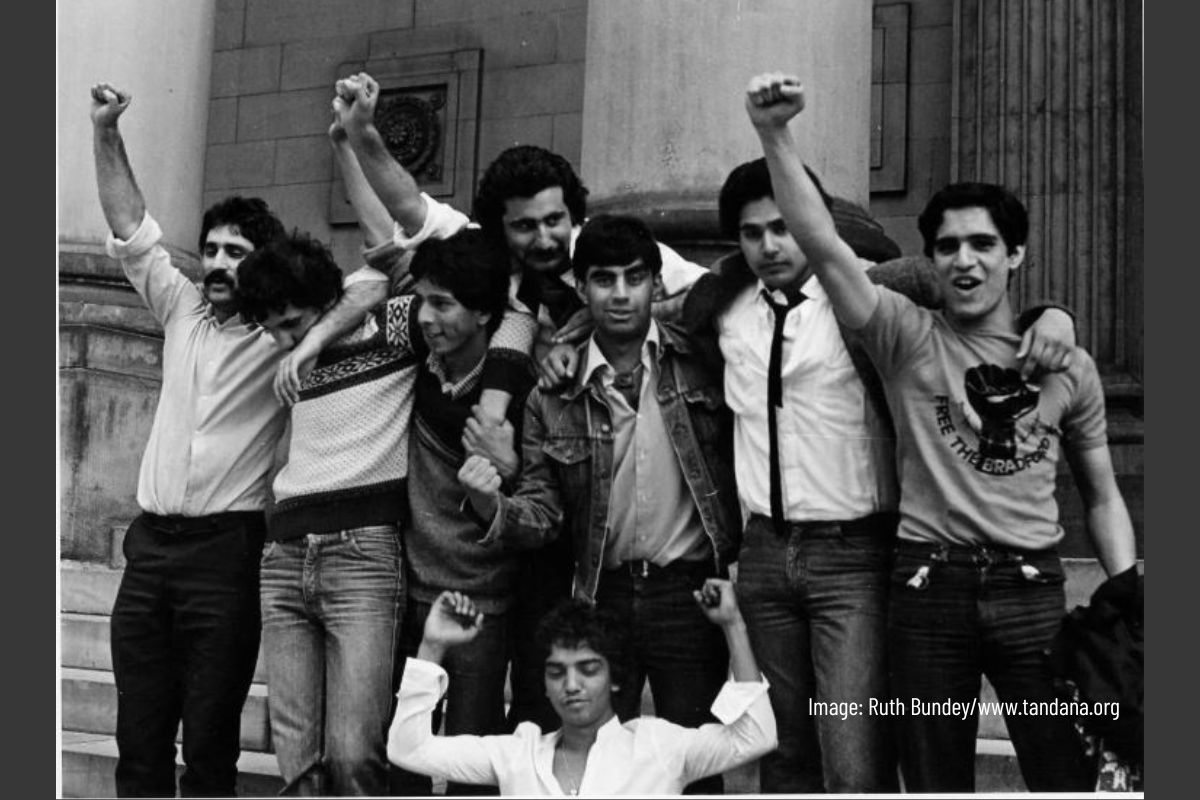
In the early 1980s, 12 members of the Asian Youth Movement (AYM) successfully fought against the British state, ensuring their right to physically defend themselves against the fascist National Front (NF).
The heroic victory of the ‘Bradford 12’ serves as an inspiring milestone in the fight against racism, fascism, and the British state.
As they stated: “Self-defence is no offence.”
Asian Youth Movement
The Asian Youth Movement was initially set up in Gravesend, Kent in 1969. As the NF unleashed an orgy of violence against black and Asian people in the 1970s, this movement became a national phenomenon.
The movement was explicitly secular. Fahim Qureshi, a leading member of the Luton AYM, remarked that “It didn’t matter if we were Muslims, Sikh or Hindu. We were all the same thing to them, and we all suffered racism. In a way, it’s what united us.”
In Bradford, the youth organisation was initially called ‘Indian Progressive Youth Association’, but was changed to ‘Asian Youth Movement’ to unite Asian youth because the majority came from Pakistan or Azad Kashmir.
While men made up the bulk of the AYMs, women also played a key role. Against enormous pressure to stay at home, these young Asian women dared to get organised. Shanaaz Ali in Bradford for example lied to their families about going to see friends so they could be part of the struggle.
The Bradford AYM
In 1974, with the growing threat of racist violence, the first national demonstration against racism was initiated in Bradford. It was organised by the Trades Council and the Labour Party Young Socialists – an initiative led by Marxist Pat Wall from the Militant Tendency, the forerunner to our Revolutionary Communist Party.
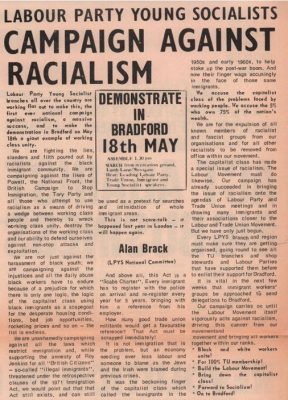
Thousands of workers and youth from every background marched against racism, bringing closer together the Asian and white workers who were being divided by racism at the time.
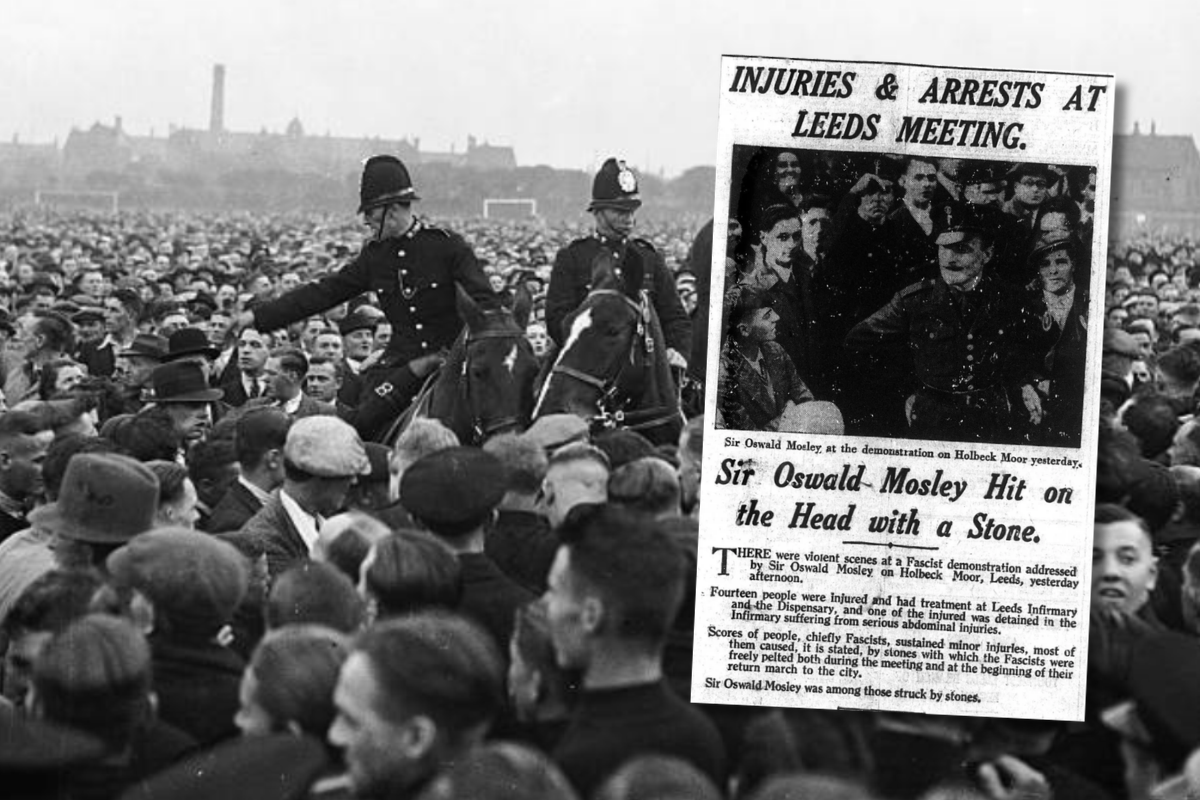
In 1976, the NF marched through Manningham, a mainly Asian area of Bradford. But the ‘official’ leaders of the anti-racist struggle in the Indian Workers Association (IWA) organised a counter demo in the city centre, away from the NF march.
The youth realised the futility of their elders’ methods and directly marched to Manningham. They broke through the police presence and clashed head-on with the NF.
This, alongside racist attacks by West Yorkshire police force led to a growing rage among the youth. For example, even though the police knew the Yorkshire Ripper was white, this was used as an excuse to stop and search black and Asian people.
These experiences led the youth to realise the need to take militant self defence action on their own. A healthy distrust of the police, alongside an alienation of the elders who took a more passive approach to fighting racist attacks, led to the formation of the Bradford AYM in 1979.
This was a process mirrored amongst Bengali’s in Brick Lane and predominantly Punjabi youth in Southall where Asians were under attack.
Anwar Ditta Defence Campaign
From 1979-1980 the Bradford AYM acquired national attention by playing a leading role in the Anwar Ditta Defence Campaign (ADDC). Ditta was born in the UK but moved back to and married her husband in Pakistan.
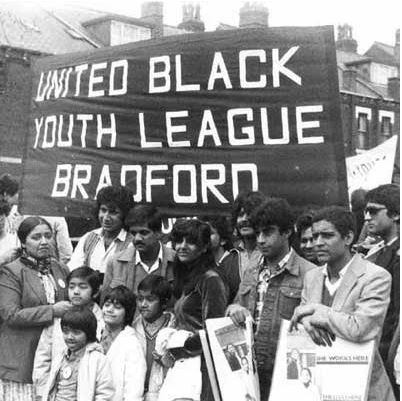
When they came to the UK they did so without their three children. The Home Office, complicit in fostering a hostile environment against migrants, claimed Ditta had never been to Pakistan and that the children weren’t hers, barring their entry.
The Manchester and Bradford AYMs campaigned alongside Ditta herself to overturn this vile attack, which was one of many. Ditta spoke at over 400 events in less than 18 months and acquired a national profile.
She pointed out that her case had been handled by both Labour and Conservative Home Offices, demonstrating that both parties were complicit in the hostile environment.
Granada TV, a Manchester based broadcaster, picked up on the story and covered it in their programme World in Action. They investigated the case, and even went to Pakistan where they ultimately performed a DNA test, proving without a shadow of a doubt that the children were Ditta’s.
The Home Office was completely humiliated. One day after the programme aired, they reversed their position.
This was not only a victory for Ditta and her family, but for the entire Asian Youth Movement which had exposed the racism of the Home Office on national television.
United Black Youth League
Victory enhanced the prestige of the Bradford AYM which was going from strength to strength.
The AYM was based in an office squat and with just 25p per member (£1.50 or so today) they were able to hire a full timer, Tariq Mehmood, who earned the average salary of someone working in industry at the time.
Mehmood remarked that “we were acting almost like a communist party, not a youth movement really” when he reflected on the professionalism of the Bradford AYM.
He recalled that, in Manningham, they defended themselves from ‘Paki bashers’ by creating “embryonic telephone trees”.
“If somebody reported an attack by a gang or somebody else, they would phone the next person and run to get there. We would drop what we were doing and very quickly have fifteen, twenty people over there.”
What did become an issue, however, was the offer of a £3,000 government grant. A rupture took place over this question: Who do we answer to? The people or the government?
Mehmood explained that after receiving the grant they no longer had to ask for donations, “and I felt that by people not giving money they were losing contact with the very process that we built.”
Unlike the donations of members and supporters, the government funds had to be audited, every expense had to be justified before the eyes of the state. Many of the more radical layers reached important conclusions, summarised by Mehmood:
“I felt that the AYM initially was a people’s organisation and once we received funding we were answerable to an institution; the very same institution that we were fighting—the British state.”
The state had tried to quash the Asian Youth Movements by force in places like Southall and failed. It now began to change track and co-opt the movement instead, guiding them down more peaceful avenues.
A vote was held on accepting state funds. Marsha Singh – who would go on to sit as MP for Bradford between 1997 and 2012 – led the argument in favour, and won by a small majority.
The most radical layers, including Mehmood, rejected the blood money sent by Whitehall and split to form the United Black Youth League (UBYL).
Bradford 12
The formation of the UBYL set the stage for the watershed moment of the entire movement.
Rumours began to circulate in 1981 that the NF was going to march in Bradford on 11 July. This followed the firebombing of a house in Walthamstow, London a week earlier which murdered a South Asian woman and her four children. Some of the UBYL members, determined to defend their communities, made petrol bombs to drive them back.
On the day, a counter-demo marched through Bradford, but no NF demo was to be seen. 38 petrol bombs were discarded in a bush. The police found these and located one UBYL member via fingerprints, before managing to secure the names of seven more following an interrogation.
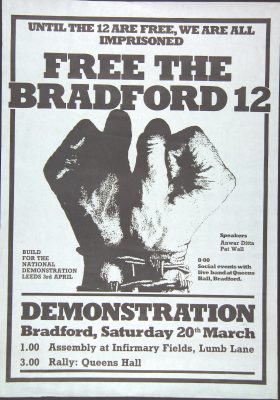
In total, the police arrested 11 UBYL members, including Tariq Mehmood. The state denied them their right to a solicitor and to any visits for the first two days of their confinement, while statements were taken from them. A twelfth was later arrested, completing the Bradford 12.
The police then pressed charges against them, claiming that they wanted to use the bombs against the police and private property.
For the police, this was revenge against the UBYL for their involvement in high profile campaigns like the ADDC, and in support of Gary Pemberton who was framed for assaulting a police officer. They had been monitoring UBYL and had searched the house of Mehmood.
There were parallels with the trial of the ‘Mangrove Nine’ a decade prior. The police were trying to take down an organisation they were monitoring, sending a message to others, and ultimately painting themselves as victims.
Activists set up defence campaigns such as the July 11th Action Committee and the Bradford 12 Defence Campaign. They also received support from Ditta who continued to play an instrumental role in the movement alongside Pat Wall, the President of the Bradford Trades Council.
Mehmood pointed out that “We were very conscious that the allies we had included many within the trade union and labour movement – people like Pat Wall from the Bradford Trades Council”.
The July 11th Committee issued a call for solidarity:
“their trial is our trial, Asians, West Indians and Africans must unite and struggle to win their freedom. We call upon white workers and unemployed to support us. Together we must say NO to political repression.”
A notable exception in the membership of this campaign was the Bradford AYM, which continued to receive its dues from the state.
The UBYL was a small organisation facing an uphill battle, and the absence of the Bradford AYM – alongside enormous pressure from the state – exacted a heavy toll.
Ultimately, in a desperate attempt to unify the movement, the UBYL dissolved both itself and the July 11th Action Committee. However, the Bradford AYM didn’t budge in its official position.
But this was a mistake. The vast majority of Bradford AYM members supported the Bradford 12.
Had the UBYL not dissolved it could’ve made direct appeals to the AYM and won over the best members to their own organisation.
Not only in Bradford, but across the country and even as far as the British Consulate in Los Angeles people protested for the 12. Fahim from the Luton AYM explained that:
“During the trial, the Youth Movements in East London and Southall would book a coach and stop in Luton to pick a group of us up, and then we’d all set off to Bradford. We’d protest outside the magistrates’ court while the twelve were remanded in custody.”
The Trial
When the trial began on 26 April 1982, 500 supporters of the defendants were inside and outside the magistrates court in Leeds.
Scandalously, the initial jury was all white and predominantly middle class. The defence successfully appealed for a new jury. Seven women, five men, among these were five black and Asian people, and it had a more working class composition.
The defence made its case, “self-defence is no offence.”
The police tried to lie and stitch up the 12. Dozens of officers came forward and claimed they had confessions that the 12 would target officers and public property. Yet the statements they presented as evidence spoke not with the voice of the 12, but of the West Yorkshire Police officers – mannerisms and all!
The officers even tried to claim there was no cause for concern where racial attacks were concerned, which if true would’ve meant there was no ground for self-defence.
But the police argument that racism ‘wasn’t an issue’ was so egregious that even the judge took issue with it.
Apart from one of the 12 who was at home watching cricket during the march and was acquitted early, the rest admitted to making the bombs and said they would do so again. They then used the court as an arena to expose the vile racism they were forced to live with day after day, and the fears they felt.
As the trial went on, almost daily pickets took place outside Leeds Crown Court, with mass pickets every Wednesday. The pressure mounted and the jury ultimately made its ruling: not guilty.
#OtD 16 Jun 1982 the Bradford 12, on trial for defending their community from fascists, were found not guilty. Their trial revealed mass police negligence in stopping racist attacks & established the rights of POC to self-defence. Learn more in our pod: https://t.co/1yEilF8wHo pic.twitter.com/kHtZ0esxsf
— Working Class History (@wrkclasshistory) June 16, 2020
This was a monumental victory, the jury had officially ruled that self-defence is not offence.
In Tariq Mehmood’s words, “the police made a mountain out of a molehill and in so doing made a monument to our beliefs: the right to self-defence by a community under attack.”
Aftermath
Asian youth, workers and oppressed people across Britain and beyond secured the victory of the Bradford 12.
Nationally, the NF and racist police were given another blow, but unfortunately, despite this momentous victory, the movement ultimately ebbed.
On the one hand the AYMs never coalesced into a single national organisation, elaborated a clear perspective of how they could defeat racism, or turned to the wider working class struggles of the 1980s. Different AYMs began to drift in different directions.
On top of that, from the 1980s onwards, the state began to invest in deprived black and Asian communities following the 1981 Scarman report.
Lord Scarman, far from worrying about the plight of the oppressed, was concerned with reducing the number of clashes between the police and black and Asian youth. His concern reflected a broader anxiety of the ruling class, that if the state continued to attack, these layers would continually undermine and ultimately challenge their rule.
Gurnam Singh from the Bradford AYM recounted how after the Scarman inquiry, the state began to reach out to the AYM, and not long after:
“some of us then became suit wearing and totally abandoned the struggle all together, others took the struggle into the state”
As noted earlier, prominent AYM figures like Marsha Singh rose very high indeed, from one-time Bradford AYM chairman to comfortable right-wing Labour MP for Bradford West.
The AYM’s largely reactive nature led the state to co-opt activists into their institutions like Singh, or slowly receded into monitoring groups, divorced from the local community they once represented.
Nevertheless, the Bradford 12’s victory and legacy lives on until this day. It was a landmark victory in the British anti-racist movement, and set the legal precedent for self-defence.
Their victory echoes on from the Fairford Five who broke into an RAF base in 2003 to oppose the Iraq war, to the Filton six who broke into Israeli owned arms company Elbit systems – both of whom juries found not guilty.
Their victory symbolised that the NF would be met with physical resistance. The idea of cowardly submissive Asians who could be pushed around was shaken. Bradford’s anti-racists reclaimed their streets.
Whilst they had won the battle the war still continues. For a new generation fighting racism today, the lessons of the Bradford 12 and the AYM are invaluable.
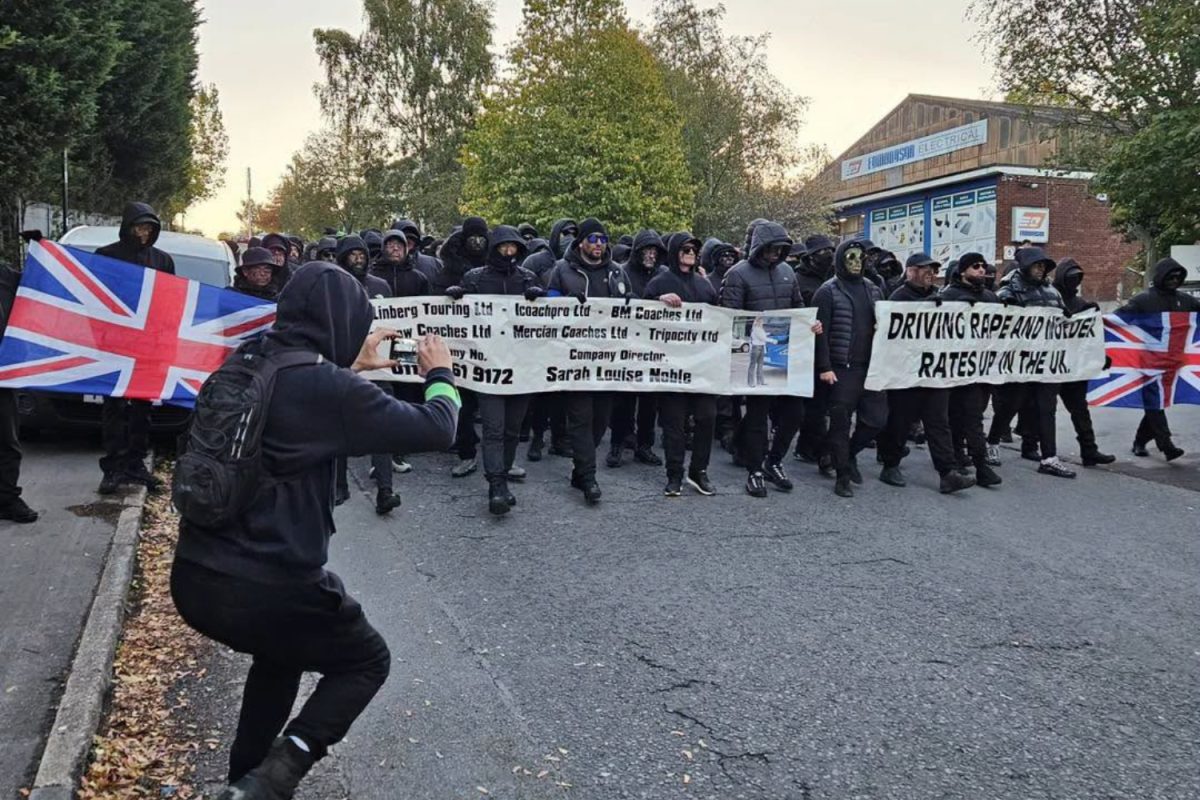
That being with the far right on rampage again, workers and youth need to get organised and take militant action to defend our communities against the far right. The labour movement needs to support these efforts, as Pat Wall and the Militant did in Bradford.