“This racist murder will be avenged.”
A few feet away from where someone had graffitied these words on the pavement outside Southall’s Dominion Cinema, the blood of 18 year-old Gurdip Singh Chaggar was drying.
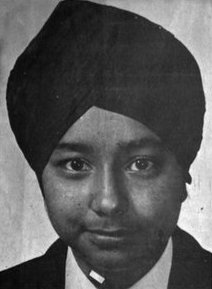
Two white youths had murdered him on 4 June 1976. When 20 year-old Suresh Grover walked past the next day and asked the police officer standing there what had happened, the curt reply came: “It was just an Asian.”
Such was the open, unapologetic, and violent racism of 1970s Britain. The official line from the Met Police was that this was not a racially-motivated attack. The presiding judge, Sir Neil Lawson, dismissed claims of “racial prejudice” in the murder. The court convicted the two white boys, Jody Hill and Robert Hackman, with manslaughter, not even murder.
The killing of Gurdip Singh Chaggar emboldened the fascists of the National Front (NF) in their rhetoric, encapsulated by chairman John Kingsley Read’s chilling words, “One down, a million to go.” But the provocations of reaction oftentimes invite the oppressed to fight back.
This is a story about an inspiring and militant struggle by the self-organised youth of Southall.
The founding of the Southall Youth Movement
On 5 June, the branch of the Indian Workers’ Association (IWA) at Southall called a meeting to organise a fightback to Chaggar’s racist murder.
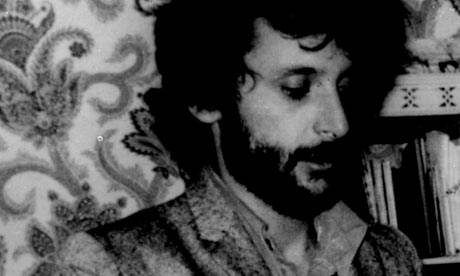
Older generations fighting for Indian independence founded this organisation which had deep roots in the British South Asian diaspora. The IWA had a long history of workers’ struggle and organising against racism.
The Southall IWA actually split from the national organisation in the 60s over political differences, deeming the latter to be “dominated by communists.” For example, the IWA GB (the national organisation) maintained their distance from parliamentary politics, whereas the Southall IWA had supported and worked with the Labour Party during elections.
While they successfully campaigned on many important South Asian issues such as bussing (enforced by the government to keep schools majority white), they primarily worked within the system, such as writing to members of parliament and local councils.
And so this method of cautious, legal struggle while rubbing shoulders with politicians had become the norm within Southall IWA. Their resistance to change was reflected in its composition of mostly middle-aged men.
This was further manifest in their response to Chaggar’s murder. Two days after the killing, the IWA held an open meeting on what their response would be. Much of the action they talked about amounted to just a march.
The elders called for “calm and a measured response”. But the younger generation had had enough of their elders’ pro-establishment “politicking” and wanted direct action.
A group of the most radical youth stormed into the meeting and demanded the elders to take real action, or “perish along with the institutions they will take on”. They left the meeting and marched immediately toward the local police station, with more and more joining them. The elders had lost all credibility in front of the younger layers.
Unlike their parents, these youngsters had known no home but Britain. They had grown up here and went to British schools. They faced racial discrimination from as early in their life as they can remember, and so did not share their parents’ outlook of not rocking the boat because they were foreign. These young Asians also wanted to be freed from the stultifying atmosphere at home. They wanted to go out and live life. They were here for the long run, to fight for a dignified life and their rightful place in British society.
Thus, on 6 June, a group of these radical youth formed the Southall Youth Movement (SYM). They saw their salvation not in the blind trust in the establishment that their elders had, but in organising on the streets.
They organised self-defense classes and physical fitness sessions, and arranged legal help if the police arrested their members. At one word they could mobilise hundreds around Southall for an action, or bus dozens of their members from London for counter-demos against the NF.
Blackness and internationalism
The Asian youth of the SYM saw themselves as politically black, an identity which they see as enveloping Africans, African-Caribbeans, Punjabi, Bengali, and so on. Their identity transcended religion, caste, race, or the former nationalities of their parents.
Even though the majority of the SYM membership was South Asian, through this identity they understood that the struggles of all racial minorities were connected against a common enemy: the British state.
It was no coincidence then that they adopted the Black Panthers’ black fist as their symbol. The founders deliberately chose the name ‘Southall Youth Movement’ to reference no race. In the words of founding member Balraj Purewal:
“We called ourselves Southall Youth Movement because we were not a minority in Southall. Saying ‘Asian’ made it sound like we were a special thing but we were the youth of Southall.”
The formation of the SYM was a rallying cry that inspired the formation of various Asian Youth Movement groups across the country – in Sheffield, Manchester, Bradford, Leicester, Nottingham, Birmingham, and so on. These groups operated very closely with each other, publishing each other’s struggles in their papers.
Their secularism and anti-sectarian stance extended to an internationalist outlook. They were explicitly anti-imperialist and followed national liberation movements closely. Their papers featured international issues like the Palestinian struggle, Irish republicanism, and women’s issues in Pakistan. The SYM even sent a delegation to the World Festival of Youth and Students in Cuba, 1978.
An important slogan they had was ‘No Politics.’ By this they meant a suspicion and rejection of political organisations that approached them, from the Labour Party to various socialist groups. While this attitude came understandably as a reaction against the IWA and racism in the workers’ organisations themselves, it bred eclecticism in the movement. There was no long-term political programme for the organisation, a problem which would only assert itself later when the street battles quietened.
The Battle of Southall
In April 1979, the SYM faced its first big test. In the lead-up to the general election, the NF organised a pre-election rally in Southall Town Hall, which was clearly to antagonise one of the largest Asian communities in Britain.
The IWA convened a meeting with the wider Southall community. Again there was a split between the older layers and the new: of whether to take a defensive approach, or to confront them directly.
By the end of the meeting, they staged a march the day before the rally, presenting a petition signed by nearly 10,000 residents to Ealing Council calling for the meeting to be cancelled. They also resolved for a half-day strike and sit-down protest starting a few hours before the NF meeting.
Ultimately, the petition failed. The authorities allowed the NF to have their meeting after all, which proved to the youth of the SYM that something drastic had to be done. They did not want a passive sit-down protest – they wanted to fight back and drive the NF out of Southall forever. They had a singular aim on the day: get to the town hall at all costs and break up this meeting of racists.
On 23 April, thousands of Southall residents thronged the streets to protest the NF, surprising the elder leaders of the IWA. Workers in local factories struck in solidarity, and local shops and businesses closed down early.
The police were out in force, armed with riot shields and ready for a fight, all to allow the NF to have their meeting. They brought out thousands of officers, including the infamous Special Patrol Group, a militarised police unit, which the Met had first summoned to crush the Grunwick Strike led by Jayaben Desai. They hurled racist abuse, drove vans into the crowds and beat up protestors with their clubs. The police clearly intended this exceptional violence to send a message to the SYM and Asians in Southall.
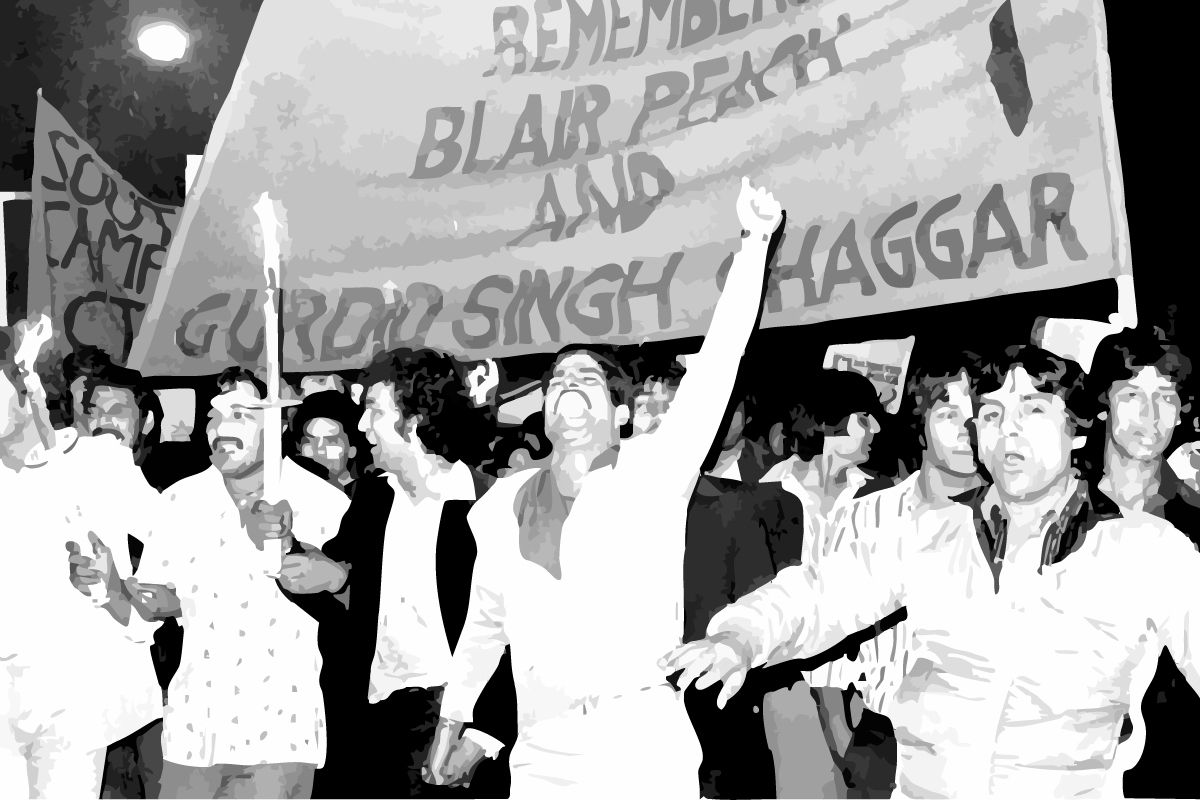
A notable presence among the protestors was the Anti-Nazi League and its member from New Zealand, Blair Peach. As Peach and his companions tried to leave after supporting the protest for the whole day, the SPG chased after them for no reason whatsoever. While most of his companions got away, an SPG officer dealt a blow to Peach’s head with his truncheon, fatally wounding him. The Atwal family took him in and called an ambulance, but it was to no avail.
The Met covered up the SPG’s responsibility for Peach’s murder for decades. It took the Met until 2010, a full 31 years, to issue an apology and release an investigation report proving that the SPG had killed Peach.
The aftermath of 1979
Following the Battle of Southall, the state launched a widespread clampdown. Police arrested around 700 protestors, many of them members of the SYM or other local organisations, while the same police bussed in the NF into the town hall to have their meeting.
The state tried over 300 people from the battle in what can only be described as a kangaroo court. They employed various methods by the ‘impartial’ legal system to maximise prosecutions.
Magistrates from outside the community presided over the cases, not by local justices of the peace. The magistrates clearly preferred the testimonies of police, who blatantly lied in court, over those of other eyewitnesses including doctors.
The media was no less complicit in its reporting of the battle. They painted it as just “vicious rioting” by “mobs” of Asians who had “violently attacked the police with bricks and stones and bottles.” Margaret Thatcher, having just become Prime Minister, committed to giving “full support to the police service,” in the aftermath of such a devastating event for the Southall community.
In short, the whole of the British state, the courts, police, media, and politicians were complicit in prosecuting anti-racists and protecting the NF!
As a result, the belief that black people could trust the police or any part of the state apparatus to defend them was shattered. They could only rely on their own organisations to get justice.
The SYM in response, together with other local organisations such as the IWA, formed a Southall Defence Committee to support the court battles by raising funds, getting legal help, and publicising cases. They also set up the Southall Monitoring Group, which monitored the compliance of police activity in the area with the law.
The burning of Hambrough Tavern
In 1981, the Southall Youth Movement would be challenged again by the NF, in what the British establishment declared a ‘riot’ at Hambrough Tavern.
Yet what they asserted as a ‘riot’ was in fact a coordinated and targeted attack against the NF and their sympathisers. The SYM and Asians in Southall sent a message – we will not be terrorised by you anymore.
On 3 July 1981, several ‘Oi’ punk bands were set to play at the Hambrough Tavern. The gig attracted skinheads who were either NF members, or at least had neo-Nazi sympathies.
On their way to the gig, the racist skinheads terrorised the Asian community, breaking up windows of shops and taunting the residents. During the performance, eyewitnesses saw the racists throwing up Nazi salutes to the Asians looking inside. It was yet another provocation to the people of Southall.
After the experience of driving out the NF in the battle of 1979, the residents of Southall had learned that the police were not there to protect them, and they had to defend their community themselves. After the battle of 1979, they now had the confidence to take the fight directly to the racists.
The SYM gathered their forces and one group marched to the Tavern, facing up to the rows of police defending the skinheads. This time they outnumbered the racists, 500 to 300. They hurled petrol bombs at the pub and the police, setting fire to their vehicles. Some managed to get inside the pub and got into brawls with the skinheads. A group of Southall residents even destroyed a brick wall near the tavern to provide bricks to throw at the police.
While that was happening, another group of SYM members went up and down the road to set up burning barricades in either direction from the tavern, to prevent police reinforcements and the fire department from coming in. A third group approached the tavern from the side and set fire to the building.
After three hours of this clash, the racists fled the scene with their tails tucked between their legs.
This was SYM’s greatest victory. The burnt remnants of the Tavern was a ‘shrine of celebration’, and vindicated their direct action tactics over the conciliationism of the Southall IWA. It was also a payback for the murder of Blair Peach by the police, and in this way, the battle was just as much against the state as against the NF.
Lessons for today
In Channel 4’s documentary on this subject (‘Defiance: Fighting the Far Right’), a participant in the SYM was asked what she learned from the experience. She casually responded, “Don’t trust the politicians, don’t trust the police, don’t trust the courts.” but then a panic crosses her face as she realises what these conclusions mean.
The youth of Southall who participated in this struggle learnt that they could not trust or rely on the police, courts, or politicians. They learnt that these institutions were not impartial but served the elites and were institutionally racist. The only consistent force they could rely on were themselves, through their own self-organisation on the streets.
The SYM defeated the National Front in Southall and their national organisation, following defeat after defeat, began to fall apart. Subsequently, by the 1980s, the movement began to ebb.
In the early 80s, there was a split within the AYM movement generally between those who wanted to continue direct action on the streets versus those who wanted to work within the state.
Their ‘anti-politics’ stance and failure to centralise the movement nationally and orient around the working class with a view to overthrowing capitalism as the root cause of racism led gradually to the co-opting of some members as ‘respectable politicians’, or a drift towards purely legal advocacy.
The Southall Monitoring Group, for one, renamed itself as just ‘The Monitoring Group’ and moved its headquarters to Holborn, and overtime, the organisation became further removed from the day to day struggles of the people of Southall.
Despite this, the SYM represents a great conquest in the history of anti-racist struggle in Britain. The struggles they led are just as much an inspiration to anti-racists and revolutionaries today as they were to the myriad groups that followed their lead in the 70s and 80s. Their compatriots in Bradford continued the struggle.