In the 1970s and 80s, Bangladeshi immigrants and workers organised themselves in their thousands to confront the fascist thugs of the National Front (NF) and boot them out of the East End of London.
‘The Battle of Brick Lane’ as it has been named has achieved almost legendary status, and is one of the most inspiring anti-racist struggles in living memory.
Bengali Migration
Britain’s brutal colonial legacy has tied it to the state of Bengal for over 400 years.
The first Bengali immigrants arrived in Britain between the 17th and 20th centuries as sailors or ‘lascars’ as they were known who worked on British ships in the Navy, or for the East India Trading Company until its dissolution in 1874.
The main waves of Bengali immigration and settlement in the East End came after the Second World War and subsequent partition of India (engineered by the British establishment), and then the Bangladesh war of Independence in 1971 which saw the formation of Bangladesh as an independent nation state.
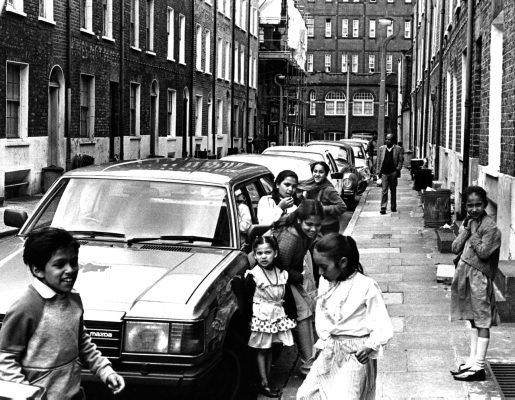
Desperate Bengali’s fleeing war and poverty in their own country, which was a direct product of centuries of exploitation and division fomented under British colonial rule, were now used as dirt cheap labour by British bosses at home, especially in the textile industry, known as the ‘rag trade’.
In her book ‘The Shoulders We Stand On’, Preeti Dhillon describes the highly exploitative working conditions faced by immigrant labourers:
“The working hours were long and the wages were low. It wasn’t unusual for workers to clock up to seventy hours per week in the rag trade. Of a suit that would retail for £30 a bengali would see £1. Workers were not unionised. Women also worked in the trade, usually from their homes” (Preeti Dhillon, The Shoulders We Stand On, p. 232)
Housing was also a big problem. Bengalis were crammed into condemned buildings, known as ‘low demand housing’. They would be cramped, damp and mouldy. One man Chand Ali lived with his wife and five children in a one bedroom nine foot by nine foot flat, sharing his bathroom and kitchen with other families living in the building. He had also been waiting for a council house for five years!
Even if they were lucky enough to be moved to a house that wasn’t falling apart, it would be far away from their community and would experience such horrific racism that they’d be driven out of it anyway.
Volatile Britain
The Battle of Brick Lane took place in a volatile period for Britain. .
By 1978 Prime Minister James Callaghan was overseeing widespread deindustrialisation, a sterling crisis and an IMF bailout.
It was in this context of a deep economic, political and social crisis that the blame for Britain’s decline was being placed on the shoulders of migrants like the Bengalis in the East End. The most vile and poisonous racism was pouring out of all institutions of the British establishment.
Margaret Thatcher, who had become leader of the Conservative Party, was interviewed on national television in January aping the fascist NF stating: “people are really rather afraid that this country might be swamped by people with a different culture”.
The racism from the establishment gave cover to the attacks perpetrated against Bengali’s. So-called ‘paki bashing’ which consisted of unprovoked violent assaults on Asian people became a daily occurrence for many, including elderly people and nursery age children.
Azad Konor recalls their experience:
“Bangladeshi families’ letterboxes were set on fire. Our next-door neighbours would throw stones and swear at us. We weren’t safe anywhere: home, school or work. We stayed in groups when we went out. It wasn’t exactly the better life we’d dreamed of.”
In autumn 1977, 110 racist attacks were recorded ‘which included urination through letterboxes, dog attacks and arson’. (Preeti Dhillon, Shoulders we stand on, p. 239)
The attacks on Bengalis were spearheaded by the National Front (NF), a fascist organisation which had formed from a merger between various far-right groups.
Despite mass resistance to them, the NF still posed a significant threat; exploiting the very real insecurities people had over unemployment and the cost of living and directing that anger against immigrants, blacks, Asians and the Labour movement as a whole.
By this point, they were well past their peak of 17,500 members in 1972 and had been served a partial blow in the Battle of Lewisham the previous year. However, in the East End of London for example, in the GLC elections in 1977, the NF received 19 percent of the vote in Bethnal Green and Bow where Bengali’s had mainly settled.
They held regular stalls on Sundays on Brick Lane, right in the heart of Banglatown. They would organise provocative marches and their supporters would often go to Bangladeshi owned restaurants, and in the words of Preeti Dhillon ‘dine, trash and dash’.
In response to the horrendous living conditions and almost constant racist threats with no accountability from the police, the community began to fight back. The Bangladesh Youth Front was formed in 1976 in response to escalating attacks. They would meet every night in cafes to discuss the latest attacks and even attended Kung-Fu classes to help defend their community.
Altab Ali
The real turning point though came on 4 May 1978, the day of local elections where the NF stood 41 candidates in Tower Hamlets, a young textile worker Altab Ali was stabbed in the neck and murdered on his way home from work by three teenagers. Ali had been intending to vote later that evening.
This was the final straw – Jamal Hasan who worked at Tower Hamlets law centre recalled:
“As soon as we heard about Altab Ali, everyone in the East End was terrified. Being beaten up was one thing, being stabbed to death, that was the first one. It shocked us so much, we became ten times more angry”
This jolted the community into action and it drew in thousands of people who were otherwise unorganised. All of the local groups no matter the race came together – the Bangladesh Youth Front, the Anti Nazi League, the Tower Hamlets law centre etc all formed the joint organisation: the Action Committee Against Racist Attacks (ACARA).
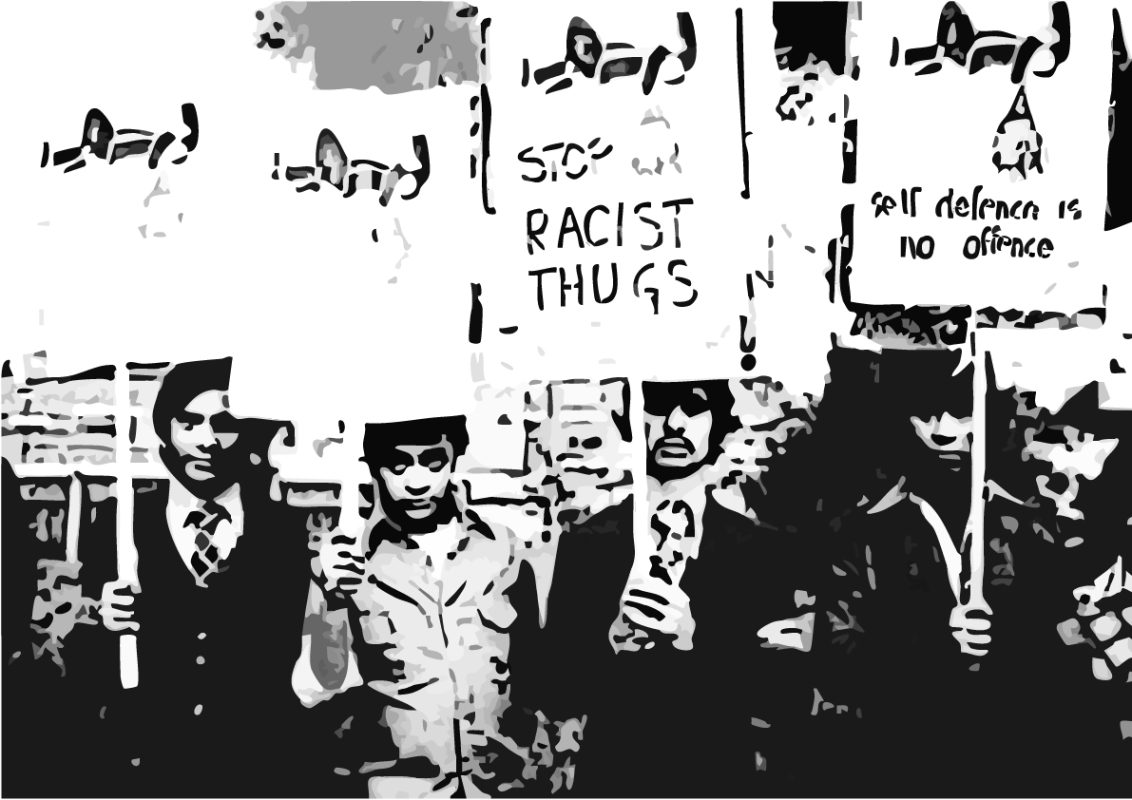
In response to Ali’s killing, the ACARA organised a march in torrential rain from the place of Ali’s death from St Mary’s Gardens to Hyde Park, which drew in between seven to ten thousand people.
The procession carried a symbolic empty coffin and chanted slogans of ‘law and order for whom?’ ‘Self defence is no offense’ and ‘black and white unite and fight’.
A small group then marched to Downing street where they presented a petition to Prime Minister James Callaghan demanding a full investigation into the police’s handling of racist deaths and greater police protection for migrant communities.
This was the opening act of the Battle for Brick Lane.
Role of the Met Police
The Metropolitan Police unsurprisingly played a shockingly racist role. After Ali’s murder there was no extra security in the area and the investigation into Ali’s murder was utterly shambolic.
In an attempt to sweep it under the carpet, they initially dismissed the racist motive for the murder. They were incredibly slow to respond and didn’t catch his killers until 56 days after the event!
They then had the cheek to blame the Bengali community for not co-operating with the police; criticising their ‘inward looking’ cultural values.
It’s not difficult to see why people didn’t contact the police. Often it would take up to three hours for police to arrive on the scene, of which then the Bengali man would be arrested instead of the perpetrator.
Bengalis were frequently arrested for carrying weapons to defend themselves, precisely because the police couldn’t. For example, over a five year period, members of the Bangladesh Youth Front were stopped and searched over 2000 times by police.
Furthermore, the police always went out of their way to protect the NF. They refused to ban their Sunday stalls on brick lane market saying it was ‘first come first served’.
In response, groups of locals would camp out on the street corner with placards and posters to pitch up on Sunday before the NF could arrive. Passers by would show their solidarity by keeping them company and feeding them throughout the night.
Again, despite the police saying it was first come first served, they would pre-emptively arrest the Bengalis for ‘breaching the peace’.
It was perfectly legal then for fascists to terrorise people, but not okay for the Bengali victims to defend themselves.
Battle intensifies
On 11 June 1978, 39 days after the murder of Ali, 150 thugs went on a rampage on Brick Lane donning badges reading ‘National Front Rules O.K.’ Akin to the riots over the summer of 2024, they smashed up anything they could see, throwing concrete, beating people up and shouting ‘kill the black bastards’.
The Bengali community fought heroically and managed to kettle some NF goons. Twenty NF thugs were arrested but then scandalously only three charged with anything.
This was an escalation and was the worst group attack thus far. The fascists were more emboldened and more organised than ever.
The racist attacks continued. Another Asian man Ishtaq Ali was mugged by three men in Hackney while walking home with his nephew. He died later in hospital. This was now two racist murders in two months.
It was made abundantly clear the police could not be trusted. The community understood that they could trust only in their own organisation and strength to defend themselves.
In response, a coalition of 25 different groups came together to form the Hackney and Tower Hamlets Defence Committee. The committees were very organised by this point and could mobilise hundreds of activists at a moment’s notice.
46 days after Ali’s death, a march of up to 4000 was organised on Brick Lane to confront the NF who were given free reign to sieg heil behind protection of a police line.
Every Sunday became a battle ground between the organised committees and the NF. On Sunday 16 July, 2000 people turned up to smash the NF off the streets chanting ‘we’re taking over Brick Lane – we shall not give up’ and ‘we shall come back, Sunday after Sunday’.
The next day, the defence committee organised a ‘black solidarity strike’ which was the first strike ever in Britain against racist violence.
The Killing of a Bangladeshi Worker, Altab Ali, in 1978
🔻On May 4, 1978, Bangladeshi textile worker Altab Ali was murdered in East London in a racially motivated attack by three teenage boys who stabbed him to death in a senseless act of violence.
🔻They were later arrested… pic.twitter.com/SkfGDtFe0f— Intrigue Archive (@IntrigueArchive) November 30, 2024
The strike was widely followed with 8000 participating and 1000 people showing up to Naz cinema to hear speeches. 80 percent of offices and shops were closed in the area and at Robert Montefiore School, only 50 out of 450 students turned up for school that day.
There were pickets outside factories and police stations. Three men were arrested for confronting the NF and a crowd of 2000 people showed up at Bethnal Green police station which forced their release. Witnesses reported the freed prisoners crowd surfing out of the station like rockstars!
The police realised if they didn’t do something, this would escalate and the Bengali community would kick out the NF from Brick Lane for good. In response they set up a temporary police station on Brick Lane, and it became the most heavily policed area outside of the North of Ireland!
This had no effect of curbing racist violence, the police continued to find ways to protect the NF and criminalise locals for defending themselves. In September 1978, the NF were even allowed to move their offices to Hackney where they called a demonstration of 2000 thugs to march through Brick Lane.
Again, the self defence committees blocked them from marching through Brick Lane, no thanks to the police who mobilised in full force to protect the NF.
Aftermath
The Battle for Brick Lane was an inspiring episode which landed a severe blow to the far-right in Britain. Many of the methods of battle were learned and developed from previous pitched battles like the Battle of Lewisham a year prior.
After numerous battles over 1978 and beyond, support for the NF began to dwindle in the area. There was not one knockout blow, but a consistent wearing down of the NF led primarily by the Bengali youth.
There was also a noticeable and growing involvement from white workers and youth. Coinciding with the events of the Grunwick strike, they grew to understand that racism was being used as a tool by which the ruling class could divide and weaken their struggle.
Culturally too, 100,000 attended ‘Rock Against Racism’ carnival with The Clash headlining in the spring of 1978 in Victoria Park.
The NF struggling for recruits, meant their Sunday stalls became untenable and were eventually forced to move their offices out of the East End and later collapsed. Although racist attacks still continued, the fighting decreased in its intensity as the Bengali community claimed the streets from the far right.
In the 1990s successor fascist organisation BNP (British National Party) had their councillor Dereck Beackon ousted from his seat due to a massive local campaign, and there are now no ‘no go zones’ for blacks and Asians in Tower Hamlets.
St Mary’s Park was renamed to Altab Ali park in 1998 which was the site of a massive rally in 2024 after the Bangladesh revolution that overthrew hated despot Sheikh Hasina.
Despite these victories, real justice was never served to Ali’s three killers. The one wielding the knife was given just seven years in prison and the other two given only three years for robbery, despite the fact nothing was stolen (Ali’s wallet containing £10 was found with his body!)
One of the killers admitted to have killed him for: “no reason at all, if we saw a Paki we used to have a go at them… I’ve beaten up Paki’s on at least five occasions.”
Nowadays, to add insult to injury, Bangladeshis are being pushed out of Brick Lane through gentrification, a product of the crisis of capitalism. House prices between 2012 and 2021 rose 63 percent and since the year 2000 only a third of Bangladeshi owned restaurants still exist.
Working class communities are now under threat from trendy brunch destinations, highrise flats for millionaires on top of all the racist poison spewing out of Westminster.
The veterans of Brick Lane may have won the battle, but we have not yet won the war.
The Bangladeshi Youth Front showed the way, and had been supported by Punjabis organised in the Southall Youth Movement. Asian Youth Leagues were sprouting up across the country, and in Southall west London, they were to have their own battle with the NF which we will explore in the next chapter of our series.