The capitalist system today is wracked with instability and uncertainty. This is contributing towards a severe lack of investment across the world economy, which in turn is holding back growth, exacerbating capitalism’s ever-deepening crisis.
Many of the most serious strategists of capital are warning of a myriad of economic risks, and of potential permanent scarring to the global economy as a result of the fallout of the Iran War, amongst other sources of turbulence.
“Disruption is now systematic, it’s persistent, and it’s accelerating,” stated one corporate attendee of this year’s World Economic Forum in Davos.
Or as IMF chief Kristalina Georgieva bluntly put it in a speech last year: “Buckle up. Uncertainty is the new normal, and it is here to stay.”
Catastrophe looms
It is clear that some kind of economic catastrophe looms – although the exact timing and trigger remain to be seen.
The root of this crisis lies in the impasse of the capitalist system, which is ridden with contradictions. Debt, inflation, bubbles, and protectionism are all mushrooming across the planet.
The spark that eventually sets all this combustible material ablaze, however, could come from any number of places.
Economic factors like overproduction and glutted markets certainly underlie all the growing tensions and chaos we see globally. But this worsening crisis – as with capitalism’s crises in general – cannot be explained by any rigid, mechanical schema that reduces everything to ‘pure’ economics.
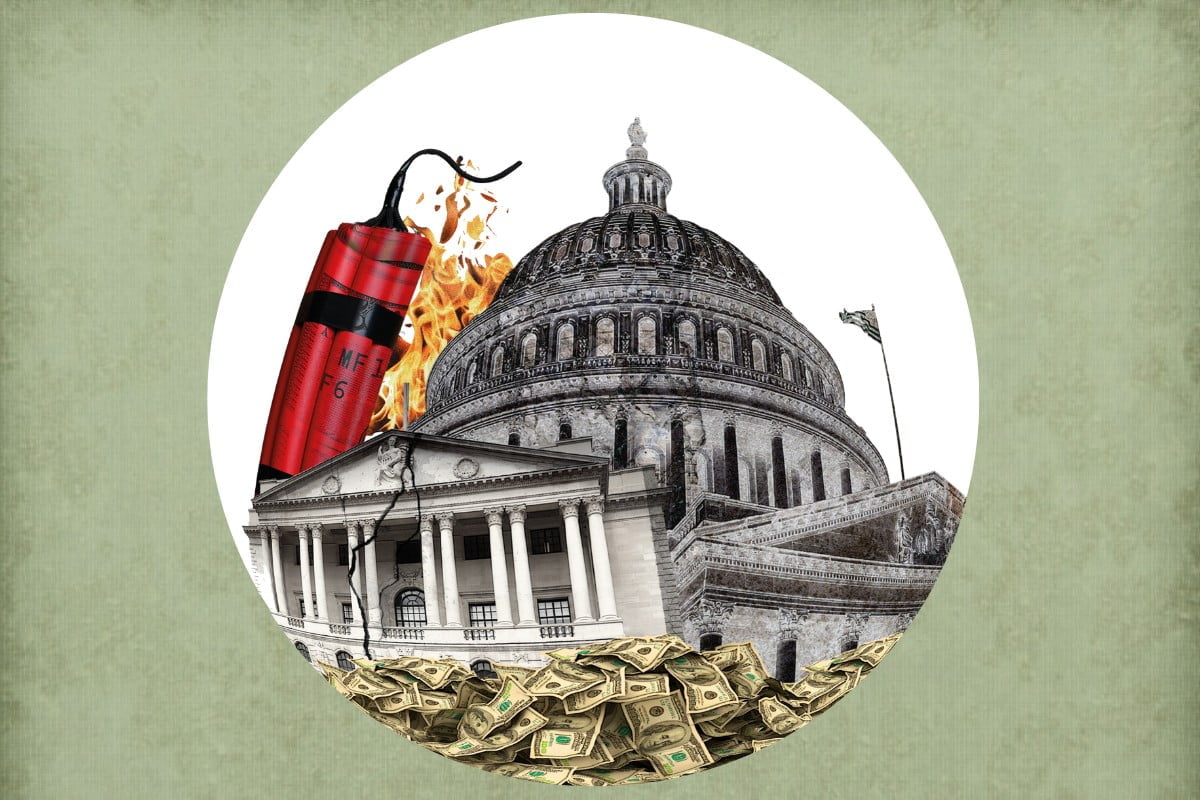
Above all, given the volatility and fragility of the system, it is evident that political and social instability itself – including ‘shocks’ like wars and revolutions – are increasingly acting as catalysts for wider economic crises.
In other words, non-economic – and even accidental – factors can also precipitate and accelerate crises, particularly when the contradictions in the world economy have already reached a breaking point.
Shocks to the system
Disruptions to global supply chains; inflation and sharp fluctuations in the price of commodities like oil; unstable currencies and exchange rate movements; the risk of sanctions: these are just some of the unpredictable and ‘accidental’ factors that capitalists investors are having to navigate when choosing where to put their money.
As the Financial Times’ Martin Wolf comments:
“Today we can see many risks: geopolitical tensions; shocks to supplies of essential raw materials; trade disruptions; disappointment in the profitability of – and so a collapse of investment in – AI; prolonged fiscal deficits and ever greater accumulations of public debt; and damage to crucial institutions, notably central banks…To be added to that list is the collapse of the US as a benign hegemon…”
Added to this list, environmental factors like climate change are also partly responsible for causing hesitation amongst the capitalists when it comes to investment.
Much of this uncertainty and instability in the economy, in turn, is being fuelled by political events and developments.
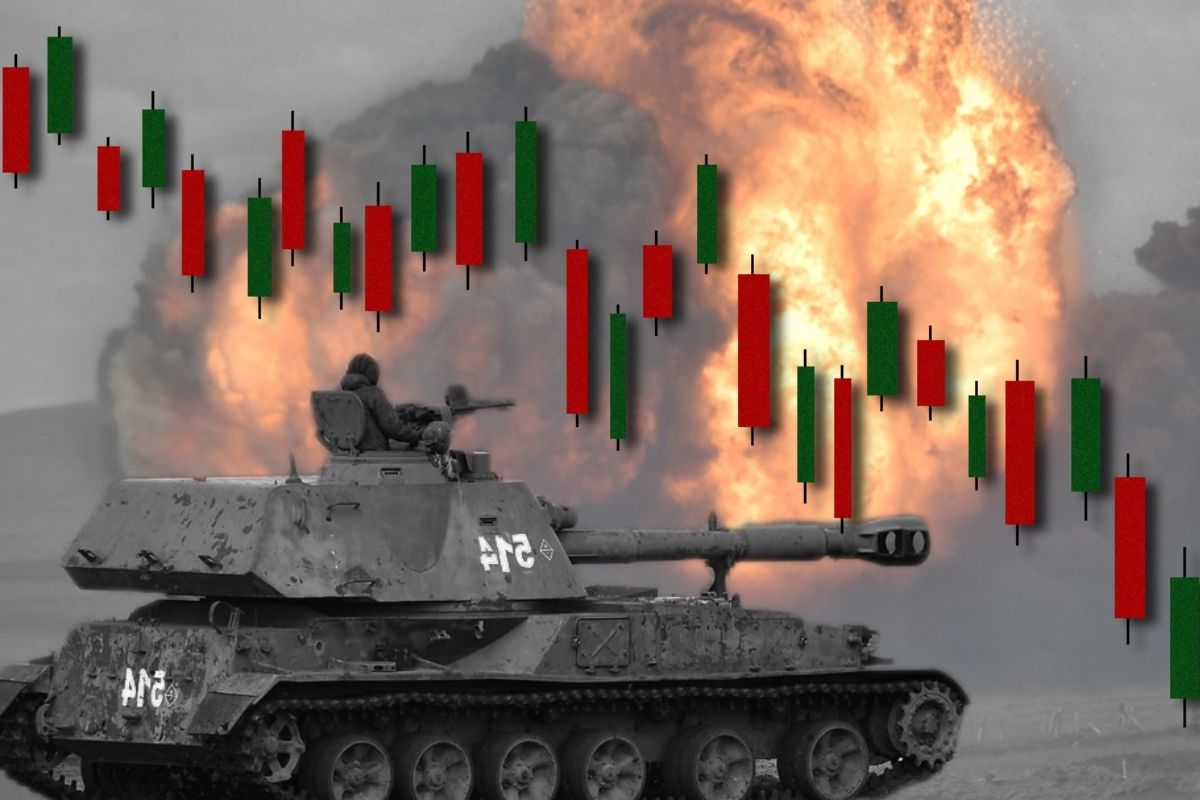
Most notably, geopolitical clashes and frictions are generating shocks that have a profound impact on the wider economy. This includes the Iran and Ukraine wars, alongside the rise of economic protectionism and trade conflicts between the big imperialist powers.
There is also the influence of political leaders themselves. The Financial Times, for example, talks about the potential impact of “bad actors”. In the past, such a term would refer to the proclaimed pariahs of western imperialism, such as Vladimir Putin. But now the reckless and myopic premiers of the United States and Israel are equally causing the capitalists a headache.
The current on-off Iran War – a disaster for the world economy – has been brewing for some time. But Trump’s own short-sightedness, stupidity, and self-interest has certainly played a part in bringing about this calamity.
The US President’s capriciousness does not stop there, however. Since his return to the White House, Trump has announced, delayed, and revised tariffs; ramped up deportations of migrant workers; and intensified American imperialist aggression and threats against Venezuela, Cuba, and Greenland.
All of this is acting as a drag on investment and growth, in the USA and globally. Some economic commentators have dubbed this the ‘Trump tax’.
In reality, chaotic, short-sighted mavericks like Trump are themselves products of the senile, degenerate capitalist system. They are both a cause and effect of capitalism’s crisis.
The decline of US hegemony and the demise of the ‘rules-based order’, meanwhile, is having a knock on effect on investor confidence. Gillian Tett of the Financial Times even writes of an “age of lawlessness” that would-be investors must navigate when considering where to park their money.
Closer to home, the ongoing turmoil in Westminster is stoking economic instability for British capitalism. The bankers and bosses are concerned that Starmer’s successor, Andy Burnham, will not be trustworthy when it comes to defending their interests, and are withholding any major investments until the country’s political picture becomes clearer.
“People abroad must think it’s a comic convention,” stated Sir Martin Sorrell, chief executive of media conglomerate S4 Capital, voicing the frustrations of Britain’s capitalists. “Business has enough volatility already with war in the Middle East, tensions between the US and China, and Russia and Ukraine.”
Grinding to a halt
This heightened instability and uncertainty is weighing on the minds of the world’s capitalists.
A survey of CEOs by Fortune and Deloitte from 2025 found that 58 percent of big business bosses felt pessimistic about the global economy, up from 18 percent in 2024. Factors such as geopolitical turbulence, inflation, market volatility, and supply-chain disruption were most commonly cited as fuelling this pessimism.
In another study from last year, 500 major multinational companies were surveyed about their investment decisions. Over half of them said that, between 2020-25, they had suffered a direct financial loss as a result of political factors.
Elsewhere, a survey carried out last year by the Federal Reserve Bank of Atlanta, found that 45 percent of corporate executives planned to cut capital spending owing to Trump’s erratic policymaking.
Similarly, in another poll of business leaders by KPMG around half reported low confidence in carrying out their investment plans, due to Trump’s tariffs.
The overall result is that investment in new means of production is being delayed, deferred, or cancelled
Removing the distorting effects of the enormous investment in AI, US capital expenditure growth increased by only one percent in 2025, and is expected to grow by just 3 percent in 2026. This is a sharp drop from the 4.2 percent growth in ‘capex’ seen in 2024.
Investment levels in British plants, machinery, and equipment, meanwhile, have been negative for the sixth quarter in a row.
Researchers at Oxford Economics report that, last year, the ‘global economic policy uncertainty index’ reached unprecedented levels. And these “headwinds from uncertainty”, they estimate, led to $202 billion in lost or delayed business investment in 2025.
This slowdown in investment, in turn, is making a mark on economic growth. The UN, for example, has predicted that global growth will slow to 2.7 percent this year, lower than 2025, and less than the pre-pandemic average.
In other words, an enormous amount of grit is being thrown into the wheels of the capitalist system, which are gradually grinding to a halt. And all this before the next slump hits.
Difficult decisions
The impact of today’s elevated instability and uncertainty is amplified by the magnitude of the productive forces. The size and scale of modern capitalist production is such that major investment decisions come with greater hazards than in the past.
Any capitalist thinking about investing in real production needs to spend massive sums over long timespans – in a period when the economic and political environment can change rapidly from day to day, potentially evaporating their profits in the process.
Investment in commodity production takes time to be realised. Manufacturing requires an average investment horizon of several years. The development period for metallic mines takes an average of 15.7 years from the point of discovery to production. And oil and gas fields take between 8-20 years to get going in terms of site appraisal and rig construction.
Given the scale of modern production, meanwhile, any new investment requires billions to be sunk into fixed, physical assets. A state-of-the-art silicon microchip plant, for example, costs between $15-30 billion to build and equip, and around two or three years to construct.

Modernising production, improving infrastructure, or rearranging supply-chains similarly comes with a big bill in terms of time and money.
The pace of technological change adds another element of uncertainty. Eye-watering amounts are being spent by Big Tech on mammoth data centres, for example. These are stuffed with expensive processors, in order to train and run cutting-edge AI models.
Such is the speed of this AI arms race, however, that a firm’s technology can quickly be overtaken and made obsolete by its competitors, causing the value of such investments to go up in smoke.
The capitalists must therefore think twice before pouring billions into building new factories, upgrading equipment, or rearranging production – even more so if there is a threat of severe disruption, or a risk that the market for their goods may not be there a few years hence, due to war, tariff barriers, sanctions, and so on.
In short, the capitalists are finding it increasingly difficult to confidently invest in real production, or make any long-term decisions about how or where to allocate their money. And this is another contributing factor in the global economy’s stagnation and slide into a new downturn.
Vulnerable to disruption
Over a whole historical period – in tandem with globalisation, the expansion of international trade, and a greater integration of the world market – the capitalists perfected what economists referred to as ‘just-in-time’ production.
This meant less stockpiling of resources; less redundancy or robustness in terms of productive capacity and distribution networks; and an ever-increasing speed of commodity circulation, with goods moving from farms and factories to shops and supermarkets at a faster and faster pace.
Such developments are not new. Competition and the profit-motive has always compelled the capitalists to trim their production and circulation costs; to produce and transport goods more rapidly, over greater distances; to develop ‘economies of scale’; and to expand their markets.
Marx explained this same process in detail in Capital volume 2:
“Whereas on the one hand the improvement of the means of transportation and communication brought about by the progress of capitalist production reduces the time of circulation of particular quantities of commodities, the same progress and the opportunities created by the development of transport and communication facilities make it imperative, conversely, to work for ever more remote markets, in a word — for the world market.” (Our emphasis)
Or as Marx and Engels put it in the Communist Manifesto:
“The need of a constantly expanding market for its products chases the bourgeoisie over the entire surface of the globe. It must nestle everywhere, settle everywhere, establish connections everywhere.”
In the modern era, these ‘just-in-time’ methods served to improve efficiency, bring down costs, and – above all – boost the bank balances of the multinational monopolies.
At the same time, however, this hyper-efficiency and increased interdependency has made the world economy more prone to disruption and vulnerable to any shocks. Today’s global supply-chains may be lean, but they are also complex and fragile.
When stoppages or bottlenecks do occur, meanwhile, their inflationary effects quickly propagate across the world economy.
This was demonstrated during the Covid pandemic, and again in March 2021 when a container vessel blocked the Suez Canal. Similarly, the current shipping restrictions through the Strait of Hormuz threaten to throw the world economy into disarray.
In essence, production has become more socialised; more interconnected. But ownership has become more concentrated; more monopolised.
The result is an ever-increasing clash between the development of the productive forces and the anarchy of the market; between socialised production and private property.
Hoarding and economic nationalism
Contemporary capitalists are therefore exposed to grave economic risks in a way that their predecessors were not.
Due to the anarchy of capitalism, however, all their attempts to mitigate against this uncertainty and instability only serves to further harm the economy.
To build up their resilience to shocks and advance their own interests, for example, individual capitalists or imperialist powers are increasingly turning towards hoarding, stockpiling, export controls, and other forms of economic nationalism.
To protect itself against Trump’s trade war and the threat of US sanctions, China is accumulating reserves of gold, rare earth minerals, and other strategic resources at a record pace. And other major powers are following suit, leading to an imperialist grab for supplies of important raw materials across the planet.

Similarly, during the pandemic, the imperialists all hoarded vaccines for themselves. And in the midst of the ongoing Iran War, it is every man for himself when it comes to gaining access to oil and gas.
Such stockpiling and protectionism acts as a further inflationary drain on the economy – pushing up prices and diverting resources that could otherwise be put to use productively.
Marx explained that, for capital to be utilised productively, it must circulate. But if the capitalists are simply hoarding their wealth – whether this be in the form of commodities or money – then this means it remains idle and is not being invested.
From the perspective of an individual capitalist or country, this hoarding makes total sense. But for capitalism as a whole, the result is slower (or negative) growth, meaning a smaller economic pie to share around than if there were cooperation.
Yet this hits at the heart of the matter. Capitalism is based on private ownership, market competition, and production for profit. In this midst of a crisis, therefore, any coordination will quickly be abandoned in favour of a ‘beggar-thy-neighbour’ rat race.
Once again, we see the two fundamental barriers to socio-economic progress demonstrated plainly: private property and the nation state.
Speculation and bubbles
The uncertainty associated with investment in real production is also an important factor in the growth of speculation and bubbles.
As explained earlier, investment in physical assets like factories is riddled with risks. Instead, therefore, the capitalists are flooding into the stock market and other speculative vehicles, where their wealth remains relatively liquid – that is, easily retrievable in the event of a crisis.
It is therefore not only overproduction – i.e. excess capacity and saturated markets – that is encouraging speculative rather than productive investment. Fear and instability, characteristic of this turbulent period, are also contributing towards the ongoing bubble in AI and other shares.
This explains why, despite all the turmoil in the Middle East and in the wider world economy, the stock market continues to soar. The S&P 500, for example, is trading at near all-time highs.
As bourgeois economist John Maynard Keynes once remarked: “The markets can remain irrational longer than you can remain solvent.”
Again, such speculative investment is completely sensible for the individual short-term-profit-seeking capitalist. But at a macro-level, it is only further inflating an almighty bubble, which will have devastating consequences for the entire world economy when it eventually bursts.
In short, capitalism is an anarchic system where the ‘rational’ profit-driven actions of individual capitalists and nation states result in irrationality for the economy and society as a whole.
No final crisis
The next slump, if and when it comes, could be triggered by any number of things: the stagflationary shock of the Iran War; the bursting of the AI bubble; the debt crisis in the advanced capitalist countries – or, most likely, some combustible cocktail of the above.
The ruling class is well aware of the manifold risks that they and their system face. They can see the same symptoms of overproduction that the Marxists can, for example – the debt and bubbles, etc. Similarly, they can see the tsunami of inflation that is heading their way on the back of the Iran War. But they are powerless to do anything to tackle these.
For starters, they have run out of ammo, in trying to stave off previous waves of crisis. Their economic arsenal is now empty.
Furthermore, whatever they try to do in this scenario will be wrong. Trying to stimulate the economy to avoid a recession will only fan price rises. Trying to curb inflation through attacks on wages and interest rate hikes, meanwhile, will bite into demand and deepen the downturn.
And as highlighted above, with the world market shrinking and key resources in short supply, every capitalist robber is out for themselves: focussed on their own narrow interests, regardless of the resultant race to the bottom.
Regardless of where the next slump comes from, it should be emphasised that there is no such thing as a ‘final crisis’ of capitalism. Nor is there a predetermined level of economic contradictions that capitalism has to reach before it suddenly collapses.
And no matter how big the crash, the capitalist system will not self-implode and take itself to the grave. It must be actively and consciously overthrown by the organised working class.
Scandals and sparks
At the same time, it should also be emphasised that there is also no mechanical link between economic conditions and the consciousness of the masses. Recessions do not automatically and immediately lead to radicalisation.
Conversely, we do not have to wait for capitalism to undergo its next major crisis in order to see revolutionary explosions.
As we are seeing today, a profound radicalisation can take place in the absence of a major slump, due to all the daily injustices, inequalities, and miseries that capitalism imposes upon the working class.
In the USA and Europe, for example, the most radicalising events of recent years have included the Covid pandemic, Black Lives Matter, the ongoing genocide in Palestine, and the Epstein scandal.
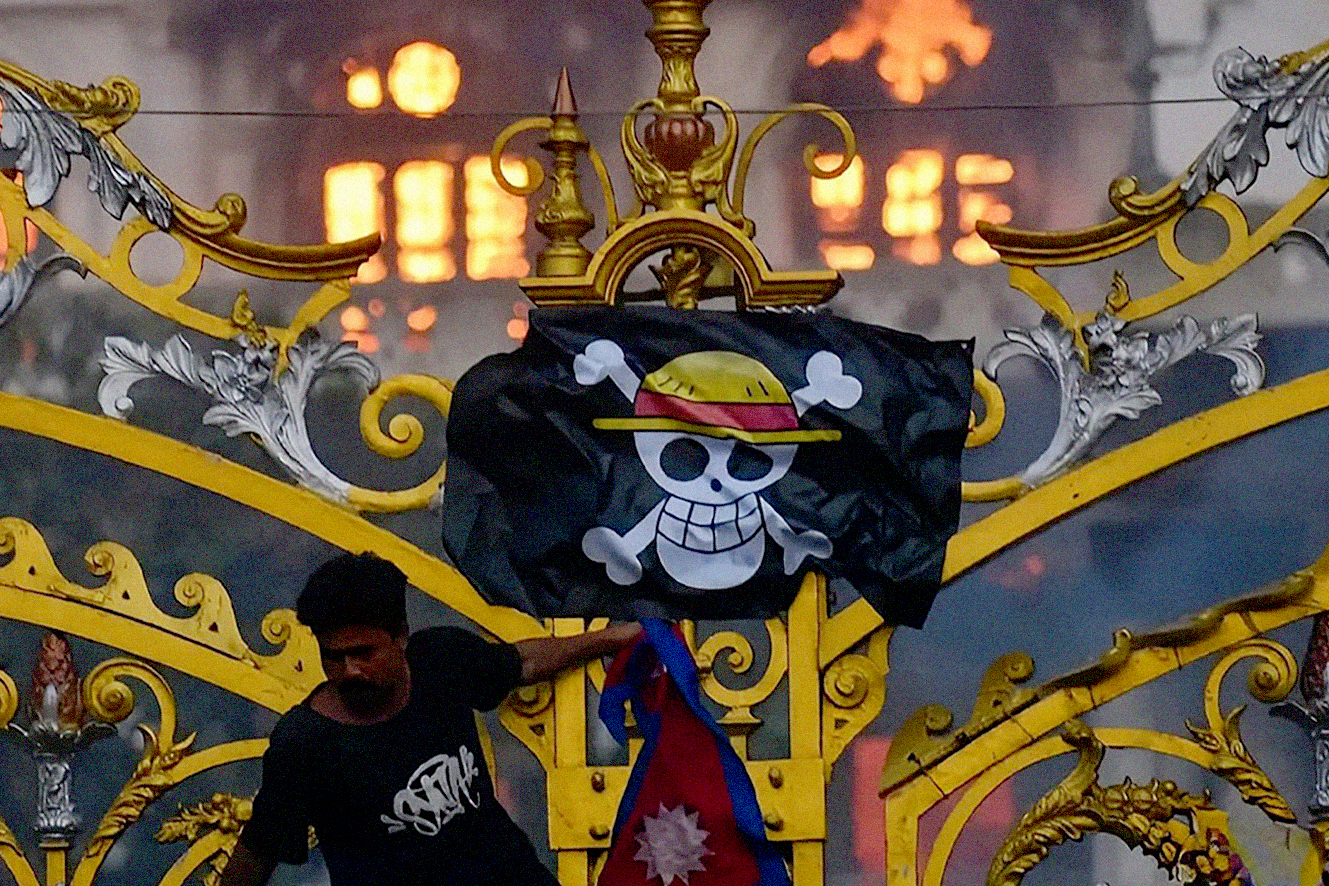
Similarly, the ‘Gen Z’ revolutions in countries like Bangladesh, Nepal, and Indonesia, as with the recent mass ‘cockroach’ movement in India, were triggered by incidents of corruption, incompetence, and repression by the ruling class.
All of these social eruptions have occurred following the 2008 crisis, in a period when the capitalist class and its institutions have never been more hated and discredited.
That is, they have emerged in the context of economic crisis – but they have been sparked by non-economic events.
Cause and effect
These are exactly the sort of lessons that Leon Trotsky was trying to impart to the young communist parties during the Communist International’s debates in the 1920s.
The Russian Revolution attracted thousands – if not millions – to the banner of Bolshevism internationally. But many of these fresh, fledgling communists suffered from a certain rigidity in their outlook; from schematic thinking, which reduced all of Marxism and perspectives to a form of economic fatalism.
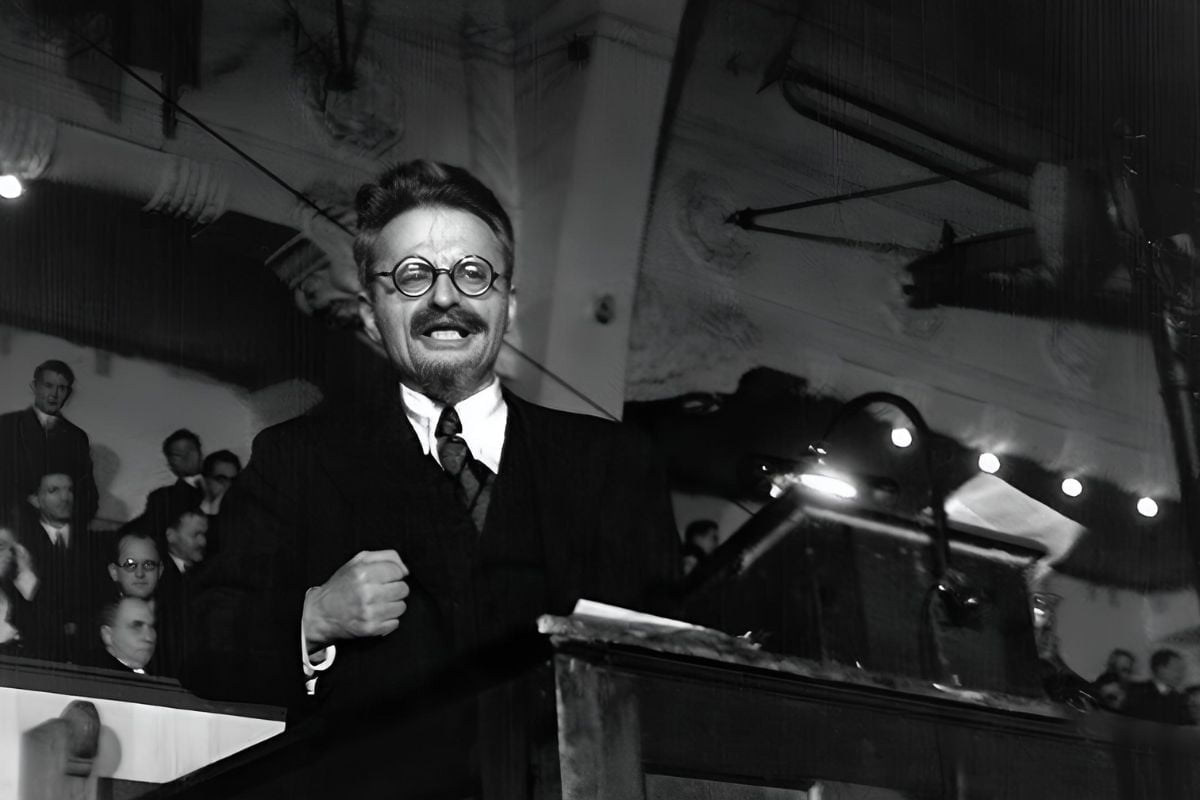
“Even now, many comrades base themselves on the notion that crisis is the mother of revolution, and that prosperity is, so to speak, the gravedigger of revolution,” Trotsky stated. “As a prophecy, this is false.”
It is not only the hammer blows of economic crises, therefore, that can transform consciousness. In this epoch of uncertainty and instability, political and social events – including scandals and shocks – can and will also become lightning rods for the frustrations and indignation of the masses.
And, importantly, a system that is pregnant with contradictions – that has reached a dead end, and can no longer take society forward – will inevitably produce many more such ‘accidents’ and bombshells, which in turn exacerbate the instability in the global economy and in world relations.
Dialectically, cause becomes effect, and effect becomes cause.
Need for revolution
Instability and uncertainty, then, have become an objective barrier for capitalism; for investment and growth; for the development of the productive forces.
But alongside the economic and political considerations that feed into the ruling class’ decision-making is an important social one: the enormous strength of the world working class.
The ever-present threat of revolutionary upheavals remains a significant limiting factor in the calculations of the capitalists and their political representatives – preventing them from carrying out the large-scale cuts and ‘creative destruction’ that the profit system requires.
For these reasons, the perspective ahead is one of protracted crisis and class struggle.
Temporary economic fluctuations and periods of growth are inevitable. But the general trajectory will be one of stagnation, interrupted by violent disruptions, disturbances, and downturns.
In trying to restore a fragile economic equilibrium, through austerity and attacks on the working class, the ruling class will only provoke sharper political and social crises.
And vice-versa: every attempt by capitalist politicians to paper over class antagonisms and save their own skins will only worsen the debt, inflation, bubbles, and protectionism, and thereby intensify the crisis.
In the process, the ruling class will lurch from one disaster to the next, economically and politically – until the working class takes power decisively, and puts this decrepit system out of its misery, once and for all.
That is the revolutionary task that we, the communists of the Revolutionary Communist International, are striving towards.