When Donald Trump returned to the Presidency of the United States back in January 2025, Europe’s right-populist leaders and politicians were jubilant.
“I see a shining victory, perhaps the biggest comeback in the history of Western politics,” said the recently-deposed President of Hungary, Viktor Orbán. “For the world, it means the hope of peace.”
Nigel Farage, the leader of Reform UK, gushed that Trump’s re-election heralded “the beginning of a golden age.”
And no wonder they were so filled with joy. Trump’s return meant that the world’s most powerful man – the leader of the ‘free world’ – was their patron; they had a potent ally in their struggles against the European liberal establishment. The President could bolster their authority and legitimacy.
This triumphant mood was captured at the ‘Patriots for Europe’ rally held in Madrid in February 2025, where Orbán popularised the slogan “Make Europe Great Again”. Figures like Rassemblement National leader Marine Le Pen and Italy’s Deputy Prime Minister Matteo Salvini, meanwhile, spoke of a “reconquest” of Europe.
For their own part, Trump and his administration have been keen to work with Europe’s right-populist groupings, regardless of whether they were in government or in opposition.
The US National Security Strategy document explicitly states that the “growing influence of patriotic European parties… gives cause for great optimism”, and that Washington “encourages its political allies in Europe to promote this revival…”
This ‘encouragement’ was on full display weeks after the ‘Patriots for Europe’ rally, when Vice President JD Vance delivered his notorious speech at the Munich Security Conference.
In his address, Vance excoriated the European liberal establishment as being a “threat from within”, more concerning than Russia or China; he correctly exposed the hypocrisy of these so-called ‘democrats’ for overturning the Romanian elections, and erecting a “firewall” around the AfD in Germany.
Undoubtedly, the aim of this strategy was to circumvent Europe’s official leaders, and promote forces which would seek to undermine the European Union. The MAGA wing of the US establishment views the EU as a hotbed of liberalism and ‘globalism’. More broadly, it views Europe as a drain on US resources, and an obstacle to American interests.
Relationships turn sour
Up until this year, the right populists of the world have been more or less united in their crusade against the ‘woke’ liberal establishment. They were able to put aside their differences on contentious topics like Ukraine, economic policy, etc., in order to wage a struggle against their common enemy: the Atlanticist elites.
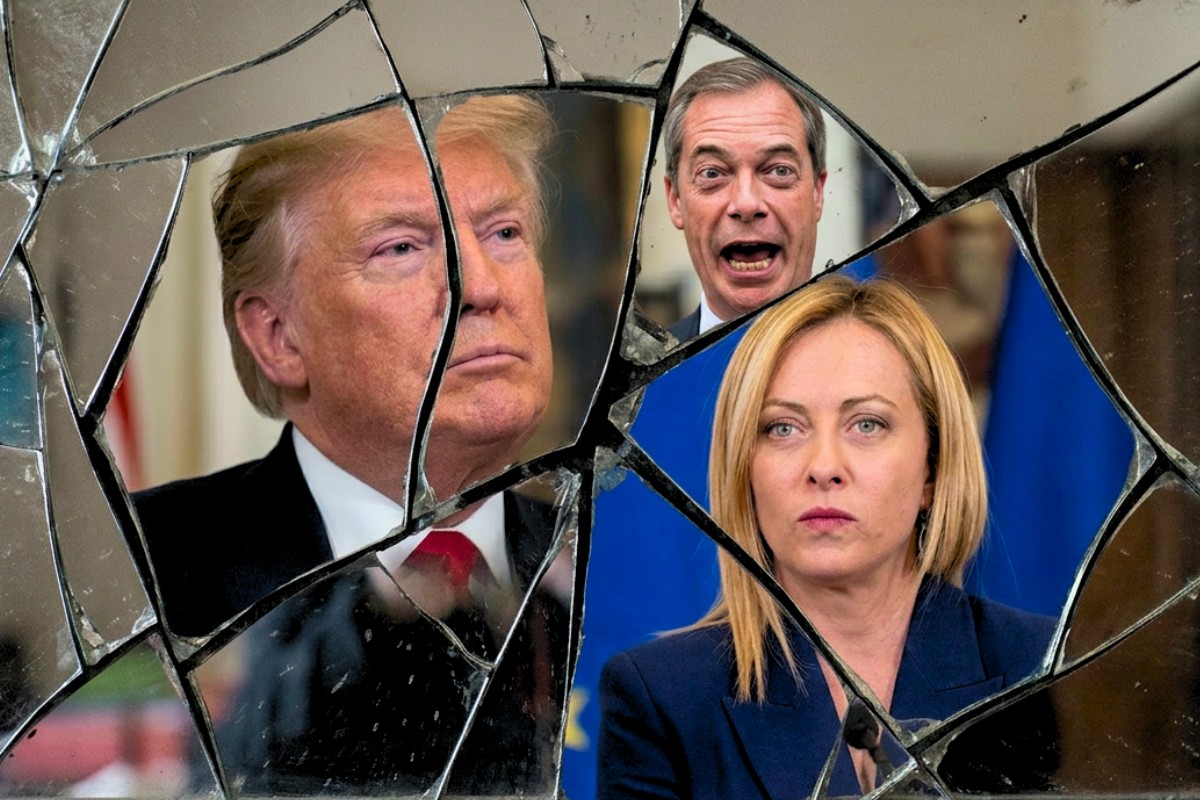
Lately, however, the relationships between Trump and his European acolytes have turned sour. It turns out that it is rather difficult to build a ‘nationalist international’ – not least when the world is being riven apart by imperialist contradictions and national antagonisms.
This divide has been brewing for some time. In fact, faultlines within the right-populist camp – over questions like Ukraine, rearmament, and the Middle East – could be detected as far back as the 2025 ‘Patriots for Europe’ gathering, as Le Monde commented at the time.
But these faultlines have now widened into gaping cracks, particularly following Orbán’s colossal defeat in the April Hungarian elections to a more pro-EU candidate.
Nigel Farage, who once welcomed the Trumpian “golden age”, and often bragged about his close friendship with the Republican leader, has noticeably distanced himself from the MAGA camp. “I happen to know him,” he nonchalantly told the Financial Times last month, “but that’s by the by.”
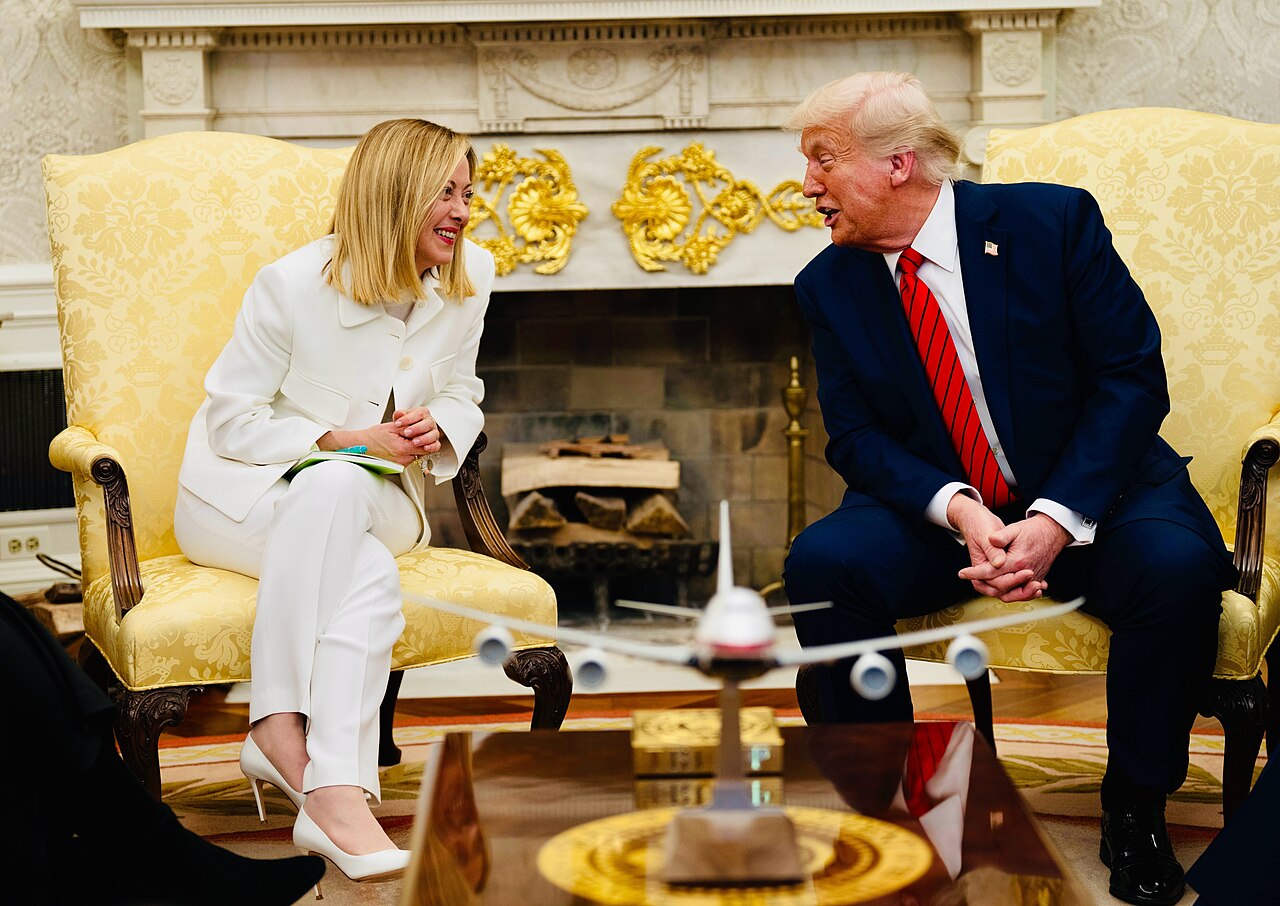
After coming out in full-throated support of the US’ war on Iran – calling on the UK to enter the fray – Farage soon triangulated, and then backpedaled his position altogether. He even went to the lengths of admitting that Starmer was right not to join in with Trump’s war.
Similarly, Le Pen has criticised Trump’s “erratic” war aims in the Middle East, and noted the “catastrophic consequences” the conflict will have on fuel prices. Earlier this year, Le Pen’s protégé Jordan Bardella, who officially leads Rassemblement National, also denounced Trump’s “imperial ambitions” in relation to Greenland and Venezuela.
In Germany, Alternative für Deutschland (AfD) – whose platform is particularly anti-war – has delivered blistering criticisms of Washington. The party’s co-chair Tino Chrupalla accused Trump of “war crimes” in Iran, and even called for the withdrawal of US troops from Germany at a party conference in March.
The most public falling-out, however, took place between Trump and Italian Prime Minister Giorgia Meloni, who is in a particularly uncomfortable position. She was viewed, up until now, as the most pro-Trump European leader – rivalling only Viktor Orbán in her effusive praise of the President.
She relished being Trump’s favourite in Europe, and pegged a lot of her authority on being close to the US President.
But now she has been forced to clash with Trump over the Iran War, under pressure from her own base, and also from the point of view of the national interests of Italian capitalism, which has nothing to gain – and much to lose – from Trump’s military adventure.
After going so far as blocking the use of a Sicilian air base by the US, Trump lashed out at her, telling an Italian newspaper that she “lacked courage” to join the US-Israeli attacks.
Meloni, in turn, has been dragged into the spat between Trump and the Vatican – partly over Trump’s blasphemous AI-generated memes comparing himself to Jesus Christ, of all things.
🔊 ‘You immediately saw pretty negative reaction from a lot of fairly conservative Christians who are typically very Trump-aligned.’ @josephax on the controversial, AI-generated image depicting President Trump as a Jesus-like figure https://t.co/EoFf0QuZ18 pic.twitter.com/pLJ0HuRenN
— Reuters (@Reuters) April 14, 2026
“I find President Trump’s words towards the Holy Father unacceptable,” said Meloni, reflecting pressure from the devout Catholics in her hardcore base. “The pope is the head of the Catholic Church, and it is right and normal for him to call for peace and to condemn every form of war.” Deputy Prime Minister Matteo Salvini echoed these views.
This is all incredibly embarrassing for Meloni, who is mocked for her past association with Trump, and the sudden about-turn she has been forced to make.
Spats and personal disagreements alone cannot answer for this abrupt change in relations between Trump and his former allies. To understand the global splintering of the so-called ‘populist international’, we need to take a broader look at the political and geopolitical turmoil of the past year.
Pressure from below
Since Trump got into office last January, he has upended the entire world order. From his Quixotic tariff wars, which threatened economic catastrophe, to his tearing up of the postwar western alliance: the watchword of the Trump administration has been ‘America First’, and that has meant, ‘everyone else last’.
The Iran War has ramped up the risk of widespread economic instability, particularly through the rise in energy prices. Trump has carried all of this out with blithe disregard for his European ‘allies’, who were neither consulted about nor forewarned of the attack. The looming threats of unemployment, inflation, and another energy crisis now hang over Europe – especially over ordinary households.
On top of this, there is a generally negative perception of Trumpian America by ordinary Europeans, who typically view the US as an unstable country of ICE deportations, police brutality, political assassinations, and a debauched, corrupt ruling elite enriching themselves at the expense of the world.
It’s no surprise, therefore, that public opinion in Europe against Trump, the US, and the actions of US imperialism is extremely negative.
YouGov polling data reveals that Trump’s approval rating is 78 percent unfavourable in France, 86 percent in Germany, and 80 percent in both Italy and the UK.
Across the continent, 73 percent of Europeans said they view Trump as a threat to peace and security in Europe. This is just nine percentage points behind Russian President Vladimir Putin, who is constantly villainised in the western press. And this data comes from last summer – before Trump’s latest acts of aggression in the Middle East and Latin America.
This attitude was likely one factor in Orbán’s defeat, with 85 percent of Hungarians saying that they wanted their country to have a different relationship with the United States in the run-up to the election.
Trump endorsed Orbán on multiple occasions, and even flew in Vice President JD Vance four days before the election, but this did not have the intended impact. “Vance going to Orbán was like delivering the kiss of death,” one political commentator told the Guardian. “So when [Meloni] saw that, she really understood.”
Working-class and middle-class people – including farmers, who in many countries back right-populist parties in large numbers – are anxious about the continued economic uncertainty that a Trump presidency will likely entail.
Many of them are connecting the dots between the economic situation and Trump’s military pursuits, and are therefore opposed to reckless wars and the burden of militarism.
Peter Felser, an AfD MP, summed up this mood when he said “we cannot be the lapdog of an ‘America First’ policy if it destroys German jobs.”
If there’s one thing that the right-populist parties have in common, it’s that they are built on heterogeneous and unstable social bases, and feed off of the anti-establishment anger of workers and the middle classes.
So when an instinctive anti-Trump, anti-war sentiment reaches into their electoral base, the populist leaders must reflect it – or risk being tarnished, and lose support as a result.
In the case of the AfD, tapping into the anti-American mood in German society after the Iran War has allowed them to take the lead in the opinion polls, above the ruling CDU, for the first time ever.
Pressure from above
There is another factor in this process, which is the fact that the right-populist parties are all led by the most narrow-minded national-chauvinists, who must ultimately reflect the national interests of their respective countries, not someone else’s. And the fact is that Trump’s ‘America First’ policy means squeezing Europe, and openly treating European countries as petty vassal-states.
Nationalist policies inevitably mean rivalry and conflict, because the national interests of the USA, Germany, the UK, etc. are objectively at odds with each other. However much their interests might overlap, these countries each have their own distinct economic ties and spheres of interest; they are competing within the same finite world market
Alongside this, we can see the ongoing moderation of some of Europe’s right-populist parties. The closer they get to power, the more their leaders tend to reflect the needs of their national ruling classes, and the thinking of their political establishments.
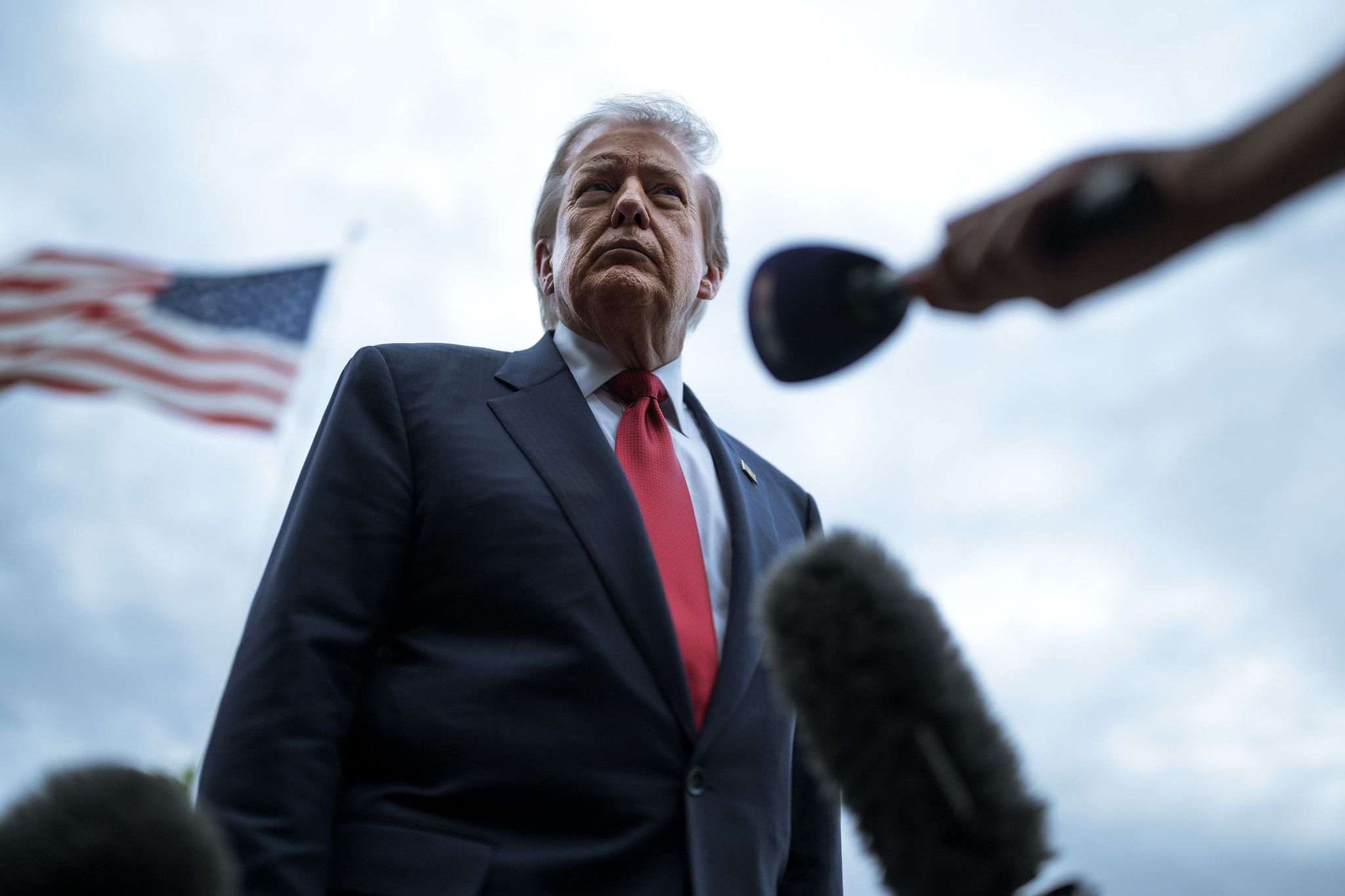
Most European powers are now coming to terms with the rupture between US and European imperialism. If their final hopes of a rapprochement weren’t dashed by Trump’s threats to annex Greenland – effectively threatening Denmark, another NATO power – then the Iran War fallout probably has. This is reflected in the recent tonal shifts from the governments of the UK, Spain, Italy, and elsewhere.
Alongside this, incumbent governments – after carrying out brutal austerity programmes – are everywhere feeling the pressure of public disapproval, and are desperate to shore up their plummeting popularity. It’s no coincidence that Meloni’s spat with Trump, for example, came very soon after her government’s defeat in the recent judicial reform referendum.
Having witnessed the success of Mark Carney’s anti-Trump campaign in last year’s Canadian elections, some European leaders are likely adopting anti-Trump, anti-American rhetoric in order to save their own skin.
In this respect, the right populists’ increasingly critical attitude towards Trump and the US echoes the moves of their liberal and reformist counterparts, like Spain’s Pedro Sánchez, and Britain’s Keir Starmer.
There are, however, limits to the anti-Trump rhetoric of the European leaders. The US remains the EU’s largest trading partner, and the EU and Britain do not have the power – economically, politically, or militarily – to fully break with the US, or stand up to it in open conflict.
The right populists are being forced to ditch their overtly pro-US, pro-MAGA image. In some cases, they are falling more in line with the foreign policy agendas of their own national ruling classes, who are growing concerned with the role of European capitalism in an increasingly divided world, in which Europe can no longer rely on the patronage of the US.
This is clear in the statements of the AfD’s new youth leader, who wrote that “the future of European right-wing parties lies in Europe” and that relations with other Europeans “are always more important to us than any special hotline to Moscow, Beijing, or Washington”.
Likewise, Meloni echoed this sentiment in her speech to the Italian parliament last month, where she repeatedly underscored the need for European unity: “history is knocking at the door, and Europe must not fail this test.”
Fracturing and fraying
It remains to be seen exactly where their break with Trump will lead the right populists. These parties and movements will likely diverge in several directions, based on their specific national conditions.
Some of them may tentatively engage with the European project. Despite their traditional Euroscepticism, over the last few years Meloni and Le Pen have both tempered their stances towards the EU – in favour of reforming it from within rather than a Brexit-style departure.
Such a pro-European shift is unlikely to be the case with Farage. Reform UK has Brexit and Euroscepticism built into its DNA. While Farage has admitted that he is “starting to worry slightly” about Trump’s judgement on the Iran War, he has underscored the vital importance to British capitalism of the so-called ‘special relationship’ with the US, correctly pointing out that “without America, we are defenceless”.
Other right-populist projects may retreat into narrow, parochial nationalism – distancing themselves from both Washington and Brussels. This would add to the centrifuge of pressures which are already threatening to tear the European Union apart.
Additionally, this rupture between the US and Europe may introduce and inflame tensions within the right-populist parties themselves.
The AfD, for example, was already divided on its attitude to the US before the Iran War, between Alice Weidel’s more pro-American wing, and a growing, hardline anti-American wing led by Tino Chrupalla.
The recent escalation in the Middle East has emboldened Chrupalla, who has accused Trump of “war crimes” and called for the withdrawal of American troops from Germany. The growing anti-American mood in Germany has even forced the more pro-US Weidel to make some tentative criticisms of the President. MP Maximilian Krah, meanwhile, commented that “a break with Trump would be harmful to the AfD in all sorts of ways. It must not be allowed to happen.”
This is just a taste of the political uncertainty in store for European politics in the coming period.
Feet of clay
The right populists are taking hits for a number of reasons, some of which have little to do with the antics of the Trump administration, nor the recent defeat of Viktor Orbán.
In Britain, for example, the radical, anti-establishment shine has partially come off of Reform, as they welcome ex-Tory careerists into leading positions, and administer austerity cuts and tax hikes in the local councils that they control.
Farage has recently promised to wage war on the welfare state should he get into power – even if there are strikes and riots. Such pronouncements will hardly galvanise the 36 percent of Reform voters who report feeling “desperate or worried about their finances”.
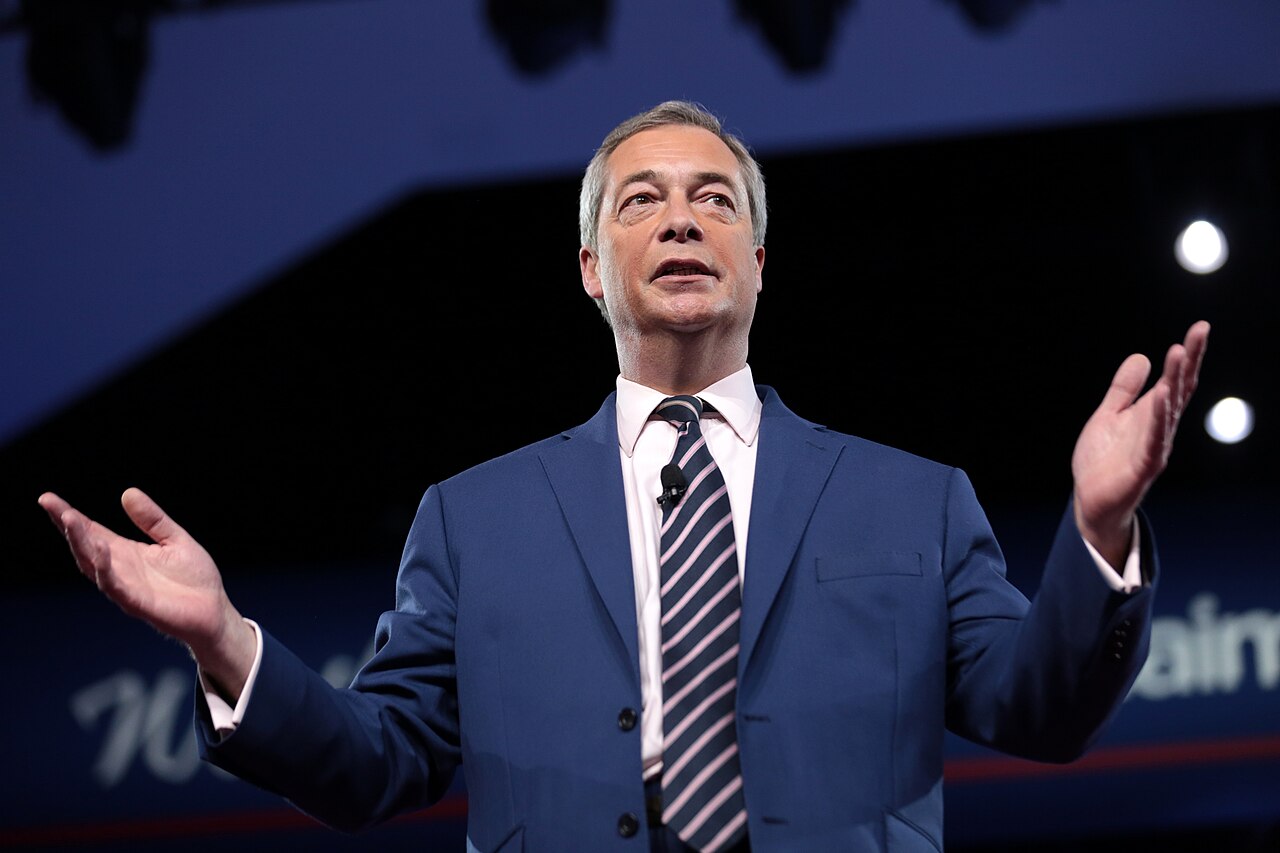
The experience of the Meloni government in Italy is much the same, except that she is becoming even more widely discredited, because she is ruling on a national level.
In many respects, therefore, Orbán’s defeat – after presiding over 16 years of corruption and decline – provides Europe’s right populists with a window into the future: once they’re in power, they’ll become as despised as the rest of the political elites. Except this time around, with events accelerating, they won’t enjoy anywhere near 16 years in power.
Recent events, including the crisis of the Trump administration, have exposed the vulnerabilities of these reactionary, demagogic outfits.
But whatever is going on with Trump, the main source of the strength of these parties is domestic: the enormous popular anger towards the liberal establishment, who are implementing brutal austerity policies, and the complete failure of the left to offer a serious alternative.
Reform, the AfD, and Rassemblement National are therefore still riding extremely high in the polls compared with their rivals, and are expected to make huge gains in coming elections in Britain, Germany, France, and elsewhere.
Sections of the left throw their hands up in despair at this supposed unstoppable wave of reaction – which they often mistakenly identify with fascism.
As we have pointed out from the beginning, however, this apparent ‘shift to the right’ is just one, ephemeral facet of a deeper polarisation in society, driven by the crisis of capitalism.
These groups appear strong because they are tapping into a powerful reserve of anti-establishment anger. As demagogues, they attempt to be all things to all people.
Their greatest strength will therefore be the source of their greatest weakness: they are susceptible to an array of national and social pressures, pushing them in contradictory directions.
And as they get closer to power, they become indistinguishable from the very establishments that their supporters resent.
If Donald Trump – standing at the head of the most powerful nation in world history – cannot deliver his golden age of peace and prosperity, then the reactionary pygmies of a divided, stunted Europe have no hope at all.
They are miniature colossi with feet of clay, destined to crumble in due course. The forces that they have conjured will tear them down, as night follows day.
The only way to fight right populism is to cut the ground from underneath them. That means, above all, fighting the liberal establishment’s austerity and militarism on a working-class basis, and providing a real alternative to the dead-end of capitalism and national division. This is what communists stand for.