






The History of British Trotskyism to 1949 – part 1
Today we publish in 3 parts a history of British Trotskyism by Martin Upham. This was a PhD thesis on the subject, and while we would not agree with all the points raised in it, we believe it deserves a wider audience, particularly for those interested in the history of our movement. For a more in-depth study of the subject readers are urged to consult Ted Grant’s book on the the History of British Trotskyism.
Why Socialism?
Production
is carried on for profit, not for use. There is no provision that all those
able and willing to work will always be in a position to find employment; an
“army of unemployed” almost always exists. The worker is constantly in fear of
losing his job. Since unemployed and poorly paid workers do not provide a
profitable market, the production of consumers’ goods is restricted, and great
hardship is the consequence. Technological progress frequently results in more
unemployment rather than in an easing of the burden of work for all. The profit
motive, in conjunction with competition among capitalists, is responsible for
an instability in the accumulation and utilization of capital which leads to
increasingly severe depressions. Unlimited competition leads to a huge waste of
labor, and to that crippling of the social consciousness of individuals which I
mentioned before.
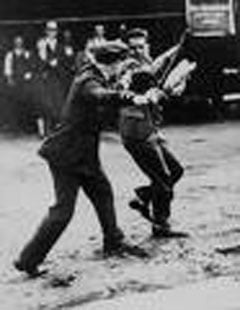
How to win strikes
Harry DeBoer wrote this pamphlet in 1987 to inspire
a new generation of trade union activists with the militant traditions of US
labour’s past. As a young man he worked in the Minneapolis coal yards and
became caught up and radicalised in the Minneapolis ‘teamster rebellion’ of
1934. As he makes clear, this was a model strike, and it was led by Marxists.
(See our review of ‘Teamster Rebellion’ by Farrell Dobbs, another Trotskyist
and strike leader.)