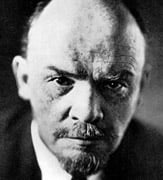
Shostakovich: The musical voice of the Russian Revolution
From this year’s Revolution Festival, Peter Kwasiborski, introduces Shostakovich.
108 years ago today, Lenin and the Bolsheviks achieved the impossible: they led millions of workers and peasants in a successful socialist revolution. But which events, struggles, and ideas led to that victory? How did Lenin become Lenin?
The Bolshevik party was the only party in history which was able to lead the working class in a successful socialist revolution. In this episode, leading RCP member Rob Sewell explains how Lenin built this force, and the lessons to guide us in the struggle for revolution today.
This week marked 120 years since the Bloody Sunday massacre, in which Tsar Nicholas II massacred workers peacefully delivering a petition to his palace. This brutal repression radicalised the masses of Russia, sparking the mighty 1905 Russian Revolution.
Today is the anniversary of the 1917 October Revolution, which saw the working class seize power for the first time ever. We are republishing a lesser-known article by Lenin, which outlines the theory of permanent revolution in relation to the Russian Revolution.
On this day in 1917, Lenin returned to Russia, arriving into Petrograd’s famous Finland Station. This was the beginning of his one-man struggle to politically reorient the Bolshevik Party – a vital stepping stone towards the October Revolution.
Continuing our series on the life and ideas of Lenin, 100 years after his death, Dylan Thomas explains how Lenin’s emphasis on the need for class independence was pivotal in arming the Bolsheviks for leading the working class to power in 1917.
We publish here the editorial from the latest – Lenin themed – issue of our quarterly theoretical magazine, ‘In Defence of Marxism’, in which Rob Sewell discusses the life and ideas of the great revolutionary leader, a century after his death.
100 years after his death, there are many so-called ‘Marxists’ who lay claim to Lenin’s name and legacy, whilst defending policies and methods that would be anathema to the great revolutionary. We base ourselves on genuine communist traditions.
In this podcast, Nelson Wan discusses the artistic and creative emancipation unleashed by the October Revolution, which saw individual geniuses rise to prominence, and gave ordinary people access to the world of art and culture.
In this podcast series, Alan Woods takes us through the key events of the 1917 Russian Revolution. In the final episode of the 1917 series, Alan Woods discusses the October Revolution, when the workers and peasants of Russia seized power.
Today marks the 106th anniversary of the Bolshevik Revolution of 1917, when the working class seized power in Russia. To celebrate this magnificent historic event, we invite you to listen to the IMT’s new podcast: Spectre of Communism.
In this podcast series, Alan Woods takes us through the key events of the 1917 Russian Revolution. In part five, Alan Woods discusses the failed coup attempt by General Kornilov and the impact this had on the political consciousness of the masses.
In this podcast series, Alan Woods takes us through the key events of the 1917 Russian Revolution. In part four, Alan shows that revolution is not a one-act drama; it is not a linear process of radicalisation and ascent. Within any revolution, there are ebbs and flows.
In this podcast series, Alan Woods takes us through the key events of the 1917 Russian Revolution. In part three, Alan explores the June Days, where the Bolsheviks, armed with correct theory and tactics, went from a small force to the only serious opposition to capitalism.
One hundred years ago, Leon Trotsky and his supporters founded the Left Opposition, in order to defend the revolutionary traditions of Lenin and the Bolsheviks, and the ideas of genuine Marxism. Today, we stand on the shoulders of these giants.
In this podcast series, Alan Woods takes us through the key events of the 1917 Russian Revolution. In part two, Alan discusses Lenin’s April Theses and the need to theoretically rearm the Bolshevik leadership.
In this podcast series, Alan Woods takes us through the key events of the 1917 Russian Revolution. In part one, Alan covers the events of the February Revolution, when the masses overthrew the centuries-old Tsarist autocracy.
In ‘The Revolution Betrayed’ Leon Trotsky uncovers the main processes that led to the degeneration of the Russian Revolution, and the transformation of the Soviet Union into a Stalinist bureaucratic regime.
A recent theatrical adaptation of John Reed’s ‘10 Days That Shook the World’ portrays the inspiring events surrounding the 1917 Russian Revolution. In doing so, this play highlights the key task today: to build a Bolshevik organisation.
A new release from Wellred Books looks at the gains made by-and-for women thanks to the Bolshevik Revolution. Natasha Sorrell provides a valuable summary of this process, discussing how communists can fight for the emancipation of women today.
In this talk, Natasha Sorrell discusses how the Bolsheviks approached the women’s question, the gains that were won in the Revolution, and the conditions that led to their reversal.
Keelan Kellegher discusses the Stalinist degeneration of the USSR that led to its demise.
Today marks the centenary of Lenin’s ‘Testament’, in which he took up the struggle against Stalin and the bureaucratisation of the Soviet state. His Testament – suppressed for decades – dispels the slander that Stalinism was the continuation of Leninism.
We celebrate today’s anniversary of the 1917 Russian Revolution by republishing this article by Alan Woods. 105 years on, we proudly defend the conquests of the October Revolution, and the inspiring example of Lenin, Trotsky, and the Bolsheviks.
Rob Sewell discusses the life and ideas of Vladimir Lenin, and what revolutionary Marxists can learn from them.
104 years ago, the Russian working class seized power. To celebrate the anniversary of these remarkable events, we are excited to publish the following eye-witness account of revolutionary Russia, including never-before-seen photographs.
At this time 100 years ago, the Communist International held its second congress, with discussions and debates that laid the theoretical basis for the worldwide socialist movement. James Kilby looks back at this historic event.
Today, 22 April, marks the 150th birthday of Vladimir Lenin, the great revolutionary leader. Whilst the bourgeois historians and liberals slander him, we celebrate the life and ideas of Lenin – ideas that are more relevant now than ever.
The first few months following the 1917 October Revolution in Russia were a frantic period for the new Soviet government of workers and peasants. Lenin and the Bolsheviks spent much of this time issuing decrees and appeals, designed to put their programme into effect and further win over the hearts and minds of the masses. James Kilby looks at the opening months of Soviet power.
Continuing our series of articles and videos celebrating the 100th anniversary of the Russian Revolution, Rob Sewell, editor of Socialist Appeal, answers the myths and distortions put forward by bourgeois academic and historian Orlando Figes in his recently re-released book, A People’s Tragedy.
We continue our week of articles and videos celebrating the centenary anniversary of the 1917 October Revolution with this video talk by Alan Woods.
No other event in human history has been the subject of more distortions, falsehoods and fabrications than the Russian Revolution. We publish here Alex Grant’s list of the 10 biggest downright lies about Lenin, the Bolsheviks, and the 1917 October Revolution – and the truth behind the myths.
Speaking at the recent October Revolution festival in London (on 20th October 2017) to mark the centenary of the 1917 Russian Revolution, Esteban Volkov – Leon Trotsky’s grandson and director of the Trotsky Museum in Mexico – discusses the significance of the Revolution, 100 years on.
Continuing our week of articles and videos in celebration of the centenary anniversay of the 1917 October Revolution, we publish here extracts from John Reed’s article entitled Soviets in Action, in which the American socialist writer describes the workers’ democracy that existed in Russia following the Revolution.
In this talk at a recent day school on the Russian Revolution, Daniel Morley of the Socialist Appeal editorial board discusses the question of revolutionary insurrection, examining how Marxists approach the question of the seizure of power.
In his latest video outlining the key events of 1917, Alan Woods – author of Bolshevism: the Road to Revolution – discusses the October Revolution, when the workers and peasants of Russia seized power.
Continuing our week of articles and videos celebrating the centenary anniversary of the 1917 October Revolution, Ben Curry discusses the build up to the insurrection on 25th October (7th November in the new calendar) and the decisive role played by Lenin in the debates surrounding the question of whether the time was right for the soviets to seize power.
This week marks the 100th anniversary of the 1917 October Revolution in Russia, which took place on the night of 7th November (25th October in the old calendar). To mark this great historic event, we are publishing articles and videos all week looking at different aspects of the Revolution. To begin, we publish here an account of the insurrection as it happened.
To mark the centenary of the Russian Revolution, we present this original documentary by the IMT celebrating the life and accomplishments of one of the revolution’s main leaders: Leon Trotsky.
In this latest video from our series on the 1917 Russian Revolution, Alan Woods – author of “Bolshevism: from Revolution to Counter-Revolution” – discusses the failed coup attempt by General Kornilov and the impact this had on the political consciousness of the masses.
This week marks 100 years since the attempted coup by General Kornilov in Russia, the aim of which was to completely crush the revolution. Dejan Kukic examines the events leading up to the Kornilov affair and explains how the working class, headed by the Bolsheviks, was able to defeat this counter-revolutionary putsch.
Continuing our commemorations of the centenary anniversary of the Russian Revolution, we republish here extracts from Leon Trotsky’s History of the Russian Revolution, in which the author explains the events surrounding the attempted – and failed – coup by General Kornilov and the forces of reaction surrounding him.
Niklas Albin Svensson of the International Marxist Tendency discusses the events of the 1917 Russian Revolution: from its opening scenes in February; through the return of Lenin in April; to the suppression in July.
Alan Woods, author of “Bolshevism – the Road to Revolution”, discusses the “July Days” of the 1917 Russian Revolution. These events marked a turning point in the revolution. From this moment on, dual power had ended. Only two options remained: either the forces of reaction would crush the revolution, or the Bolsheviks would lead the masses to take power.
The “July Days” of 1917 (3-7th July, or 16-20th July in the new calendar) marked a turning point in the Russian Revolution. A series of spontaneous armed demonstrations alarmed the Provisional Government leaders, who acted to repress the Bolsheviks and drive Lenin into hiding. After this point, it was a question of revolution or counter-revolution.
Alan Woods, author of “Bolshevism: the Road to Revolution”, discusses the “June Days” of the 1917 Russian Revolution, when tensions in Petrograd began to rise and the masses turned towards the Bolsheviks and their slogan of “All Power to the Soviets!”
R.H. Bruce Lockhart was a British Government agent in Russia before and after the Bolshevik Revolution of 1917. His first-hand experiences and lucid observations, published in 1932 as a book entitled Memoirs of a British Agent, provide a fascinating account of the Russian Revolution and its key characters.
On the centenary of the Russian Revolution, for those interested in understanding the causes, events and consequences of October 1917, there are dozens of books and articles to get stuck into. The Last of the Tsars: Nicholas II and the Russian Revolution by Robert Service, according to Ben Gliniecki, is not one of them.
On 16th April 1917, Lenin returned to Russia in the midst of the Revolution. Lenin’s return marked a turning point for the Bolshevik Party – the beginning of a process of politically preparing the party for the seizure of power by the working class. We republish here an extract from Leon Trotsky’s History of the Russian Revolution about the political rearming of the Bolsheviks.
Alan Woods discusses the events surrounding Lenin’s return to Russia on 16th April 1917.
Hamid Alizadeh continues his series looking at the developments taking place in Russian in the lead-up to the outbreak of the February Revolution, which began 100 years ago. The war and deteriorating living standards were having a radicalising effect on the workers, peasants and soldiers of Russia, preparing the ground for the revolutionary events of 1917.
To commemorate the centenary of the Russian Revolution, Alan Woods, editor of In Defence of Marxism, provides a timeline analysis of 1917. To begin this series, Alan examines the events of the February Revolution, which began on International Working Women’s Day, when the masses entered onto the scene of history to overthrow the hated Tsarist monarchy.
One century ago, in February 1917, the Russian masses rose up to overthrow the hated and rotten Tsarist regime. This marked the beginning of the 1917 Russian Revolution. Alan Woods examines the events surrounding the February Revolution, including the establishment of the Provisional Government and the stance of Lenin and the Bolsheviks.
To commemorate the centenary of the Russian Revolution, Alan Woods, editor of In Defence of Marxism, provides a timeline analysis of 1917.
1917 was the year the Russian revolution changed the course of world history. But before the masses took to the stage, a whole period had prepared the fall of Tsarism. While the reign of Nicholas II appeared strong on the surface it was rotten to the core. Hamid Alizadeh explores the build up to one of the most monumental and inspiring events in human history.
One hundred years ago the Russian Revolution shook the capitalist world order to its foundations. We launch here our official 1917 centenary campaign, commemorating the historic events of the Russian Revolution.
Rob Sewell replies to the slanders and distortions presented in the Evening Standard by liberal historian Victor Sebestyen about Lenin, the Bolsheviks and the Russian Revolution in relation to the exhibition Russian Art 1917-1932 at the Royal Academy.
In the second of a series of videos celebrating the 100th anniversary of the 1917 Russian Revolution, Alan Woods – editor of In Defence of Marxism, www.marxist.com – examines the lies and slanders used to attack the Revolution, the Bolsheviks, and the ideas of Lenin and Trotsky.
In the beginning of a series of videos celebrating the 100th anniversary of the 1917 Russian Revolution, Alan Woods – editor of In Defence of Marxism, www.marxist.com – examines the lies and slanders used to attack the Revolution, the Bolsheviks, and the ideas of Lenin and Trotsky.
This year marks the 100th anniversary of the October Revolution. The apologists of capitalism try to comfort themselves with the thought that the collapse of the USSR signified the demise of socialism. But what failed in Russia was not socialism but a caricature of socialism. Alan Woods replies to the lies and slanders thrown against the Russian Revolution.
In the beginning of a series of videos celebrating the 100th anniversary of the 1917 Russian Revolution, Alan Woods – editor of In Defence of Marxism, www.marxist.com – examines the lies and slanders used to attack the Revolution, the Bolsheviks, and the ideas of Lenin and Trotsky.
Today is the 99th anniversary of the Russian Revolution, an event which altered the entire course of human history. For the first time, the working people took power into their own hands and began the task of the socialist re-construction of society. We republish here an article written in 1992 by Alan Woods, which gives an excellent overview of the revolution and highlights its main lessons.
In these extracts from “Year One of the Russian Revolution”, published in 1930, Victor Serge explains how the events of 1917 reflected the revolutionary forces within society and outlines the key role of the Bolshevik Party and its leadership in the October Revolution, which took place 98 years ago.
To commemorate the anniversary of the October Revolution of 1917, we publish here a short speech by Alan Woods on Sergei Eisenstein’s masterpiece “October – Ten Days that Shook the World”.
Adam Booth provides an analysis of 1917, outlining the key processes during the Revolution, and drawing out the main lessons for Marxists today.
Ninety years ago, on 21st January 1924, Vladimir Lenin, the leader of the Russian Revolution, died from complications arising from an earlier assassin’s bullet. Rob Sewell looks back at the life and ideas of Lenin, the great Marxist and revolutionary leader.
At the recent Marxist summer school, Alan Woods – author of Bolshevism: The Road to Revolution and editor of In Defence of Marxism – explores the ideas of Leninism, Trotskyism, and the Bolshevism, and discusses the vital role of Lenin and Trotsky in the Russian Revolution of 1917.
This month is the 95th anniversary of the Russian Revolution of 1917. During this month we will be publishing a number of articles to mark this historic event. The article by Ted Grant posted here was first published in 1975 to mark the 58th anniversary. Extended extracts have been reproduced in this month’s edition of Socialist Appeal, mainly dealing with the events of 1917. However the full article is worthy of study and it is that version will be made available here.
The July days in Russia in 1917 were crucial. Without the Bolshevik
Party the outcome could have been a devastating defeat. The reaction
could have gained more ground. Thanks to the Bolsheviks the events after
the July days illustrated the weakness of the reaction and the role of
the reformists and prepared the ground for the events up to October
This article by Trotsky was written in the immediate aftermath of
the July Days, following the (temporary) defeat of the spontaneous
demonstrations of the Petrograd workers. 95 Years on the revolutionary
movements in the Arab world over the past 18 months and the turmoil in
Spain and pre-revolutionary situation in Greece demonstrate that the
events of 1917 are worthy of study for more than academic interest.
We conclude our series of articles on the Russian revolution of 1917
with an item first published online in 2007 to mark the 90th anniversary
itself. It is being reproduced here and in the current issue of
Socialist Appeal in a revised form.
As part of our build up to the 93rd anniversary of the Russian
Revolution of Nov 1917, we reproduce the second of two extracts from
Lenin’s widow Krupskaya’s book ‘Reminiscences of Lenin." Dealing wth the
October events and the build up to the revolution itself, this account
provides a marvelous picture of the unfolding struggle.
As part of our build up to the 93rd anniversary of the Russian
Revolution of Nov 1917, we reproduce the first of two extracts from Lenin’s widow Krupskaya’s book
‘Reminiscences of Lenin." Dealing wth the October events and the build
up to the revolution itself, this account provides a marvelous picture
of the unfolding struggle.
As part of the build-up to the 93rd anniversary of the Russian
Revolution of November 1917, we reproduce here chapter 26 of Leon
Trotsky’s My Life, headed From July to October.
March 8th is International Working
Women’s Day – originally instituted not as a day to celebrate, but as a day for
militancy and action. Now many liberal institutions and feminist organizations
recognize International Women’s Day, but few acknowledge its roots or its
historical significance. They have in fact attempted to remove the class
content of this day of struggle.
The year 2009 marks the 85th anniversary of the death of the man who, together with Leon Trotsky, made a decisive contribution to the cause of socialism and the working class in this century, Vladimir Ilyich Lenin. To mark the occasion, we are republishing this article which was originally written to commemorate the Lenin centenary in 1970.
Alan
Woods was recently interviewed by the Argentine magazine Sudesta on the aftermath of the Russian Revolution. He deals with
the gradual political degeneration of the Revolution and its usurpation by the
Stalinist bureaucracy, discussing the political issues raised in the course of
the struggle. Unease at the rise of bureaucratic rule was signalled by Lenin in
his last years and by Trotsky. As Alan says, “In 1923 Trotsky launched the
Platform of the Opposition, based on a defence of the Leninist principles of
workers’ democracy and proletarian internationalism. He began a struggle
against bureaucratic tendencies in the state and Party. This was the beginning
of the Left Opposition in the Soviet Union and internationally. The struggle
between the Left Opposition and the Stalin faction was at bottom a class
struggle, which reflected the contradictory interests between the working class
and the rising bureaucracy.”
"Petrograd is in an unprecedented catastrophic condition. There is
no bread. The population is given the remaining potato flour and
crusts. The Red Capital is on the verge of perishing from famine,"
stated Lenin. "The political situation has become extremely critical
owing to both external and internal causes." This view of Lenin’s summed up the horrendous plight of the
Russian Revolution in May 1918, some six months after the successful
Bolshevik insurrection and the introduction of Soviet rule. The
"external and internal causes" which threatened the Revolution were the
aggressive actions of the imperialist powers, foreign blockade, the
organisation of internal counter-revolution, and the economic sabotage
of the landlords and capitalists.
"The October revolution laid the foundation of a new
culture, taking everybody into consideration, and for that very reason
immediately acquiring international significance. Even supposing for a
moment that owing to unfavourable circumstances and hostile blows the
Soviet regime should be temporarily overthrown, the inexpungable
imprint of the October revolution would nevertheless remain upon the
whole future development of mankind." Trotsky – The History of the Russian Revolution
This instalment, in a series of articles published by Socialist Appeal over the year that marks the 90th anniversary of the Russian Revolution, looks at the tumultuous events of the July days in Petrograd. What attitude Lenin and Trotsky took towards the movement of the workers in the capital is a valuable lesson in the tactical flexibility of the Bolsheviks. The impotence of the Kornilov reaction that followed demonstrates the irresistable power the working class wields when it is united.
In his article (The significance of Lenin’s April Theses
1917 ) Darrall Cozens explained how Lenin rearmed the Bolshevik Party
in 1917. Continuing our series on the Russian Revolution, he tells how the
revolutionaries developed from being a small group when the
February Revolution broke
out, to become the main alternative to the new
establishment by June of that year.
This month marks 90 years since Lenin returned to Russia from exile. He immediately embarked on the task of convincing not only the mass of workers, but also the Bolshevik leadership, that the tasks of the revolution were socialist, that what was needed was for power to pass to the hands of the Soviets.
Today, November 7th, we celebrate the 89th anniversary of the 1917
Russian Revolution by republishing an article written by Ted Grant,
originally published in 1967 on the revolution's 50th anniversary. Even
at a time when the bureaucracy seemed almighty and irremovable this
article confidently predicts the downfall of the Stalinist regime.
Then, the political revolution, i.e. the workers coming to power,
seemed a concrete possibility, especially in the light of the 1956
Hungarian events. Unfortunately, because there was no party capable of
leading the workers, the collapse of the Stalinist regime led to the
capitalist counter-revolution. However, this article clearly
demonstrates that the genuine Marxists, the Trotskyists, never had any
illusions in Stalinism and always struggled for its overthrow and for
the workers to take back the power they had briefly held after the 1917
revolution.