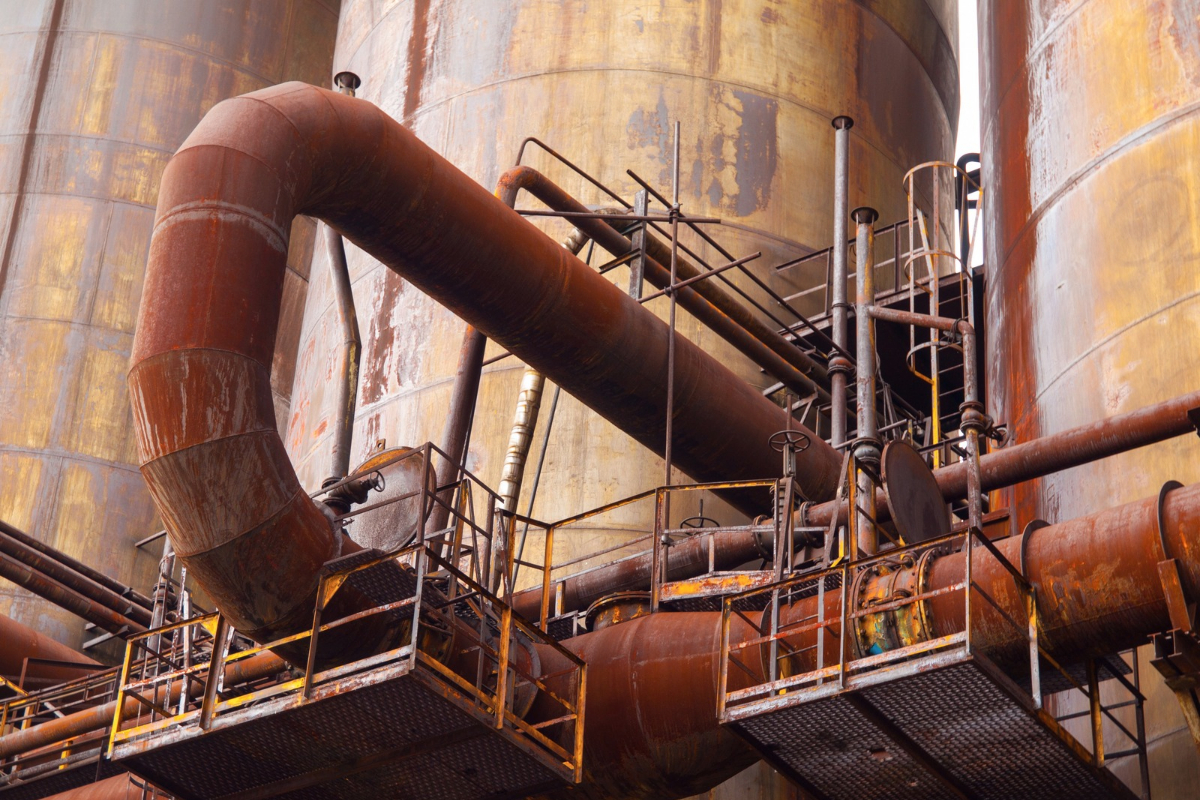

The rumble of industry has been replaced by an eerie silence at three plants at Saltend chemicals park in Hull. Workers hold their breath while their livelihoods sit in limbo.
The pipes that wrap around solid steel frames like a strange sea monster are shiny but hollow. They act as a monument to the state of British industry.
Billionaire Sir Jim Ratclifffe, CEO of chemical giant Ineos, recently announced the mothballing of Europe’s last remaining world-scale acetyl production facilities. Acetyls are key to producing a whole variety of commodities – from aspirin to vinegar and decaffeinated coffee – and their production supports 4,000 jobs across Europe.
Rising energy costs have proven to be the last nail in the coffin for many industries that have previously survived deindustrialisation in Britain. This shutdown is merely a foreshock of worse things to come.
‘Reindustrialisation’?
Burnham and Healy wax poetic about their so-called plans for ‘reindustrialisation’.
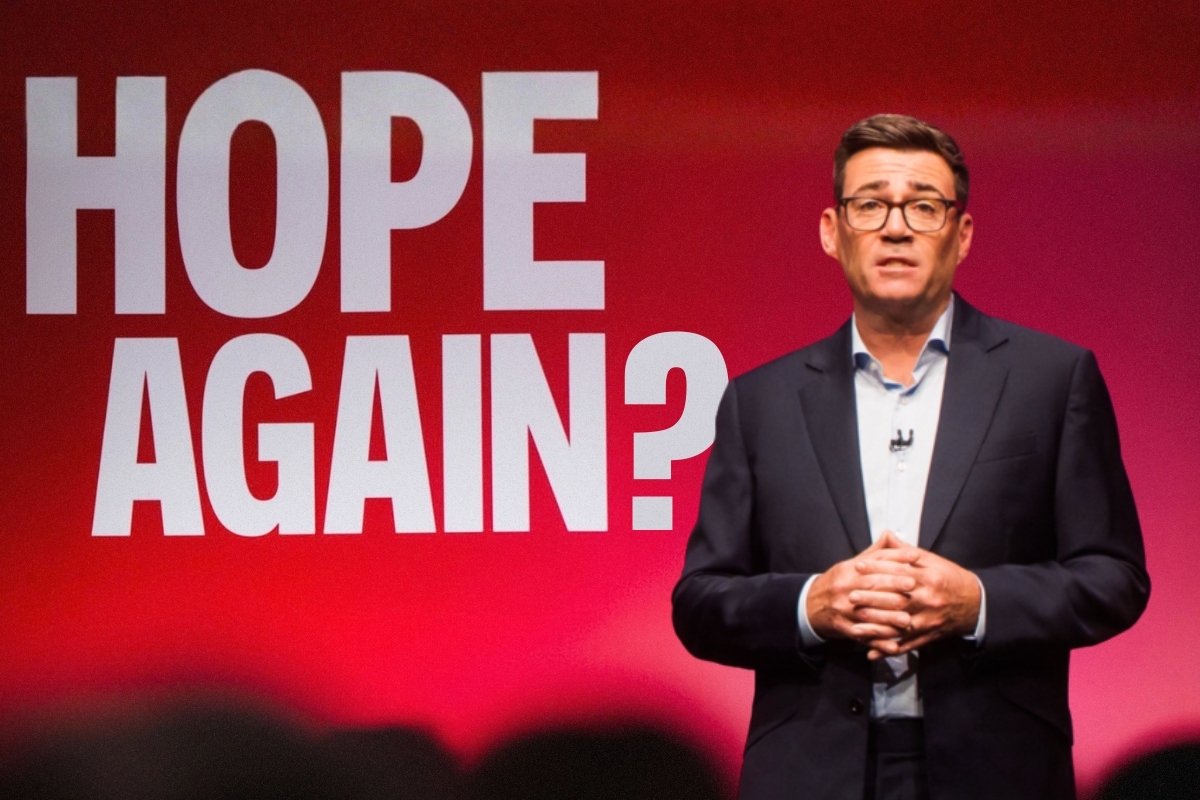
They tell us that once, we had politicians (Thatcher) who wanted to deindustrialise; and now, we have politicians (Labour) who want to reindustrialise – so let’s get cracking!
Manufacturing bosses paid £6,600 to attend (and schmooze ministers) at Labour’s annual conference. They settled in for Labour’s grand speeches about reindustrialisation, praying for some genius scheme to save their businesses… but were left sorely disappointed.
Economist Liam Sides, a director at Oxford Economics, put it bluntly: “I personally cannot think of an advanced economy less suited for an industrial resurgence.”
The UK chemicals industry has been falling behind its rivals for decades, and now can no longer compete. China brought online huge capacity for acetyls in 2025 and 2026, and can now effectively wash away the whole acetyl industry in Europe.
This imbalance is further compounded by higher energy prices due to the wars in Ukraine and the Middle East – which, by the way, Burnham and co. are directly involved in prolonging.
Capitalists only invest to make a profit. But the amount of capital required to achieve a competitive level in the UK is unappetising to private companies like Ineos. This rules out any industrial resurgence without significant government intervention – but this is not feasible either given the dire straits of the state budget.
The government recently conjured up a £350 million supposed ‘lifeline’ for the chemicals industry. Meanwhile, China invested over £65 billion – 186 times the former figure – into coal-based chemicals industries to buffer itself from shocks to oil and gas supply caused by the war on Iran.
These figures cast a bleak picture: no grand scheme will save British manufacturing.
Biting the bullet
With such dire prospects for investment, the bosses are desperate to lap up some of the vast amount the government is planning for defence spending (£298 billion over the next four years).
The Yorkshire Regional Defence & Security Cluster, for example, was launched in June to formalise the relationship between local industry and the war machine. The mayor of Hull and East Yorkshire, Luke Campbell, boasted that “from Leconfield and the University of Hull (UoH) to our ports, supply chains and industrial businesses, we have assets that matter to UK defence”.
As an aside, this explains why UoH keeps kicking communist students off campus for criticising the imperialist war machine. UoH’s application to the Defence Universities Alliance was rejected, sadly for management; but the university has still been courteous enough to allow BAE Systems to sit on the industry advisory board for the engineering department, giving this genocide-accomplice company’s bosses a direct say over what is taught and researched at the university.
This genuflection at the altar of defence businesses, however, has not saved the university from major course closures and staff layoffs.
Elsewhere in Yorkshire, the press holds up Sheffield and Rotherham as success stories – areas with booming industry based on high-tech manufacturing. Even this, however, has come largely off the back of government defence spending, such as the nationalisation of Forgemasters to produce parts for the Royal Navy.
The shift from cutlery to artillery has led to a small jobs boost, but it has replaced the old industrial armies of tens of thousands with a few thousand specialists. This has left the rest trapped in a purgatory of low-skill, low-wage jobs in the service industry.
Ruins of industry

The impact of lost industry can be felt viscerally in towns like Middlesbrough, which has been in the news recently after a fatal crash involving teenagers driving the wrong way down the road, and the wave of gang violence that followed. Middlesbrough was once one of Britain’s richest towns, with the nickname ‘ironopolis’ – specialising in iron, steel, and coal.
The gutting of heavy industry has pulled the heart out of the city. Without its steady rumble, children are left with the prospect of spending their lives working dead-end jobs in JD Sports or Macdonald’s, or joining drug gangs.
Only 66 percent in the city are in work and in parts of the town, children are more likely than not to grow up in poverty.
This is the future that British capitalism has to offer. Middlesbrough is only peculiar in that it was deindustrialised earlier than other towns and cities.
The billionaire class weeps about deindustrialisation because of the threat to their profits and to ‘national security’. On the other side, countless young people are having their future robbed from them.
Workers are being pushed to their limits. Another rumbling is starting up – the rumbling of millions of workers demanding their future. And this rumbling is not as easy to turn off as a chemical plant, and is a million times more explosive.