
On 28 March, the Trades Union Congress (TUC) – alongside many other organisations – is organising a “unity march” against Reform, the far right, and racism.
Many workers and young people are rightly worried about racism, Islamophobia, and migrant-bashing – the preferred tools of the ruling class to distract from capitalist austerity, war, and social decay.
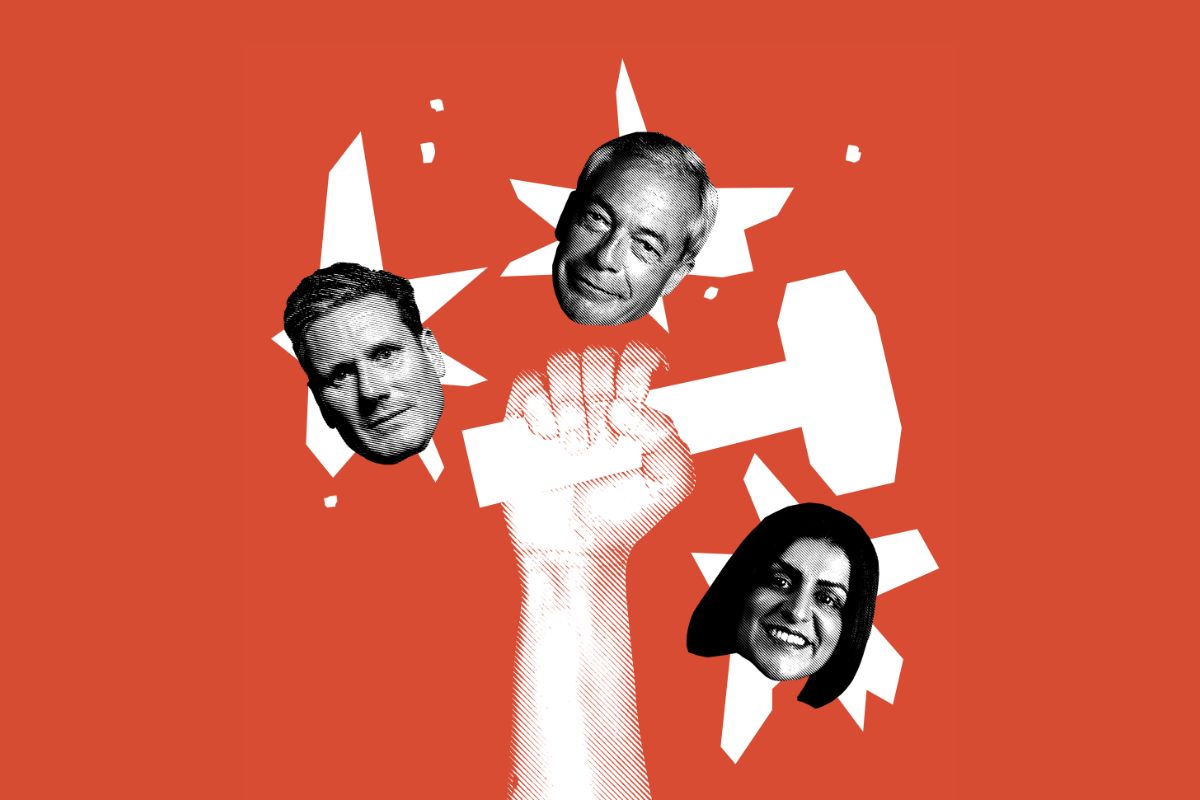
Farage’s Reform has threatened to create a British version of the USA’s anti-immigration police, ICE. And routinely, Starmer tries to outflank Reform from the right on the question of migration: from his infamous “island of strangers” speech; to his constant boasting about his government’s achievements when it comes to deportations.
All of this bolsters the racist scum in society – far-right and fascist layers that, whilst still small in number, have a disproportionate impact when they terrorise migrants, Muslims, and minorities.
Class collaboration
Workers have a big stake in the fight against these reactionaries.
For all of Farage’s pro-worker demagoguery, he and his chums are now threatening to scrap trade union rights if they come to power. Furthermore, Reform is promising to implement the austerity programme that the bankers and bond markets demand.
Unfortunately, however, the programme of the trade union and ‘left’ leaders – gearing towards the 28 March demonstration – is politically lacking, to say the least.
The demo organisers’ main demand for “love and hope” is completely out of step with the class anger and hatred that most ordinary people feel: the youth who despise Farage and his gang of Tory rejects; workers who quasi-unanimously loathe Starmer and his ministers; and the vast majority of society that wants to hang the Epstein class as a whole.
It is precisely this kind of woolly, liberal politics – epitomised by the ‘Stand Up To Racism’ coalition – that failed to mobilise workers on 13 September, when 100,000 people turned out in London for Tommy Robinson’s ‘Unite the Kingdom’.
By looking for the lowest common denominator upon which to assemble the broadest possible front against the right, the TUC leaders are pursuing a class-collaborationist approach. This can be seen from the list of liberals, lords, and preachers who the unions are publicly joining forces with on 28 March.
Rather than strengthening the movement, all this does is alienate workers, on the left and on the right – some of whom have ended up looking to Reform as a supposedly anti-establishment alternative.
Community, togetherness…and lots of dancing 💃
That’s what 28 March is going to look like.
People from all backgrounds coming together to say – we’re united against the far right.
Will you be there? pic.twitter.com/znQlKjh09k
— Together Alliance (@UKTogetherAll) March 24, 2026
No capitalism without racism
By taking a purely moralistic stance, the trade union leaders ignore the fact that racism and migration are, at root, class questions.
The ruling class use discrimination and ‘culture war’ questions to divide the working class – not just politically, but in the workplace too.
By creating an ‘underclass’, both in law and in practice, the bosses and their representatives intensify capitalism’s race to the bottom: ramping up competition between the native and migrant workers, for example, over jobs and pay; for housing and services.
This creates genuine concerns amongst workers, providing fertile ground for reactionary demagogues like Farage and Robinson. In the context of austerity, inflation, and stagnating wages, with the working class squeezed on all sides, these opportunists are able to sweep in and blame migrants – and other scapegoats – for the problems facing workers.
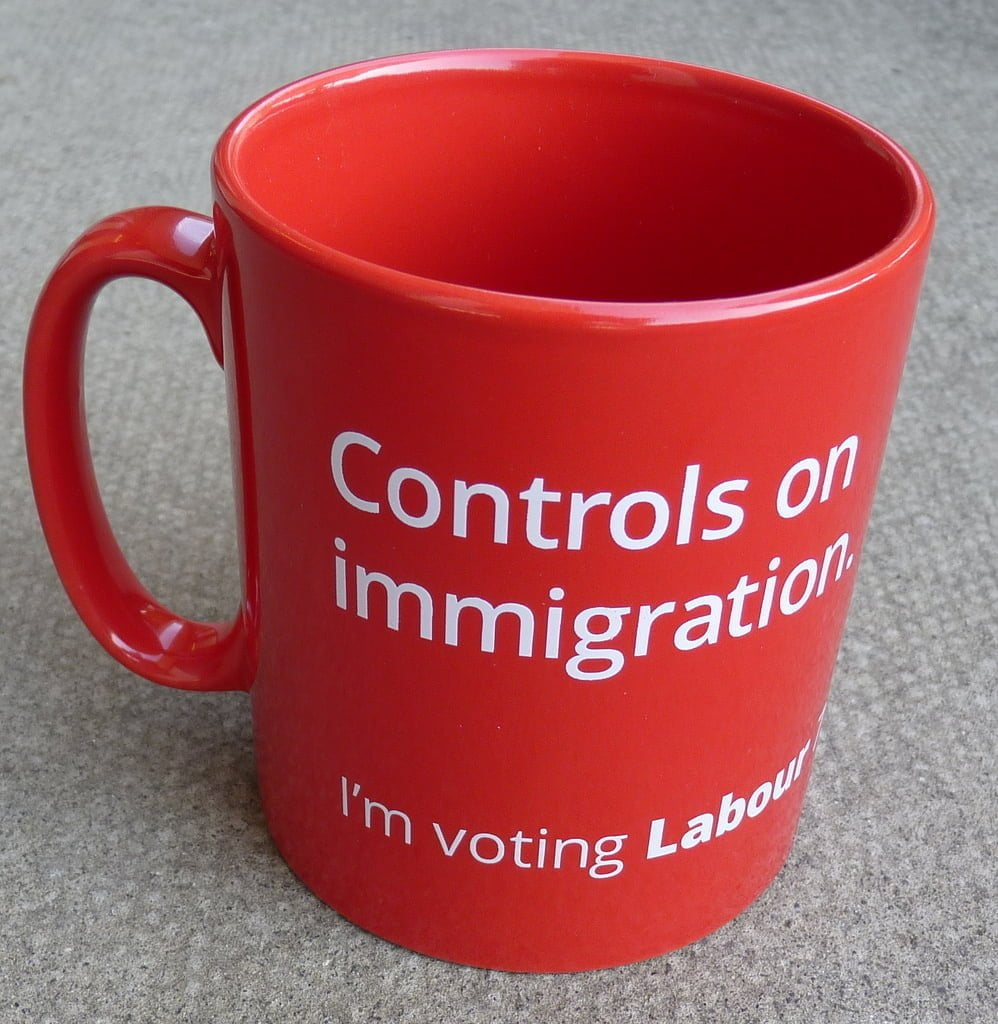
‘Stopping the boats’ is sheer culture-war rhetoric. Immigration controls, repression, and the establishment’s ‘hostile environment’ only achieve one thing: to further divide, distract, and exploit the working class, to the benefit of the bosses and their profits.
This is why the labour movement should fight against racism and for open borders – not by aligning with one or the other side of the ruling class, but by uniting workers on a class basis, in a common struggle against the real enemy: the billionaires and bankers.
Popular frontism
Unfortunately, the trade union leaders do not see the question of racism in class terms. At best, they view racism as simply a nasty idea to be tokenistically denounced, rather than as a weapon wielded by the ruling class; as a putrid product of the toxic capitalist system.
This outlook flows from their reformist politics. And it goes hand-in-hand with their narrow, parochial mindset.
The idea that they could propose a bold socialist alternative is alien to the trade union leaders. Instead, as seen with the 28 March demonstration, they tie themselves to the so-called ‘progressive’ liberals, looking for a solution to workers’ problems on a capitalist basis – which is no solution at all.
Rather than joining a pessimistic popular front – consisting of a motley crew of celebrities, charities, and religious groups – the unions should be doing everything in their power to raise class consciousness and strengthen the unity of the working class by fighting for material demands.
This means waging a militant class struggle for rights, pay, and jobs across the board, and fighting for a clear socialist programme that can cut the ground from underneath the feet of Farage, Robinson, and all the rest of these charlatans.
Organise the unorganised
The first step in this must be to organise and unionise the most oppressed and exploited layers of the working class.
Any unionisation drive must be done by offering workers a militant perspective, not meaningless perks and tepid politics.
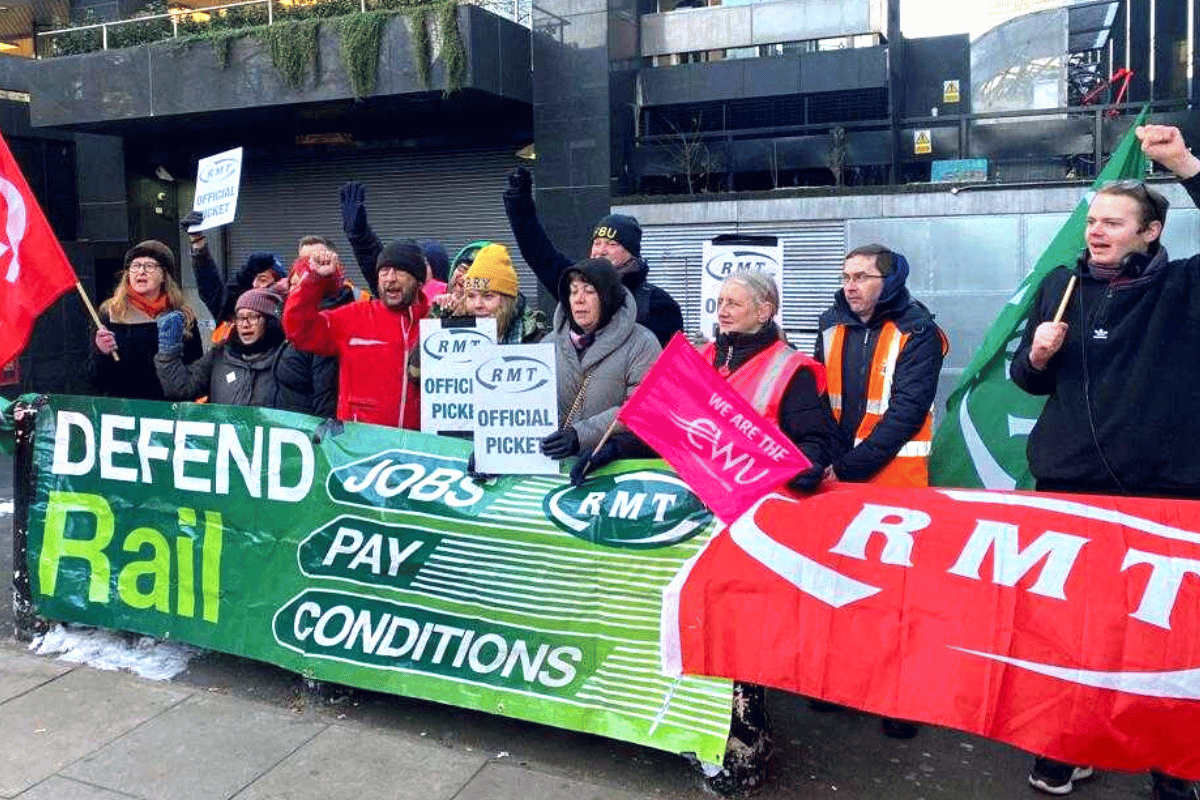
This should include a fighting campaign against victimisation and deportation threats, alongside bold demands backed up by strikes and occupations: to reverse privatisation and expropriate the outsourcing giants that heavily rely on migrant labour; for proper pay rises; for better terms and conditions, and so on.
In 2022, for example, the RMT organised a strong campaign amongst cleaners employed by private contractor Churchill. This was linked to the need to organise all sections of workers across the railways.
The union’s demands included: a major wage increase, from £8.91 to £15 per hour; direct employment by the railway firms; and the right to company sick pay. This was backed up by intense rounds of strike action.
Unfortunately, energetic campaigns such as this are lacking amongst the bigger, cross-sectional unions – Unite, Unison, and GMB – that have the resources to tip the scales in favour of workers nationally.
In fact, Unison nominally organises numerous outsourced workers across the public sector: cleaning and security staff in universities, for example. But the bureaucracy consistently puts the brakes on industrial militancy, amongst these layers and more widely.
Instead of mobilising workers against the employers, or systematically organising in the workplace, union officials lean on identity politics, and promote lip-service campaigns against racism and Reform. As a result, grassroots engagement remains low.
In many cases, smaller unions like the IWGB (Independent Workers of Great Britain) have attempted to fill the vacuum, taking a lead in organising migrant workers and other precarious layers. Whilst generally more militant, however, these unions generally lack the weight to launch widespread, sustained industrial action.
Mass struggle against oppression
There is, furthermore, a tendency for the unions to rely on legislation and the courts – alongside arbitration with the bosses – to protect workers and their rights.
The defence of workers and union members, however, should not just be carried out on a legal basis, or through negotiations behind closed doors.
On the contrary, the power of the organised working class lies in their mass strength; in workers’ ability to paralyse industries and workplaces, and thereby hit the bosses in the profits.
The last few years provide countless examples that demonstrate the power of mass collective action to effectively fight against state repression and far-right violence: from numerous local protests against immigration raids; to working-class communities turning out to block the far right in the summer of 2024; to the inspiring city-wide movement in Minneapolis against ICE, more recently, which culminated in a general strike.
Notably, however, all of these movements have primarily succeeded thanks to grassroots mobilisation – but without the active involvement of the trade unions, which would have greatly increased their potency and potential.
This ultimately comes down to a question of leadership. For the trade union leaders, political questions – including the fight against racism – are incorrectly seen as separate from the issues ‘directly’ facing their members, such as wages and jobs .
In both cases, meanwhile, the methods they pursue are tepid and wishy-washy.
When it comes to economic demands, their preference is for appeals to the employers, with a reluctance to call industrial action. And when it comes to the political front, email circulars, occasional protests, and broad cross-class campaigns to lobby politicians are the best that they can muster.
In fact, a militant struggle against racism and the far right would strengthen the fight for better pay and conditions, etc. – and vice-versa.
Mass resistance against deportations through strike action, for example, or physically confronting the far right and chasing them out of town, would massively increase the confidence of the working class in its own strength.
That, in turn, would pave the way for workers to go on the offensive more broadly, against the bosses and the government, in pursuit of class demands.
Cut across the culture war
Conversely, a proper struggle against the employers and the elites would unite the working class in action – thereby cutting across the culture war: the racism whipped up by the ruling class to divide workers against each other.

We saw this during the 2022-23 strike wave. 62 percent of the public was sympathetic to the RMT and its strike action, which sparked this blaze of industrial militancy. Then-RMT general secretary Mick Lynch, meanwhile, became a working-class icon, due to his uncompromising stance in media interviews.
The attempts of the Tories, at that time, to pit one section of the working class against one another failed. Smears and attacks on the strikers found no audience. And media propaganda around migration and other culture-war issues faded into the background.
The same was true in Minnesota this year. The heroic struggle of the working class and youth there inspired others across the rest of the USA and internationally – and shifted opinion firmly against ICE and Trump.
Most importantly, any similar such struggle in Britain today would put class questions front and centre. This would force demagogues like Tommy Robinson and Nigel Farage to pick a side – and no doubt they would come down on the side of the bosses and billionaires.
Industrial action and class struggle is therefore the best way to combat these reactionaries and destroy their ‘anti-establishment’ credentials.
The questions of racism, repression, and migration, on the one hand, and austerity, jobs, pay, and conditions, on the other, are therefore not separate. On the contrary, they are part of one-and-the-same struggle.
The fact that the trade union leaders fail to consistently and resolutely take up these fights is the reason that Keir Starmer, Nigel Farage, and co. can get away with their culture war – deflecting the blame for capitalism’s crises away from them and their rotten system.
For class war against the billionaires!
The attitude of Britain’s trade union leaders is generally very conservative. In reality, they are lagging well behind events, and behind consciousness more broadly.
They behave as if we are still living through the 1990s and 2000s – or even the postwar period: a time when the capitalists could afford to throw a few extra scraps towards the working class; a period when reformism and class compromise seemed to deliver some gains for workers and their families.
But that era is long gone. Now we are living through a historic crisis of the capitalist system; a period not of reforms, but of counter-reforms and attacks on our living standards.
This is not only leading to an increase in racism, discrimination, and prejudice, but to a radicalisation of a growing layer of workers and youth. Yet the trade union leaders only ever acknowledge the former, and never the latter.
The idea that they could coordinate militant strikes; raise political demands; defy the trade union laws; or even oppose a Labour government: all this is anathema to them.
Thus they constantly act to blunt the edge of the class struggle; to keep the sword of working-class anger sheathed in its scabbard; and to work with our class enemies to find an agreeable ‘solution’.
Ultimately, this conservatism and class-collaborationism stems from their lack of faith in the working class and its ability to transform – and run – society; that is, from their belief in the possibility of reforming capitalism.
It is about time, therefore, that the trade union leaders abandoned their appeals for ‘peace, love, and hope’, and instead began organising and mobilising workers to wage a class war against the billionaires.