The war in Iran, which started as a reckless gamble on the part of Trump, is developing into a significant strategic defeat for US imperialism, which can have important consequences for the world economy, the position of America as a world power, and world relations in general.
We are now in the seventh week of the US-Israeli war of aggression against Iran. The US has been unable to achieve any of its aims, and, in fact, it has become clear that it is not in a position to achieve them.
[This article was originally published on marxist.com]
The stated aims of this war, as detailed by President Trump on day one, were: to force Iran to stop its nuclear enrichment programme and give up its stockpile of enriched uranium; to get rid of its ballistic missile programme; to stop its support for pro-Iran groups and forces in the region; and above all, regime change. That is, the installation in Tehran, once again, of a US-compliant regime. This was clearly spelled out by Trump himself. “I have to be involved in the appointment,” he told Axios on 5 March, “like with Delcy [Rodriguez] in Venezuela”.
Since 27 February, the US and Israel have carried out over 24,000 strikes on military, civilian and infrastructure targets in Iran. Still, Iran has not been forced to give up its nuclear enrichment programme. It remains able to launch missiles and drones and hit targets in Israel and in the Gulf countries. It has maintained close links with its allies in the region – mainly Hezbollah in Lebanon and the Shia militias in Iraq. And the regime is not only in place but appears to be stronger and capable of commanding much greater popular support than at the beginning of the war.
In fact, Iran has not only proved resilient and able to absorb pain – for Tehran this is an existential war – but it has demonstrated its ability to inflict pain on its enemies and their allies, both in terms of strikes on military targets and infrastructure.
In the first days of the war it destroyed key US radar equipment worth $2-3 billion. In total, it has destroyed or damaged over 50 US aircraft (half drones and the rest manned military planes and helicopters) worth $41.4 billion, and it has rendered 13 US military bases in the region uninhabitable.
In retaliation for attacks on Iranian oil and gas and industrial infrastructure, it has attacked and damaged oil, gas and industrial installations in Israel and the Gulf countries.
Above all, it has demonstrated its ability to inflict enormous pain on the world economy by first closing and then controlling the passage of ships through the crucial Strait of Hormuz. The narrow waterway carries between 20 and 30 percent of the world’s seaborne oil and gas, as well as crucial amounts of fertilisers and other oil and gas derivatives, which play a key role in decisive world supply chains.
In terms of the ability of the US and Israel to attack Iran and protect themselves and the Gulf countries from retaliation, time is on the side of Iran, which has a reserve of cheap drones and sophisticated missiles. The rate of depletion of interceptor missiles has diminished the effectiveness of Israeli air defence from 95 percent down to 63 percent, meaning many more Iranian missiles and drones are getting through.
While Iran is selling its oil at much higher prices, it is the world economy, starting in Asia but slowly moving into Europe and the US, which is feeling the pain of much higher prices for much scarcer oil and gas.
In turn, higher energy and fertiliser prices, and the limited amount available, are already having a significant political impact worldwide. One of Trump’s key election campaign promises was to deal with inflation, as well as to put an end to ‘forever wars’. The war in Iran is severely eroding his electoral base ahead of the mid-term elections, as well as having caused a monumental schism within the MAGA movement. The war has never been popular in the US. But now, only 24 percent of the US public thinks that the war in Iran “was worth it”.
No good options
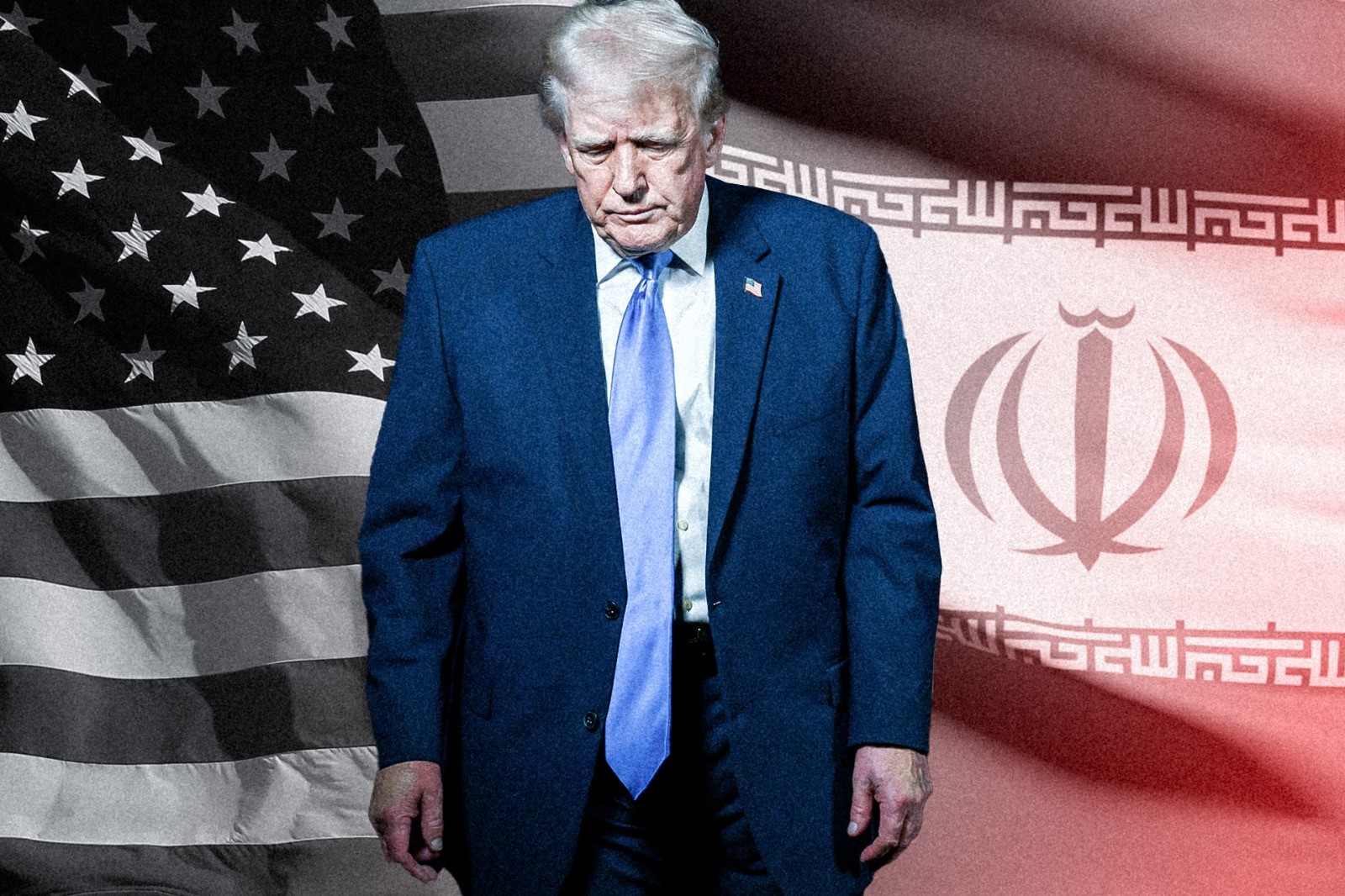
As a result of the combination of these three factors – inability to achieve the war aims by military means, the impact on the world economy, and the political impact at home and abroad – Donald Trump is now in an impossible position in which any action he takes will be wrong.
If he admits defeat and withdraws without having achieved anything, it will be a humiliating defeat, something he is unable to contemplate, because he is a megalomaniac narcissist, but also because of the enormous political costs to him. It should also be noted that both the neocon and liberal wings of the US ruling class believe the US to be an all-dominant global hegemon, capable of imposing itself at will. They are incapable of comprehending any outcome where they are not the victors, where they have to negotiate the terms of their own defeat, and certainly not on this scale.
The only other option which is left to him would be to escalate. That was clearly being discussed in the weeks before the current two-week ceasefire was announced. There was talk of boots on the ground to take over Kharg Island or several small islands on the northern shore of the Strait of Hormuz. A plan was even developed to send a large number of special operations troops to actually seize Iran’s enriched uranium, currently buried deep underground.
Those options have also been discarded, at least for now. Military planners must have told Trump that the risks involved were enormous, including serious loss of life on the part of the US military. Even if the actual takeover of one or several islands was achieved through US military superiority, they would become sitting ducks for Iranian missiles and drones, creating a nightmare scenario.
Furthermore, the botched rescue operation of the two US airmen in the F-15 fighter that was downed by Iran would have acted as a deterrent. The operation, we are told, ended with the safe rescue of the two airmen. But in the process, the US lost 12 aircraft over the course of one weekend.
The Iranians have speculated as to whether the whole operation was not a cover for an attempt to seize enriched uranium at a nearby facility in Isfahan. The US did commandeer a small airfield and used hundreds of troops. Whether the aim was solely the rescue of the second airman, or the operation had additional objectives, we may never know.
One thing is clear: the destruction of aircraft to the tune of hundreds of millions of dollars in the course of the operation would have dissuaded even the most obtuse in Washington from following along that path. At least for now.
They have also raised the idea of “bombing Iran to the Stone Age”, through a massive campaign of destruction of civilian infrastructure (bridges, oil depots, desalination plants). That was also abandoned as Iran showed it was able to retaliate in kind, threatening to hit the same targets in the Gulf countries.
Attempts by Washington to cajole the European powers into reopening the Strait of Hormuz through military force were also a failure. Germany and France were not in the mood to carry out what would have amounted to a suicide mission. Especially on behalf of an ‘ally’ who had gone out of his way to humiliate them a couple of months earlier by threatening to take over Greenland. Not even the usually slavish British prime minister was prepared to lend Trump a hand.
Negotiations
This is the background to the current ceasefire and the first round of failed negotiations in Islamabad. When Trump issued his wild threats to erase the whole of Iranian civilisation he was certainly already involved, behind the scenes, in frantic attempts to get negotiations going, and those threats were an attempt to build a narrative along the lines of “my threats have forced the Iranians to come to talks”.
The truth could not be further from this, and that can be demonstrated clearly by the fact that Trump accepted Iran’s ten-point proposal as a framework for negotiations. It is likely that he had not even read the proposal before he announced it on social media. That is just a reflection of his desperation to get a ceasefire at a time when the military campaign was proving so disastrously unsuccessful.
The negotiations collapsed after nearly 20 hours of non-stop talks, as was to be expected. There is absolutely no common ground between the proposals in Iran’s ten-point document and the United States’ 15 points – which amount to demanding Iran’s capitulation. US imperialism is facing a strategic defeat on the battlefield but pretends it has achieved all of its aims at the negotiation table!
The fact that Trump had to send Vance to Islamabad was also significant. He is the one figure in Trump’s administration who was never convinced about the war on Iran and has stayed on the sidelines since it began. The Iranians had indicated that they considered Witkoff and Kushner to be clowns, based on their performance at the talks prior to US aggression – and who can blame them?
Netanyahu clearly was not happy with the ceasefire or the talks. It is reported that Vance was briefing not only Trump but also Bibi at regular intervals during the talks in Islamabad. Certainly Netanyahu would have exerted enormous pressure to put an end to negotiations.
The dropping of 160 bombs by Israel on Lebanon within 10 minutes on the day the ceasefire came into effect was clearly intended to stop the negotiations and recommence the war at the outset. For now, however, he has failed as the Iranians are still complying with the ceasefire despite ongoing Israeli bombardment of Lebanon.
Trump enforces his own blockade
Although the direct negotiations in Islamabad collapsed, behind the scenes, messages are still being exchanged. The latest harebrained initiative by Trump is the idea of blockading the Strait of Hormuz… in order to force Iran to reopen it. On the face of it, the whole idea seems farcical. One of the reasons Trump is being forced to back down is the pain inflicted on the world economy and the impact on energy prices of the closure of the Strait. Why would he want to add to it?

The situation was one in which Iran was moving towards a phased reopening of traffic under its own control and with the collection of toll fees – fees said to be to the tune of $2 million per tanker. Agreements had already been reached with a series of countries and others were in the process of making a deal, including India, China, etc. Quite logically, Iran was signalling that those who were attacking it or collaborating in the attack would not be allowed through, but that others could be given permission, under Iranian control and with payment of a passage fee. A fee which would, furthermore, be paid in Chinese yuan.
Trump is calculating that by preventing Iran’s control of traffic through the Strait from working, that would either force Tehran to water down some of its demands at the talks, or force China to put pressure on Iran to do so.
Trump, who had actually lifted US sanctions on Iran earlier in the war in order to increase world supply and bring down prices, has now reimposed sanctions. China is the primary buyer of Iranian oil and would, presumably, be the primary target of the blockade. Meanwhile, just a few days ago, the waiver on Russian oil sanctions was allowed to expire, meaning they will take effect again.
The most likely outcome is that this latest desperate attempt by the US will not work either. Economic sanctions on Russia have failed, and if the Americans attempt to stop Chinese ships, the Chinese can respond by stopping exports of rare earths once more. This at a time when the demand for rare earths from the US, thanks to its need to replenish diminished weapons stockpiles, is sky high.
While the US blockade has been largely effective, there are already reports that it is not completely watertight, as a number of ships have gone through by using stealth tactics. The pain for Trump and the US, caused by the impact this will have on the world economy, is more likely to become unbearable for them before it forces Iran to make any concessions.
Meanwhile, Iran still possesses means of inflicting pain on the US which it has not yet used. For instance, if the Houthis in Yemen were to enter the fray, they could close the Bab-el-Mandeb Strait into the Red Sea, another major choke point for the world economy.
Where next?
At the moment, the US is in the process of deploying further troops to the region, including 6,000 troops aboard the aircraft carrier USS George H.W. Bush and its strike group, and 4,200 more from the Boxer Amphibious Ready Group and the 11th Marine Expeditionary Unit. It is worth noting that the USS Bush is being sent the long way round, circumnavigating Africa, rather than through the Suez Canal where it could be attacked by the Houthis. Even once these additional troops are in place, the US would not have anywhere near enough forces for a proper ground invasion of Iran.
Sooner or later, this war will end in some sort of agreement, either through a signed deal or a de facto understanding.
What is becoming increasingly clear is that the outcome will be one much more favourable to Iran than the US. The very reasonable terms which Iran offered in negotiations before the war are now off the table.
This war, the first proper Trump war, will have significant consequences. It will be a major defeat for Trump, which will enormously weaken the standing of US imperialism in the world, as well as weaken him politically at home. This is the reason why he has been sounding ever more erratic, frantic and frustrated in his social media posts – lashing out against MAGA influencers, the Pope, becoming even more wildly erratic from one day to the next.
There is a lot of discussion about Trump’s mental health. But we should be clear, he may be unhinged, but Trump is not so much an anomaly, but rather, a symptom: a particularly vicious manifestation of a system in crisis and terminal decline. His own personal characteristics certainly aggravate the crisis and introduce a strong element of uncertainty into it, but they are not the cause of the crisis.
A defeat in Iran may make the Trump administration more willing to launch another foreign adventure in a theatre where they think they can get a quick victory before the mid-term elections, to divert attention from the failure in the Middle East. Cuba is high up on the list. That would be another massive gamble which is not guaranteed to have a favourable outcome for US imperialism.
A humiliating defeat for the US in this war will also mean a victory for Iran, which will strengthen its hand in the region after having suffered an important setback in Syria.
This war is also likely to result in a major defeat for the interests of Israel in the region, and perhaps the beginning of the end for Netanyahu. In Lebanon, he clearly did not achieve his aims last time and he has not achieved them now. If he is forced to put an end to that war, he may decide to launch another extermination campaign against the Palestinians, with the formal annexation of the West Bank. Whatever he does, Israel will come out weakened from the new rebalancing of power in the region and that will bring to the fore the already sharp contradictions inside Israeli society.
The standing of Israel in the world has also been massively damaged, with public opinion and, consequently, with governments. In the US, the net favourability of Israel among men under 50 was -3 in 2022, collapsed to -22 in 2024 and is now an astonishing -47.
The Gulf countries are already pondering what is next for them now that being allied to the US has proved so costly. They are making overtures to Russia and China, and will be forced to recalibrate their relationship with Iran.
It will also strengthen the hand of Russia and China in the world and their collaboration with Iran. A defeat for the US will push a number of countries away from it and closer towards its adversaries. We already see the first indications of that in the Spanish prime minister’s trip to China, South Korea’s angry statements about Israel, and the visit of the leader of Taiwan’s opposition to China.
The war has also deepened the rift between the US and Europe. There seems to be a growing mood among European leaders to stand up to Trump. They were not consulted about the war. To different degrees, they refused to become directly involved, although some offered important logistical support. And now that Trump has been weakened, they have found a small degree of self-respect.
There are limits to how much Europe can chart its own course separately and in opposition to that of the US. First of all, this is because of the long protracted crisis of European capitalist powers, which do not have the economic might to stand up on their own. Europe remains closely linked to the US in terms of exports, imports (including data centres and AI), capital markets, and military hardware and intelligence, and therefore it is largely dependent on it.
The attempt of the European capitalist countries to rearm – in the face of being abandoned by their decades-long, senior partner across the Atlantic and faced by the rise of a powerful, militarily victorious Russia on their own continent – will inevitably lead to renewed class struggle. Military expenditure, in a period of economic stagnation, can only be increased at the cost of massive cuts in pensions, healthcare, education, etc., leading to major class battles.
Britain’s position is particularly fragile. After the Second World War, its role became that of a junior, subservient partner to the US, advancing the interests of Washington inside Europe. Now that the US and Europe are drifting apart, Britain is staring into a gaping hole. Significant sections of the British ruling class, even some of those who a few months ago were looking towards Trump, are now saying that the only way forward for the UK is back towards the European Union.
A Trump defeat in Iran will also weaken those forces of the populist right in Europe and elsewhere which rose in its wake. Orbán has been defeated in Hungary. In Britain, Reform was polling at 30 percent and has now dipped slightly by about 5 percentage points.
However, the underlying reasons for their rise – the crisis of legitimacy of the liberal establishment, the lack of a serious radical alternative on the left, the accumulation of anger on the part of sections of the working class – these were not caused by Trump and will not disappear with him. These populist right figures and parties may have to reevaluate their support for Trump and take a more nationalistic approach, but, like in the US, they will be discredited once put to the test of power.
Finally, we should not forget that even if the Iran crisis is resolved tomorrow morning, and that is very unlikely, the economic impact will be long-lasting.
The shockwave of the closure of the Strait of Hormuz and the physical withdrawal of millions of barrels of oil and gas from the market is only now being felt in full in Asia. It will still take a few weeks for the full impact to hit Europe and the US. High energy prices are here to stay for at least the whole of this year. The futures price of oil is over $80 a barrel for December deliveries of the Brent benchmark, a full $15 over their price before the war.
Whether this shock alone leads to a worldwide recession remains to be seen. But the political impact of higher prices at the pump is already being felt, in the form of disaffection with Trump in the US and farmers and hauliers’ road blockades in Ireland.
What started as a massive gamble on the part of Trump, drunk on the immediate success of his Venezuela raid and foolish enough to believe Netanyahu’s wild claims of a quick, epoch-making victory in a three-day war, will be seen in retrospect not only as a crucial turning point in the unraveling of the Trump presidency, but also as a key development in the decline of US imperialism.