This year, on 4 July, marks the 250th anniversary of the declaration of American independence from Britain – a truly historic event.
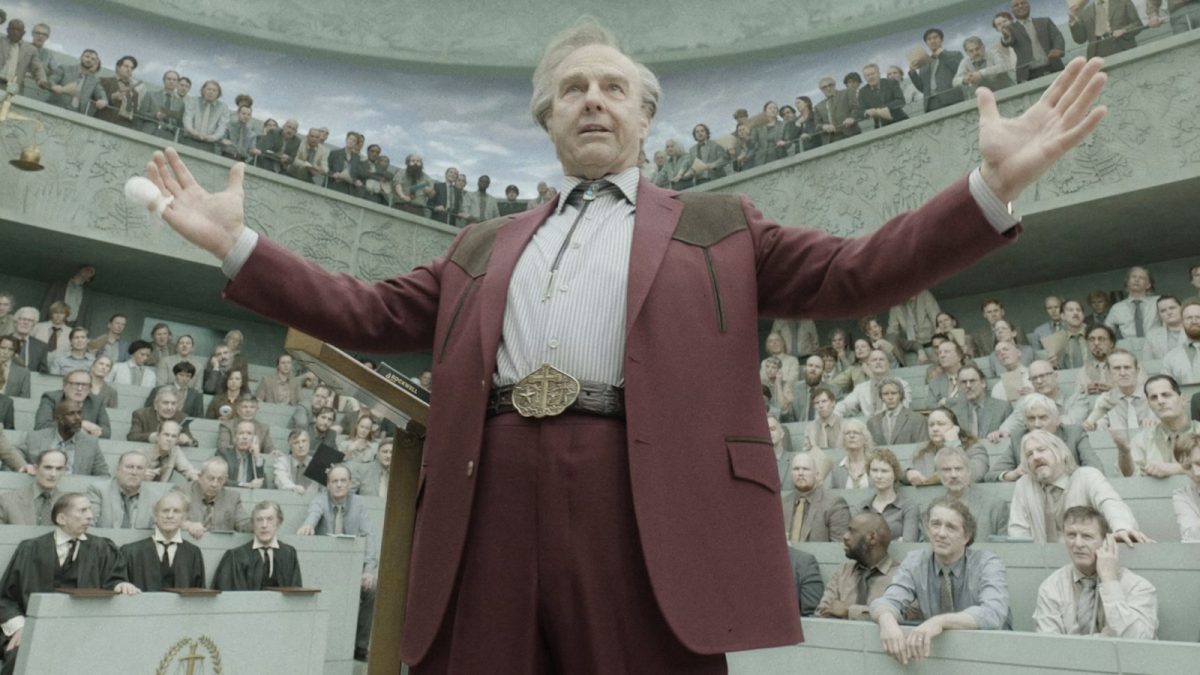
At Trump’s behest, one of the key participants attending the recent independence celebrations in Washington was our very own half-witted British monarch, King Charles III.
Charles is a direct descendant of the mad king George III, who lost America – and his mind. He was accompanied on his recent US trip by Queen Camilla, another parasite, at taxpayers’ expense, of course.
This farcical pantomime took place as the Epstein scandal reached a crescendo – a scandal which has sparked the greatest crisis for the British monarchy since Charles I literally lost his head in 1649.
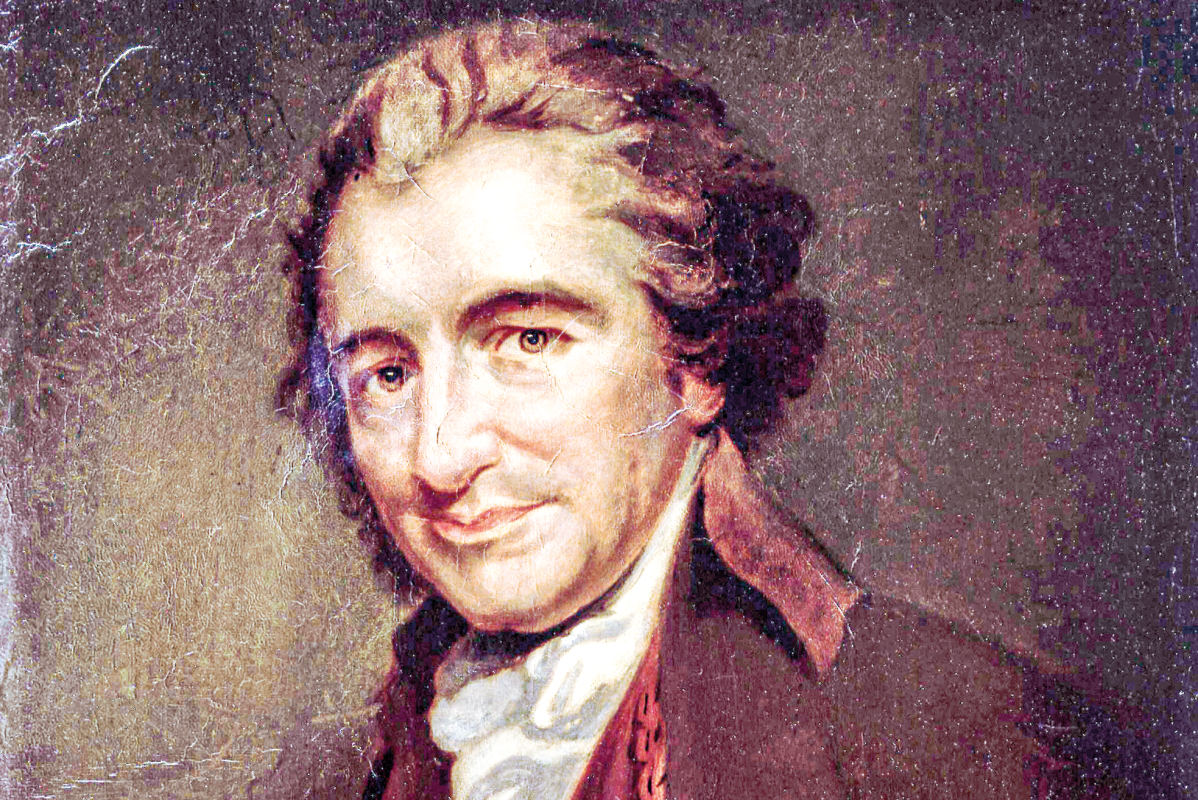
There is one man in particular who would have seen the obscenity in this palaver: namely, the great Thomas Paine, a true revolutionary democrat and republican.
This year also marks the 250th anniversary of the publication of Paine’s famous booklet, Common Sense, a work that actually altered the course of history.
Paine’s radicalism and defence of the American and French revolutions led William Pitt’s government to seek his arrest for sedition. He was then found guilty of high treason, in his absence, as he wisely fled to France to avoid the hangman’s noose.
View this post on Instagram
Trying times
Born in the village of Thetford in Norfolk in February 1737, Thomas Paine eventually moved to London, where he mixed in radical circles.
In 1774, he emigrated to the British American colonies, following the advice of Benjamin Franklin, in time for the American Revolution.
In Philadelphia, he took up the cause of anti-slavery and became a founding member of the American Anti-Slavery Society.
As an avid advocate for the coming American Revolution, he wrote Common Sense, a pamphlet arguing the cause of American independence.
This became an immediate best seller, on a scale previously unknown. During the revolution, such was its impact that it sold half a million copies, and was read aloud in family circles and in taverns.
But Thomas Paine was not simply a pamphleteer. He put ideas into action by taking up arms during the American Revolution and enlisting in the army under General Nathanael Greene. Given his ability and standing, he soon became the General’s aide.
“These are times that try men’s souls,” stated Paine. “Tyranny, like hell, is not easily conquered.”
In an echo of the future lines engraved on the Statue of Liberty, he wrote:
“O ye that love mankind! Ye that dare oppose, not only the tyranny but the tyrant, stand forth! Every spot of the old world is overrun with oppression. Freedom hath been hunted round the globe…
“O! Receive the fugitive, and prepare in time an asylum for mankind.”
Greatly admired by Thomas Jefferson, a Founding Father and future president, Paine was chosen as one of the delegation that went to Paris to seek aid for the American Revolution.
Despite his role as the ‘unofficial founding father’, there is no official monument to Thomas Paine in Washington D.C. But Paine was not interested in such ‘honours’. His revolutionary ideas were worth much more than any stone plaque. He would certainly have complete contempt for today’s leaders – minnows and political pygmies in comparison to Paine.
Old order
In April 1787, following the American Revolution, Paine left America for Europe. Eventually he arrived in Paris, where – given his radical reputation – he was not short of friends or contacts.
By this time, Europe itself was pregnant with revolution. In 1789, the hated Bastille fell and the French Revolution began to unfold.
Referring to these dramatic events, the poet Wordsworth wrote:
“Bliss was it in that dawn to be alive,
But to be young was very heaven!”
The masses were on the move, overthrowing the old order. And Paine was in the midst of it all.
Throughout Europe, the masses hailed the French Revolution, while the ruling classes everywhere trembled in their boots. This was particularly the case in Britain, ruled by an autocracy that was keen to preserve its power.
The hatred of the ruling classes towards revolutionary France was articulated by Edmund Burke in his Reflections on the Revolution in France, written in 1790.
Burke’s book was an all-out assault on the French Revolution, as well as the whole conception of ‘democracy’ and democratic rights, on behalf of the ancien régime.
For Burke, political power had to be in the hands of the educated ruling class, Britain’s ‘natural’ rulers – and certainly not in the hands of the “swinish multitude”, who were clearly unfit to govern, let alone vote. If power fell into their hands, it would mean the end of private property and society as they knew it.
“The tyranny of the multitude is but a multiplied tyranny,” was the famous phrase used by Burke to show his contempt for any form of democracy.
“Numbers in a state are always of consideration, but they are not the whole consideration,” stated Burke. For him, the higher ‘consideration’ was the preservation of the power of the ruling class. This he saw as embodied in the (uncodified) British Constitution, which was a “liberty connected with order”, and the outcome of “good and steady government”.
It is no accident that Edmund Burke is regarded as one of the progenitors of our modern Conservative Party, which fought tooth and nail against any democratic progress.
Rights of Man
In response to Burke, Thomas Paine took up the cudgels in defence of the French Revolution, which stirred the hearts and minds of democrats everywhere.
He energetically defended the rights of the ‘multitude’. In doing so, he became increasingly popular with the downtrodden masses. And the more his message struck a chord, the more forceful he became.
Paine’s reply to Burke was issued as a book, The Rights of Man. This was a strident defence not only of the French Revolution, but a clear call to the masses in Britain to follow the French example – to do away with its own crown and aristocracy.
This became a textbook for radical democrats; a phenomenal success, which was read everywhere. The second part of Rights of Man sold around 200,000 copies, and – given its popularity – was even translated into Welsh and Gaelic.
Tom Paine and his deeds became a household name.
At this time, the Industrial Revolution was in full swing. Landless peasants were being driven into overcrowded towns – into ‘satanic mills’ and factories – where they were viciously exploited.
As a result, Paine began to link up his political demands with radical economic demands. This increased his popularity even more.
Radicalism vs reaction
Christoper Wyvill, a Yorkshire gentleman, reacted with alarm at Paine’s new-found radicalism.
“It is unfortunate for the public cause,” Wyvill wrote in May 1792, “that Mr Paine took such unconstitutional ground, and has formed a party for the Republic among the lower classes of the people, by holding out to them the prospect of plundering the rich.”
He continued:
“If Mr Paine should be able to rouse up the lower classes, their interference will probably be marked by wild work, and all we now possess, whether in private property or public liberty, will be at the mercy of a lawless and furious rabble.”
This was the true voice of the British ruling class.
Edmund Burke, a true conservative statesman, vehemently defended the system of rotten boroughs that constituted the House of Commons, whereby large cities were denied any representation. He opposed all attempts at reform.
Burke had the same utter contempt towards the poor, which is still echoed by today’s reactionaries:
“In the name of God, what is the meaning of this project of Mr Pitt concerning the further relief of the Poor? What relief do they want, except that which it will be difficult indeed to give, to make them more frugal or more industrious?”
“When a man cannot live and maintain his family by the natural hire of his labour, ought it not to be raised by authority?” asked Burke rhetorically.
“No. To provide for us in our necessities is not the power of government… The labouring poor are only poor because they are numerous… Patience, labour, sobriety, frugality, and religion should be recommended to them… The laws of commerce are the laws of nature and consequently the laws of God.”
“No wonder,” remarked Marx, “that, true to the laws of God and of Nature, Burke always sold himself in the best market.”
Privileged parasites
For Paine, it was not the poor who were the godless parasites, but the upper echelons, beginning with the aristocracy. According to him, kings and queens were completely useless and unproductive, and would be the first to be shown the door.
In complete contrast to Burke, Paine’s message was thoroughly egalitarian, and bent on destroying the “quixotic age of chivalric nonsense”.
“Of more worth is one honest man to society and in the sight of God,” he declared, “than all the crowned ruffians that ever lived.”
Why should we be beholden to such pampered upstarts, to their heirs and posterity, until the end of time, Paine argued.
“The vanity and presumption of governing beyond the grave is the most ridiculous and insolent of all tyrannies. Man has no property in man; neither has any generation a property in the generations which are to follow.”
Paine attacked the very idea of hereditary royalty “as absurd as an hereditary mathematician, or hereditary wise man; and as ridiculous as an hereditary poet-laureate”.
He continued: “France has not levelled; it has exalted, it has put down the dwarf, to set up the man. The punyism of a senseless word like Duke, or Count, or Earl, has ceased to please.”
The privileges and power of the nobility are held by people of no-ability, to use Paine’s play on words.
This is a fitting description for the royal highnesses, the dukes and duchesses, the princes and princesses, and all other such privileged bloodsuckers today. Likewise, with the so-called peers and knights of the realm – all of whom are incompatible with genuine democracy and accountability.
Constitutions, classes, and corruption
Of course, at this time, the working class was just emerging and was in its infancy. Paine’s view of social classes was coloured by this situation – defining the class struggle simply in terms of “those who pay taxes, and those who receive and live upon taxes.”
As for the Constitution, it was good for the likes of “courtiers, placemen, pensioners, borough-holders, and the leaders of Parties… but it is a bad Constitution for at least ninety-nine parts of the nation out of a hundred.”
Paine’s instincts were in the right direction, and were certainly revolutionary for his time. In fact, his comments about money and corruption are as relevant today as they were then. As he explained:
“When extraordinary power and extraordinary pay are allotted to any individual in a government, he becomes the centre, round which every kind of corruption generates and forms. Give to any man a million a year, and add thereto the power of creating and disposing of places, at the expense of a country, and the liberties of that country are no longer secure. What is called the splendour of a throne is no other than the corruption of the state. It is made up of a band of parasites, living in luxurious indolence, out of the public taxes.”
Paine championed many radical and egalitarian ideas, including the abolition of the monarchy, aristocracy, as well as for the nationalisation of the land.
In the second part of his Rights of Man, he advocated redistribution of wealth to the poor – a truly revolutionary idea for its day.
For this extreme radicalism, Paine was met with the bile and deep-felt hatred of the reactionaries, who regarded him and his supporters as no better than foreign agents, intent on treason.
Compared to previous radicals, Thomas Paine was clearly pointing towards a revolutionary theory of the state and of class power, although this was inevitably quite confused, given the state of affairs.
Nevertheless, it was for him increasingly a conflict between the propertied classes and the propertyless.
This demand for democratic rights – and the end of privileges and monarchy – was also echoed by workers in struggle, and is contained in the call of the Luddites and the mythical General Ludd:
“You are requested to come forward with arms and help the Redressers to redress their rings and shake off the hateful Yoke of a Silly Old Man, George III, and his Son more silly and their Roguish Ministers, all Nobles and Tyrants must be brought down. Come let us follow the Noble Example of the brave Citizens of Paris who in sight of 30,000 Tyrant Redcoats brought a Tyrant to the Ground…”
Abolish the monarchy!
As can be seen from Paine’s intervention in the American and French revolutions, he was no petty nationalist, but a man of the world in the best sense. He was a true revolutionary at heart.
“The revolutions of America and France have thrown a beam of light over the world,” Paine stated – in the same way that the Russian Revolution inspired the workers of the world over 100 years later.
In fact, in September 1792, for his writings, he was elected to the French National Convention, and was made an honorary citizen of France.
His internationalism was summed up by his words: “My country is the world, and my religion is to do good.”
Paine’s clarion call against privilege and power stands in great contrast to the spineless timidity of the chiefs of today’s labour movement, with their subservient deference towards the monarchy and all its miserable trappings.
He would have hated the snivelling servitude from the Labour ‘leaders’, who fall over themselves to accept a knighthood or a place in the House of Lords, for their services to capitalism. They are Lilliputians by comparison to Paine.
Following Sir Keir Starmer, Andy Burnham now bows down before the Crown, pledging undying allegiance to King Charles and the monarchy. After all, the British government is not the government of the people, but ‘His Majesty’s Government’. They are all lickspittles towards this feudal institution.
The monarchy is only maintained by the ruling class, together with its ‘emergency powers’, as a bulwark against the future socialist revolution. The Crown possesses extensive reserve Constitutional powers that can be used in times of crisis to defend the capitalist status quo.
Britain’s monarchy is said to be ‘above’ party politics, which is utter nonsense. Its constitutional powers can – and will – be used to dismiss left-wing governments, as with the Gough Whitlam government in Australia in 1975.
That is the real role of these feudal relics. And that is why we stand for the complete abolition of the monarchy and the House of Lords.
The scandal over (former prince) Andrew and his friendship with billionaire paedophile Jeffrey Epstein has again brought the monarchy into disrepute.
These privileged, pampered good-for-nothings believe they are all-powerful and untouchable, as with the rest of the Epstein class. They think they can get away with murder. But the mask is dropping, and they are increasingly being exposed as the degenerate parasites they all are.
Revolutionary traditions
Reactionaries, of course, despised Paine. At the time, public effigies of him were hanged by reactionary mobs, then placed on a gibbet post as an example of what should be done to such radicals.
But he never repudiated his views. Paine and the revolutionaries that followed him were undeterred in their historic fight to change society.
Paine’s democratic and radical ideas live on. You can imprison and even kill a person, but you cannot stop an idea whose time has come.
When the East London Democratic Association was formed by Julian Harney and other Chartist leaders in 1837, their manifesto declared that its object would be to liberate the working class “by disseminating the principles propagated by that great philosopher and redeemer of mankind, the Immortal Thomas Paine”.
Even in the early 20th century, the great American socialist Eugene V. Debs paid tribute to Paine as the founder of the American radical tradition. He is without doubt a part of our revolutionary tradition.
View this post on Instagram
Today, to mark the anniversary of his historic pamphlet, we pay tribute to this revolutionary democrat; this hero of the downtrodden and enemy of the privileged.
In this day and age, the spirit of Paine’s ideas are taken up by the communists: fighting for the emancipation of the working class – the exploited multitude – in Britain and internationally; fighting to sweep away the filth of class society, including the Epstein class and its degenerate hangers-on, forever.