In his Philosophy of History, Hegel remarked that “it was not so much from slavery as through slavery that humanity was emancipated.”
A similar thing could be said about war, which – for all its horrors and barbarities – has shaped the world in ways good as well as bad.
History almost appears to us as an endless series of armed conflicts: wars of imperialist domination; wars of national defence and liberation; colonial and slave wars; and, of course, civil wars.
It could be said that wars provide the second most important impulse for historical development, behind revolutions – although even then, many revolutions are the result of wars, or evolve into wars in the course of their unfolding.
Unlike the teary-eyed pacifists, Marxists recognise that war is a natural outgrowth of class society.
We understand that no serious transformation of society can take place without a pitched battle between the contending classes. Leninism, Leon Trotsky once remarked, is “warlike from head to foot”.
And yet, at the same time, we maintain that war is a stamp of barbarism; a black mark on humanity’s record, and a blight on our species. War is rightly reviled and hated by workers and young people – as barbaric, violent, backwards, and irrational.
Over the past two years, the cry of the millions who took part in the global Palestine movement was for an end to the imperialist war and bloodshed, and the cruel killing of tens of thousands of innocent men, women, and children. The vast majority of workers and youth oppose the wars and interventions in Ukraine, Latin America, and the Middle East.
As Marxists, we share that sentiment. We are no more in favour of war than we are in favour of slavery. We are fighting for a future based on free and peaceful relations, without the need to settle differences with such brutal methods as rifles, drones, and poison gas.
Therein lies the contradictory nature of war, which we must unravel.
Politics by other means
Any Marxist analysis of war must begin with the principle deduced by the German military theorist Carl von Clausewitz, that “war is the continuation of politics by other means”.
This expression is often repeated, to the point of becoming cliché. But as with many clichés, there’s a good reason for its repetition. The meaning of this maxim is far from self-evident to everyone.
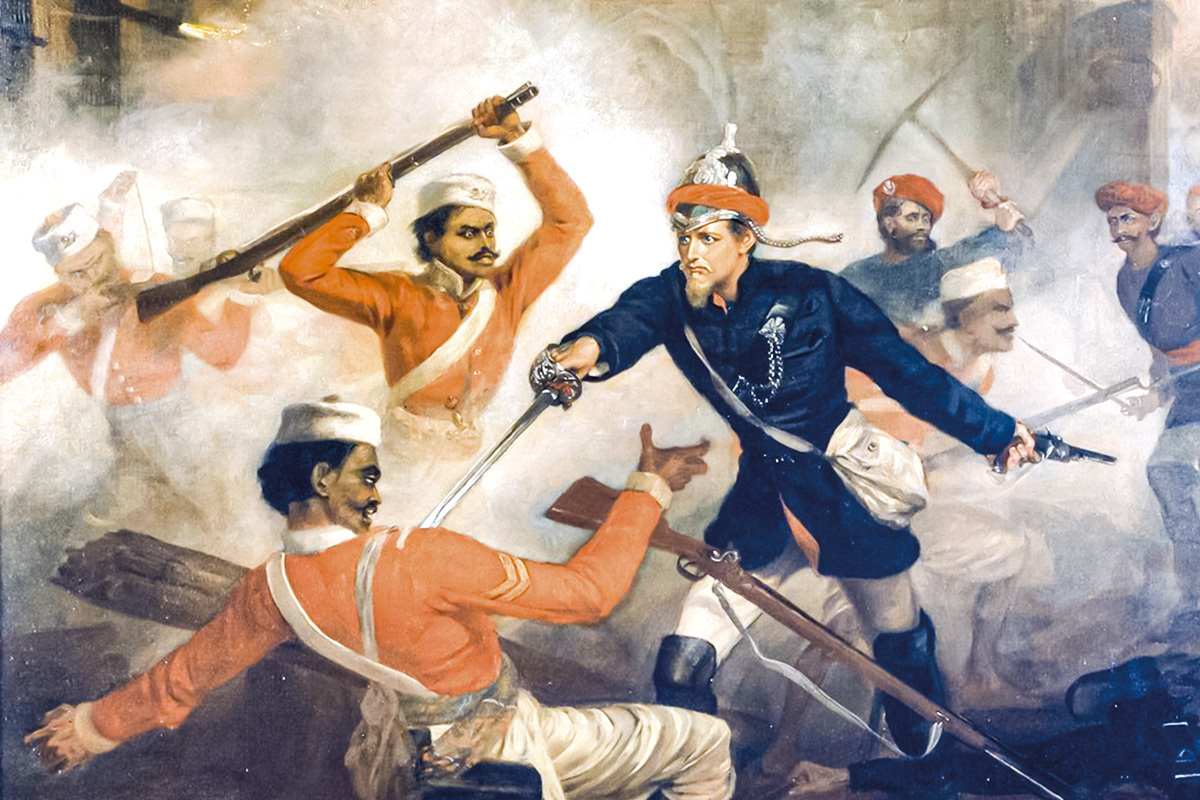
Pacifists, for example, view war as some sort of evil madness or delusion that grips the minds of the ruling classes. Surely, they think to themselves, there are more rational ways of settling our differences, like international courts, the United Nations, and so on.
If politics were as in a children’s story, then pacifist moralism would be a fine method for approaching international conflicts. But sadly, we do not live in a fairytale.
As Marxists, we do not oppose all wars on principle. A war waged for the freedom of an oppressed or exploited people has a very different character to a war fought between imperialist powers for domination and enslavement.
Our position on any given war must begin by uncovering the class forces at play: which classes are waging the war, and for which ends? What are the possible outcomes? And how will they strengthen or weaken the revolutionary class, which can carry society forwards?
National wars
During the First World War, Vladimir Lenin wrote a fantastic pamphlet called Socialism and War, which details the different kinds of wars that can take place in the modern era.
Lenin writes that in the period between 1789-1871 – beginning with the Great French Revolution and ending with the Paris Commune – national wars were the most prevalent.
These were wars which grew out of the bourgeois-democratic national movements of their time, which aimed to uproot the remnants of feudal backwardness in society, create centralised nation-states, and throw off foreign oppressors.
These bourgeois-democratic tasks were essential for the growth of capitalist society, and therefore the later development of the proletarian struggle. These national wars were therefore objectively progressive.
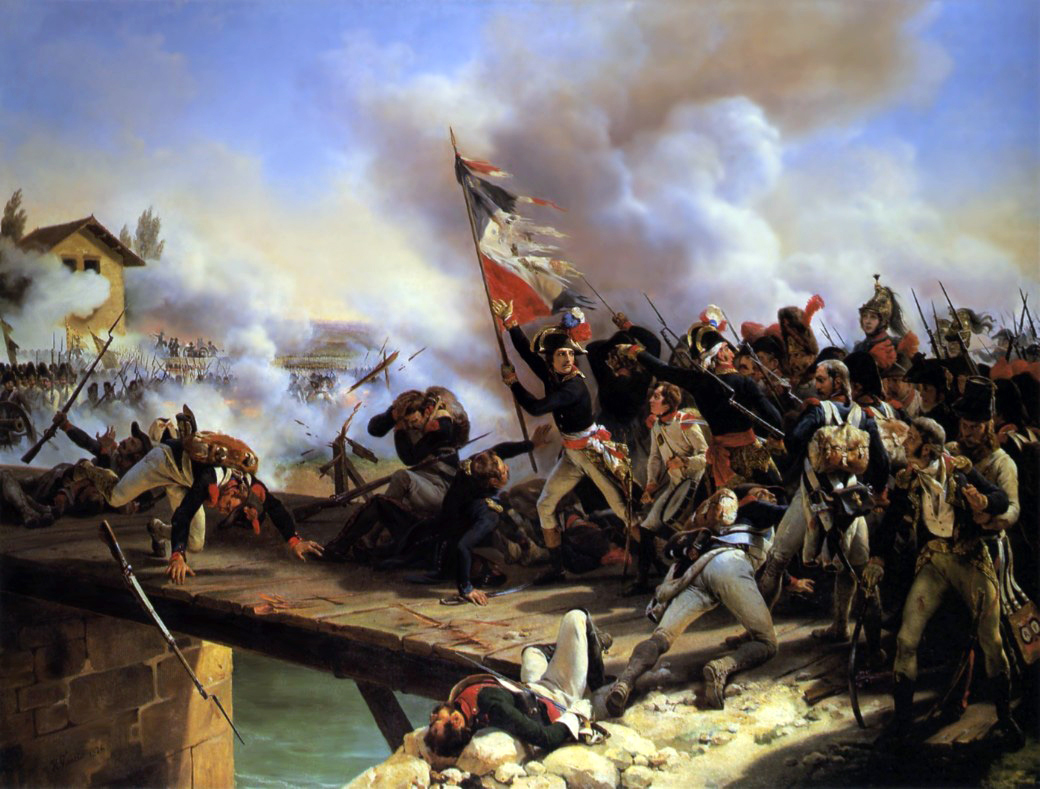
The Revolutionary Wars following the Great French Revolution dealt shattering blows to the reactionary European monarchies (namely Britain, Russia, and Austria) that sought to crush the revolution, and to stem the democratic movements stirred up within their own countries.
The fact that, at a certain stage, French power passed into the hands of Napoleon Bonaparte, a counter-revolutionary dictator, did not alter the general progressive character of these wars. Wherever the French triumphed, feudalism was torn up, and replaced with modern, bourgeois property relations.
Similarly, the Prussian war against France in 1870 was progressive to the extent that it unified the German nation – which had hitherto been kept divided as a hodgepodge of feudal principalities and city-states. Marx and Engels supported Prussia against Louis Bonaparte’s French Empire for this reason.
This did not mean, however, providing an ounce of political support to Prussia’s reactionary chancellor Otto von Bismarck, nor the Hohenzollern monarchy, who were pursuing the war for their own prestige and enrichment.
Nor was Marx and Engels’ support unconditional: when Louis Bonaparte’s empire was overthrown and replaced with a republic, and the Prussians began a predatory invasion of France, Marx and Engels came out in support of France, and denounced the annexationist aims of Prussia.
Here, as in all other cases, their position was based on a many-sided appraisal of the war and its implications for the international class struggle. The documents collected in Marx’s The Civil War in France demonstrate this concrete method.
Imperialism
National wars were a product of capitalism in its ascendancy, back when the bourgeoisie was still capable of playing a revolutionary role. But this period came to an end at the close of the 19th century.
Capitalism had reached its highest stage, which we are still living through today: imperialism.
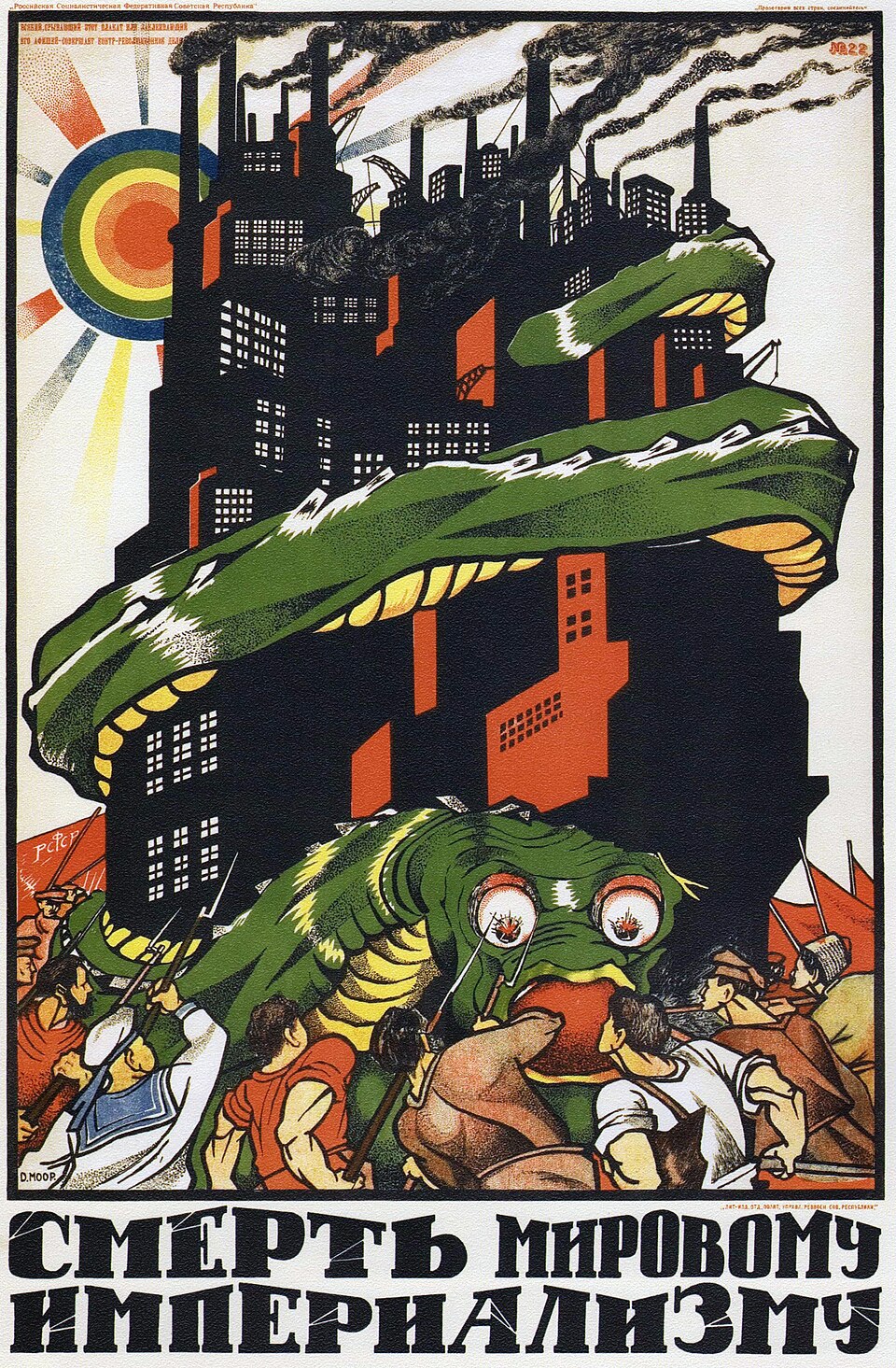
As Lenin outlines in his 1917 work Imperialism: The Highest Stage of Capitalism, in this epoch, the big banks and heavy industry become fused with the state; production is concentrated in the hands of gigantic monopolies, which grow so big that their home market is far too small for them.
At the time Lenin was writing, the world had been carved up by the ‘Great Powers’: Britain, France, Germany, Russia, and Japan. The time had long passed that these powers could wage progressive national wars.
With the rise of imperialism, the era of national wars was generally over in Europe. That’s not to say that genuine national wars were impossible, but that the imperialists’ meddling made it harder for them to be waged consistently, without becoming imperialist proxy wars.
The Serbian people, for example, had every reason to wage a national struggle during the Balkan Wars. But this possibility was outweighed by the fact that the Great Powers were conspiring to dig their claws into the region, using national tensions to ‘divide and conquer’ the Balkans.
A war for Serbian independence would in reality have become an imperialist proxy war. The Serbian Marxists understood this, and correctly opposed the idea of a national war, in favour of the demand for a democratic Balkan federation.
In this new epoch of imperialism, the only genuine national wars that could be fought were in the colonial and imperially-dominated countries. And Lenin explained that it was an elementary duty of the workers of Europe to support any uprising or rebellion against imperialism by the oppressed nations – no matter which class was carrying them out; no matter the regime, nor the methods they employed; and no matter ‘who started it’.
Lenin reserved some sharp words for those who were opposed or indifferent to genuine national struggles:
“In the internationalist education of the workers of the oppressor countries, emphasis must necessarily be laid on their advocating freedom for the oppressed countries to secede and their fighting for it. Without this there can be no internationalism. It is our right and duty to treat every Social-Democrat [i.e. socialist] of an oppressor nation who fails to conduct such propaganda as a scoundrel and an imperialist.” (our emphasis).
We support any anti-imperialist struggle – not out of an abstract sense of solidarity, but because the weakening of the imperialist system strengthens the working class, and advances the struggle for socialism.
In the ongoing war between US-Israeli imperialism and Iran, for example, we stand firmly on the side of Iran, regardless of the fact that the counter-revolutionary mullahs are currently in charge. A defeat for the US would massively discredit the American ruling class at home.
Inter-imperialist wars
Wars between imperialist powers, like the First World War, are different. Here, the consequences for the class struggle are predominantly reactionary. The working classes of the contending countries are slaughtered in the name of profit, and the victory of a given power simply means the strengthening of its ability to exploit, oppress, and dominate – at home and abroad.
Lenin also drew attention to how militarism was the “chief instrument of class oppression” at home, as it was used to economically and politically subjugate the working class through heavier taxation, attacks on living standards, and whipping up national-chauvinism and jingoism.
The ruling class can also use inter-imperialist wars to divide and distract the working class: to lower class consciousness, and send workers to the slaughter against their class brothers and sisters. Sooner or later, however, such wars can produce the opposite effect, by sharpening social contradictions, and providing a focal point for mass anger.
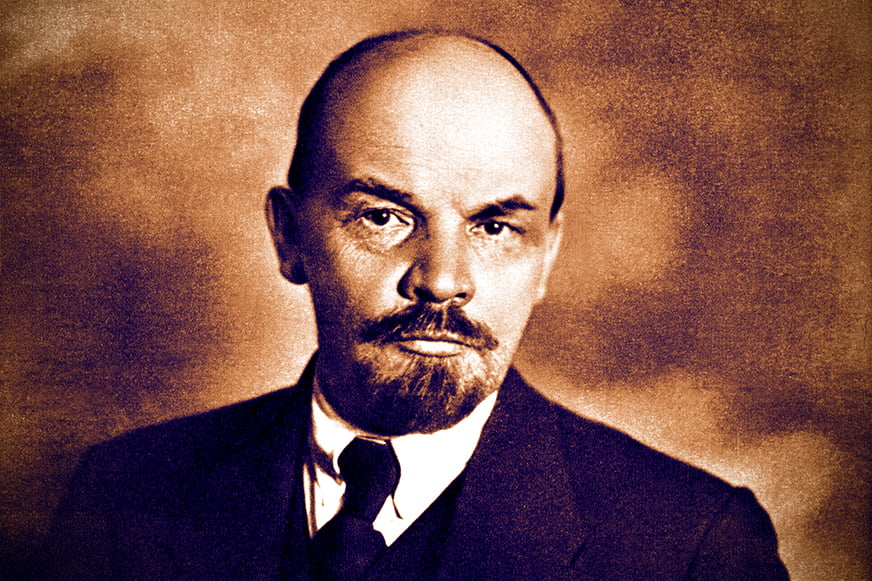
The working class has no skin in such a contest. Lenin quoted some of the best resolutions of the Second (Socialist) International, before its decline, to argue that the task of the working class was to prevent such a war by means of international class struggle:
“In case a war should break out, it is our duty to intervene in favour of its speedy termination and with all our powers to utilise the economic and political crisis created by the war to rouse the masses and thereby to hasten the downfall of capitalist rule.” (Resolution from the Seventh Congress of the Socialist International in 1907).
The problem was that, by the time of the First World War, the leaders of the Socialist International had become completely corrupt and degenerate after decades of class collaboration and peaceful capitalist development.
These militant resolutions weren’t worth the paper they were written on. The privileged upper layers of the workers’ movement fell in line with the war plans of their national ruling classes, and provided a left-wing cover for the war effort.
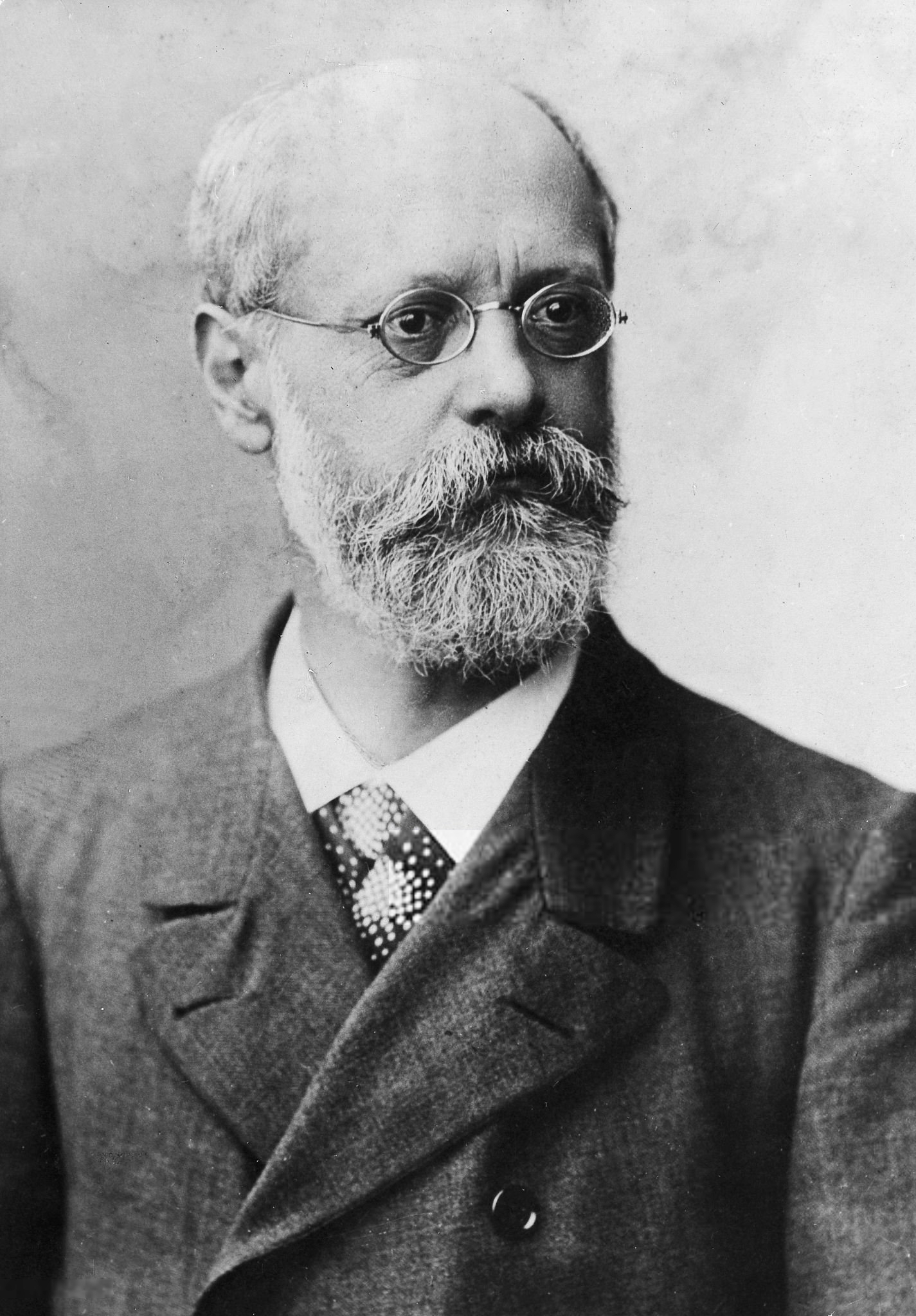
From that point on, the Second International was nothing but a “stinking corpse”, in the words of Rosa Luxemburg. Its leaders had betrayed the working class, and sent them to the slaughter in their millions.
This transformation of opportunism into outright social-chauvinism was what made Lenin realise the need for a clean break with the old International, and the creation of a new organisation on a Marxist, internationalist basis.
Chauvinism and pacifism
It was in this period that some of Lenin’s finest writings on the question of war were written. Wellred Books has collected them together in Lenin’s Selected Writings on Imperialist War.
The opportunists and waverers within the workers’ movement were all talking about how supporting their own ruling class was the ‘lesser evil’, and how workers must ‘defend the fatherland’. They said that democracy, trade unions, and the working-class movement were under threat.
This is, incidentally, how some so-called ‘lefts’ justify their support for western imperialism in the Russia-Ukraine war today.
Lenin’s attitude was: forget all of that! Words like ‘democracy’, ‘sovereignty’, and ‘national defence’ are nothing but lies in the mouths of the imperialists – lies which are designed to disarm and disorient the working class.
Of course, Marxists aren’t opposed to genuine national defence or ‘defence of the fatherland’, as in the case of a war of national liberation. But it is a different story when these phrases are cynically used by the imperialist ruling classes, in order to cloak their predatory domination and oppression of other nations, and to politically defraud the working class.
Lenin explained how the First World War was a war between robbers for a bigger spoil of the plunder; a war between slave-holders for the increased exploitation of the slaves.
The task of the working class remained the same as was outlined in the best resolutions of the Second International: to utilise the war to hasten the overthrow of capitalism.
Lenin developed this position further. He said the task of revolutionary workers was to transform the imperialist war into a civil war: to continue their revolutionary work underground; to call for the fraternisation of troops across national lines; and to spread propaganda with the aim of splitting the imperialist armies along class lines.
The only difference between the Second International’s position (on paper) and the new situation was that, now that the war had broken out, there was no room for any talk about peace, or abstract calls to ‘stop the war’. Appeals for ceasefires; disarmament; peace missions; international arbitration: none of this could put an end to the slaughter.
Lenin heaped scorn on the pacifist leaders like Karl Kautsky, the leading theoretician of the Second International, who put forward such slogans. He scolded these pacifists as worse than the open chauvinists, because they pacified and lulled the workers into believing that you can have capitalism without war – as if imperialism was simply a bad policy, or a product of an unfortunate misunderstanding.
And besides, an imperialist peace would be just as rotten and reactionary as an imperialist war, and would merely pave the way for future conflicts down the line.
For example, the predatory Versailles Treaty – which ended the First World War by economically crushing Germany in the interests of the Entente powers – paved the way for another even bloodier war two decades later.
Similarly, look at the Oslo Accords brokered between Israel and Palestine in the 1990s – they paved the way for Israel’s wholesale slaughter of Gaza today.
Over 100 years later, and so-called ‘Leninists’ in groups like the Communist Party of Britain call for the same pacifist, Kautskyite measures – in relation to Palestine and the Russia-Ukraine war – that Lenin railed against. For example:
“The Communist Party of Britain, therefore, calls for an immediate ceasefire in Ukraine, a halt to all military operations and the beginning of negotiations to bring about a just settlement [?] of the Ukraine question. Where necessary and by agreement, UN peace-keeping forces should be stationed in Ukraine to protect communities from further attack…
“The British government should be using its permanent membership of the UN Security Council to work alongside China for peace and a negotiated settlement. The objective should be a demilitarised and neutral Ukraine whose sovereign borders are respected and guaranteed internally and externally.”
What a mess of confusion! Such a position does nothing more than sow illusions in the idea that imperialist powers can pursue ‘just settlements’, protect the ‘neutral’ smaller nations, and respect sovereignty… In other words, that they can stop acting like imperialists, if they so choose – all we need to do, therefore, is convince them of the error of their ways.
Lenin’s position, on the other hand, was clear and unequivocal: war is an inevitable product of capitalism; only socialist revolution can bring swift and lasting peace.
Let’s not forget that the First World War was not brought to an end by mutual agreement and armistice between the imperialist powers, but under the pressure of the immense revolutionary wave that swept Europe – particularly Germany – after the 1917 Russian Revolution.
Revolutionary defeatism
During the First World War, Lenin developed a position known as revolutionary defeatism – an idea which has been greatly misunderstood and abused by sectarians and counterfeit Leninists.
Lenin’s position, outlined across several articles and texts, was that the defeat of one’s own country in an inter-imperialist war is the lesser evil; it is in the interests of the working class of an imperialist country for its own ruling class to be defeated.
At the time, people read this sharp formulation and were shocked. Leading figures within the Russian revolutionary movement like Trotsky, Piatakov, and Bukharin all disagreed with it, for various reasons. In truth, almost the whole Bolshevik apparatus was caught off-guard by Lenin’s position.
This was likely partly by design. Lenin often posed things in a sharp way to hammer home an important point during a discussion. And in this case, it was especially vital to firm up the cadres of the Marxist movement, who had been disoriented by the tumultuous events of the war and the betrayals of the Second International leaders.
Does revolutionary defeatism mean that we want the enemy imperialists to win? No, of course not. That would just be chauvinism in reverse.
Does this mean that revolutionaries should consciously sabotage the war effort? Again, no. We are opposed to adventurist tactics – activity that is isolated from the mass struggle of the working class – in wartime just as much as in peacetime.
Lenin’s actual position was much less outlandish than people thought it was. Revolutionary defeatism was merely the principles of Marxist internationalism spelled out in a sharp and explicit way.
There are layers to what Lenin was saying. His arguments were many-sided, and he developed and concretised them over time.
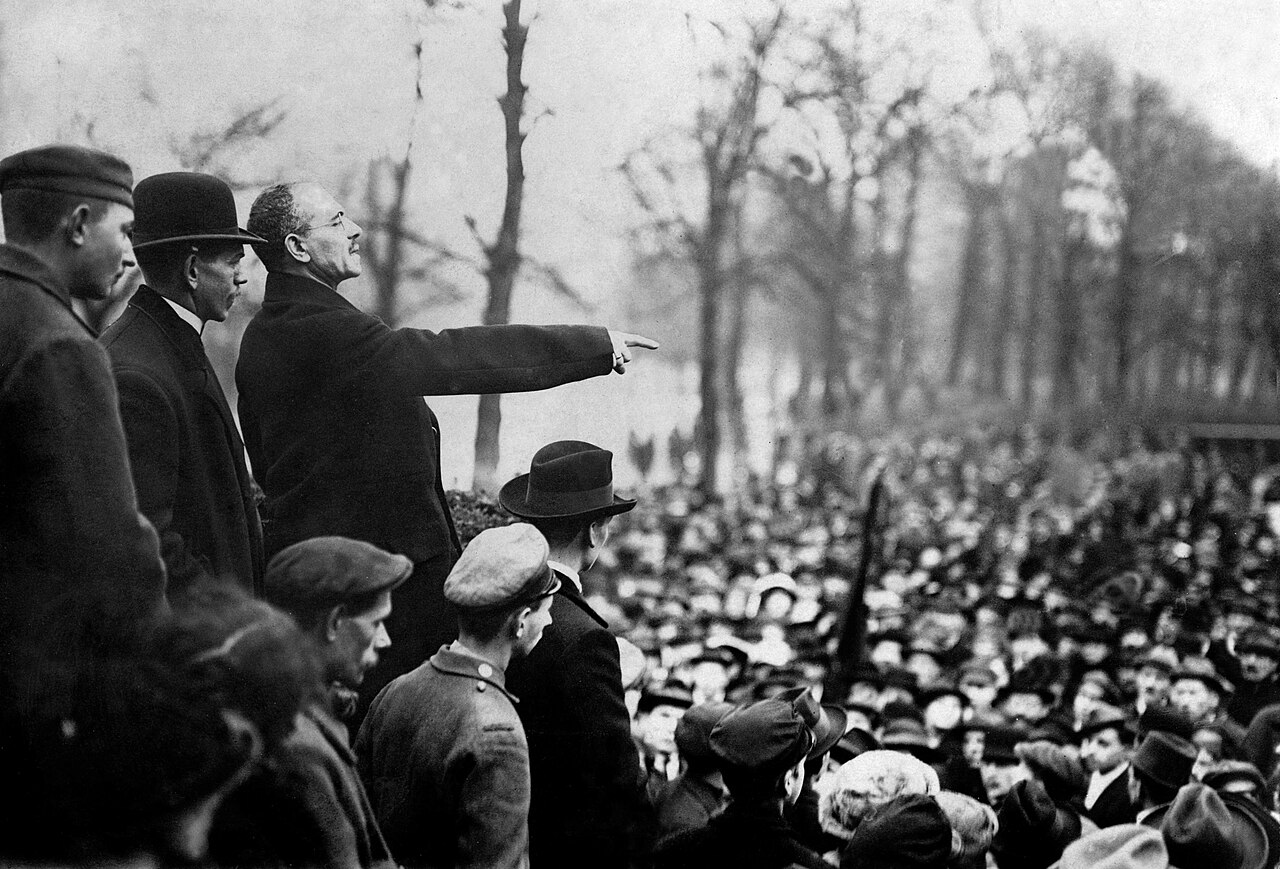
The overarching argument was that for workers in imperialist countries, “the main enemy is at home”, as the German communist Karl Liebknecht proclaimed.
The primary task of the workers in each of those countries is therefore to overthrow their own warmongers and imperialists. They can leave the job of overthrowing the other imperialists to the workers in that country. This position was equally applicable to Russia, Germany, Britain, France, and Japan.
Lenin was also arguing against the opportunists’ ideas of Burgfrieden (‘fortress truce’) and union sacrée (‘sacred union’): that workers should put aside their class demands in order to support the war effort. His position was that the class struggle must continue – and sharpen – in times of war.
It doesn’t matter if strikes and revolutionary struggle weaken the war effort. The military defeat of the government due to class war is preferable to a military victory won through class peace. Lenin’s slogan was – again, in the words of Karl Liebknecht – “for civil war, not civil peace!”
Adopting anything less than this consistently internationalist position would mean sliding into national-chauvinism, and thereby abandoning a class position.
Weakening imperialism
By putting forward the position of revolutionary defeatism, Lenin was also pointing out that the military defeat of an imperialist government spurs on the class struggle.
This part of Lenin’s formulation is less of a position, and more of an objective observation. There are many examples throughout history, both before and after Lenin’s time, which prove this point.
Look at how the defeat of France in the Franco-Prussian War gave birth to the Paris Commune, or how the defeat of Russia in the Russo-Japanese War gave birth to the 1905 Russian Revolution. The military setbacks of Russia, Germany, and Austria-Hungary in the First World War all produced revolutionary situations.
In the second half of the twentieth century, similar processes can be observed. The military setbacks of US imperialism in Vietnam – particularly after the Tet Offensive in January 1968 – accelerated the mass anti-war movement in the US, as well as inflaming the general social unrest and polarisation on the home front, and the mutinous situation within the US Army.
The 1974 Carnation Revolution also came after a series of Portuguese setbacks in Africa during the protracted Colonial War. The crisis of French imperialism – provoked by defeats and setbacks in Vietnam and Algeria in the 1950s – similarly inflamed class struggle and political upheaval at home, forcing General Charles de Gaulle to dissolve the Fourth Republic in favour of a new Fifth Republic.
Military defeats serve to expose the weakness of the supposedly formidable capitalist state, and often provoke crises and splits within the regime, which invite class struggle. Wars are therefore often the midwives of revolution.
One of Lenin’s formulations applied to Russia in particular. He wrote that the military defeat of Russian imperialism to German imperialism would objectively be the lesser evil.
This is because Tsarist absolutism directly crushed millions of oppressed peoples across Asia and Europe, and acted as a bulwark of reactionary, conservative forces in Europe. The defeat of Tsarism, therefore, would awaken the oppressed peoples of the Russian Empire. This, in turn, would spur on the colonial peoples across the world, and weaken the entire imperialist system.
In this case, the ‘main enemy is at home’ and ‘the defeat of our ruling class is the lesser evil’ had a slightly different meaning. Lenin wasn’t just saying this in the general sense outlined above, which can apply to any imperialist country. He was saying that the defeat of Russia in particular would be the lesser evil, because of the progressive impact this would have on the class struggle worldwide.
The logic of this argument could apply today, for example, to the war between NATO and Russia in Ukraine. This is an inter-imperialist war; Marxists therefore support neither side, and call for an international revolutionary struggle to bring an end to the war.
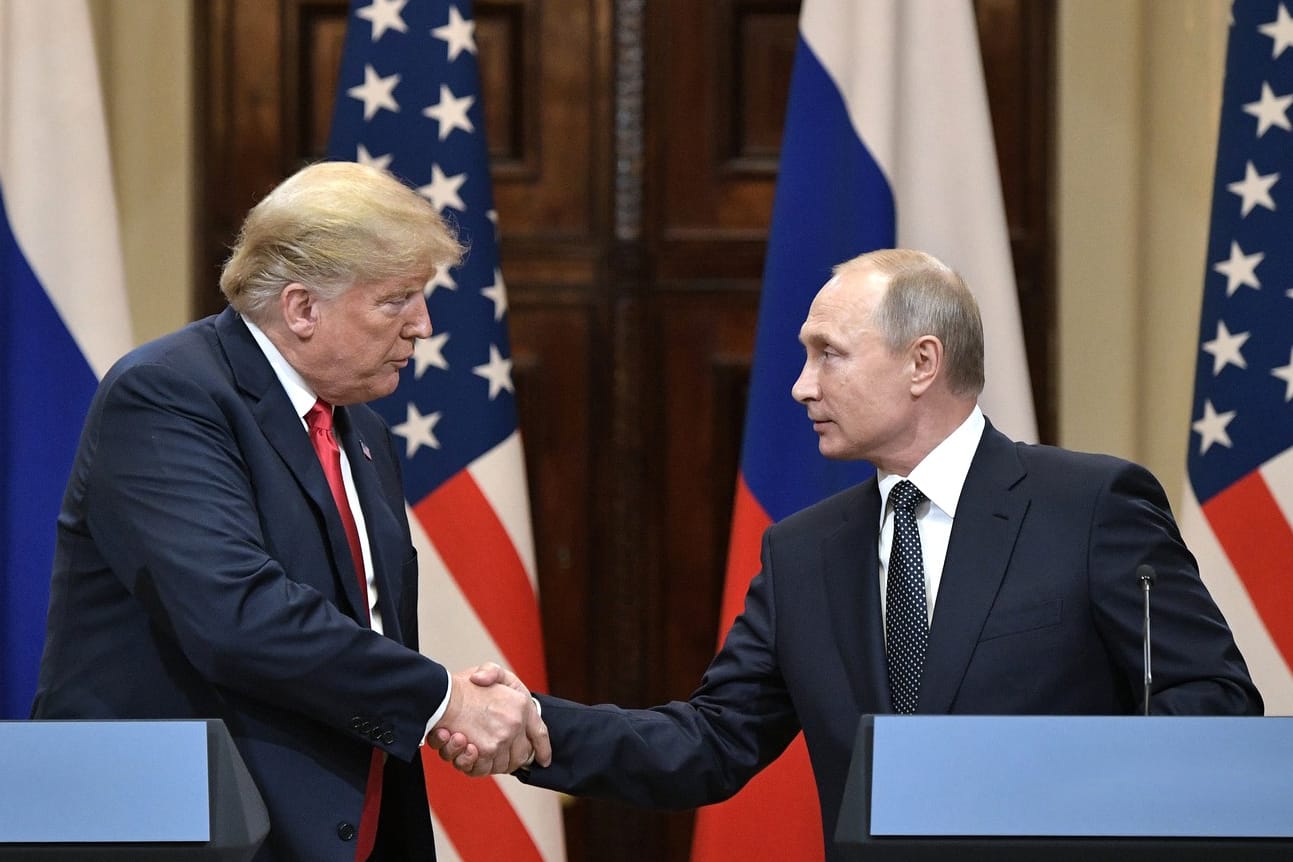
At the same time, however, US imperialism is by far the most reactionary, predatory, oppressive power in the world.
It has sunk its claws into every continent. Its military is many times the size of its rivals’. Through assassinations, kidnappings, coups, invasions, and political interference, the US has played the role of world hegemon like no other power in history. By comparison, modern Russian imperialism plays a relatively peripheral role in the world imperialist system.
A total military defeat for Russia would mean its conversion into a semi-colony of the West, and the looting of its resources by the big western banks and monopolies. Even just a partial defeat for Russia would strengthen the western imperialist world order for an entire period, and set back the class struggle worldwide. This would be an entirely reactionary outcome.
What would a western defeat look like? Well, we are witnessing the consequences unfolding in real time.
Of course, one reactionary outcome is the strengthening of Russian imperialism. But the impact that this might have on the class struggle is outweighed by the progressive outcomes of the West’s weakening.
Ukraine’s ongoing defeat has meant splits, infighting, and embarrassment for western ruling classes. It has precipitated the breakdown of the decades-old transatlantic alliance. It has shattered the illusion that the US can continue dominating the globe.
This – alongside the US’s calamitous setbacks in the Iran War – has weakened the power and authority of our class enemies, chiefly the American imperialists. And we, as workers in the West, are glad to see this!
The crisis of western imperialism has and will continue to play an objectively progressive role in the class struggle worldwide, bringing socialism closer to reality.
The only thing we regret is that it isn’t the working class striking these blows against western imperialism, but the reactionary regime in the Kremlin, which we do not support in the slightest.
Sectarian mistakes
A great deal of confusion has been caused by people who took Lenin’s writings on revolutionary defeatism out of context, and thoughtlessly applied them to new conditions.
A number of sectarians got hung up on the idea that defeat is always the lesser evil. They couldn’t understand that Lenin wasn’t in favour of defeatism in all circumstances, but rather in the context of an inter-imperialist war.
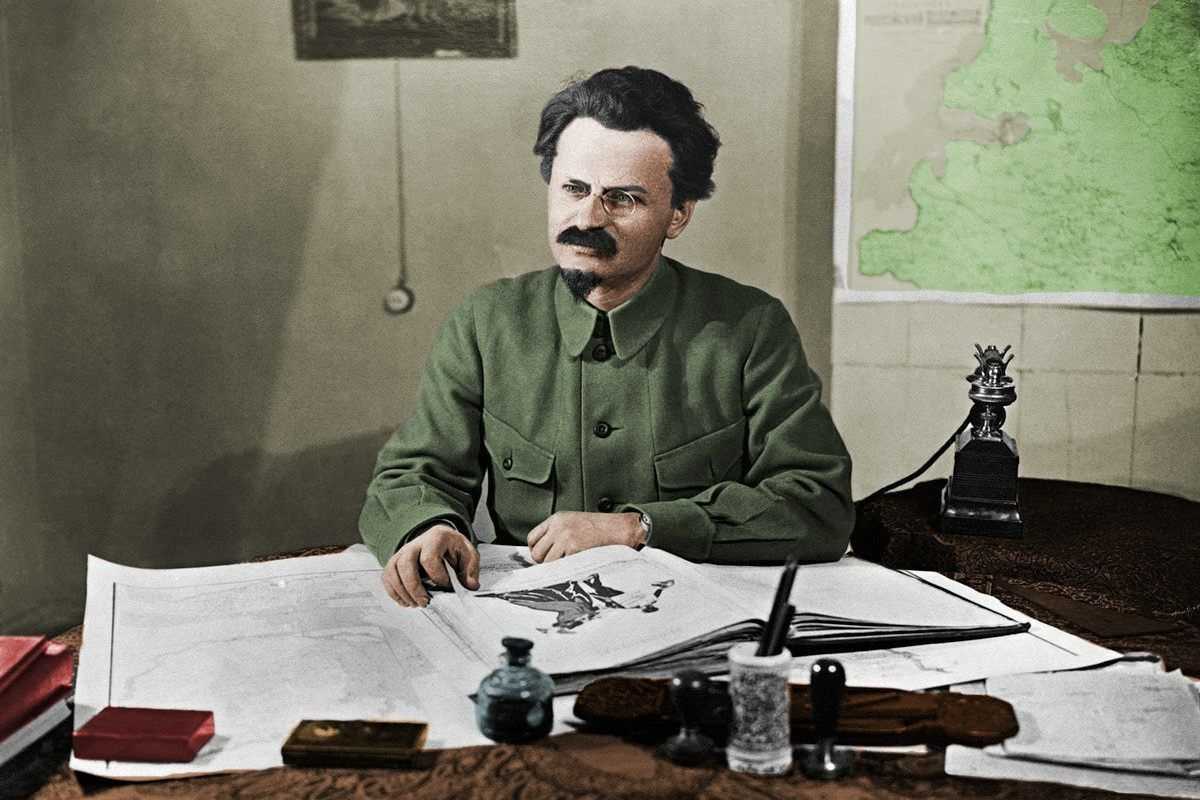
Throughout the 1930s, Leon Trotsky – the main theoretician of genuine Marxism after Lenin’s death – had to constantly battle against sectarian errors on this front.
For example, there were those who saw the Spanish Civil War as simply a war between two capitalist governments, or even an inter-imperialist war, and argued that therefore no support should be given to the Republican camp over the fascists, partly because of the (extremely limited) amounts of aid provided to the Republicans by France and Britain.
The Chinese Trotskyists also had a dispute over their stance towards the Sino-Japanese war, as Kenny Wallace outlines in his article on the history of Chinese Trotskyism in issue 51 of In Defence of Marxism.
Some argued that the defeat of the counter-revolutionary Chinese nationalists at the hands of Japanese imperialism was the lesser evil – despite the fact that China was at that time an oppressed nation fighting for its national independence. Along these lines, they also argued that the Chinese nationalists’ acceptance of American aid made the Sino-Japanese war an inter-imperialist war.
There is not enough space to go into detail about each of these examples. But Trotsky’s interventions in these controversies provide rich demonstrations of the Marxist method, which takes as its starting point the concrete, living situation, and not abstract labels and formulas.
As Trotsky summarised in his 1938 article Learn to Think:
“Ultra-left scholastics think not in concrete terms but in empty abstractions. They have transformed the idea of defeatism into such a vacuum. They can see vividly neither the process of war nor the process of revolution. They seek a hermetically sealed formula which excludes fresh air. But a formula of this kind can offer no orientation for the proletarian vanguard.”
In reality, every war has different aspects and layers. Some conflicts can have features of imperialist war, national war, and civil war overlaid on top of each other, in varying proportions. For instance, just because a genuine national war has some peripheral involvement by the imperialist powers doesn’t mean it’s automatically an inter-imperialist war.
The task of Marxists is to uncover these different processes, weigh them up against each other, and derive a programme based on how the outcomes will accelerate or hold back the class struggle.
Winning over the masses
Perhaps the best clarification in this controversy over revolutionary defeatism was provided by Ted Grant and the Workers’ International League, in their polemic against the sectarian Revolutionary Socialist League (RSL) during the Second World War.
The RSL began by categorising the war as an inter-imperialist war, and not a war of ‘democracy vs fascism’, as the British ruling class tried to paint it. This appraisal was correct – in the abstract.
But when the RSL approached the workers’ movement claiming that the defeat of Britain at the hands of Hitler was the ‘lesser evil’ – and on that basis they should oppose conscription, bomb shelters, blackouts, and air raid precautions as imperialist and chauvinistic – people rightly thought that they were mad.
Bear in mind that this was a time in which the working class supported the war effort en masse. They understood what a Nazi invasion would mean for the working class; they wanted to defend themselves from fascism.
Ted Grant wrote an excellent response to this sectarian madness called Reply of WIL to the RSL criticism of ‘Preparing for Power’. It summarises and synthesises the positions of Lenin and Trotsky on war, and how they had evolved from the 1910s to the 1940s.
Grant’s main point is that back in 1914-1916, Lenin was faced with the singular task of theoretically re-arming the cadres of genuine internationalist Marxism. During this period, he was not aiming his writings towards the masses, but the vanguard of the vanguard – which meant, in reality, dozens of people.
All of Lenin’s theoretical efforts were driven towards hammering home the need for a clean break – not just with the open social chauvinists, but also the pacifist phrasemongers and waverers like Kautsky. And, as we have discussed, Lenin had a tendency to ‘bend the stick’ in polemics: to exaggerate a point for emphasis, in order to stiffen the cadres and bring out the points of disagreement.
It would be a fatal error, therefore, to take Lenin’s writings in this period as a finished programme for winning over the masses. He was merely laying the theoretical groundwork to correctly orient the Bolshevik cadres, so that they could ultimately win over the masses. The position of revolutionary defeatism – which was in reality not a demand or a slogan, but a method – was not intended for mass propaganda and agitation.
As proof of this: according to historian R. B. McKean, of the 47 leaflets issued by the Bolsheviks from January 1915 to February 1917, not one of them mentions the idea of defeat of Russia being the ‘lesser evil’.
The Bolsheviks’ agitation does, however, focus on waging a mass struggle for a democratic republic, redistributing the land, establishing the eight-hour working day, etc. This is the content of revolutionary defeatism, i.e. that the class struggle must continue in wartime, regardless of whether it weakens the government.
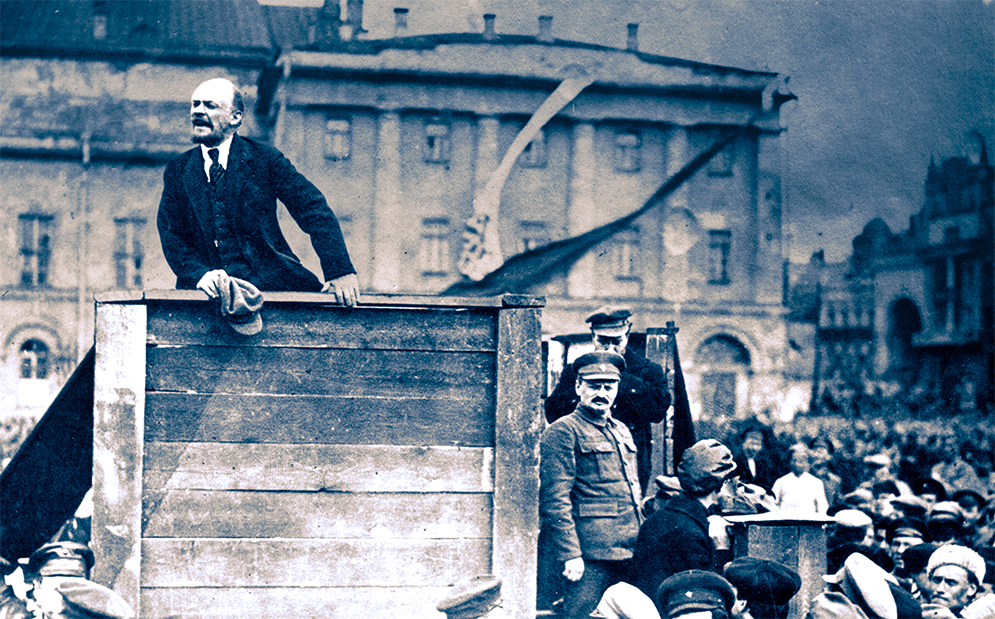
Revolutionary defeatism is a general theoretical approach, which had to be supplemented with a positive programme to win over the masses.
It can be compared to saying something like, “the bankruptcy of the boss is a lesser evil to calling off a strike”. That’s true, and we wouldn’t flinch from striking if the boss claimed it would make them bankrupt. But you aren’t going to mobilise anyone around the slogan of “let’s bankrupt our boss!”. Most workers understand that bankruptcy means potential job losses and decline. You have to present a positive programme alongside the general method.
Lenin himself later acknowledged this when he explained to the Third Congress of the Communist International, held in July 1921, that:
“At the beginning of the war, we Bolsheviks adhered to a single slogan – that of civil war, and a ruthless one at that. We branded as a traitor everyone who did not support the idea of civil war.
“But when we came back to Russia in March 1917 we changed our position entirely. When we returned to Russia and spoke to the peasants and workers, we saw that they all stood for defence of the homeland, of course in quite a different sense from the Mensheviks.
“Our original stand at the beginning of the war was correct: it was important then to form a definite and resolute core. Our subsequent stand was correct too. It proceeded from the assumption that the masses had to be won over.”
In 1917, Lenin often reminded the Bolsheviks that it’s important not to approach questions in an abstract way: “The masses take a practical and not a theoretical approach to the question. We make the mistake of taking the theoretical approach”.
Lenin made a distinction between the ‘defencism’ of the liberal and reformist leaders, who stood for the predatory interests of Russian imperialism, and the ‘honest defencism’ of the masses, who wanted to know how to end the war while protecting the gains of the February Revolution: “When the worker says he wants to defend the country, he voices the oppressed man’s instinct.”
Lenin therefore changed the emphasis of the Bolsheviks’ agitation in texts like The Impending Catastrophe and How to Combat It. He effectively said to the workers: ‘So you want to defend the gains of the February Revolution? Very well. But the bourgeoisie are incapable of waging this struggle. The only way to fight a just, defensive war is for the working class to take power. And with nationalised industry, democratic rights, and land for the people, we can do so much more effectively.’
This is a good object lesson in Bolshevik tactics. It’s not enough to have abstract truths and slogans learned by rote. To connect with the masses, you must, of course, begin with a correct theoretical appraisal of the objective situation, and the necessary tasks which flow from it. But then you must learn how to explain this programme to the masses in a way that they will understand; you need to hear their concerns, feel their sympathies, and live and breathe alongside them.
A Marxist programme becomes enriched, expanded, and deepened the closer it gets to the life of the masses, and the more widely it is applied. It’s easy to live in a world of dogmas, phrases, and fantasies when you’re a small isolated sect. But to win over the working class you need a solid grasp of Marxist theory, and dialectical thinking in particular.
The ‘Proletarian Military Policy’
It was with exactly this in mind – the need to win over the masses – that Trotsky, and later Ted Grant, developed what became known as the ‘Proletarian Military Policy’ for the Second World War.
Their starting point was the idea that the revolutionary party needs a programme for wartime just as it needs a programme for peacetime – one that addresses the problems of life during wartime: mass mobilisation, conscription, the militarisation of industry, food rationing, and the general upheaval of social life due to the war effort.
Ted Grant’s Workers’ International League – and later the Revolutionary Communist Party, from which we take our name and trace our heritage – raised transitional demands to drive a wedge between workers and the ruling class, raise the strength and consciousness of our class, and make it clear that the working class must take power.
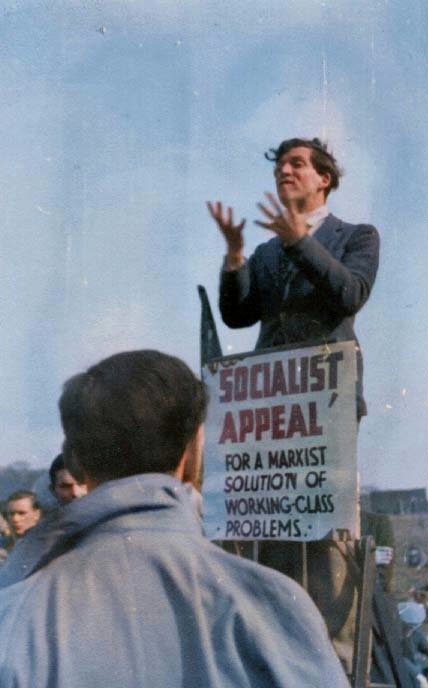
In the context of the armed forces, this included demands to democratise the army, replace the inept generals with officers elected by the soldiers, alongside the abolition of courts martial, ranks, and titles.
This also included demands for the arming of workers’ militias as the best way to defend the country, and for the state to fund military training schools for workers.
In order to curb the waste, mismanagement, and profiteering in the war industries, they demanded their nationalisation under workers’ control, and the expropriation of the war profiteers.
And they connected all of this to the need to overthrow the British imperialists, carry out a socialist programme of nationalising the land, banks, and industry, and issuing an internationalist appeal to the workers of Europe and the colonies to end the war through revolution.
In this way, the necessary principle of opposition to British imperialism was maintained, whilst making clear to workers that the Marxists were in favour of defeating the Nazis.
In the context of the Second World War, when a large section of the British working class was being drafted into the armed forces, Ted Grant explained that Marxists can’t be like the tearful pacifists who refuse to go into the armed forces. In order to win support for a Marxist programme, we must go where the working class is: whether that’s the factories, the mines, the Navy, or the trenches. We do not cut ourselves from our class brothers and sisters.
And just as we must be the best workers and students in order to win the confidence of our co-workers and coursemates, so too must we be the most capable, professional, and trustworthy soldiers.
This programme and tactical approach found an echo. As Grant relates in his History of British Trotskyism, the WIL/RCP grew considerably during the war, like no other Trotskyist organisation in Britain had done before. This growth was concentrated in the industrial areas (including in the weapons factories), as well as in the Army – where the Trotskyists enjoyed wide support in the soldiers’ mock parliaments in North Africa.
The military policy was not the original invention of Trotsky or Grant, by the way. The embryo of this policy again goes back to Lenin. Even while he was formulating his position of revolutionary defeatism, he argued in favour of the election of officers, a workers’ militia, and proletarian military training in The Military Programme of the Proletarian Revolution.
The war programme of the working class can vary in content and emphasis depending on the circumstances of the war, just like any part of a Marxist programme. But this transitional approach would be an essential starting point for connecting with the masses during wartime.
The coming period
Today, we are not approaching a new world war on the scale of the Second World War, with widespread mobilisation and all-out military engagements between the big powers. There are a number of reasons for this.
Firstly, the existence of weapons of mass destruction has made war between the nuclear-armed powers a much riskier gamble. Ultimately, the bourgeoisie wages war for profits – and there are no profits to be made in a nuclear wasteland.
Secondly, the working class is larger, stronger, and more internationally integrated than at any point in history.
In the past, it was generally the peasantry and the middle classes who provided the social base – and the bulk of the manpower – for expansionist wars. These classes are now increasingly sinking into the ranks of the proletariat.
The working class is driven by its material interests to oppose imperialism and militarism. The experience of the costly and fruitless ‘War on Terror’, and the disastrous impacts of the Russia-Ukraine war on their living standards, have fuelled widespread anti-war sentiment.
Alongside this, workers and youth have witnessed the barbarity of the Gaza genocide, which has irreversibly built a wall of distrust between the masses and ‘their’ governments.
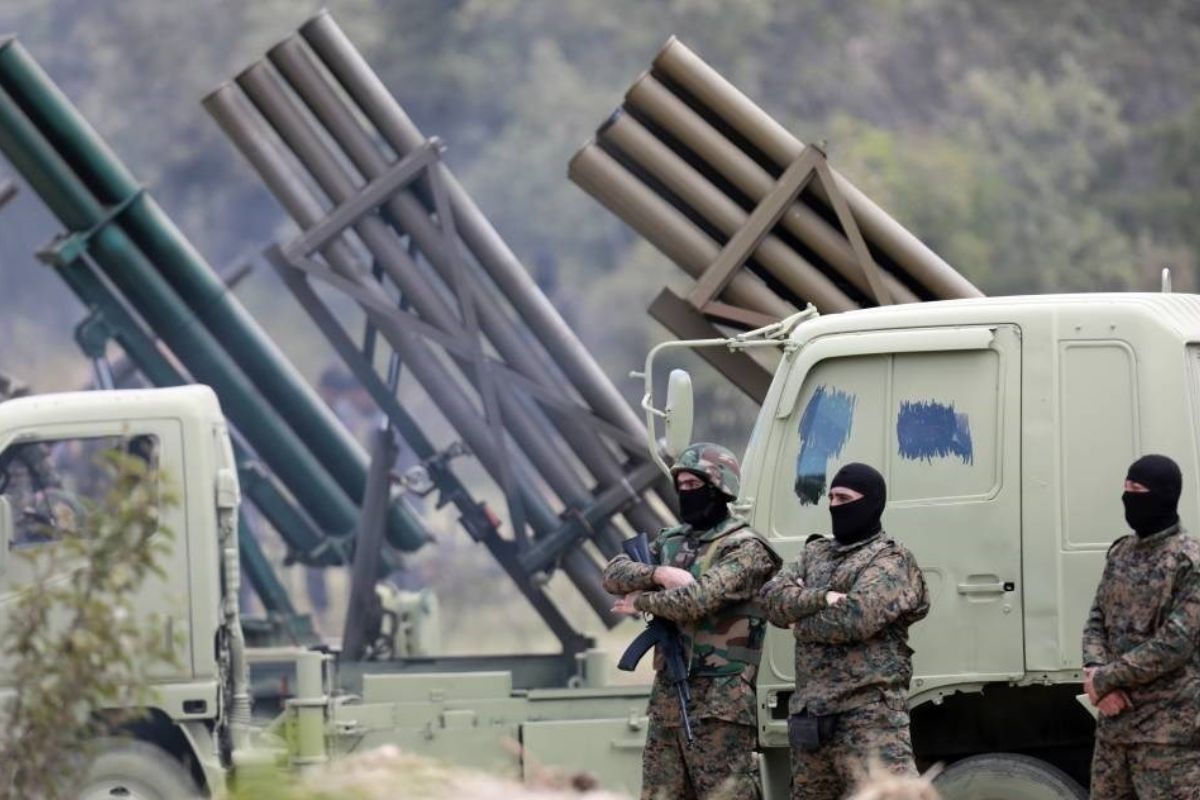
Today, imperialist states like Britain and America simply could not find enough people willing to fight such a massive war on their behalf. And if they resorted to conscription, it would very likely lead to explosive mass movements, or even a revolutionary situation. The recent youth protests against conscription in Germany attest to this.
Lastly, it is becoming increasingly hard for the imperialist powers to maintain any sort of military domination in the form of direct occupation.
In the 19th and early 20th centuries, Britain and France were able to hold down the majority of the world’s population in direct colonial enslavement. But the past one hundred years has proved that such a level of domination is becoming almost impossible.
US imperialism in particular has experienced setback after costly setback ever since the Vietnam War. The US’ campaigns in Afghanistan and Iraq in the 21st century both led to costly retreats. As US generals have warned Trump, a full-scale intervention in Iran would carry enormous military risks – and that’s leaving aside the financial and political damage.
Part of this shift is down to the rise of national consciousness. Enslaved peasant populations – confined to plantations and farms, without a national life – were relatively straightforward for the old colonial powers to directly control. But modern, industrialised, urbanised societies with a developed sense of national sovereignty aren’t as willing to be occupied by foreign powers.
Another part of this shift is the spread of capitalist industry to every corner of the earth. Many countries – not just the advanced western powers – are now capable of producing military hardware like drones, missiles, and ammunition, alongside having access to sophisticated weapons, surveillance, and communications systems.
The war on Iran in particular has proved that smaller, less-advanced countries can sometimes even have the edge over their larger, imperialist rivals, whose military-industrial complexes lie in the hands of parasitic monopolies with overengineered weaponry.
When cheap drones and home-made missiles are capable of fending off state-of-the-art weapons systems worth billions, and depleting the imperialists’ munitions stocks, the big powers can wind up exposed as Goliaths facing down an army of Davids.
In effect, by developing the productive forces – spreading technology, industry, and modern social relations to every corner of the globe – imperialism has made military domination increasingly difficult. It has sown the seeds for its own demise.
Down with militarism!
But despite all of the factors which stand in the way of a full-blown world war, imperialist tensions are nonetheless being ramped up. The war drums are beating louder and louder. The vortex of war is swelling and shifting across the globe.
Inevitably, we will see more proxy conflicts break out on every continent; more warmongering and jingoism from the western ruling classes; and more chauvinist poison and pacifist phrasemongering from the opportunists in the workers’ movement.
All the while, the black smoke of militarism will continue to choke society – economically, politically, environmentally, and culturally.
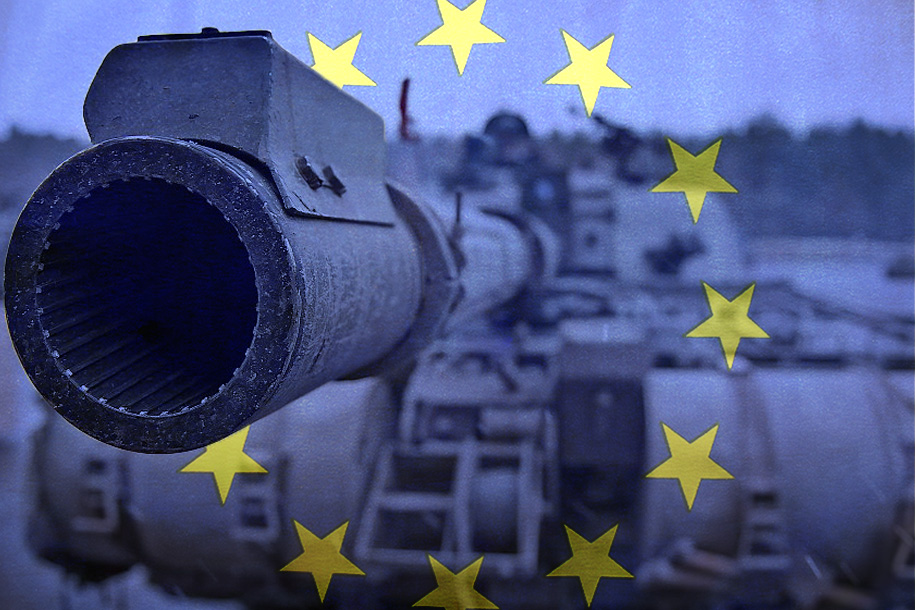
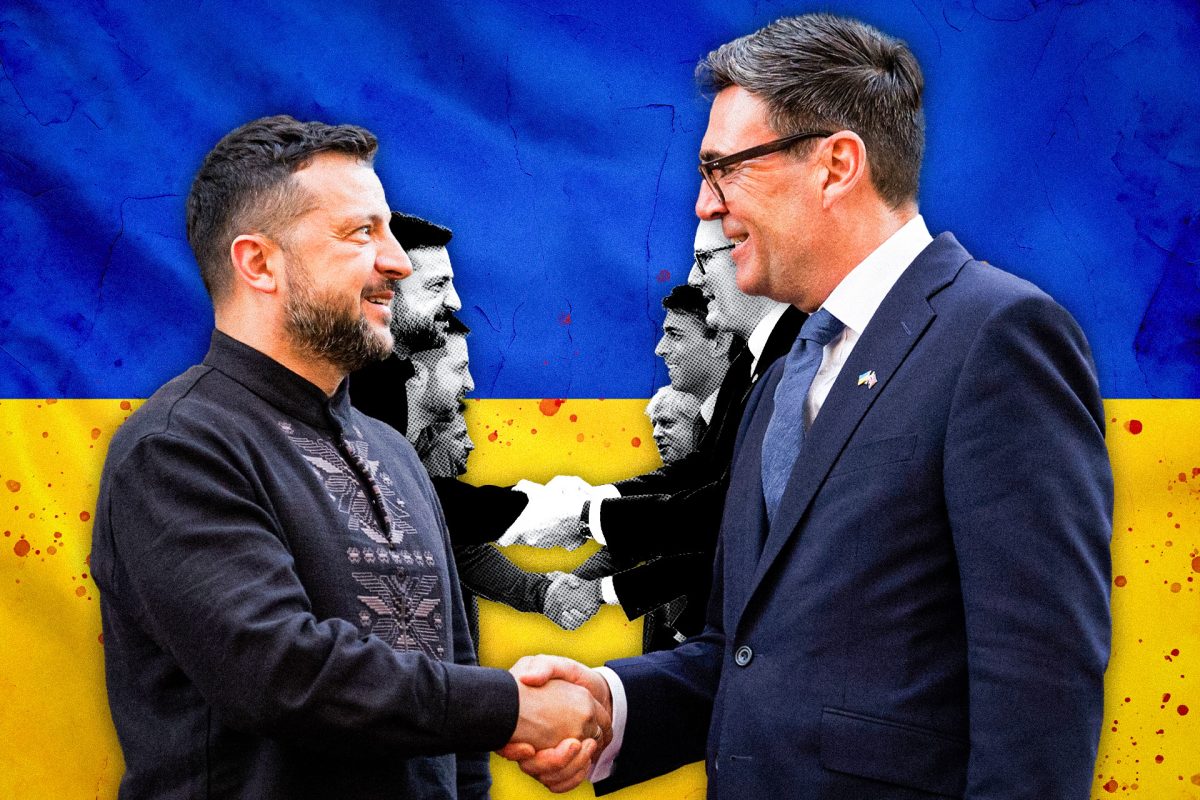
The previous Starmer government pledged to place the UK on a ‘war footing’. And Andy Burnham has already made clear his effusive support for British militarism. Sections of the military establishment, meanwhile, are beginning to call for national service and militarisation of the youth.
Across Europe, governments are ramping up the drive towards militarism, calling for austerity cuts to increase arms spending, in order to ‘protect western democracies’ against the fictitious threat of a Russian invasion. In reality, these reactionary policies are nothing more than an attempt to shore up the strength of a weak and divided European imperialism against the rising powers of Russia and China – at the expense of the working class at home.
Opposition to this militarist campaign will be one of the key factors driving the class struggle in Europe and Britain in the coming period. Communists must be armed with a clear, class-based anti-militarist programme, capable of uniting the masses of Europe in a common revolutionary struggle against their imperialist ruling classes.
War always accompanies periods of revolutionary turmoil like that which we are being plunged into. The coming period will include inter-imperialist wars, national wars, civil wars, and class wars.
We must be theoretically prepared to make sense of this maelstrom, and to resist the pressures of bourgeois public opinion and petty-bourgeois hysteria.
We do not want militarisation, nor do we wish to hasten its arrival. But we do recognise it as an inevitable feature of our epoch of imperialist decay, which only the socialist revolution can do away with.
The imperialists are militarising society – that is their choice to make. But in doing so, they should know that they are also militarising the consciousness of the masses: shaking them out of their stupor; toughening them up; and preparing them for the coming class war.