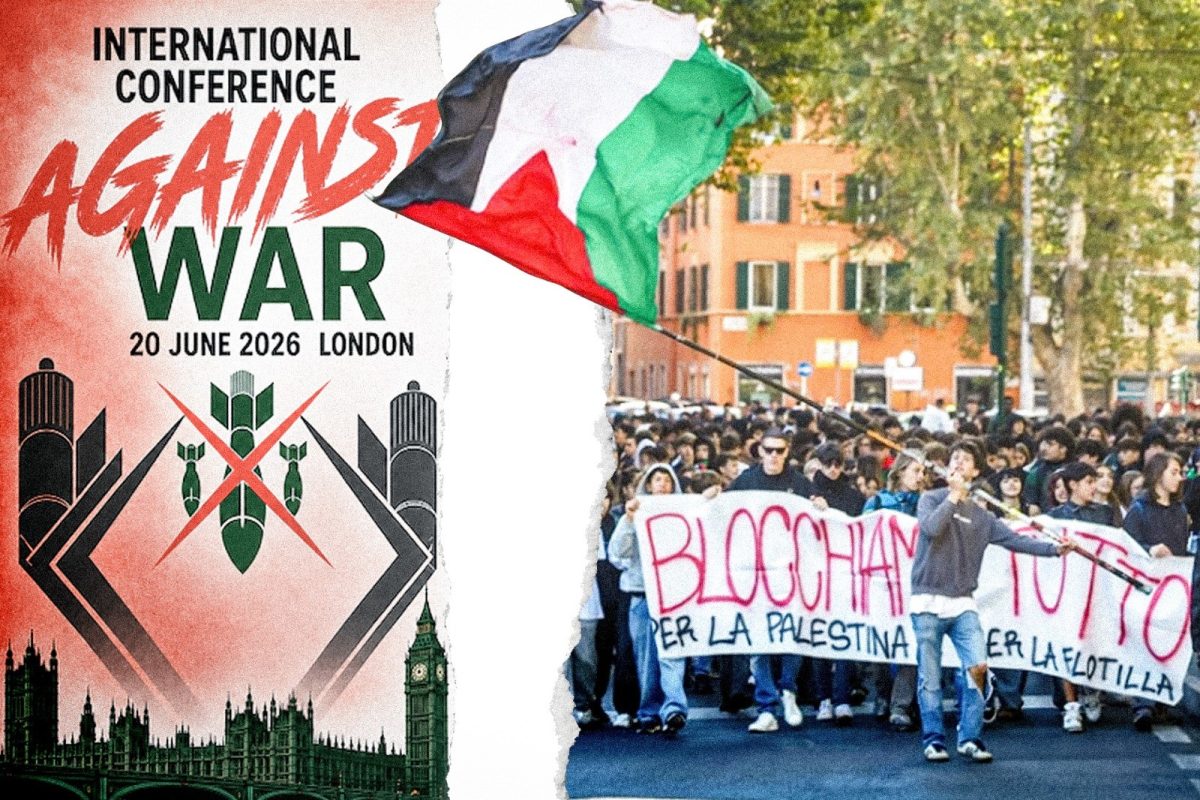
An ‘International Conference Against War’ is taking place in London on 20 June, billed as the biggest of its kind in years.
This follows a similar anti-war conference held in Paris last October, which attracted some 4,000 people.
The organisers of the Paris event claimed that they brought together “all the democratic forces”, so as to “raise the alarm” and “organise for peace”.
With these aims in mind, those attending listened to setpiece speeches from selected individuals, who spoke against war and against the genocide in Gaza.
This is now to be followed by a gathering in London, along similar lines.
Political heterogeneity
It must be said from the outset: if the London event is anything like the one in Paris, then this is certainly not a ‘conference’, as billed.
Rather than any kind of delegate-based democracy or audience participation, this is more likely to be a rally, with a line-up of prearranged platform speakers.
Having said that, this ‘conference’ has gathered the sponsorship of an impressive array of organisations: fourteen national trade unions, including Unison, UCU, RMT, ASLEF, NEU, and PCS, as well as over 100 union branches and trades councils.
It is also supported by dozens of wide-ranging peace organisations and solidarity groups, such as the Stop the War Coalition, Campaign for Nuclear Disarmament, Palestine Solidarity Campaign, Peace and Justice Project, Bertrand Russell Peace Foundation, Cuba Solidarity Campaign, and Venezuela Solidarity Campaign.
Politically, it is supported by the Morning Star, the Democratic Socialists of America International Committee, as well as the Muslim Association of Britain. And there will be representatives from left parties from across Europe, including Podemos, France Insoumise, Die Linke, and the Belgian Workers’ Party.
The event is being held under the banner of ‘the people of Europe demand peace’.
According to the conference’s organisers, the aim is to “build a movement” across Europe and internationally against rearmament, militarism, and the drive towards war.
Speakers will include Jeremy Corbyn MP, Zarah Sultana MP, Richard Burgon MP, John Trickett MP, author Tariq Ali, Green deputy leader Mothin Ali, NEU general secretary Daniel Kebede, PCS general secretary Fran Heathcote, and a host of others.
This line-up certainly points to the wide spread of political opinions that will be present at this event: from ex-radical authors to left reformists; and from staunch pacifists to liberal ‘progressives’ – and all the colours in between.
The political heterogeneity of this event is also demonstrated by the material put out by its key sponsors, such as the Stop the War Coalition.
View this post on Instagram
“The aims of the conference,” states Stop the War (StW), in a model resolution for trade union branches, “are supportive of the positions taken at this year’s TUC in favour of ‘wages not weapons’ and support for the Palestine movement”.
This motion also calls for the need to “broaden and deepen international links between trade unionists, anti-war movements, and progressive forces”.
What these “progressive forces” are is not defined. But presumably it includes all those liberal and moral forces opposed to war – an extremely broad alliance, to say the least.
‘Building the movement’
The organisers have certainly been beating the war drums. They warn that the danger of war is imminent, and that we need to act.
In fact, their leaflet for 20 June announces that “the wolf is at the door”.
“Talk of war has become preparation for war across the European continent,” they say. “In the face of war, and racist divisions it breeds, we must create our own international network which will organise for peace…”
In other words, according to the organisers, it is necessary to gather together the widest number possible to resist the slide towards war and militarism, through an international “network”.
John Rees, a key organiser of the event, summed up last year’s ‘conference’ by talking about “the extreme danger facing us, of our governments preparing for war, guided by the fascist international headed by Donald Trump”. He urged the audience in Paris to step up and “build and deepen the movement”.
But what does “building a movement” mean with such a politically amorphous coalition (or “network”)?
Rees recalled his involvement in the movement against the 2003 Iraq War, when millions took to the streets of London. According to him, “it will require exactly this kind of movement if the war-drive in Europe is to be stopped”.
What he fails to mention is that, despite millions on the streets, Tony Blair and the British ruling class ignored these protests, and went to war anyway. They were not swayed by the mass opposition on the streets, but were driven by their own class interests – nothing more and nothing less.
As Marx explained, under bourgeois democracy, you can say what you want, but the bankers and capitalists ultimately decide.
Despite Rees’ grandiose claims, how is this London conference going to be different from the Paris event?
In reality, despite any good intentions, it will produce no tangible outcomes. It will, in essence, comprise the same speeches made thousands of times by the same – or similar – people about how bad war is, and how desirable peace is.
But millions of young people throughout the world do not need a conference in London to tell them that imperialism is bad, war is horrific, and so on. They know that already.
Rather than leaving it up to such coalitions and campaigns, we need to ask: where are the leaders of the trade unions and the mass organisations of the working class on this question?
They lead organisations of millions. Some of them will even be attending this conference. In practice, however, they have not lifted a finger. They conveniently wash their hands of any serious struggle, and simply ‘outsource’ it to broad front organisations like Stop the War.
The magnificent political general strike in Italy last October, in solidarity with Gaza, points in the right direction.
Even there, the trade union leaders of the CGIL dragged their feet, as usual. But they were forced to call action, due to the pressure from below. Together with smaller unions like the USB, they came out in defiance of the law, and despite the state declaring the general strike ‘illegitimate’.
By comparison, what have the British trade union leaders done? The best that they can offer is squeaks of protest. They happily sponsor all kinds of things, but they do little in practice when push comes to shove.
In relation to the Iran War, the TUC – supposedly the ‘general staff’ of the union movement – simply issued a mealy-mouthed statement calling for “all states and international actors to assume their historic responsibilities to support de-escalation… under the United Nations Charter”.
Chris Nineham from StW wrote that it was “good news” that Unison, Unite, and the CWU had backed their statement condemning “an illegal war” and the “abandonment of diplomatic talks by the United States”.
This statement also says that reports of Iranian casualties were “deeply disturbing” and require “urgent, independent investigation”. And it also called for “an immediate return to diplomacy”.
This mild, mealy-mouthed statement was signed by 15 trade union general secretaries. The ‘left’ and trade union leaders had laboured and produced a mouse! And this is “good news”, according to StW!
Talking shops
There have been many ‘anti-war’ congresses in the past, especially in the 1930s. But these all achieved absolutely nothing.
In 1932, we had the great ‘International Congress of War against War’ in Geneva. This gathered together “all people, all groups, regardless of their political affiliations, and all labour organisations – cultural, social, and trade union – all forces and all mass organisations”.
Politically, this broad front of ‘progressive forces’ was dominated by pacifist platitudes. It was, in reality, a “pernicious masquerade”, to use Trotsky’s words.
The Geneva Congress provided a platform for the reformist leaders to give meaningless speeches about the need to ‘build the movement’ against war; to show how ‘radical’ they could be, without any real commitment. But it was totally powerless in stopping the Second World War.
Today’s conferences are no different from those of the past. We are told we must all unite – diluting any politics or programme down to the lowest common denominator along the way – in order to ‘share opinions’ and ‘learn from each other’.
Instead, we must learn from history: no amount of talking shops can or will end war.
Pacifism and moralism
The main problem with this latest amorphous gathering – or ‘conference’ – is that it is devoid of any class content, let alone revolutionary content.
The overriding outlook of this event is a pacifistic, moralistic approach to war – an outlook shared by all the left reformists and do-gooder types.
Every sane person wants peace. But as the Bible says, they cry “peace, peace, when there is no peace”. Under capitalism, in this epoch of decay and decline, there is no peace – only crisis and conflict; misery and perpetual wars.
Calls for peace under imperialism, and for the ruling class to change its ways, are utopian. They are an attempt to reconcile the irreconcilable.
No amount of ‘pressure’ on the bourgeoisie, or ‘uniting all the progressive forces’, will end war and conflict.
Public opinion can have a certain effect, obliging the ruling class to modify its position on secondary questions. But it can never force the capitalists and imperialists to change course on important questions that affect their fundamental interests.
We recognise that pacifism, for most, is a sincere expression of the desire to stop war. But in the face of rampant militarism, it ends up impotent and in a complete blind alley. It is like the Christians appealing to the Devil to mend his ways.
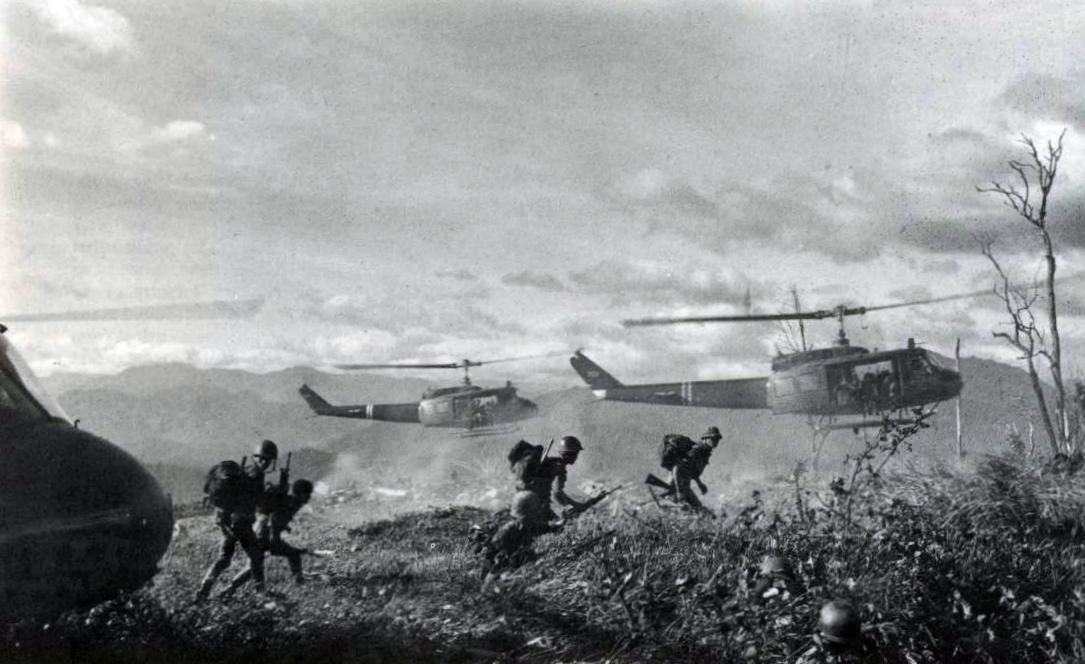
At the same time, we should also remember that not all wars are the same. There are wars of imperialist domination. But there are also wars of national and social liberation, which we support, as was the case with the Vietnam War.
The pacifists think it is possible to make the ruling classes behave better and disarm, in order that ordinary people may live peacefully side by side. But this is a utopian dream.
As Lenin tirelessly explained, there is nothing more futile as empty and sentimental pacifist rhetoric.
Horror without end
War is not a moral issue, as the pacifists and reformists wish to portray it. It has nothing to do with good and evil people.
Wars under capitalism are fought for objective reasons. They arise from the imperialists’ need for markets, raw materials, and spheres of influence. The different capitalist powers manoeuvre to defend their material interests; their power, profits, and prestige.
As Prussian military theorist Carl von Clausewitz aptly put it: war is simply the continuation of politics by other means – the continuation of capitalist plunder and exploitation through violent and destructive means.
As night follows day, therefore, under capitalism, wars are inevitable at some stage. They are the product of the insoluble contradictions of capitalism; of the limits imposed on the productive forces by private ownership and the nation state.
The whole history of capitalism is one of bloody conflict and conquest – especially in the epoch of imperialism. As Lenin stated, “capitalism is horror without end”.
There has hardly been a single day of peace since the Second World War, with wars constantly taking place in one part of the world or another.
As I write, there are two major wars going on: the conflict in Ukraine, which is a proxy war between Russia and western imperialism, in the form of NATO; and that between American imperialism and Iran.
In regards to these ongoing wars, a lot has been made of the need for ‘ceasefires’. But even where a temporary agreement or cessation is achieved, this only reflects a passing change in the balance of forces. Sooner or later, the imperialists’ cold, selfish, vested interests make themselves felt.
At the present time, the so-called ‘ceasefire’ in Iran is not worth the paper it is written on (although it is not even written on paper). It reflects the dilemma of the American imperialists, who, having blundered into the war, are now desperate to get out of this mess. They have, in reality, been defeated by Iran.
Today, to invert Clausewitz, talk of peace has become the continuation of war by other means.
We don’t stand for meaningless ceasefires, but for the defeat of NATO and the US imperialists globally. They are the greatest gangsters on the planet.
The globe’s leading imperialist power, the USA, has pursued a foreign policy since 1945 that has involved: the overthrow of more than 50 governments; interference in 30 elections; the bombing of 30 countries; the use of chemical and biological weapons; and the attempted the assassination of world leaders, in some cases successfully.
US imperialism is engaged in ‘special ops’ in 124 countries. And Washington’s faithful lapdog, British imperialism, has collaborated in many of these crimes.
Look at Ukraine. With the collapse of the Soviet Union, western imperialism sought to extend its influence into Eastern Europe, provoking resistance and then war with Russia. This was facilitated following the Maidan ‘revolution’, which brought to power an extremely reactionary nationalist regime backed by fascists in Kiev, which the western powers have supported and prettified.
Kiev carried out a bloody pogrom in Odessa in 2014, where a trade union building was surrounded and burnt to the ground. Even today, the Ukrainian leaders glorify wartime fascist butchers as ‘national heroes’.
Similarly, the western imperialists also presided over the breakup of Yugoslavia in 1991-92, mainly in the interests of German imperialism. This resulted in a series of bloody wars. This was all part of the strategy of western imperialism to extend NATO eastwards.
International law
No doubt there will be radical-sounding speeches on 20 June, as in Paris, where there was talk – amid great cheering – of taking Blair, Starmer, and the rest of the imperialist gangsters to the International Court of Justice in the Hague.
This all sounds wonderful. But who in practice is going to do this ‘taking’? The suggestion is little more than verbal radicalism.
In fact, the idea that these international courts are somehow ‘independent’ – that is, standing above class society – is false from beginning to end. They exist to build up false illusions in capitalist ‘justice’; to dupe the masses into trusting in the liberal establishment’s institutions and ‘rules-based order’, rather than in their own strength as a class.
The glib talk we hear of creating a world based on ‘justice’ and ‘humanity’ is so much utopian bubble-blowing under capitalism, as if this dog-eat-dog system can somehow be transformed to be nicer and kinder.
Similarly, it is likely that speeches will be made by our pacifist friends praising the United Nations as a means to peace, which the reformists make a lot of fuss about.
But the working class should have no faith in the UN. Throughout its existence, the UN has either been used as a fig leaf to justify imperialist aggression – as in the case of the Iraq War – or has been utterly impotent.
The UN can never solve the basic issues of war and peace, as history has proved. It wasn’t for nothing that Lenin described its predecessor, the League of Nations, as a “thieves’ kitchen”.
As revolutionary communists, we oppose war and militarism. At the same time, we always link our opposition to the need to do away with the system that produces wars.
You can’t cure cancer with an aspirin. And you can’t end war without ending capitalism. No amount of pleading and ‘putting pressure’ on the ruling class will put an end to war.
Socialism or barbarism
Our task is not to sow illusions in pacifism, but rather to strip away all the subterfuge and lies; to reveal the real class interests at play; and to point the way forward.
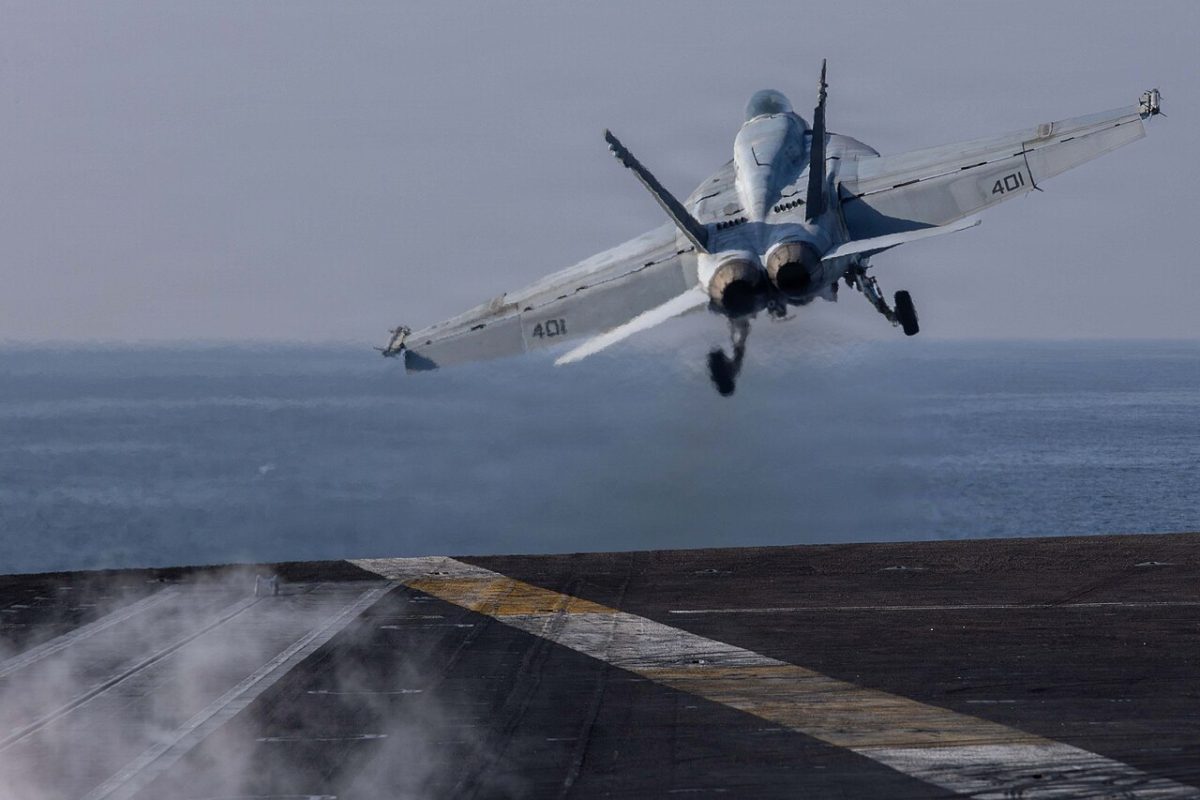
The increasingly turbulent international situation, reflected in the turmoil of world relations, is not due to the whims of individuals but arises from the organic crisis of capitalism.
The capitalist system has reached its limits, producing crises at all levels. Only through the overthrow of this system can we eliminate such crises, including the threat of wars and conflicts. Anything less than this is a sham.
Communist Rosa Luxemburg correctly explained that the alternative facing humanity is capitalist barbarism or socialist revolution.
Today, it has become fashionable on the left to quote Luxemburg, but to strip her words of any revolutionary content.
We believe that only the working class – by carrying out the socialist revolution and instituting workers’ democracy – can put an end to war, and thereby free up the resources and expertise wasted by militarism in order to transform the planet.
Imperialist conflicts can only be ended by the overthrow of the ruling classes worldwide, and by bringing about a society that is free of all class exploitation and oppression.
Popular frontism
Inevitably, woolly pacifist attitudes are accompanied by class-collaborationist approaches; by calls for ‘progressive alliances’ and popular fronts. ‘Everyone together, never mind the weather’: this is the thinking of these ‘lefts’.
This conference, for example, is heavily promoted by Counterfire – a so-called ‘Marxist’ organisation, coming from the pseudo-Marxist traditions of the Socialist Workers’ Party (SWP).
The whole approach of Counterfire and the SWP is to promote broad-front organisations: whether it was the Anti-Nazi League in the past, or the Stop the War Coalition and Stand Up to Racism today.
These organisations follow in the footsteps of the popular frontism of the past: watering down their ideas to accommodate and placate the greatest number of so-called ‘progressive’ elements. Such ‘allies’ include the most moderate of reformists in the labour movement, and even liberals.
In this way, these ‘Marxists’ ingratiate themselves with the ‘left’ trade union leaders, in order to ‘build the movement’ – gathering sponsorships, affiliation fees, and other sources of funding along the way, of course.
This trailing after the ‘lefts’ lead these groups further into the swamp of opportunism, which has become their trademark.
They constantly beat the drum about fascism and the need to keep out Reform at all costs. But this only leads to a policy of ‘lesser evilism’.
“Vote for any party that keeps out Reform,” states Lindsey German, another leading figure in Counterfire and Stop the War. Thus, according to them, you can vote Conservative, Liberal Democrat, Labour, and whoever else as the supposed ‘lesser evil’.
They ignore the fact, however, that the ‘lesser evil’ is still evil. In fact, these political parties are all hated by ordinary workers and youth. Rallying behind the established parties, with their pro-capitalist policies, only prepares the way for the inevitable rise of Reform.
In this way, ‘lesser evilism’, so prevalent on the so-called ‘left’, proves itself to be completely bankrupt.
No doubt, the conference organisers will object: ‘but at least we are doing something!’
Yes, true enough, they are doing something: blowing off hot air and sowing illusions in pacifism.
We have to tell the truth, however. Genuine peace can only be attained by revolutionary struggle against capitalism and its representatives.
Workers and youth in all countries honestly and sincerely want peace, and we support this progressive stance.
But we must state clearly: the real struggle against war is precisely the preparation for socialist revolution – namely the building of revolutionary parties and a revolutionary international.
The only effective campaign against war is a revolutionary one, in other words, involving the stripping away of any pacifist illusions and demagoguery.
Is war coming for Europe?
Above all, alongside their wishy-washy pacifism, the reformists have no perspective or programme to answer the crisis of capitalism, or the wars and conflicts that arise from it.
Take the question of an impending Europe-wide war. It is true that the European capitalists – frightened by Trump’s threats to abandon Europe, as Putin strengthens his position in Ukraine – want to increase military spending.
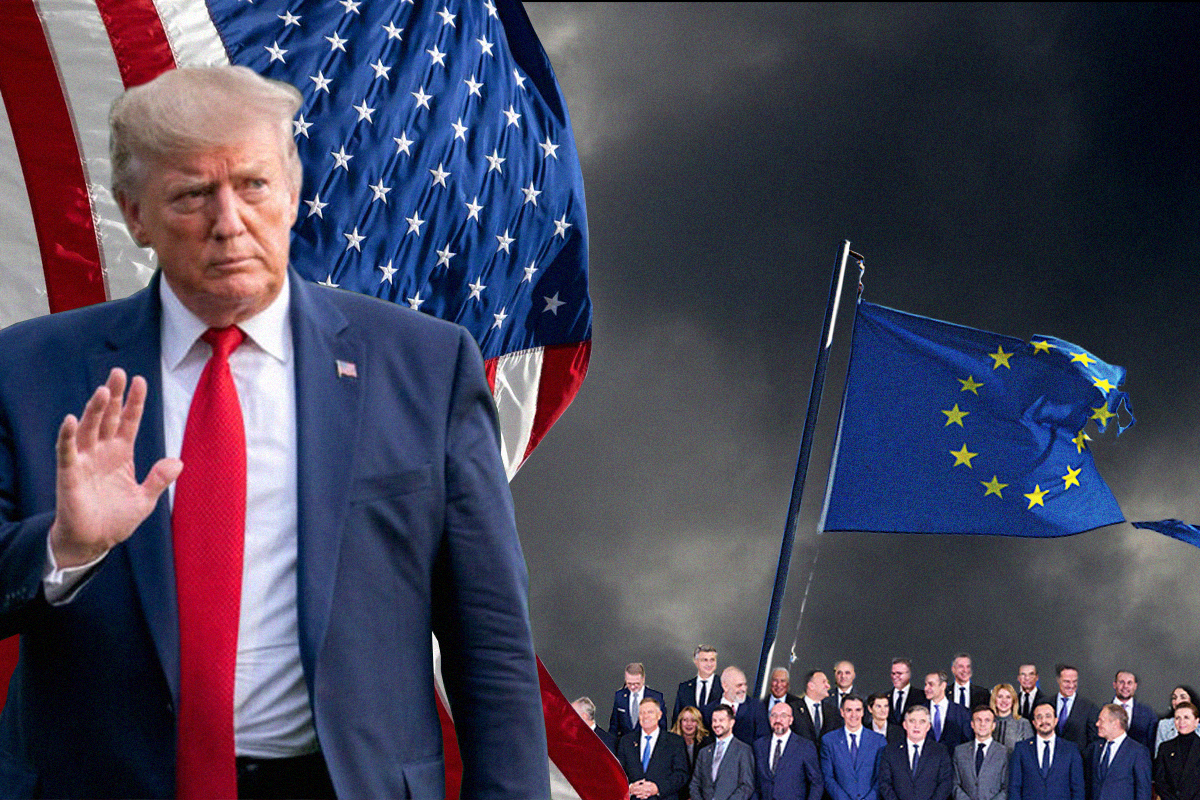
The idea that we are facing an immediate European war, however, is false. To fall for this is to swallow the propaganda of the western imperialists and the military-industrial complex, who are keen to see increased expenditure on arms.
General Pudāns, head of Latvia’s armed forces, recently stated that Russia could invade the Baltic states by the end of 2028. The British secret service talks of 2030.
But the idea that Russia is preparing to attack Britain or Europe is a fairytale, promoted by the frantic European leaders.
The real reason for their drive to rearm is that – having been abandoned by the United States, and with Russia emerging victorious from its proxy war with NATO in Ukraine – the different European imperialist powers fear that their interests abroad will be undermined.
They are therefore calling for rearmament, as part of an effort to reassert their strength and retain their spheres of influence: in Eastern Europe, the Balkans, Central Asia, Africa, etc..
In other words, they are not rearming to ‘defend Europe’, but precisely to defend the imperialist interests of the big German, French, and British multinationals, banks, and billionaires, at the cost of working people.
Healthcare vs warfare
In any case, the militarisation of Europe is far from certain. While the European Union has promised €150 billion in loans for defence, they have run into difficulties over this.
Meloni, for instance, is threatening to reject a €15 billion rearmament loan, unless more ‘fiscal relaxation’ is offered in order to tackle soaring energy prices.
“We cannot justify to our citizens that the EU is allowing financial flexibility for security and defence purposes,” the Italian Prime Minister has stated, “and not to protect families, workers and businesses from a new energy emergency.”
The capitalist governments of Europe are under pressure to boost their military spending. But they are restrained by colossal debts, on the one hand, and by the opposition of the working class, on the other.
The only way they can pay for a massive increase in defence is by dramatically cutting the welfare state, seriously affecting the lives of millions of workers.
We have seen how Starmer tried to make cuts to welfare, and was forced to partially retreat under pressure from his own MPs, who in turn were under pressure from their constituents.
After many months of delays, the government’s defence spending review has come up with an extra £13.5 billion, instead of the £28 billion demanded by the military – itself only enough to make up for past cuts in defence.
This £13.5 billion is supposedly going to come from cuts to other departments. But Starmer is still wrangling with his ministers.
The strategists of capital are not happy, but they realise the difficulties. “The inability of the government to make meaningful cuts to public spending is its fiscal Achilles heel,” lamented the Financial Times.
This row has now resulted in the shock resignation of John Healey, the (now former) defence secretary, who complained that Starmer’s government has been “unwilling” to commit sufficient resources to defence.
His resignation was followed by armed forces minister Al Carns, alongside two ministerial aides at the Ministry of Defence.
Matthew Savill, director of military sciences at the Royal United Services Institute said: “It looks like the gap between government rhetoric and reality became too great.”
With this latest blow, Starmer – isolated, blooded and humiliated – is hanging by a thread, as his grip on power quickly slips away.
“The political turmoil leaves the modernisation of Britain’s armed forces in limbo,” remarked the Financial Times.
In France, every attempt to make cuts in the budget has resulted in a political crisis, and the fall of one government after another.
Macron has been forced to retreat on his pension ‘reforms’, for example, in the face of mass opposition on the streets.
The same is true in other countries. Everywhere, the ruling class are at a complete impasse. If they make moves to further cut social spending, they will again face massive opposition. This is a recipe for class battles in one country after another.
Revolutionary programme
We are against increased military spending, and the piling up of scrap metal, while schools and hospitals are starved of resources. But how is this opposition to be expressed?
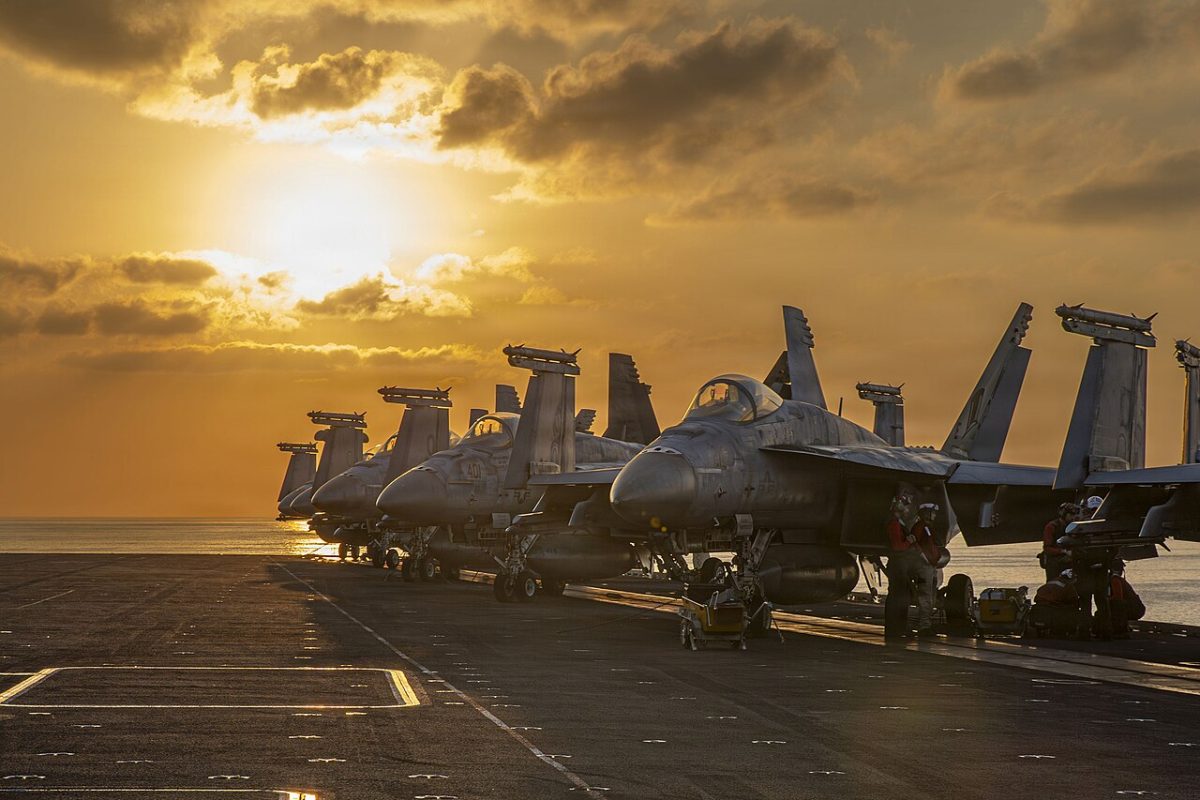
The answer is clear: a genuine anti-war conference must put forward a clear revolutionary policy.
But wait, the organisers of events like that on 20 June would say, this will frighten away the trade union leaders, reformists, and pacifists!
What these organisers do not say is that the struggle against war and militarism means launching a struggle against pacifist masquerades and reformist fraud, which only distracts from the real tasks.
This is not a time for empty speeches and moral pleading. The occasional oblique mention of socialism in the dim and distant future is also totally inadequate.
As Lenin explained at the Zimmerwald conference in 1915:
“Our resolution’s fundamental idea that a struggle for peace without a revolutionary struggle is a hollow and false phrase, and that a revolutionary struggle for socialism is the only way to put an end to the horror of war.”
War is precisely “the continuation of politics by other means”. Communists don’t have a separate policy for peacetime and another for war.
At all times, we explain that our main enemy is at home!
We fight to bring down the Epstein class and the whole capitalist system. And that is why we need a serious international, revolutionary, anti-imperialist campaign against militarism and war, with the aim of overthrowing capitalism internationally.
Such a campaign must include the following demands:
- Down with NATO and all other imperialist military outfits!
- No trust in the so-called United Nations, which either operates as a cover for imperialism, or is completely impotent.
- No to conscription! Not one man or woman, and not one penny, for capitalist governments and their war machines!
- No to rearmament! For a programme of useful public works!
- Confiscation of all military profits and the expropriation of the merchants of death in the war industries.
- Expose the imperialist fraud of ‘national defence’, the aim of which is to dominate and oppress weaker nations.
- For class war against militarism and imperialism! Our main enemy is at home!
- Fight for worldwide socialist revolution – the only way to truly resolve the question of war, and to pave the way for a true era of peace and prosperity.
The capitalist system is in the throes of a deep crisis, resulting in savage austerity and attacks on all our past gains. Capitalism can no longer afford reforms, only counter-reforms. This is preparing social explosions in one country after another.
Revolutionary upheavals are on the order of the day.
The task facing the working class is the eradication of this rotten social system, which breeds war and devours trillions on means of destruction, while savagely cutting back on healthcare, education, housing, and living standards.
This is the revolutionary goal that the RCP is fighting for. Workers of the world – unite!