



Youth radicalisation in Japan
Communism is
suddenly back in fashion in Japan. The reason is not hard to seek. ‘Lifetime
employment’ is a thing of the past for young workers, who face a casualised and
insecure future. One in three is temping. Some 44% of country’s workforce are
part-time only, while a profusion of short-term contracts has created a
generation of freelancers who are often ‘between jobs’. They have already worked
out that, as recession bites, they will be first in the firing line. They are
drawing political conclusions in increasing numbers.
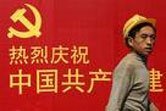
Rural reform and revolt in China
China’s urbanization process has
reached a critical juncture. Inequality between town and country is producing
explosive revolts surrounding the cities. The problem of how to contain these
revolts is at the core of policy making and is reflected in conflicts inside
the Central Committee of the ruling Communist Party.
The background to this is that rural
rebellions have escalated over recent years. Yu Jianrong director of the Rural
Development Institute’s Social Issues Research Center at the Chinese Academy of
Social Sciences gave explicit warnings to the Chinese leadership of a revolutionary crisis developing in
the countryside and new proletarian zones in the interior provinces.

Recession and class struggle in Europe
The disarray among ruling circles in the
European Union could hardly have been more clearly depicted than at the
‘summit’ over the weekend of October 4th and 5th. In
reality the event was little more than a photo-shoot. The meeting brought
together the Prime Ministers of Britain, Germany, Italy and France. The Prime
Minister of Spain clearly had his nose put out of joint by the lack of an
invitation. The other EU members (currently 27 nation states) also may well
have asked why they weren’t to be asked to take part in decisions that could
profoundly affect their futures.
The only realistic reply could be that the
meeting would have been even more of a shambles. Europe cannot get its act
together. First the participants at the summit swore to unite in action in the
teeth of the crisis. Secondly, when it came to pumping money in to the European
banking system (which must come if the plan is serious) they all got cold feet.
National interests came first. German finance minister Peer Steinbruck blew the
gaff. “We as Germans do not want to pay into a big pot where we do not have
control and do not know where German money might be used,” he complained. Since
the EU nations are not hanging together, they will hang separately.