This article is from the RCP’s pamphlet The Crimes of British Imperialism.
To fight imperialism, we must scientifically understand what it is, and where it came from. This pamphlet is therefore aimed at arming communists in the revolutionary struggles to come, to end the system which caused these heinous crimes.
Order your copy today at Wellred Books Britain.
“The first and almost exclusive task of the colonial army, often under the name of a “defensive formation or of a “foreign legion”, is to drive the luckless natives into slavery, to turn them into forced labourers for the capitalists, and – when they wish to defend their native land against the foreign robbers and blood-suckers – to shoot them down mercilessly, to cut them down with the sword and to starve them out.”
– Karl Liebknecht, Militarism and Anti Militarism
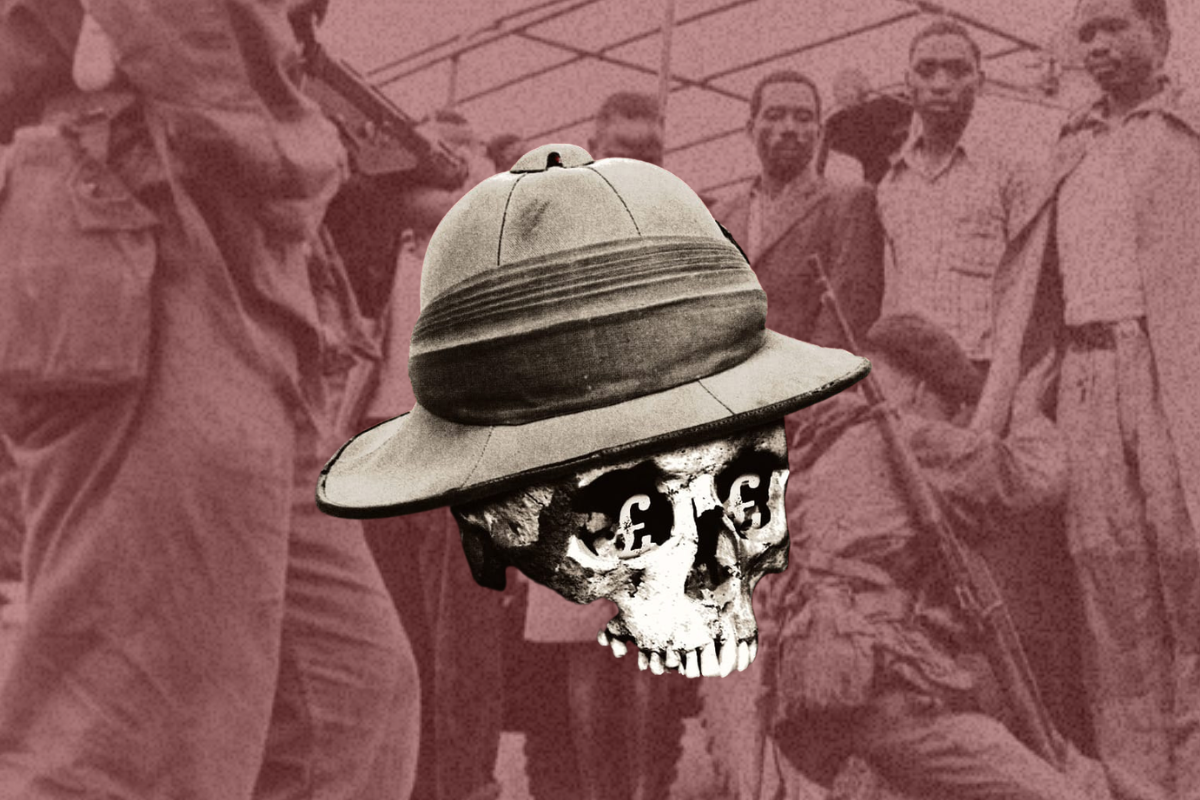
The history of the British Empire furnishes us with a great array of examples for Liebknecht’s words. The British suppression of the Mau Mau uprising in Kenya manages to shock and repulse even those well aware of the crimes of imperialism.
Throughout the 1950s, only a decade after the liberation of the Nazi camps, the British government was responsible for the creation of at least 42 labour camps across Kenya with the intention of holding back the tide of Kenyan independence.
These camps committed some of the most gut-wrenching torture it is possible to imagine. The depth and breadth of the British atrocities in Kenya are so repulsive that many documents were not only protected but destroyed permanently.
However, studying the suppression of the Mau Mau uprising teaches much more than the brutality of the British Empire. It also shines a light on what imperialism really is; something which is deliberately shrouded in great mystery by those who benefit from it.
Origins of colonial Kenya
To understand the brutal treatment of the Mau Mau, it is first necessary to understand the place of Kenya in the British Empire. At root, capitalist imperialism is not a macho competition but the economic necessity of a system which must constantly expand. Britain’s actions in Kenya prove this.
Since the Portuguese were run out of East Africa in the 1720s, the land was dominated by Arab merchants. By the 19th century, the British were looking towards East Africa as an important trading route into India.
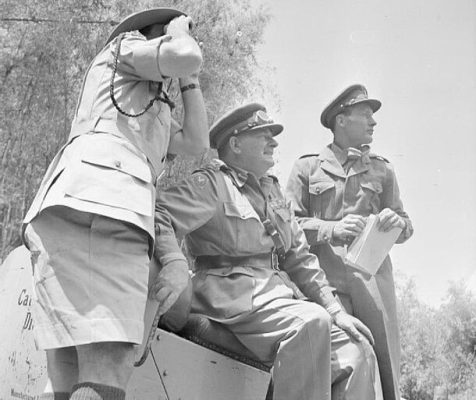
The British began ravaging the resources of East Africa, especially ivory and cloves. At this point, they had no interest in physically dominating East Africa as they had friendly relations with the Sultan of Zanzibar, the Arab leader of the region.
As German imperialism flexed its muscles, the British began to sweat. They knew that informal procedures and handshakes made in smoke filled rooms with the current regime were not enough.
Suddenly, there was a pressure to secure the profit made in this region. However, the British had their fingers in many different pies and the government was more interested in maintaining their colonies in the South of Africa.
Rather than taking on another cumbersome colony, which would need attention from the British government, they handed a mandate of the region over to trusted capitalist Sir William Mackinnon, who set up the Imperial British East Africa Company (IBEAC) in 1888.
As the largest shipmaker in India, Mackinnon was no stranger to fierce exploitation and domination of a foreign people for profit.
The royal charter which Queen Victoria granted to the company as it was founded left Mackinnon the task of annexing the land from the Eastern sea border of Kenya all the way to the Northwest tip of Lake Victoria in modern day Uganda.
The IBEAC was entrusted with managing the export of food and resources as well as building a railway stretching the length of the annexed land in order to make the movement of exports and workers faster.
Despite Mackinnon’s legacy of imperialism, IBEAC met with failure in Kenya, and ironically for the very same reason the British government had granted it the royal charter in the first place. The rise of German imperialism was part and parcel of the relative decline of British imperialism on the world stage. The British could no longer dominate the entire globe with ease and were facing sharper competition with other imperialist or wannabe imperialist powers.
The IBEAC simply did not have the resources to dominate East Africa in the way the East India Company had dominated the Indian subcontinent.
In fact, the founding of the IBEAC came at a time when Britain’s other colonies were being brought out of the hands of individual capitalists and into the hands of the state to secure their potential profits for British capitalism.
State control of Kenya
Only five years after its founding, in 1893, the British government took over from the IBEAC, striking a deal with Germany where the British took the Northern section of the Sultanate of Zanzibar (modern day Kenya and Uganda) and the Germans took the Southern section (modern day Tanzania).
Now, the burning need of British capitalism was cheap labour and they saw a dream of this in the colonies.
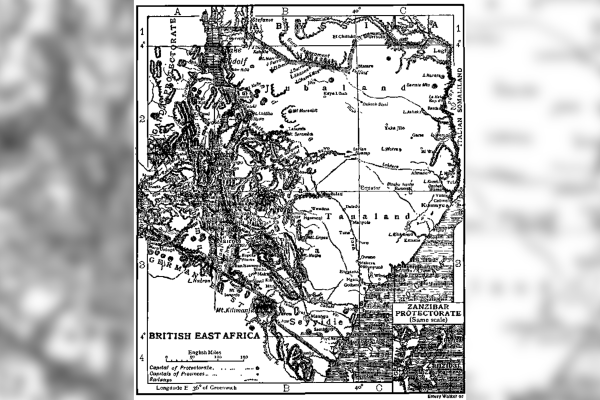
In order to make this dream a reality, the British government imposed a series of measures on the Kenyan people. This began with a ‘hut tax’ which forced those living on the now British controlled land to pay to live there.
Of course, most native Kenyans could not pay this as they were not dealing in standardised money. This forced many into selling their labour power to the British capitalists in order to pay these taxes. If you could not pay, you were forced to work for the British anyway.
The British also made it illegal to sell crops on an open market. Instead, Kenyans were forced to sell them to a marketing board, run by the British government at a set price. For the Kenyan people, there was no way out of this trap.
To add insult to injury, a careful system of monitoring ‘natives’ with ID passes (kipande) was put into place.
Cultural domination
In order to ensure the domination of a land which had thousands of years of history, cultural domination was an important step. As Marx said, “The ruling ideas are nothing more than the ideal expression of the dominant material relationships”.
In Kenya, the British won over the local chiefs by offering them larger plots of land and special privileges in society. These chiefs were responsible for collecting hut taxes and keeping their territories in line with British needs.
A caste of white settlers were also given stolen land in Kikuyuland, the region in which the Mau Mau would later come about, in order to develop the economy. This had the added bonus of creating a gang to check up on the ‘uncivilised natives’. As in the vast majority of settler colonies, a system of segregation was put in place to keep the Kenyan people in their place, known as the colour bar.
In order to explain to the Kenyan people why their sudden domination and oppression was a moral act on the part of the British Empire, Christian missionaries were sent to pass on the word of God – i.e. the word of British capitalism.
The Kenyan people were educated in Christianity and its great salvation of the ‘backwards peoples’ of Africa. Later, in the camps, the Mau Mau would sing a song which explained the role of Christian missionaries very well:
“They told us to close our eyes and pray,
And when we opened them,
Our land was stolen.”
Kenyatta’s political development
In Kikuyuland, where the Kikuyu people could see white settlers living on their stolen land, the anger at British colonisation was strongest. In the late 1910s to early 1920s the Kikuyu Central Association (KCA) was built, being formally established in 1924. This succeeded the massacre of 21 Kikuyu protestors in March 1922 by the colonial government.
The KCA was a defensive organisation with no clear idea of what imperialism was and how to fight it. Despite this, they could feel the effects of it weighing down on them.
The KCA was against the colour bar, against the kipande and against the brutal nature of the British Empire. Their main idea was the need to unify the Kikuyu. However, its ideas did not stretch much further than this.
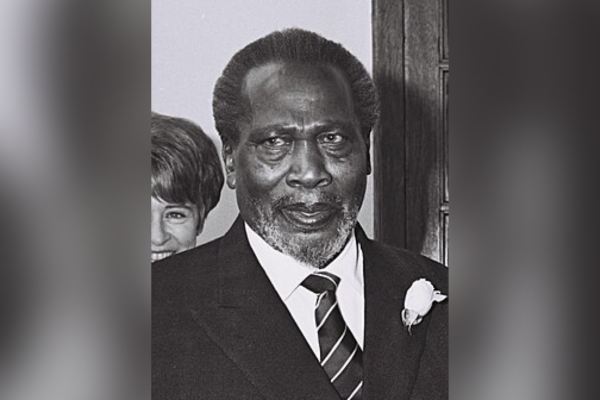
One young Kikuyu man who joined the KCA was Jomo Kenyatta, the future President of independent Kenya. At this point Kenyatta was 25 years old, and was brought into the KCA by his close friend James Beauttah, who was a leading member.
Kenyatta was given a motorbike and told to spread the word of the KCA. His duties included translation of the KCA magazine, Muigwithania (‘The Unifier’).
However, Kenyatta’s views were never completely clear. Even during his early time with the KCA he praised British imperialism for the equality it provided, praised the churches and the chiefs.
Throughout the 1930s, Kenyatta moved around Europe and even lived in Moscow attending the Communist University of the Toilers of the East.
He wrote for the Daily Worker, the newspaper of the Communist Party of Great Britain and befriended George Padmore, who was working for the Communist International. However, there is no evidence he was ever a member of any communist party and his ideas often stand in contradiction to Marxism, even at this point.
In Europe he wrote many books and articles. Most well known amongst them was Facing Mount Kenya. This book praised the culture of the Kikuyu people and presented it as the alternative to the horrors of British imperialism.This book gained its fame because it provided a sharp criticism of the outlandish lies about the Kikuyu people which British imperialism relied on: that they were backwards savages who could not live in peace.
However, it looked backwards rather than forwards. Africa was now dominated by imperialism, and the whole of African society had been turned on its head, from the way people lived to the food eaten and much more. The only way to end the horrors was global socialism, which would abolish imperialism at its heart.
The development of the Mau Mau
Back in Kenya, anger at the British Empire was growing. After India won independence in 1947, hope of independence grew in Kenya. When Kenyatta returned to Kenya in 1946, he was greeted as a hero. However, his views quickly created divisions within the anti-imperialists.
The development of the Mau Mau is missing many links in the history books but dominant figures in the KCA were central in this process. They correctly understood that the struggle could not be left entirely to the Kikuyu people, and needed to be spread to other tribes across Kenya.
In 1947, a congress of the Kenya Africa Union was held. This was the basis for the formation of the Mau Mau. Mau Mau was never a name the fighters gave to themselves, but one given by the British press.
Only three years after this, in 1950, all Mau Mau activity was made illegal by the British.
Therefore, political clarity about the goals and tactics of the group was never achieved. As the situation developed a divide opened up between those who saw violence as necessary and those who wanted to avoid it.
Armed struggle is an important tool in the belt of anti-imperialist struggles. When used by the oppressed and exploited in mass, these methods can beat back the imperialist forces and help bring the workers to power.
Despite holding great political authority amongst the Mau Mau, Kenyatta’s complete disregard for violence confused the Mau Mau, eventually turning many away from his ideas.
Before losing a lot of his authority, Kenyatta’s views played the negative role of stunting discussion on how violence should be used from taking place. The lack of an in-depth understanding about how capitalism and imperialism act led the Mau Mau down blind alleys, and made them an easy target for the British.
Uprising and repression
The Mau Mau focussed on small-scale armed terrorism against the white settlers and loyalists in Kenya. As soon as the Mau Mau existed as a force, they were banned by the British. In 1950, they were outlawed, and by 1952 a state of national emergency had been declared. This state of emergency was a public excuse for the savage brutality which the British were about to unleash.
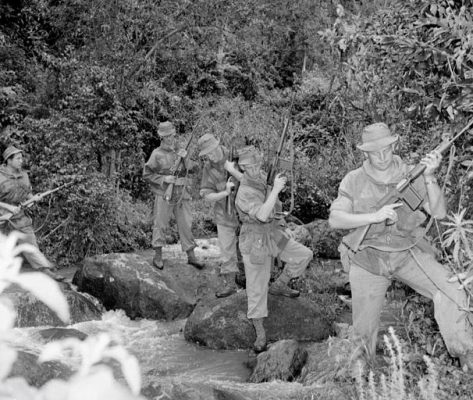
A global slander campaign was launched which would try to make the name Mau Mau synonymous with violent savagery. ‘Going Mau Mau’ became a widespread phrase to describe extreme intimidation and threatening behaviour.
Despite this, the violence perpetrated by the Mau Mau was a drop in the ocean compared to the response they received. In March 1953, the Mau Mau killed around 75 supporters of the loyalist Chief Luka. The response was 150 killed by the Home Guard.
In total, the Mau Mau cannot have killed more than 2,000 people. The British on the other hand killed 11,000 Kikuyu, whether Mau Mau or not. 20,000 were also placed in camps.
Labour camps
Much of what happened in the labour camps will never be uncovered. This was decided by the British government when they burnt documents. What is known offers a clear explanation of why this is the case.
Less than a decade after the British government had cried crocodile tears over Hitler’s camps, they were authorising the same procedures to secure their empire.
One story of a Kikuyu survivor being taken to a camp is reported on over half a century later by Al Jazeera:
“When we arrived, we found other people being tortured and we were being asked how many oaths we had taken; I said ‘no’ to anything about taking an oath. I was blindfolded and I could hear my children crying, calling me ‘Mummy, Mummy.’ I never saw them again. Because when this bottle was pushed into my vagina, I fell unconscious.”
The oath which she was asked about was the promise the Mau Mau fighters gave to fight British imperialism. The abuse she described caused her to miscarry.
Another survivor of the camp describes his experience:
“I was pushed to the ground, ordered to straighten my legs and trampled on, slowly. Then I was forced to lie on my back, my groins were taken. Then they used pliers and I felt a very painful yank of my testicles.”
This is his memory of being castrated. Other stories include regular beatings, filling detainees buttocks with sand and water and pushing it down with a stick, and psychological torture. An epidemic of typhoid gripped the camps because of the poor hygiene and water quality.
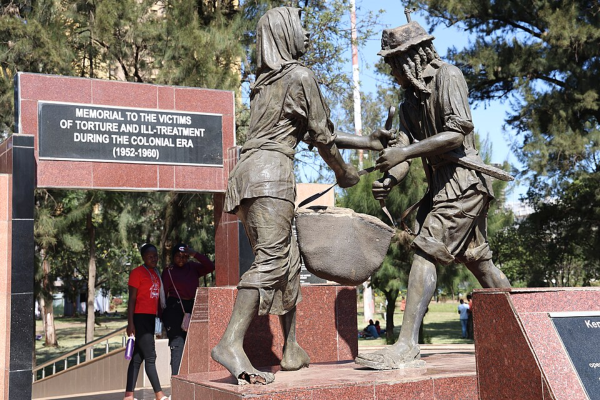
After the Second World War ended, the United Nations (UN) was founded. In reality this was a multinational bloc to defend the interests of western imperialism. But their stated aim was shrouded in the abstract phrases of morality, peace and justice.
In 1948, the Declaration of Human Rights was accepted by the UN. The declaration said that everyone has the right to life and prohibited torture.
This did not present much of a challenge for the British. A combination of sensationalism around the violence of the Mau Mau, blatant racism about the savagery of the Kikuyu people and burying the worst crimes of the British, allowed the UN to turn a blind eye.
Operation Legacy
“What’s burnt won’t be missed.”
These are the words of a British officer in Malaysia tasked with destroying documents which showed the real crimes of the British Empire. Treatment of the Mau Mau was only one example but by the time ‘Operation Legacy’ reached Kenya it was a clear policy of the British state.
The foundations of this policy were rooted in the upper echelons of the civil service, i.e. the caste of bureaucrats responsible for protecting British capitalism from the ups and downs of democracy.
In October 1962, one year before Kenyan independence, the Colonial Office circulated a ‘Note on the disposal of classified and accountable documents’. Within the note it is made clear that what is being proposed has been written with Kenya in mind. The note lays out a series of documents which should be buried or destroyed. These consist of those which:
“(a) might embarrass Her Majesty’s Government or other governments;
(b) might embarrass the members of the Police, military forces, public servants or others (such as Police agents or informers)
(c) might compromise sources of intelligence
(d) might be used unethically by Ministers in the successor government.”
Operation Legacy also proposed the destruction of information which may put incoming African leaders at risk due to their deals with the British Empire.
Independence
By the 1960s, it was clear that Britain could not hold onto its colonies any longer. Overreach of the now second-rate British Empire, combined with public anger at the crimes committed, led to the formal independence of Kenya in 1963.
The British knew they could no longer formally hold onto Kenya, yet this did not mean they had to lose all the gains of the Empire. There was still profit to be extracted from Kenya. Nowhere were the British proposing to completely remove themselves. Rather, they wanted to hand over all the difficulties of running the country to someone else while keeping hold of what made them money.
For this purpose, the British needed African leaders who would be seen by the masses as something different to the colonial government, but who could still be trusted to carry out the diktats of the British.
The view of the British towards Jomo Kenyatta, who was now married to the daughter of a loyalist chief, was changing by the end of the 1950s. This became most clear when a public dispute had broken out between factions of the Mau Mau on the question of violence. Discussion occurred amongst high ranking colonial officers about whether they had misjudged Kenyatta.
In the end, the decision to trust Kenyatta was the correct tactic for British imperialism. Before independence, Kenyatta fought to build relations with the white settlers of Kenya. The reason was clear: these settlers produced a huge amount of Kenya’s wealth.
In 1962 he also visited London to work with the British government on a new constitution for Kenya, agreeing to a temporary coalition government.
His presidency, beginning with Kenya’s independence in 1963, maintained Queen Elizabeth II as the head of the Kenyan state.
Britain also enacted a scheme in which the new Kenyan state was required to buy back the stolen land. In the end, the British, along with European neighbours, continued to invest in Kenya, making a large profit at the expense of Kenyan workers.
Down with imperialism
The brutal treatment of the Mau Mau showed the blatant hypocrisy which imperialism acts with. In the final analysis, the defenders of capitalism do not care about the bloodshed they cause. They pray to only one God: profit.
Ethnic cleansing, slavery, labour camps and many more horrors make up the history of British capitalism and the Empire.
Today, Kenya is still dominated by imperialist forces. The recent revolutionary movement sparked by the extortionate taxes imposed from the IMF prove this.
The British Empire may be dead, but imperialism certainly isn’t. Today the people of Gaza are being treated with the same brutality as the Mau Mau by imperialists.
Imperialism must be thrown into the dustbin of history. Down with imperialism! Down with capitalism!