The price of death
When I heard news of my great-grandmother’s death, I didn’t expect grief to come with such a hefty price tag. Yet every Sunday, my family gathered not to mourn, but to pick at our pockets.
Aunties, uncles, cousins – all of us hunched over an A4 page of fees, scraping funds together for the funeral. Hearse rental, transportation, embalming, burial plot, digging fees… the list went on.
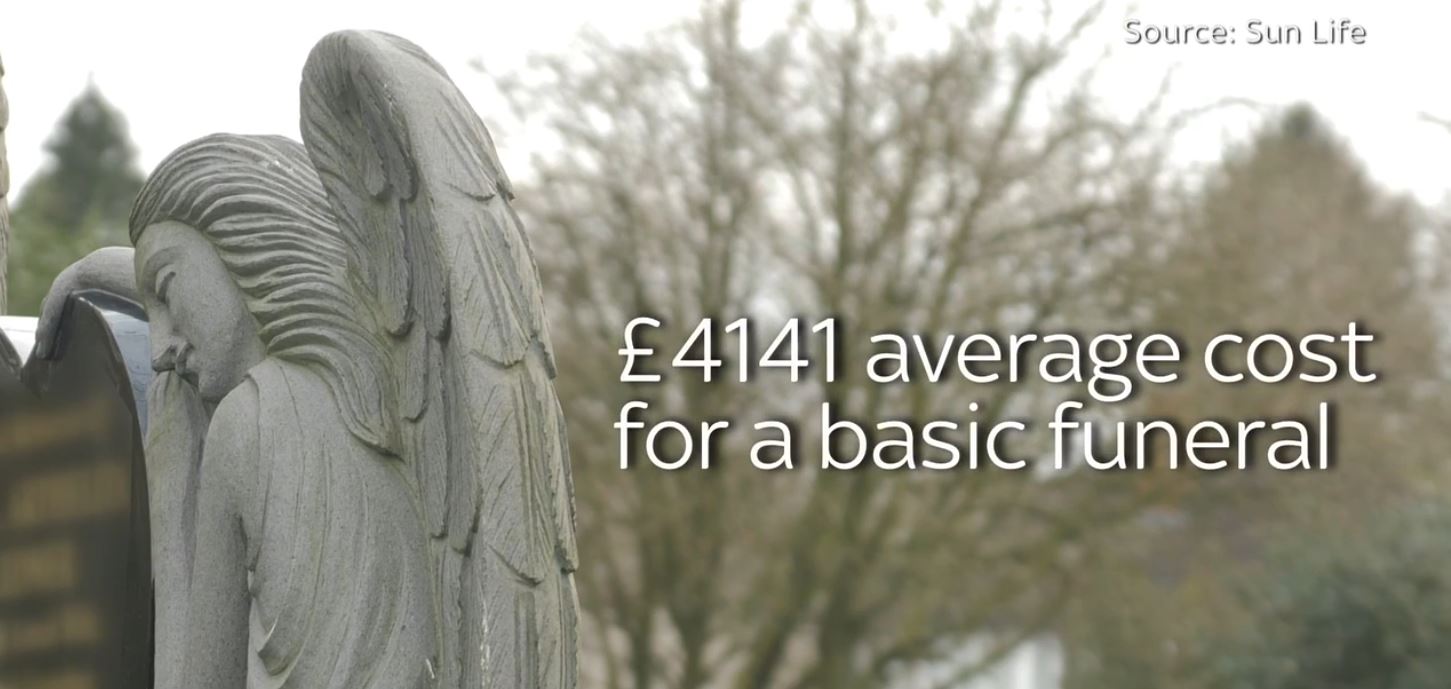
It’s not just us. Across Britain, one in seven families are cutting back on essentials like heating and food, just to afford basic funeral costs. In 2025, the average cost was about £5,500; with total costs climbing to £9,000 in London. Even the ‘cheapest’ option of cremation without a service costs over a thousand.
Families are being pushed into loans that still leave a shortfall. Funeral companies charge extra for standard practices, like headstones and flowers, while councils demand hundreds of pounds to transport the dead between boroughs.
In this decaying system, the norms of grieving become a luxury. People shouldn’t have to choose between feeding their families or laying their dead to rest.
People are told to prepare, with older family members taking out pre-paid funeral plans to relieve the burden on their loved ones.
My great-grandmother put thousands towards her funeral, even paying for an engraved casket. But following the new financial year, the price of the casket rose, and we had to cough up the difference.
Families who choose to risk funeral poverty are forced to go into debt, take on extra work, and use their inheritance to pay fees.
Capitalism turns grief into another opportunity for profit. Even after death, the system keeps its claws in you.
Ira Iscandari, New Cross
Our bodies for their beauty
This job is eating me. I’m sure we all connect with that. What if I told you death is not the end?
Not because I believe there is an afterlife, but because your body will be rendered down – and sold to the highest bidder!
This nightmarish prospect is the brainchild of companies like Alloclae and Tiger Aesthetics – purchasing donated tissue from cash-strapped hospitals and using it as filler for cosmetic surgery.
I repeat: CEOs are paying as much as $100,000 a treatment to get filler made from dead people, to beautify themselves.
It would be comforting to think this is just a sick trend, a sign of particularly callous or unscrupulous businesses.
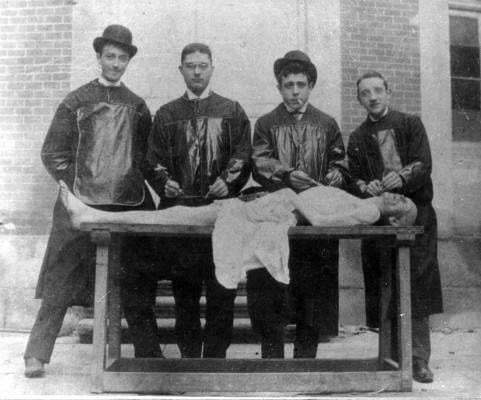
But selling bodies is nothing new, or particularly unusual under capitalism. Victorian bodysnatchers robbed graves to sell for scientific study. Even in the 1990s, Colombian thugs murdered homeless people and sold their corpses for $200 each!
The Epstein scandal showed that the establishment are united in their attitude to us: they would sell and use us for a stack of cash, a favour, or a better view in the mirror. These ghouls that leech off us like vampires need to be consigned to ancient myths, where they belong!
Hugh Nankervis, Oxford
Climate collapse (nothing to see here)
For those concerned with the continued existence of life on Earth, a new damning report published by the British security services will give you nightmares.
The ‘nature security assessment’ highlights what many of us already knew: ecological collapse is here, and the consequences are real. Yet this redacted report only saw the light of day after a freedom of information request.

It depicts a future of food and water conflicts; an increase of organised crime; migration; economic insecurity; pandemics; wars; and an end to “global prosperity” – as if capitalism wasn’t already horrific enough!
Wildlife populations have already been rapidly declining, falling by a shocking 73 percent between 1970 and 2020. We are now living through the sixth mass extinction event in Earth’s history.
Considering such dire repercussions, the establishment has been harrowingly silent. The solution, according to the report: protect 30 percent of global land and oceans, and have 30 percent of global nature under restoration by 2030.
No amount of lofty targets will save us when here on planet Earth, markets dictate policy.
The UK is one of the worst offenders for drilling in sensitive ecosystems, issuing production licenses that overlap with 13,500km2 of protected areas. ‘Sir’ Jim Ratcliffe-owned Ineos – one of the world’s largest petrochemical manufacturers – alone dumped one tonne of methanol from a gas platform directly into waters in these very areas!
Only the working class internationally can carry out the “major intervention” required to prevent total ecological collapse.
Danny Stanton, Bristol
Rafah was a city
Recently the Home Office blocked a popular musician from entering the UK. While this ruined a fair few people’s summer plans, it warms the heart to know that the British government takes hate speech seriously and is keeping this country free from racist bile.
On an unrelated note, the last time I checked Wikipedia I found that many places in Palestine are now described in the past tense. Rafah was a city with a population of 171,000 people. Beit Hanoun was a city with a population of 52,000. Om al-Nasr was a village home to around 5,000 people.
These cities and villages no longer exist – and the UK government played an active role in their destruction.
Blocking a mentally unstable musician from playing a concert is a weak distraction from the rivers of blood that flow through Westminster.
Oliver, Sheffield Communists
Two worlds
Humans have returned to the moon for the first time in over 53 years.
Now, through NASA’s Artemis programme, the first solar eclipse has been seen from the moon; humans have been the furthest they have ever been from Earth; and more ground has been prepared for a planned permanent lunar base!
But this hasn’t come unimpeded. NASA has been at the mercy of capitalism in its decline. They have been plagued by limited resources, relentless cuts, delays, and inefficiency.

Private contractors feast like leeches. The Artemis programme itself was built from scraps of other cut-down projects, including one that was intended to redirect threatening asteroids away from earth, and another that planned to “return to the moon no later than 2020”!
While we’re given this brief window to gaze upon the stars, billions still struggle to live. Thousands more rockets are instead wasted in bloody imperialist war. The billionaires, meanwhile, truly live on another planet – equipped with their own private spaceships.
This mission offered a glimpse of a new society – a type we don’t usually have occasion to see, long a grey picture in the world’s memory ever since the winding down of the space race.
We are capable of so much, yet this potential is choked under capitalism’s weight. May we overthrow this barrier, and build a new world where science, culture, and society can breathe and develop freely.
Maeve Hanley, Sheffield Hallam
From strike to split: Manjaro community breaks with company
I’m a computer science student, and a longtime fan of software that is open for anyone to review, edit, and contribute to.
This ‘open source software’ is the backbone of major tech companies and services around the world. These projects are often built and maintained by unpaid volunteers.
Manjaro is one such project: an operating system that I personally use, designed as a more user-friendly version of another popular OS. However, I’ve been sad to see the issues it’s been facing lately.
Manjaro GmbH & Co KG, the community-led tech company behind Manjaro, is facing a strike from its volunteer community.
Manjaro has in the past faced multiple issues, both in the quality of the software itself and with scandals surrounding its management. As a result, Manjaro has become a laughing stock in the tech world.
Yet as the community’s manifesto (made public 9 March, after being ignored by project leadership) makes clear, these issues were not due to a lack of care from the community, who in fact offered to solve many of the issues – only to be turned down.
Rather, these issues were due to mismanagement from the project’s leadership – who, as put in the manifesto, want “to turn Manjaro into a successful business”, but have been met with failure.
Alongside its manifesto, the Manjaro community initiated a ‘strike’. After limited response from the leadership, the community has gone ahead with the decision to form its own non-profit organisation to lead development on Manjaro, and has demanded the company hand over assets to it.
While I wish them well, Manjaro’s past shows the pressures that any company – regardless of how community-led or cooperative it is – is subject to. The laws of capitalism demand either profit or abolition.
Jack Wills, Lancaster