“If we built it, we can tear it down”
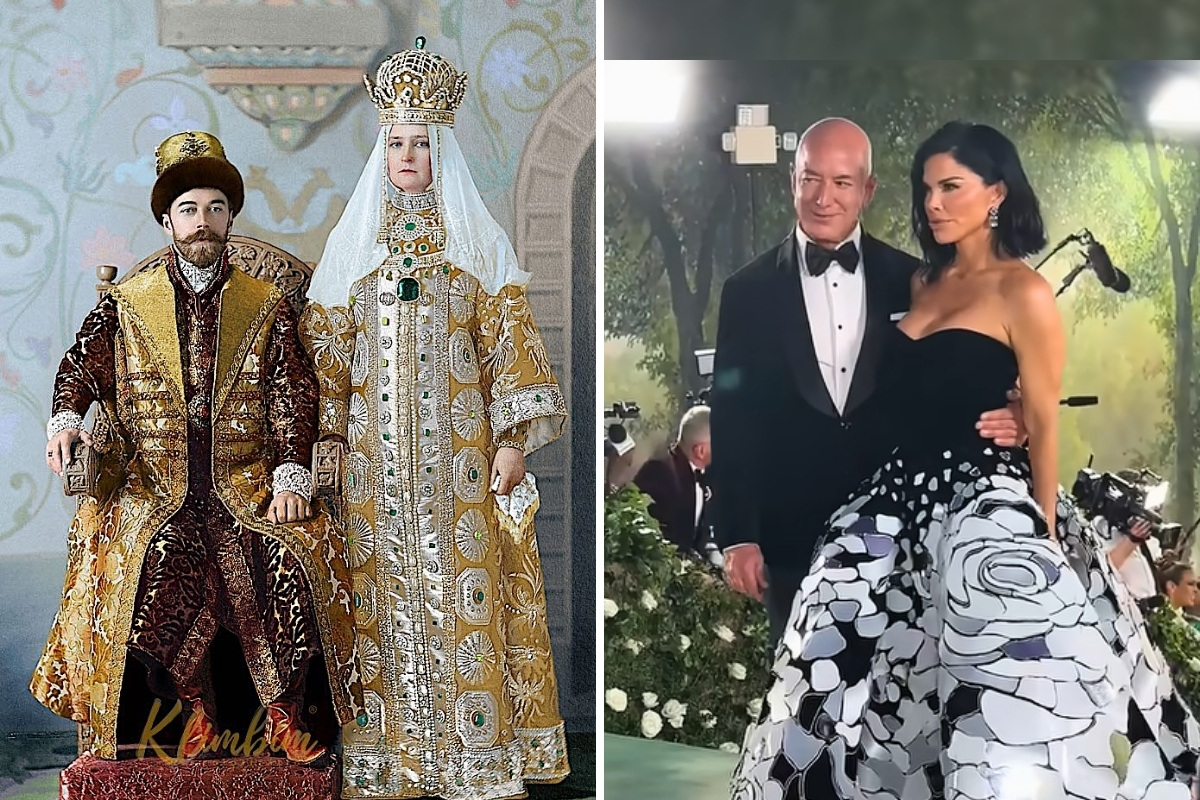
The annual Met Gala has rolled around again. Purportedly a celebration of fashion, in reality it is a glorified catwalk, where the opulence of the rich and powerful is trotted out for all to see.
Meanwhile, the millions of workers that create the fashion industry go uncelebrated.
This event has always felt a little tone deaf, but as the crisis of capitalism deepens it is becoming increasingly difficult to bear.
The nail in the coffin was Jeff Bezos being made ‘honorary co-chair’ of the event, a title he bought with a $10 million donation. What the hell does that dead-eyed parasite in cargo shorts have to say about fashion?
A protest during the event projected videos of Amazon workers onto Bezos’ penthouse. One worker said: “There’s power in numbers, and there’s more of us than there are of you… ordinary people like myself, that helped make you a billionaire – if we built it, we can tear it down.”
The backlash shows how consciousness is developing: Bezos was also honorary chair of the event in 2012 with little response. But after decades of austerity, workers have learnt that the more wealth billionaires like Bezos accumulate, the more misery accumulates for them.
In the lead up to the Russian Revolution the glittering gold of the Romanov court became utterly despised as life grew worse for the average person. It’s only a matter of time before we follow in those revolutionary footsteps!
Annie King-Ferguson, Leeds Beckett
Emperor’s new clothes
All eyes were on this year’s Met Gala – but it wasn’t the dresses and fashion that people were talking about.
In attendance were a whole coterie of modern-day aristocrats: a Snapchat cofounder, the Instagram CEO, a Google cofounder, OpenAI’s head of partnership, and multiple Amazon executives.
Jeff Bezos and his wife Lauren Sanchez served as co-chairs for the proceedings, and contributed between $10 million and $20 million towards the event.
So while Amazon relies on exploiting its workers and crushing unionisation efforts, Bezos can happily throw millions at a one-day fashion gala for the wealthy elites, featuring outfits with $15 million necklaces.
But what have I seen more of this year, while flicking through social media? Not the Met Gala itself, but a “Ball Without Billionaires” staged by the labour unions. This alternative effect saw workers from Amazon, Whole Foods, Washington Post, Starbucks, and Uber strutting the runway with looks created by working-class and immigrant designers.
Slogans such as “No Red Carpet for Trump’s Billionaires” were projected onto Bezos’ Manhattan penthouse, alongside interviews with Amazon workers, many of whom are involved in active disputes.
View this post on Instagram
This protest ball was complete with Amazon workers wearing custom designs. Many of them had been injured during their warehouse jobs at Amazon. These designs were stunning and – most importantly – not funded by the exploitation of others.
Imagine a Met Gala without the $100,000 ticket price, or CEOs networking over AI investments; one run by workers and designers with full creative control, where culture exists beyond profit.
Most creatives are locked out of access to the best materials and machines, but in a space open to everyone passionate about fashion and design, creativity could truly flourish. The most talked-about dress wouldn’t be a $5 million outfit worn by Kim K, but a genuine expression of artistry and craftsmanship.
This disgusting, ostentatious display of wealth is not impressive to the workers who shoulder the cost of austerity from wars overseas. The “Ball Without Billionaires” showed something far more meaningful: culture created by ordinary people, not bought by corporations. Real creativity comes from workers and artists, not the vacuous, tasteless billionaire class.
Elora Parocki, Wood Green
Day in the life of a chef in London
Walking out of the piss-drenched tube station, I pass by a sleeping homeless person. In a whiplash, at the station exit I’m greeted with million-pound flats and cars as far as the eye can see.
I enter work through the service entrance, because a customer at Peninsula 5-star hotel should never use the same entrance as a lowly worker.
Down to the fourth basement floor I go to start my shift – all workers are kept below ground – with LED lighting so bright that tiredness isn’t an option.
I start my shift and instantly get told that my colleague has had a heart attack. He’s in his forties, healthy, and after just getting engaged, extremely elated. He’s a member of permanent staff – I’m agency – who have been working 12-hour shifts for up to 12 days at a time.
Four months ago the head and sous-chef quit after consistent 90+ hour weeks, constant pressure, and no recognition. Management still haven’t found anyone new. Rumour has it they’re holding out so they can line their pockets.
Whilst prepping, I see the staff break many cross-contamination rules. Tired, understaffed kitchens mean hazards for everyone.
This particular hotel chain made $320 million in profits last year. Not that my pay, which has dropped from £18 to £15 an hour in the last seven years, reflects this.
I am sick of money being put before lives, with workers considered dispensable. Onwards to workers’ control – the only way to send these money-driven parasites running!
From a kitchen in West London