Since taking over as Andy Burnham’s foreign secretary, Ed Miliband has continued Labour’s cynical attempt to appear somewhat critical of Israel. This is nothing but a hopeless attempt to quell the pro-Palestine anger that has damaged the party’s support in recent years.
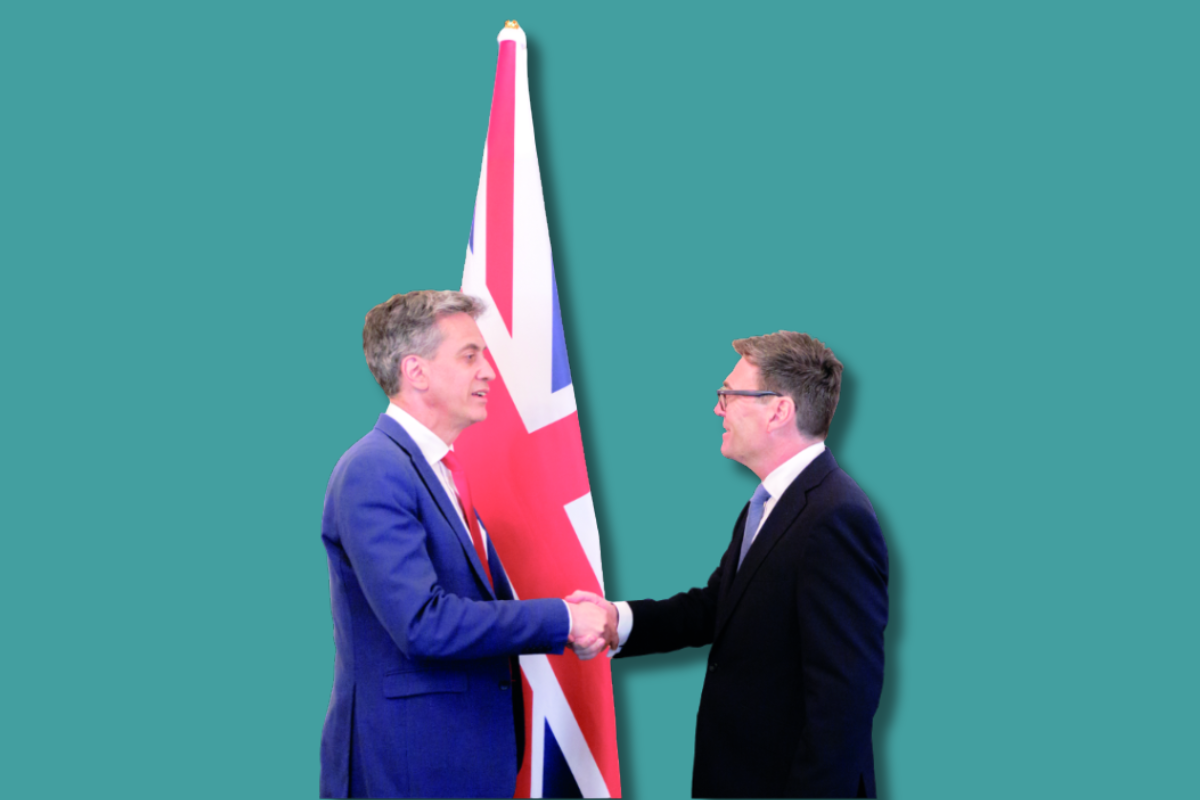
Miliband described the first call with his Israeli counterpart in Jerusalem as “frank and constructive”, assuring us that he raised concerns about a “sharp escalation of settler violence and settlement expansion” into Palestinian territory.
This coincides with winks from Burnham’s government, nodding to the potential for harsher measures toward Israel, with senior minister Chris Bryant stating that it is “time to move from simply labelling goods from illegal settlements to banning goods”.
However, Israel’s settlers are not simply rogue actors that can be reined in or easily sanctioned into submission. Especially since 7 October, they are entirely state-backed gangs – a part of Israel’s “official war aim” of ‘security’ in the West Bank.
As part of Operation Iron Wall, the Zionist state has displaced over 40,000 Palestinians in the West Bank, clearing the way for settlements. National Security Minister Ben-Gvir established the ‘First Response Unit’ composed of settlers.
Such open support erases any supposed difference between the state (which Miliband supports and arms) and the settlers (which he supposedly condemns).
Miliband and Burnham can put out as many condemnations, apologies, and threats of sanctions as they like. Flowing from the logic of British capitalism, this weak, crisis-ridden government will continue to be totally subservient to Israel’s superbacker, the USA. Burnham’s opening up of British air bases to allow for the bombing of innocent Iranians made this abundantly clear.
This government will continue British imperialism’s long and shameful legacy of arming and legitimising the brutalisation of the Palestinian people – by states, settlers, and terrorists alike. This is a legacy that can only be broken by the revolutionary overthrow of their whole system.
Georgie Lynsky-Gibson, Bradford
What will come first: another defeat for Trump, or mutiny?
While Trump is trying to present an illusion that the US armed forces remain undeterred by the Iranian forces, the reality on the ground is that the war is eating away at troop morale.
The number of soldiers filing for conscientious objector status doubled after the US bombing of a girls’ primary school in Iran, with support hotlines seeing call increases of 1,000 percent. Most military analysts have been forced to admit that if troops were deployed in Iran, riots would erupt on US soil.
The army is reaching its limits – showing it’s not just a machine that can be used by imperialism at will.
Recently the Telegraph reported about a sailor jumping from the USS Abraham Lincoln, as a mental health crisis engulfed the aircraft carrier during its ninth month at sea.
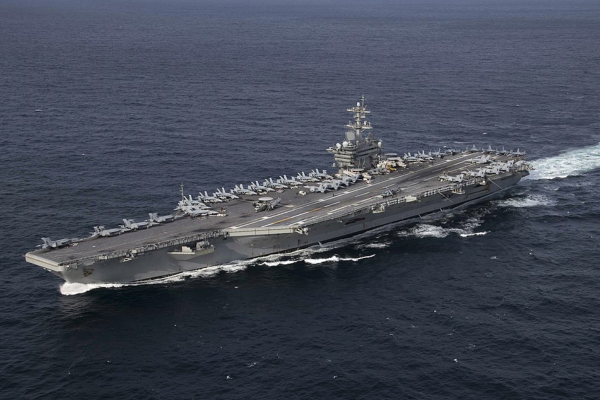
The carrier, which left the US in November and was sent to the Middle East in January, reached a record deployment of 274 days while supporting American forces in Iran. The crew was finally relieved of duty on 22 August, following the arrival of the USS George Washington.
Military families say many of the 5,000-strong crew had reached breaking point, with several more unreported suicide attempts taking place, and personnel expressing they hope they “don’t wake up tomorrow”.
In its months at sea, the USS Abraham Lincoln has seen complaints about lavatories, showers, food and water shortages, and general burnout from sailors who have spent over 200 days straight in a combat zone and have not stepped on dry land this year.
It’s often said that the armed forces are a mirror of their society – in the case of the US, this increasingly looks like long hours, bad food, plumbing issues, and deteriorating health.
The Lincoln’s crew being able to return home won’t stem the spreading decline of morale among the US armed forces over the question of Iran, however.
Support for the war is at an all-time low across the US population – and sailors like these will be the first to harbour this resentment.
As demonstrated on the battleship Potemkin during the 1905 Russian Revolution, everything has a breaking point. The naval commanders know it. They’re just not sure what will come first: another defeat for Trump, or the mutinies.
Ben Cownley, Manchester
World faces “single greatest shipping disruption” ever
Freight prices through the world’s vital waterways are skyrocketing. The average prices for container freight from East Asia to the east coast of the United States, for example, has risen 234 percent in just twelve months.
Pricing agency Argus has identified the Panama Canal, the Rhine River, the Red Sea and the Black Sea as fundamental shipping routes impacted by a combination of prolonged drought, and the wars in Iran and Ukraine.
Climate change, exacerbated by the El Niño weather system (and soon to be even moreso), has had a catastrophic impact on water levels in the Panama Canal. Some ships are now paying a record $2.1 million just to pass through this narrow waterway.
The Rhine is a foundational element in German heavy industry – but water levels have dipped perilously low during unprecedented drought. Shipping costs have risen to their highest prices since 2012, weakening Germany’s waning industry even further.
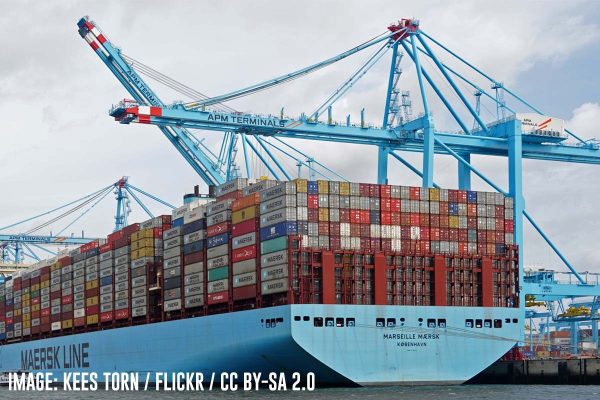
The Strait of Hormuz, already an immense thorn in the global shipping industry’s side, remains virtually closed, providing a headache for shipping magnates and insurers alike.
Similarly, tanker costs for vessels passing from the Black Sea to the Mediterranean Sea are at their highest since 2005 due to the ongoing conflict between Ukraine and Russia.
The strategists of capital are pulling their hair out. “This is without doubt the single greatest disruption that the shipping market has seen on record, eclipsing the Covid pandemic and Russia sanctions,” said head of Europe freight pricing at Argus.
And this series of calamitous events for the world market is not simply a course of random happenings.
“Chokepoints are becoming more critical,” observed Henry Curra, the head of research for shipbroking company Braemar, “because smaller countries now recognise the disproportionate political and economic leverage they can wield over global trade in an increasingly multi-polar world.”
Capitalism is clearly no longer the tide that lifts all ships. It’s up to the working class to throw the capitalists overboard and take over production… before we all sink with them.
Dillon Lauder, Holloway