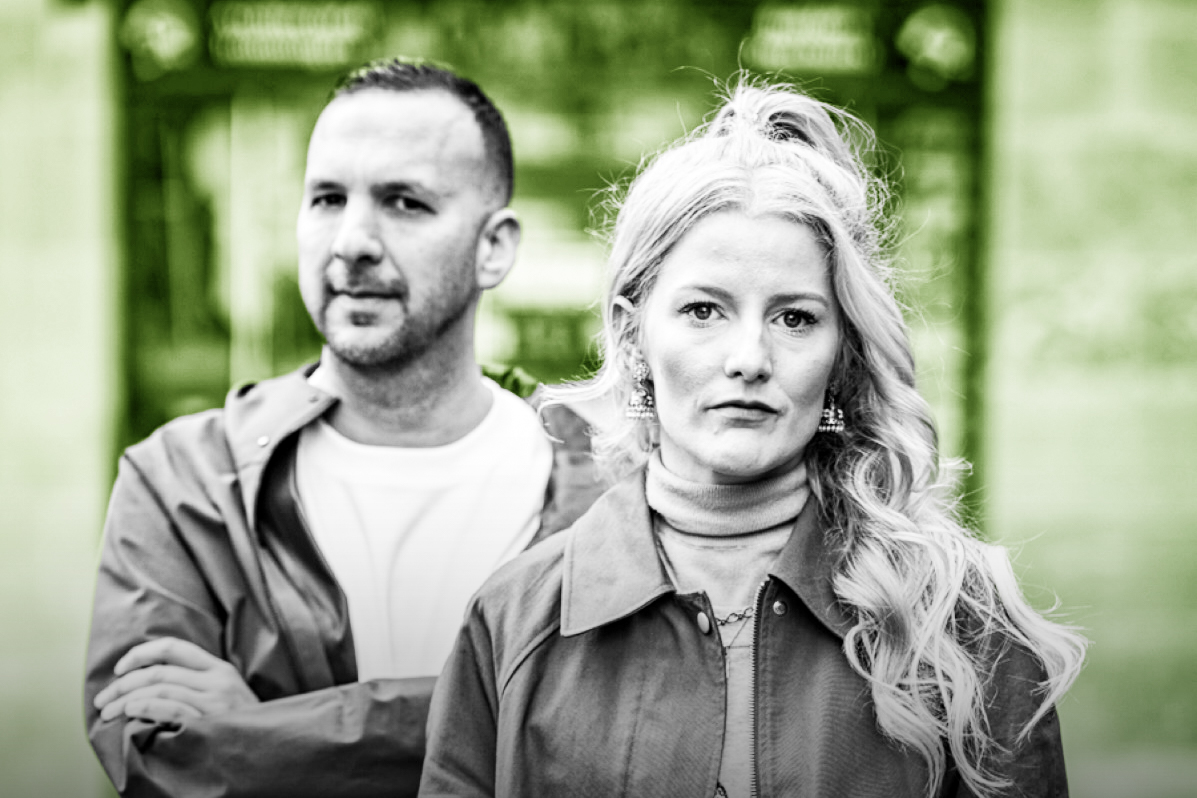

Following the Gorton & Denton by-election, Zack Polanski and the Green Party are gaining further momentum.
The party’s victory in this parliamentary contest will certainly have boosted their confidence. Meanwhile, Polanski’s profile has soared. At the ‘Together Alliance’ demonstration in London on 28 March, which drew an estimated half a million people, the Green leader was effectively the headline speaker.
This huge protest was not officially a Green Party event. Nevertheless, it will de facto be associated with Polanski and the Greens, and will be seen as another major success for them.
From mass canvassing in Gorton & Denton, to surging membership numbers, to large-scale mobilisations such as this: in the eyes of millions, the Greens are increasingly seen not simply as a parliamentary outfit, but rather as the beginnings of a real movement, involving grassroots participation and widespread enthusiasm.
With the Greens predicted to make big gains in the upcoming local elections, meanwhile, it is clear that this movement behind Polanski still has further to grow.
What is driving this? On the one hand, there is a hatred towards Starmer, alongside a fear and repulsion at the prospect of a Farage government as an alternative. On the other hand, Polanski’s anti-establishment tone undoubtedly resonates amongst a large section of the population.
In short: voters are desperate for change, and the Greens increasingly look like the most viable electoral vehicle for delivering this.
‘Vibes’ vs programme
Polanski primarily aims his message at workers and youth whose main priority is ending brutal austerity, rampant inequality, environmental destruction, and imperialist war.
Thus far, however, this appeal has mainly involved rhetoric and ‘vibes’, rather than any real political substance. Polanski’s campaigning has mostly been limited to a description of the problems facing British workers, in place of any clear solutions.
Nevertheless, given the vacuum on the left, this has been well received by large layers. It is refreshing to finally hear someone talk frankly about how bad things have gotten; to blame the billionaires and landlords; and to explain that all this misery and injustice is done for the sake of shareholders’ profit.
In a recent appearance at the New Economic Foundation (NEF), Polanski gave a more long-form speech, with the aim of fleshing out the Green Party’s programme, and explaining how they hope to implement this.
Such political clarity will be essential going forwards, as the Greens popularity further grows, and the establishment throws ever-greater quantities of mud at Polanski and his supporters.
Unfortunately, however, this keynote speech leaves us none-the-wiser. Polanski’s economic plans remain vague.
This was very much another agitational address, describing the dire situation facing working people in “rip-off Britain”. The Green leader explained, in this respect, how the previous period of privatisation has brought us to where we are today, pointing at the sickening profits that have been made at our expense.
But describing people’s problems is not the same as offering real solutions. Ordinary people already know the status quo is unfair. According to one 2025 Ipsos poll, 74 percent think that the system is rigged in favour of the rich and powerful.
What is not clear to most people is what we can do to change this. This is where the vital importance of a political programme comes in. Parties and leaders can get away with evading tricky questions in opposition. But eventually they and their ideas will be tested in practice.
Making the rich pay
Polanski’s NEF speech did outline some policies. These can be broken down into two main categories: firstly, tackling the cost-of-living crisis and bringing down expenses, in order to make life more affordable; secondly, taxing wealth to improve public services.
What’s not to like here? Who can disagree with such ‘motherhood and apple pie’ proposals?
The real question is: how do Polanski and the Greens intend to deliver on this?
In regards to lowering bills, Polanski says that a Green government would bring the water companies back under public ownership, and retrofit houses with better insulation to reduce energy costs. In relation to extortionate rents, meanwhile, he says that his party would give mayoral offices the power to implement rent controls.
On the question of tax reform, the Greens intend to fund public services – alongside, presumably, the insulation of cold homes and repair of dilapidated water infrastructure – through various tweaks to the tax system.
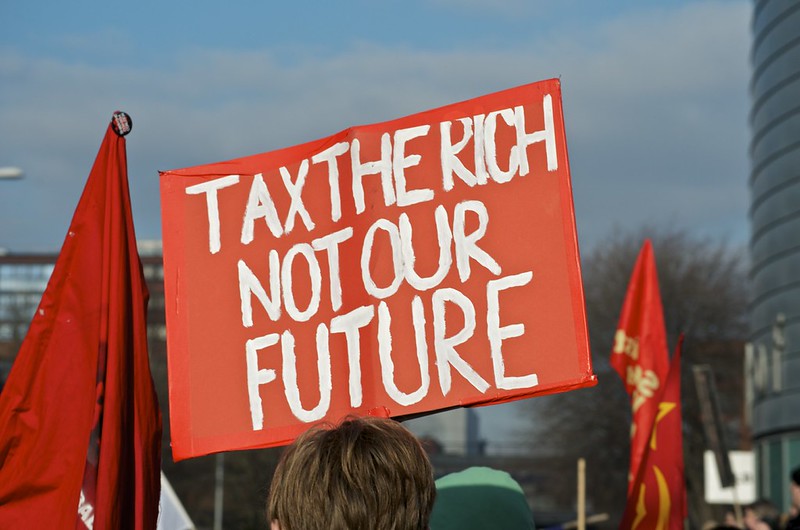
This includes a one percent tax on any wealth over £10 million, and a two percent tax on any billionaires. This would apparently raise a further £15 billion per year.
This amount is not even a drop in the ocean, however. Repairing Britain’s water network is estimated to cost somewhere in the region of £290 billion over the next 25 years. This alone would eat up the majority of this extra £15 billion every year.
The NHS, meanwhile, needs a minimum of £4.8 billion per year in extra funding, compared to what it currently receives, just to maintain its already strained services. Insulating all the country’s homes would cost several billion too.
Other proposed changes – such as equalising tax levels for capital gains and income, and applying National Insurance to returns on investments, not just earnings – would bring in similarly tokenistic sums.
Capitalist chokehold
Other than calling for greater taxes on the rich, Polanski sidestepped around anything that could really be called a clear economic alternative.
“I’m interested in anything that works”; “there is a conversation to be had about quantitative easing [printing money]”; “there’s no one jigsaw piece that’s going to solve everything”: such evasive answers do not exactly instill confidence or provide clarity.
In truth, the reforms outlined by Polanski are extremely modest. And yet even these are well out of reach, given the size of the public debt, and the chokehold that Britain’s wealthy creditors have the country in, through the bond markets.
The government cannot properly fund public services as it stands. The deficit stood at over £150 billion in the last financial year – 5.2 percent of GDP. And this year, the Treasury is expected to spend around £111 billion in interest payments on the state’s debt.

All of this guarantees the control of the bankers and billionaires over the government’s budget, and in turn over us. Yet Polanski intends to increase public borrowing even further. “There will be borrowing,” the Green leader says, “but it’s borrowing for investment.”
Polanski’s grand plan, therefore, is to continue borrowing hundreds of billions of pounds from the capitalists, in order to invest this money in public services. But this is unprofitable investment from the perspective of the market.
At the same time, he is promising to tax the capitalists more heavily, impose rent controls, ignore economic growth, and curb shareholders’ profits – not exactly an appealing package for wealthy lenders and billionaire bond holders; that is, for those who hold the purse strings.
And as the saying goes: he who pays the piper calls the tune.
Reformism vs revolution
Above all, the Green Party’s programme makes no mention of how to solve wider problems such as unemployment, overwork, and low pay.
From what Polanski has said so far, we can only presume that there would be no major encroachment on private property under the Greens.
The capitalists and bankers will continue to maintain their ownership over the vast majority of the UK economy. The land, the construction companies, the energy monopolies, the supermarkets, and – most importantly – the banks will all still be run on the basis of profit and dog-eat-dog competition.
The Greens may not be willing to move beyond the limits of capitalism. But this does not mean that their support base won’t.
Under the hammer blow of events, as attempts to reform and regulate the capitalist system fail, growing layers will come to realise that something more radical – something revolutionary – is required.
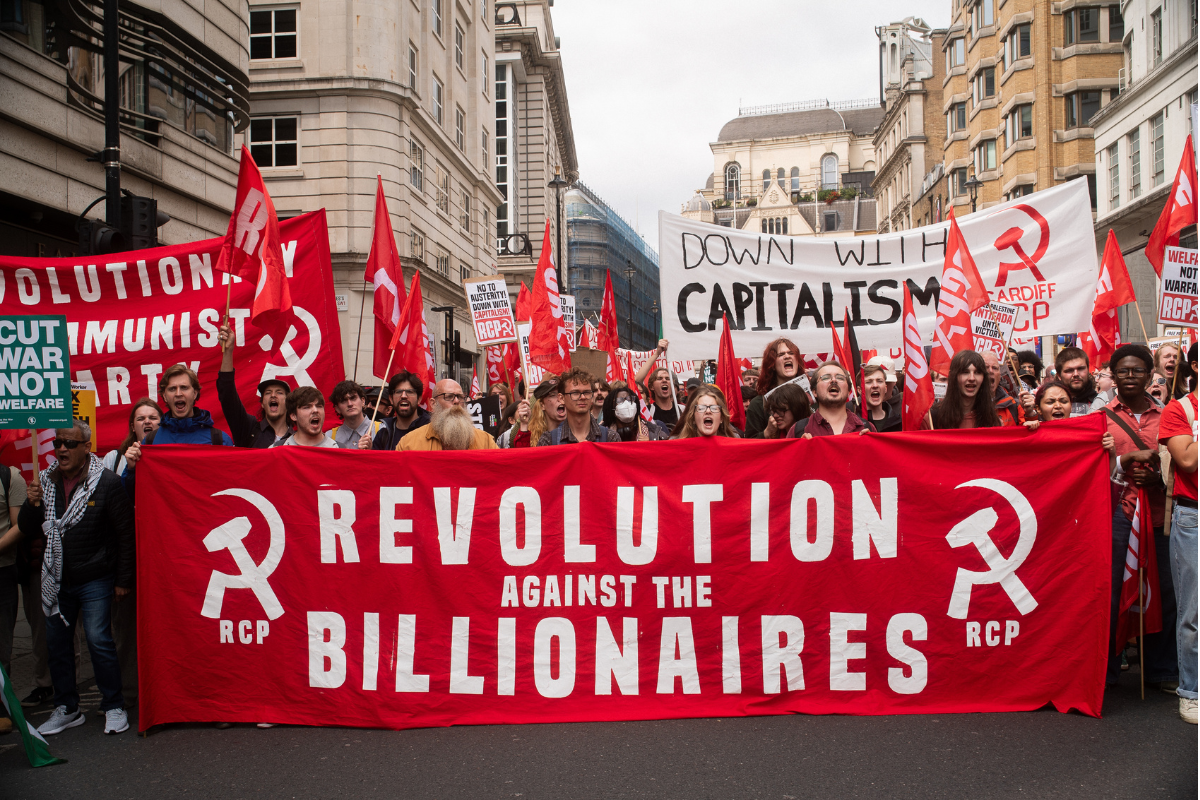
It is not so much Polanski himself that frightens the ruling class in Britain, therefore, but the prospect of a large, powerful movement of workers and youth developing behind him.
A mass movement around rent controls could spill over into rent strikes against the big landlords, occupations of properties, militant resistance against evictions, widespread support for nationalisation, and more.
Similarly, a bond market rebellion against a Green budget, aimed at removing Polanski and co., would expose – in practice – the dictatorship of capital.
Every struggle for genuine reforms, in this respect, can serve to demonstrate the bankruptcy of the capitalist system in the eyes of the working class.
If capitalism cannot afford to provide workers with decent homes, jobs, and public services, then workers will begin to see that we cannot afford to continue with capitalism; we cannot afford the bosses’ profits, shareholders’ bonuses, and the extravagant salaries of the CEOs.
The role of communists is to help draw out these class conclusions, showing the need for workers’ power and the revolutionary overthrow of the decrepit capitalist system.