
The beginnings of a youth-led mass struggle has erupted in India.
The Cockroach Janta Party, which started as an online joke among Indian youth, has become the biggest threat that Prime Minister Modi has faced in his 12 years of rule.
The Chief Justice of India, Surya Kant, referred to the youth as “cockroaches” for complaining about corruption in education. To this disgusting smear, ‘Gen Z’ responded with ‘Yes, we are cockroaches. Because cockroaches breed in rotten places – and that is what India is today’.
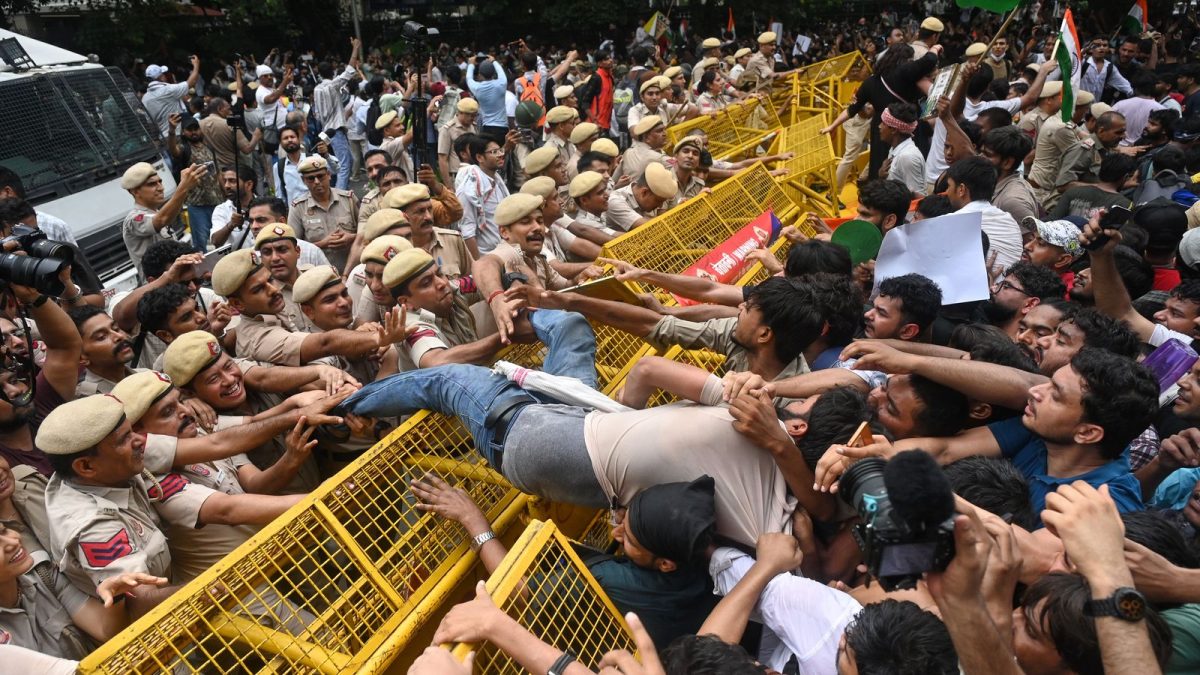
Things quickly escalated from screens to the streets. In the space of a week, a mass mobilisation of the youth has succeeded in forcing the education minister to resign. This is an incredible victory against what seemed like a strong, unshakeable Modi government.
Dire conditions worldwide
The global crisis of capitalism, combined with the consequences of the Iran War, are ravaging India.
Living conditions are dire, especially for young people. More than four in five unemployed people in India are under 30. Graduate unemployment is nine times higher than those who cannot read or write!
Meanwhile, people can see the rich getting richer.
These very same conditions led to the wave of ‘Gen Z revolutions’ which have shaken the so-called ‘developing world’ in recent years – from Kenya and Indonesia, to Nepal, Sri Lanka, and Bangladesh. Now, such a movement threatens to rock the hated Modi regime.
Simultaneously, another mass struggle is raging on the Indian subcontinent, where the workers and oppressed masses of ‘Azad’ Kashmir are in an advanced stage of a revolutionary process. They are marching on the state capital, and a position of dual power exists.
Gen Z revolution in Britain?
The conditions which led to these explosions exist all across the world, including here in Britain.
Before the 2022 Sri Lankan revolution, youth employment sat at 22 percent. In Indonesia, it was around 15 percent.
In Britain today, youth unemployment stands at 16 percent, with around one million not in employment, education, or training.
In Nepal and Bangladesh there was a burning rage at the corruption of the powerful elites, who enjoy a life of luxury while millions suffer.
In Britain, the monarchy, the Labour Party and British billionaires like Richard Branson have been engulfed in the Epstein scandal – the biggest corruption scandal in the history of capitalism.
Leadership
But for all the courage and bravery of the masses of the subcontinent, things have not gotten any better.
This is not for lack of determination or sacrifice, but because of the lack of a clearsighted leadership that was prepared in advance – with an organised presence in every school and workplace – to lead the revolution to success.
The question for you is: when such events explode on our streets, are you going to be taken by surprise, or will you have had the foresight to help build a communist leadership in advance, which can seize the moment and make history?
A few months ago, the CJP leader was an ordinary university student. If you’re a student or young person, what role do you think you can play in the coming British revolution?
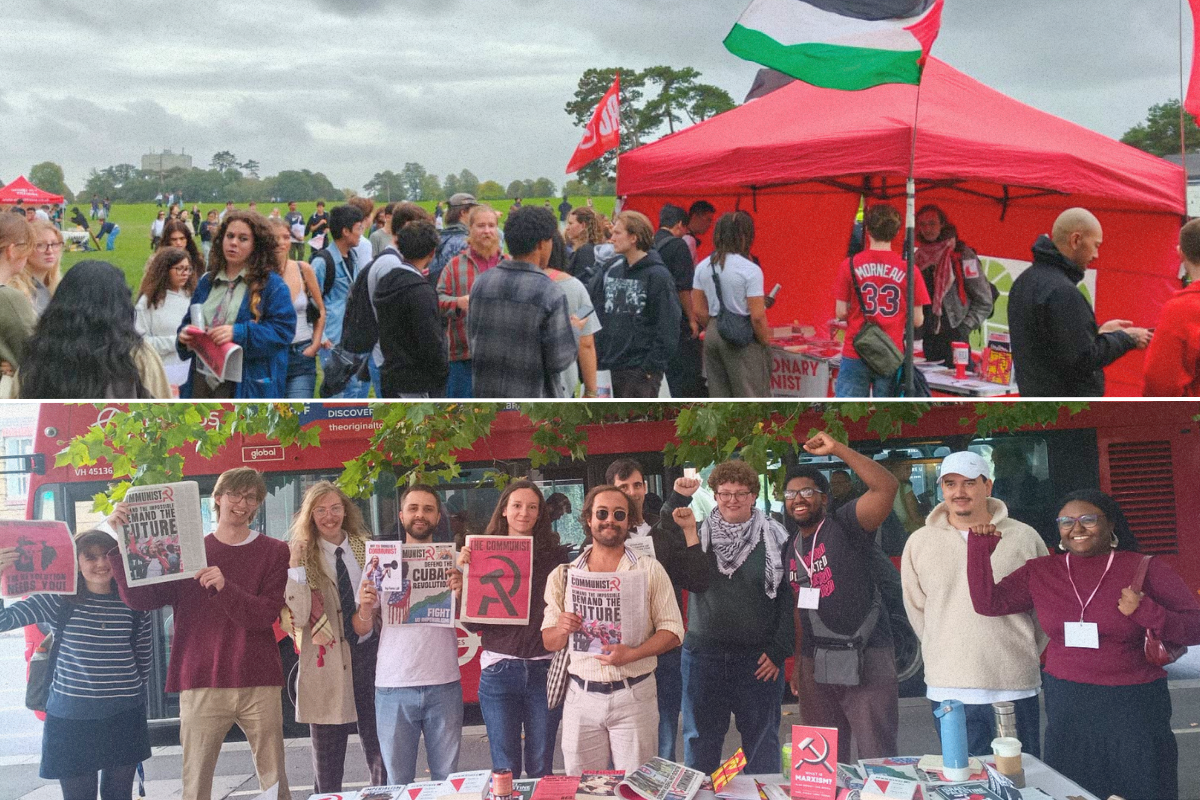
We appeal to all young people who are sick of a system which offers them no future: get organised with the revolutionary communists today!
A reader asks: Aren’t the Gen Z revolutions liberal, and not for the working class?
Katherine Zheng, Fulham
Revolutions are messy. In absence of a clear revolutionary alternative to direct it, the anger of the working class can express itself in all kinds of ways.
In former-colonial capitalist countries – like Nepal, Bangladesh, Sri Lanka and Indonesia – we have seen deep hatred of the masses for their ruling classes channelled towards the struggle for democratic rights.
They wish to break the corrupt and arbitrary rule of the present regimes. The most clear and pressing want of the masses is to at last breathe freely; to be liberated from these oppressive regimes.
There is nothing inherently socialist about the demands of these movements themselves. In these movements, the masses were calling for the resignation of corrupt individuals, greater transparency, democratic freedoms, and so on.
These are what we would call bourgeois-democratic tasks: securing rights, such as freedom of political expression and equality before the law, which are the frameworks for most ‘liberal democracies’ today.
So does this mean these were all liberal movements?
With no revolutionary party that can link the question of corruption to capitalism – and its organic inability to deliver on its supposed free, equal, democratic ideals – it can appear so on the surface. On this basis, some people on the left dismiss these Gen Z movements as ‘not real revolutions’.
At certain points, these revolutionary movements could even appear to be more of a movement led by one wing of the ruling class against the other than the masses versus their oppressive rulers.
In Bangladesh, for example, the Islamists saw a prime opportunity as the movement searched for direction. They stepped forward and began talking about ‘fighting corruption’ themselves. ‘Yes, we are against corrupt politicians too,’ they say. ‘We need cleaner politics, new faces instead of the old.’
With this, these reactionaries – who are profoundly tied up with all of the same rot the students and workers were trying to eradicate – diverted blame for corruption away from capitalism and towards other supposed causes, like a lack of morals or piety on the part of the secularists.
But corruption is the most potent and extreme symptom of the decay of the capitalist system itself.
When the masses think of the truly staggering levels of wealth that surround them, they are rightly filled with a deep sense of injustice, hatred, and indignation.
They conclude that this wealth could be fairly distributed and used to address all the social ills they see, if only it wasn’t constantly being siphoned off by selfish, greedy elites. ‘Get these guys out, and then maybe things will start working properly,’ they think.
The task of the communists, while supporting these immediate demands, is to reveal the truth – that corruption and the hoarding of private wealth while millions suffer is not an aberration under a capitalist system, but its logical conclusion.
When the masses enter the struggle for democratic demands, a layer soon becomes aware of these limits through the practical experience of their struggle. They realise their demands can only be accomplished with the overthrow of the capitalist system.
We’ve seen the beginnings of this realisation, in varying degrees, in all of the Gen Z revolutions. However, it is by no means an automatic process.
Because in the absence of a revolutionary leadership, liberals and reactionaries alike can easily derail the revolution into simply demanding a change of face at the top, as happened in Bangladesh.
The job of communists is not to denounce these movements as liberal or middle-class, but to link the fight against the corrupt establishment in all of these countries with the need for the working class to take power.