People sometimes say that the British are not a revolutionary people. Revolution, they claim, is not part of the British tradition. History shows otherwise.
In the seventeenth century, in the throes of the English Revolution, soldiers marched King Charles I to the scaffold. In the late eighteenth century, British workers, artisans and craftsmen in the Corresponding Societies hailed the French Revolution. In the nineteenth, workers formed revolutionary trade unions.
Later, industrial workers struck, rioted and organised for wages, political rights and a say in how society was run – this was the epoch of revolutionary Chartism. The heated class war prior to the First World War was followed by mass actions that led to the 1926 General Strike. These were not isolated outbursts. They were the product of deep social conflicts rooted in how wealth and power were organised.
Yet this hidden tradition is rarely talked about. Modern education prefers to teach a story of gradual reform, constitutional stability and national consensus. Revolutions, strikes and mass rebellions only disturb that picture. They raise uncomfortable questions about how history is really made – and who benefits from forgetting it.
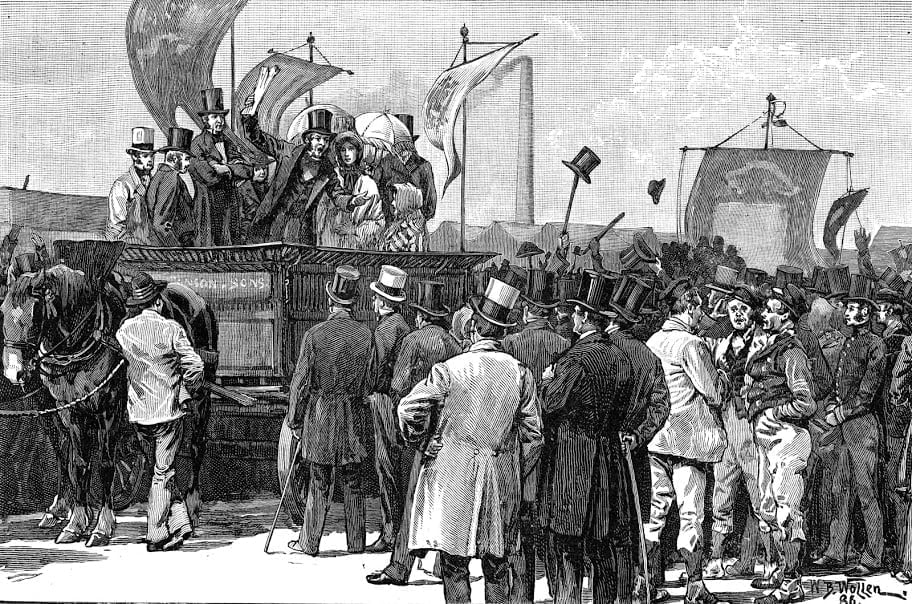
History, however, has a way of reminding us of things, even if the ruling class wants to bury them. When living standards fall, when insecurity spreads and when politics is broken, people begin to look backward as well as forward. They search for earlier moments when ordinary men and women acted collectively and fought for change. That is why the General Strike of 1926, now a century old, has great relevance.
The General Strike stands as one of the most important events in the history of the British labour movement. Yet when it is discussed, it is often misunderstood. Many accounts bear little resemblance to reality. The General Strike was a far-reaching class conflict. For a brief period, it opened the possibility of revolutionary change in Britain. Above all, it revealed a basic truth about modern society: it is the working class that keeps society running.
This is why a general strike raises a fundamental question. If society cannot function without the labour of workers, why should it be run by those who do not perform that labour? Once posed, this question points beyond a simple strike, and toward a struggle over power itself. That prospect explains why the ruling class has always regarded the General Strike with fear and hostility – and why it remains of particular interest to those who want to change society.
Today’s widespread discontent
Today, a similar anger exists within the working class as existed in the 1920s. Distrust of politicians is widespread and the government is hated. Many people have realised that the system works for the wealthy and against everyone else. This discontent is present in workplaces, communities and mass movements.
The most striking feature of recent years has been the scale of protest around Britain’s support for Israel’s genocide in Gaza. For millions, this issue condensed broader frustrations about economic hardship, failures of democracy and the establishment’s moral hypocrisy. It revealed how quickly latent anger can find a political expression.
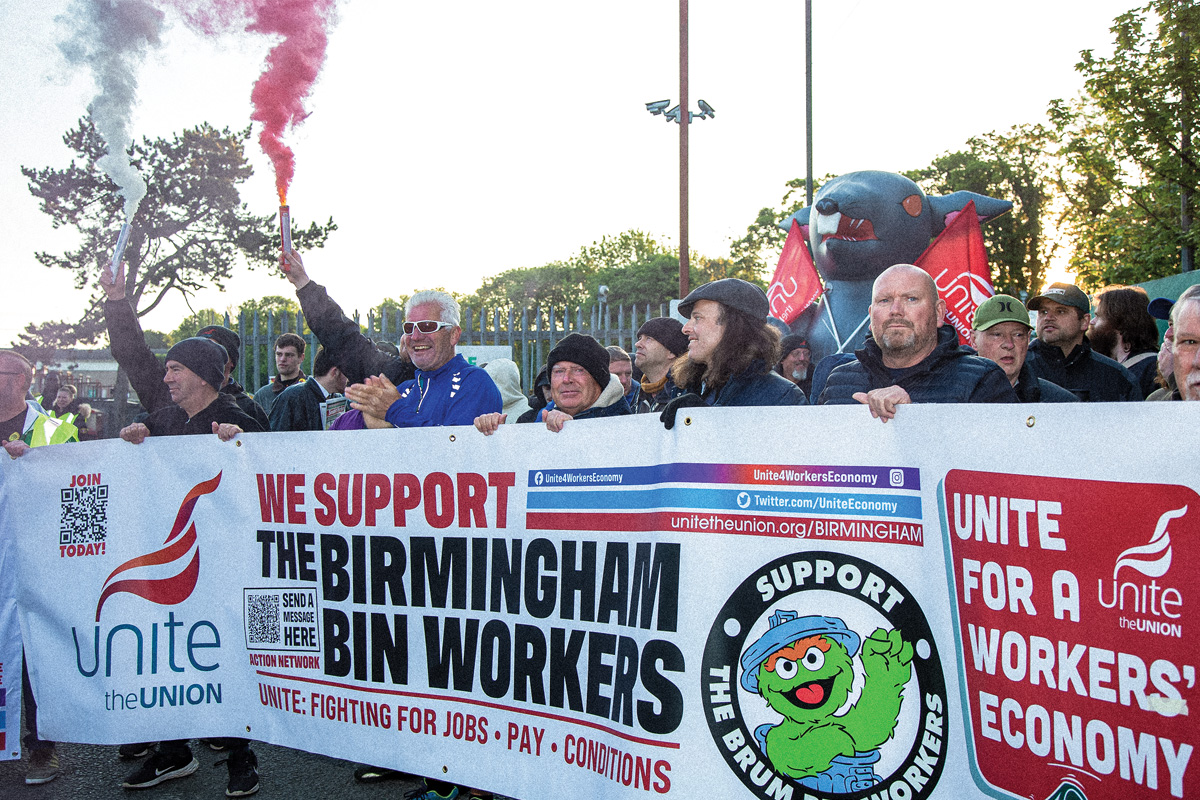
At the same time, industrial action continues to simmer. Bin workers, doctors, aerospace workers, educators and others have taken action over pay, conditions and job security. These struggles reflect the same underlying problem seen in the 1920s: workers are being asked to pay for a crisis they did not create.
Today, the working class is certainly more powerful than it was one hundred years ago. Numerically, there are many millions more working-class men and women in Britain compared to 1926. Technological and economic changes mean that industrial action could be more coordinated – thanks to better communication, and better targeted – thanks to economic concentration.
A general strike in Britain today could, in theory, be unstoppable. As in 1926, given the power of the working class, everything could be shut down.
Leadership and its limits
The reason for the 1926 defeat was not a lack of courage or solidarity among workers, but the ideology and actions of their leaders. These leaders were blinded by reformism and feared the potential power of the working class to change society. For them, it was an industrial dispute, and they worked to keep it within the confines of capitalism.
The leaders of the trade union movement failed to grasp that the strike was a product of the organic and structural crisis of capitalism, and that it posed the question of power. As a result, they did not prepare, underestimated the government’s resolve and quickly accepted defeat even when the strike was growing. They used their authority to halt the strike at a crucial point.
For men like these, who believe that capitalism can be permanently improved through reform, the idea of overthrowing the system was unnecessary, dangerous and irresponsible. Their reformist outlook begins with the assumption that the existing system, despite its flaws, can be made to work in the interests of everyone.
While they may be critical of capitalism, their whole approach remains gradual and cautious. Their whole outlook is based upon negotiation, persuasion and institutional channels, so as not to provoke too much resistance from those who hold power. They are simply negotiators, hoping to reconcile the class struggle. They have no confidence in the ability of the working class to reorganise and run society through its own collective power. As a result, they seek accommodation with existing structures rather than a break from them.
History repeatedly demonstrates the limits of this reformism. Capitalists may tolerate certain reforms during periods of stability, but when profits are seriously threatened, compromise ends. Reformist leaders then face a choice: mobilise the independent power of the working class or retreat. Lacking faith in workers’ capacity to rule, they retreat.
At times, they may adopt militant language, usually on international questions, to enhance their authority. But when confronted with concrete decisions, they lack plans, organisation and a clear understanding of how power is to be taken and exercised. Their radicalism dissolves at the moment it is tested.
The General Strike of 1926 brought these questions into sharp relief. When the struggle posed the question of power directly, none of the reformist or pseudo-revolutionary currents proved capable of answering it. Some openly sided with the state and employers. While others, the lefts, hesitated, delayed and ultimately surrendered.
Of course, communists are in favour of fighting for reforms, however small. It is in and through the struggle that the working class learns the need to change society. But we do not accept the limits of capitalism, and therefore we link the everyday struggles to the elimination of the capitalist system. Only in this way can we guarantee and extend those reforms we win today, into the future.
But for reformists, when a struggle for reforms reaches the point where the question of control over society and the economy is posed, they have no answer but to retreat.
For this reason, betrayal is inherent within reformism. It is the outcome of its underlying assumptions. By refusing to break with the logic of capitalism, and having no trust in the capacity of the working class to rule, reformism prepares the ground for retreat and capitulation at the decisive moment.
The lesson of 1926 is therefore not about individual failings, but about political outlook. Without a clear perspective of working-class power, even the most sincere reformist ends up defending the system.
Today’s trade union leaders have certainly not learned anything. They either stand openly on the right wing, or adopt a left-reformist viewpoint. Of course, communists will give critical support to the left over the right, but we have no illusions about these lefts. Workers in Britain today are suffering the worst fall in living standards for a generation, but the labour movement leaders carry on with ‘business as usual’.
The recent closures of the blast furnaces at Port Talbot, the oil refinery at Grangemouth and the Vauxhall plant in Luton resulted in large-scale job losses, yet no serious attempt was made to mobilise workers on a national scale or with militant methods such as occupations or defiance of anti-trade union laws.
The right wing openly preaches ‘social partnership’ and harmony with the employers. Meanwhile the lefts, while expressing the pressures of the rank and file, are still very cautious and hesitant. Rather than providing a militant leadership, they go through the motions, and ultimately act as a brake on the movement. They are content with partial or limited sector strikes and give little thought to extending the struggles or challenging the anti-trade union laws. In many cases, the employers revert to the courts, and the trade union leaders simply acquiesce, fearing sequestration of their funds. Only under intense pressure are they forced to act.
In a certain sense, today’s trade union leaders could be said to be worse than those of 1926. One hundred years ago the heads of the labour movement had never experienced a general strike. Arguably, they had never witnessed the awesome power of the British working class in action. They were taken by surprise and bungled their chance to make the most of it. This doesn’t justify their failures, but it could partially explain them.
But today’s leaders have no such excuse. They have one hundred years of labour movement history behind them, including the General Strike itself, which proves the potential power of the working class. The modern trade union chiefs are deliberately holding the working class back, not out of a fear of the unknown, but precisely because they do know what workers are capable of, and they fear it.
Authority
Compared to today, in 1926 the leaders of the labour movement enjoyed immense authority among workers. Most of them had come out of the working class themselves. They tended to speak the language of the people they represented. While they betrayed the movement on Black Friday, they still had a store of credit amongst the workers. This background gave them credibility. When they spoke of struggle, workers believed they meant it.
Even Ramsay MacDonald, the leader of the Labour Party, felt the need to address a TUC rally in support of the General Strike. This reinforced the belief that the leadership stood firmly behind the action.
That authority proved decisive – but not in the way workers expected. Given the lack of an alternative leadership, they reluctantly accepted the decision that ultimately brought the strike to an end, although it left a bitter taste.
The situation today is very different. The leaders of the labour movement no longer command anything like the authority their predecessors once did. Even those regarded as being on the left do not enjoy deep or widespread confidence among the working class as a whole.
As for the more right-wing trade union leaders – and the leadership of the Labour Party – the position is clearer still. These open class collaborationists are widely and correctly recognised as part of the political and social establishment, rather than as representatives of working-class interests. Their living standards, priorities and methods set them apart from the people for whom they claim to speak.
This distance is perhaps most evident in the case of the TUC. Once the leadership of the labour movement, it is now completely divorced from the shopfloor and has little presence in everyday working-class life. It looks and behaves more like a pressure group or a think tank than a general staff of the labour movement. Most workers would struggle to name a single member of its executive, let alone feel represented by it. As a result, apart from lip service, few of today’s labour leaders genuinely give voice to the experiences, frustrations and needs of working-class people.
This situation reflects a grave weakness. Ineffective leadership results in unions that are smaller, less confident and less capable of acting as a collective force. Without leaders who can inspire trust and offer some direction, the working class feels itself to be isolated and powerless.
But at the same time, this lack of authority is a danger for the trade union bureaucracy. Their limitations are increasingly visible to millions of workers and young people. Illusions, while they exist, are fewer than in the past. Their weakness and failings open up space for more radical tendencies within the working class, including the communists, to get a hearing for a militant, class-struggle policy.
Future battles and the role of communists
In the 1920s, in comparison to today, Britain’s capitalists were relatively far-sighted. They could see a major class confrontation approaching and prepared accordingly. The TUC could see nothing, and prepared nothing. They led the workers to a defeat which left them downtrodden and demoralised for many years.
Today the ruling class is short-sighted to the point of blindness. They stumble from one crisis to the next with no plan or understanding. To the extent that they can see anything, they watch, paralysed, as their system decays before their eyes. Unlike in the 1920s, they do not want to provoke a direct confrontation with the working class. They are not confident they would win. They prefer to rest on the Labour and trade union leaders to keep the workers in check – they see them as a reliable prop for capitalism.
No wonder! The reformist leaders of the working class are wedded to capitalism, and just as fainthearted as they were in 1926, with even less authority among the workers. They are incapable of leading a serious fight, despite the potential strength of the labour movement.
This, however, is producing a protracted crisis. Storm clouds gather overhead while the class struggle is fought out in minor skirmishes. Both sides are trying to avoid the inevitable decisive battle. But big confrontations are coming, on the political front as well as on the industrial front.
This poses the need to build a leadership and party that is capable of answering the needs of the working class.
The Communist Party of Great Britain in 1926 was young and small. Its members were courageous and committed militants, but the party lacked deep roots and a developed understanding of Marxist theory. It failed to develop the leaders it needed. Unfortunately, the influence of Stalinism went on to wreck this party.
Today, the old Stalinist organisations have almost collapsed, and simply act as apologists for the left reformists.
The genuine communist movement has to be rebuilt on solid foundations, enriched by the lessons of the past. One of the central tasks of communists is to preserve this collective memory, to analyse it critically, and to make it available to a new generation of workers and activists.
The ruling class invests enormous resources in training its administrators, officers and strategists. The working class must do the same, on its own terms. Without an organisation capable of drawing together historical experience, theoretical understanding and practical activity, each new generation is forced to relearn old lessons at great cost.
Today’s communists in Britain remain numerically very small, but we have learned the lessons of 1926 as well as those of the past period. We have refounded the Revolutionary Communist Party, which is made up of young people and workers who will not accept compromise with the capitalist class, or their shadows in the labour movement.
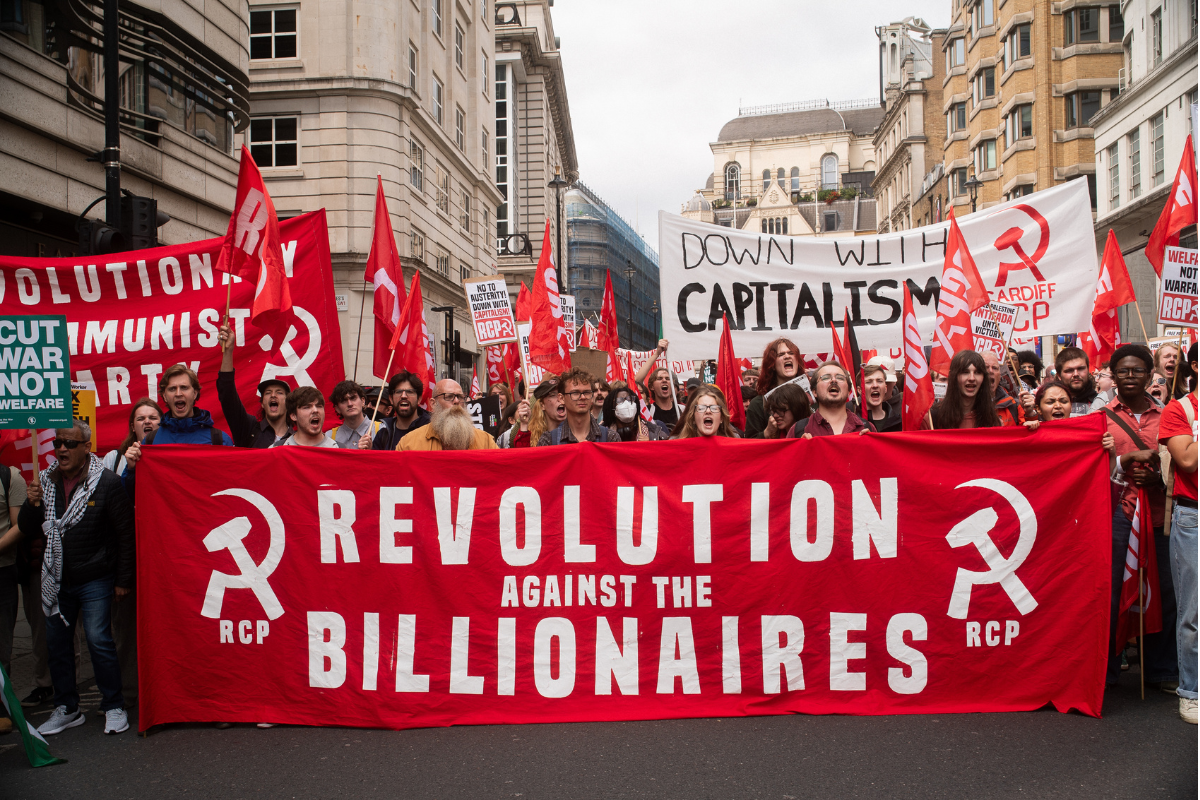
We want to overthrow capitalism and replace it with a socialist plan of production under the democratic control of the working class. Our perspective is one of world revolution. The General Strike is one piece of evidence among many which shows that the working class has the power to achieve this.
Correct ideas alone, however, are not enough. We have to build the forces of communism, which means building the Revolutionary Communist Party.
This remains the principal challenge today. The task now is to create an organisation large enough, confident enough and educated enough to connect revolutionary ideas to real struggles as they develop.
For communists then, the General Strike is not a museum piece, but a guide to action.
History does not write itself. It is made by people acting under conditions not of their choosing, but who make choices nonetheless. The story of 1926 shows both what is possible, and what lessons we must learn.
When it comes to our own history, the pages ahead have not yet been written. It falls to us to fill them with the story of victory.
Find more articles in our series ‘The 1926 General Strike as it happened’.