On 4 May 1926, London was paralysed. Buses did not run. Trams stood still on their lines. Railway stations, usually roaring with movement, were suddenly silent. Newspaper boys had nothing to sell because the presses had stopped the night before.
Across the capital, the workers who normally kept the city alive had walked away from their posts.
Traffic backed up for miles. A journey from Palmers Green into the West End, which might normally take less than an hour, stretched to three. Offices opened late or not at all. Deliveries failed to arrive. Goods remained in depots and warehouses. London, the heart of British capitalism, was discovering that all its power rested on the labour of ordinary men and women.
At Hoe’s engineering works in Borough Road, nine hundred workers joined the strike almost immediately, although they had not officially been called out by the union. Only a handful of apprentices stayed behind.
By lunchtime, a mass meeting had been called outside the gates, where older workers explained what was at stake to the apprentices. By the end of it the apprentices had joined the strike too. Nearby workers from Waygood-Otis followed. The strike was carried and spread by the workers themselves.
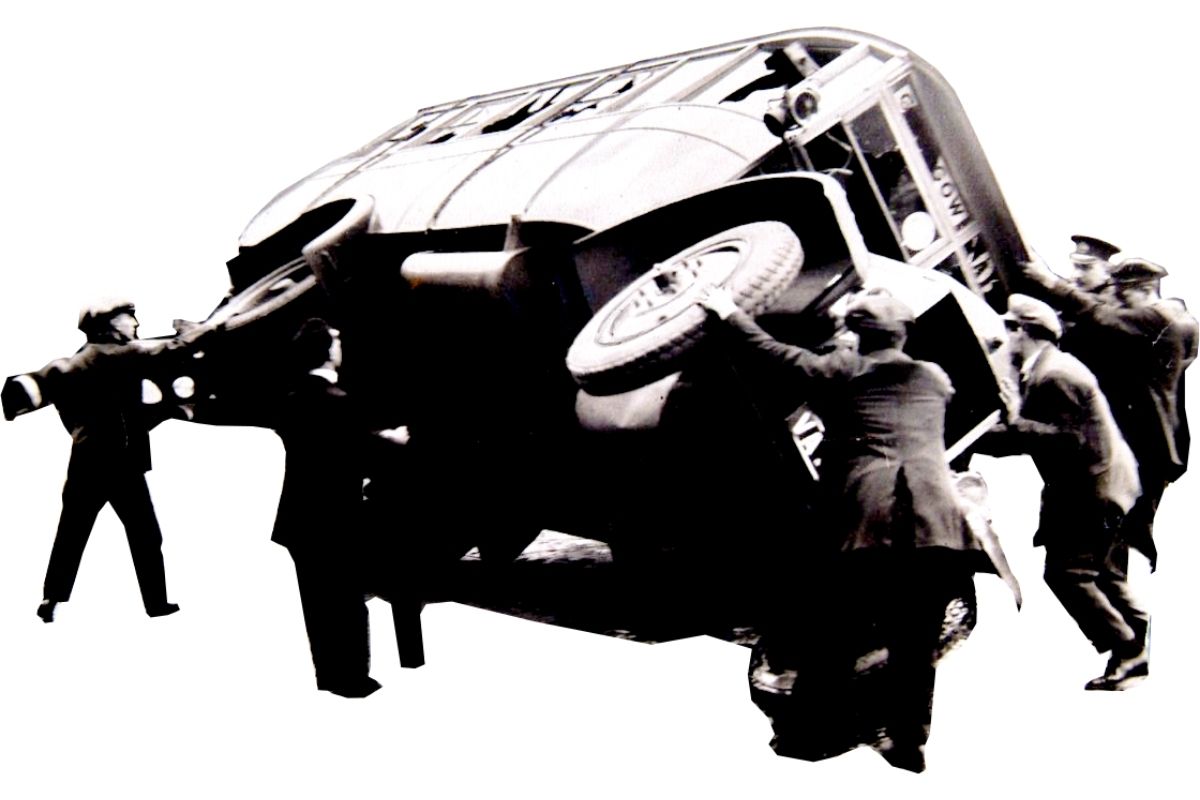
South of the river, the atmosphere was electric. At Elephant and Castle, workers and their families filled the streets. Buses that tried to run were stopped. Strikebreaking vehicles were surrounded and overturned.
One omnibus, escorted by police, was seized and set on fire in full view of the crowd. Barricades were raised in side streets and railings dragged across tram lines. For several days, nothing moved through the Elephant unless the workers allowed it.
Similar scenes played out all across London: in Lambeth, where workers organised vehicles to carry messages across the city; at the docks, which were completely paralysed; and in borough after borough where strike committees and Councils of Action sprang up to coordinate pickets, communications and relief.
The strike had outgrown the bounds of an industrial dispute and the question of power had begun to pose itself in practice. Workers were not only withdrawing their labour, they were beginning to organise transport, communication and the movement of the city on their own terms.
For the trade union leadership, this was already going too far. What had begun as a strike in support of the miners now posed a far greater threat to British capitalism itself. Feeling the logic of the strike escaping its grasp, the TUC General Council capitulated and called the strike off nationally.
In London, that decision was met with fury. For example, workers in the Council of Action in Southwark expressed that they had been “sold down the river.” On 13 May, the day after the strike officially ended, more workers poured onto the streets of Southwark in anger than during the strike on the day before.
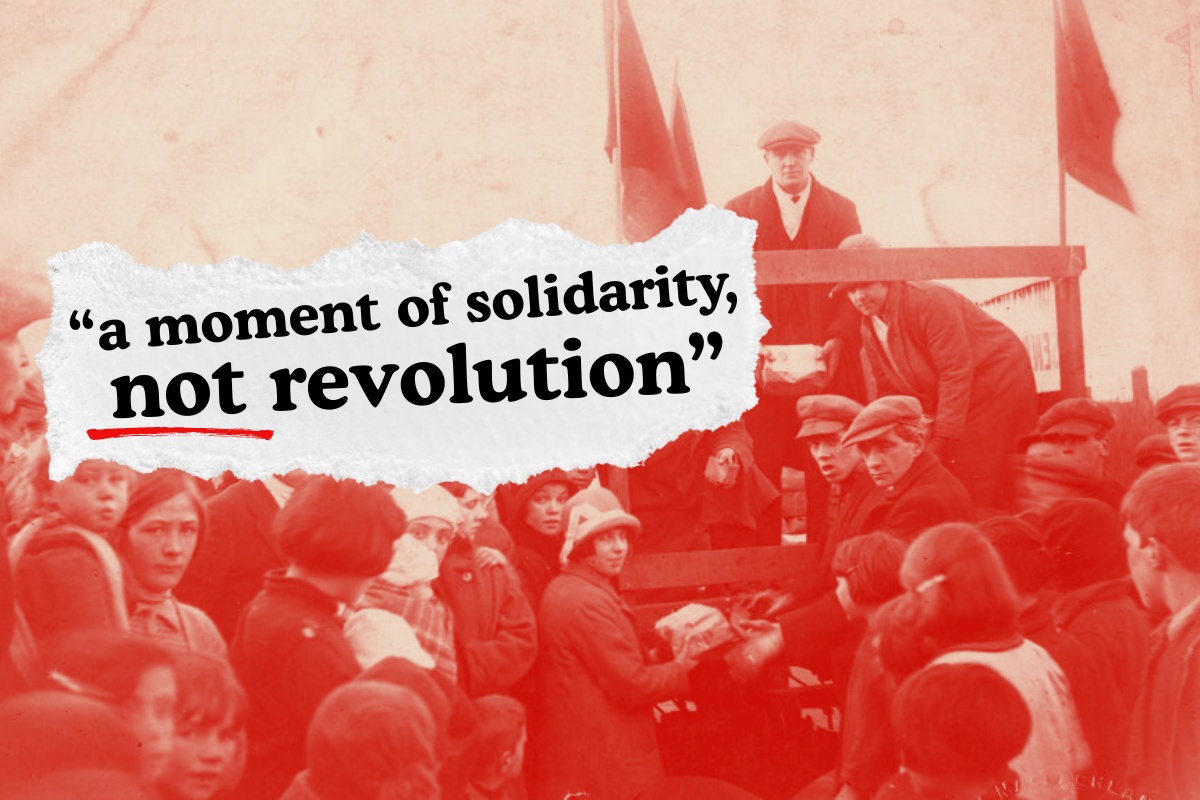
That anger reflected more than disappointment at the strike’s end – it expressed a sense of what had briefly become possible and what was lost. For nine days, two million workers had brought the capital to a standstill and shown how London might be organised differently.
Ultimately, the revolutionary potential of the strike was snuffed out by a leadership that lacked faith in the working class and, for all its criticisms of capitalism, feared workers’ power as the real alternative to it.
Find more articles in our series ‘The 1926 General Strike as it happened’.